News you may have missed #682
February 17, 2012 1 Comment
 By IAN ALLEN | intelNews.org |
►►Is there a Mossad base near Iran? The London-based Sunday Times has published an interview with a man claiming to be an Azerbaijan-based agent of Israeli intelligence agency, who confirmed the existence of such a base. The man, identified in the article as “Shimon,” told the paper that there were dozens of Israeli Mossad agents working out of the base. The meeting between the agent and the London Times‘ reporter took place in Baku, near the Israeli Embassy, the report said.
►►Analysis: CIA report on Soviet bioweapons still secret. It has been three decades since the Reagan administration accused the Soviet Union and Vietnam of using chemical weapons known as yellow rain. We still do not know how the US came to this conclusion, but have good reason to believe that it was based on flawed or distorted intelligence. A classified critique of the intelligence behind those charges, written several years ago for the Central Intelligence Agency, could shed light on what happened. Last year, Matthew Meselson, a Harvard expert on chemical and biological weapons, filed a Freedom of Information Act request to get the report released. He was turned down.
►►US official says Iran unlikely to strike first. Lieutenant General Ronald Burgess, director of the US Defense Intelligence Agency, said the Iranian military is unlikely to intentionally provoke a conflict with the West. He said Iran probably has the ability to “temporarily close the Strait of Hormuz with its naval forces”, as some Iranian officials have threatened to do if attacked or in response to sanctions on its oil exports by the US and European Union. But, he added, “Iran is unlikely to initiate or intentionally provoke a conflict or launch a preemptive attack”.

 By IAN ALLEN | intelNews.org |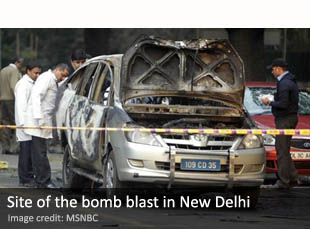





 By IAN ALLEN | intelNews.org |









Analysis: The How and Why of Modern Assassinations
February 20, 2012 by Joseph Fitsanakis 5 Comments
Reports on the discovery last week of a synchronized plan to attack Israeli diplomats in India, Georgia, and Thailand, are still unfolding. At least four people —including the wife of an Israeli diplomat— were injured in New Delhi, when a bomb ripped through a van belonging to the Israeli embassy there. Another bomb was defused by Georgian counterterrorist forces after it was found fastened under an Israeli diplomatic vehicle in Tbilisi. And in Bangkok, two Iranian nationals were arrested after a bomb they were manufacturing exploded prematurely in a rented house in the Thai capital. In an interview I gave this past weekend to The Journal, one of Ireland’s most popular newsmagazines, I noted that the use of targeted assassinations as a means of achieving broader political goals is, of course, not new. But there are definite trends that we have been able to see developing during the past decade or so. For starters, even though the methods of assassination vary greatly, there are common trends one can point out, particularly in the organizational infrastructure of state-sponsored assassination operations. There is, to be precise, an increasing complexity in the way these operations are planned prior to their execution by specialized hit teams. I told The Journal’s interviewer, Susan Ryan, that the increasing sophistication of these types of operations can be appreciated by comparing older examples with case studies that are more recent. Take, for instance, the Black September killings, conducted by Israeli intelligence in response to the 1972 massacre of Israeli athletes at the Munich Olympics. Read more of this post
Filed under Expert news and commentary on intelligence, espionage, spies and spying Tagged with Analysis, assassinations, covert action, interviews, Iran, Israel, Joseph Fitsanakis