British civil servants warned of listening devices in pubs near government buildings

Parliament StreetBRITAIN’S SECURITY AGENCIES HAVE reportedly warned civil servants and parliamentarians that public places located near government buildings may be bugged by foreign intelligence agencies. The warning covers the SW1 postcode district of southwest London, which encompasses the City of Westminster and includes the Houses of Parliament, the Office of the Prime Minister at 10 Downing Steet, and Whitehall. The latter is home to several ministries and departments, including the Foreign and Commonwealth Office, the Cabinet office, and the Ministry of Defense.

The historic London borough is littered with historic public houses (commonly referred to as ‘pubs’) and restaurants, where thousands of parliamentarians and civil servants, as well as their aides, gather for lunch or drinks on weekdays. The area is also home to numerous parks, where many government workers eat their lunch during breaks—weather permitting. Among them is St. James’ Park, which is adjacent to Downing Street and within a short walking distance from the Treasury and the Foreign Office.

It is for these reasons, according to Britain’s Daily Mail newspaper, that foreign intelligence agencies consider these gathering hotspots as targets. The paper reports that “Chinese and other spies, including the Russians and Iranians” consider these prime SW1 locations as “the soft underbelly of Whitehall”. Accordingly, government officials holding sensitive positions, as well as junior staff working for them, have been warned to refrain from work-related discussions when frequenting these locations for lunch of drinks after work.

One source reportedly told the paper that St. James’ Park is “full of Chinese agents”, and went on to say: “we have been told the Chinese literally have the park bugged, with devices in the bushes and under park benches”.

Author: Joseph Fitsanakis | Date: 21 April 2025 | Permalink

250 ex-Mossad members sign letter criticizing Netanyahu’s stance on hostages

MossadOVER 250 FORMER MEMBERS of the Mossad, Israel’s external spy agency, have drafted an open letter criticizing the government of Prime Minister Benjamin Netanyahu and warning that they will “not continue to stand by”. The letter campaign is reportedly led by former senior Mossad official Gail Shoresh and renowned hostage negotiator David Meidan. It comes in the heels of similar letters issued last week by Israel Air Force active service personnel and veterans, and by former members of Unit 8200—the cyber and signals intelligence branch of the Israel Defense Forces.

The letter is signed by dozens of former Mossad department heads and deputy department heads, one former deputy director, and three former directors: Tamir Pardo, Efraim Halevy and Danni Yatom. It openly criticizes the administration of Prime Minister Netanyahu for prioritizing the war against Hamas over the lives of 59 Israeli hostages, who are believed to remain captive by the militant Palestinian organization in the Gaza Strip. It also calls on Israeli officials to “make brave decisions and act responsibly for the security of the country and its citizens”.

The letter claims to voice the views of “Mossad and special services veterans, who have dedicated many years to safeguarding the country’s security”. It lambasts the Netanyahu government for refusing to negotiate with Hamas to secure the release of the Israeli hostages, and warns that Mossad and special services veterans “will not continue to stand by” any longer. It also expresses “full support” for an earlier letter written by Israel Air Force pilots, some of whom were subsequently dismissed form the service for criticizing the government.

The letter by the ex-Mossad service members shares the authors’ “deep concern for the future of the country” and calls for Prime Minister Netanyahu “to act immediately to reach an agreement to return all 59 abductees home, without delay, even at the cost of ceasing fighting.” It concludes with a direct message to the embattled Netanyahu: “The sanctity of life, Mr. Prime Minister, takes precedence over ‘God of Revenge’”.

Author: Joseph Fitsanakis | Date: 14 April 2025 | Permalink

Reuters publishes details about alleged Russian airline sabotage plot

DHL AviationTHE REUTERS NEWS AGENCY has disclosed more information about an alleged plot by Russian intelligence to detonate bombs on cargo flights from Europe to North America. Initial details of the plot emerged in October 2024, when it was reported that explosions had occurred earlier that year at shipping warehouses in England and Germany. It later emerged that a similar explosion had occurred at a third shipping warehouse, located in Poland.
It is now understood that the explosions occurred on July 19, 20 and 21, 2024, and that at least two of them took place in facilities belonging to DHL, a German logistics firm headquartered in Bonn. Affected facilities are reportedly located in Leipzig, Warsaw, and Birmingham. All three explosions were caused by rudimentary incendiary devices hidden inside commercial shipments. European officials said at the time that the explosions were part of a broader wider campaign by Russian intelligence to sabotage Western European transportation and shipping networks.

Now the Reuters news agency claims that the explosions were meant to test security systems in preparation for a major sabotage operation. The operation aimed to detonate explosive mechanisms in mid-air on cargo flights from Europe to the United States and Canada. Moreover, a fourth incendiary device, which was found at a Warsaw shipping facility, failed to explode and has been forensically examined by bomb experts, Reuters said. Citing “interviews with more than a dozen European security officials”, including a person familiar with the case in Poland, the news agency said it was able to provide “the most granular account yet of the alleged plot”.

The report claims the incendiary devices were concealed inside pillows, bottles of cosmetics, and sex toys. They were ignited with the use of remote timers taken from cheap Chinese electronic goods. Once detonated, the timers sparked explosions with the help of gelled flammable cocktails that included compounds such as nitromethane—a highly flammable liquid chemical used in industrial applications. All ingredients used in the incendiary devices, including nitromethane, are easily accessible to consumers at a relatively low cost.

According to Reuters, the procedures followed in the DHL attacks fit the profile of similar operations that have been carried out in recent years by the Main Intelligence Directorate of the Russian Forces’ General Staff, known as GRU. Such procedures include hiring disposable agents, most of which are not Russian citizens, for one-off operations. In the case of the DHL attacks, the agents were allegedly hired on the encrypted messaging platform Telegram and paid with the use of cryptocurrencies, or in cash.

Among the alleged suspects in the case is a Ukrainian man identified by Reuters as Vladyslav Dekravets, who was recruited in southern Poland and is now facing extradition to Poland from Bosnia. Another suspect, identified in the Reuters report as Alexander Bezrukavyi, allegedly packaged parcels containing sneaker shoes for shipment to the United States and Canada. The shipments were intended to help the GRU “gather information about parcel-processing methods and timing”. During the operation, the two men came in contact with individuals who appeared to be GRU officers, using the cryptonyms WARRIOR and MARY.

The DHL cases remain at a pre-trial stage in several European countries, Reuters said. They involve the pending extradition of suspects from elsewhere in Europe. The trials are going to feature evidence gathered from criminal investigators and intelligence agencies, according to the report.

Author: Joseph Fitsanakis | Date: 07 April 2025 | Permalink

Taiwan jails soldiers guarding president’s office for spying for China

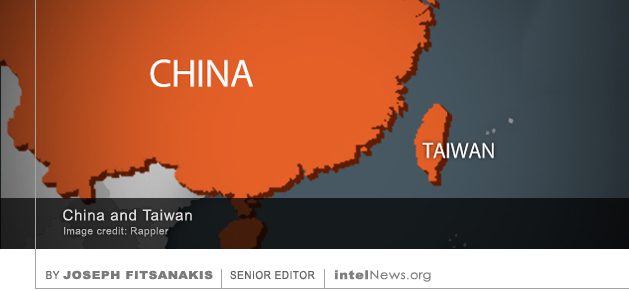
China and TaiwanFOUR TAIWANESE SOLDIERS WITH access to “extremely sensitive” secrets have received jail sentences for spying for Chinese intelligence, as Taiwanese authorities have warned of a sharp rise in Chinese espionage cases. Three of the soldiers had been detailed to the security of the Office of the President, while the fourth soldier was a member of staff at the Taiwanese Ministry of National Defense’s Information and Telecommunications Command.
According to the prosecution, the soldiers made use of their personal mobile phones to photograph “internal military information” they had access to. They then shared the photographs with their Chinese intelligence handlers. In return for their services, their handlers compensated the soldiers by paying them between $7,000 and $20,000 each. The espionage arrangement between the soldiers and their handlers lasted between 2002 to 2024, the court heard.

No information was shared during the open-door portion of the court case about the type of information that the four soldiers were accused of having shared with their Chinese handlers. But the prosecution alleged that the digital photographs given to the Chinese contained information that the four alleged spies had acquired while working in “extremely sensitive and important units” of the Taiwanese military. At the conclusion of the court case, the court sentenced the soldiers to between 70 and 84 months in prison for violating Taiwan’s national security law. In sentencing the accused, the judge said they had engaged in acts that “betrayed the country and endangered national security”.

Meanwhile, the Taiwanese National Security Bureau announced late last week that the number of people who were prosecuted for involvement in Chinese espionage in 2024 broke all recent records for the second year in a row. Specifically, there were 10 prosecutions for Chinese espionage in 2022, 48 in 2023, and 64 in 2024. Many of those caught spying for China were either active or former members of the Taiwanese military. These individuals were deliberately targeted by Chinese intelligence officers because they had knowledge of Taiwanese military secrets, the National Security Bureau said.

Author: Joseph Fitsanakis | Date: 31 March 2025 | Permalink

Death of Soviet defector Gordievsky not seen as suspicious, British police say

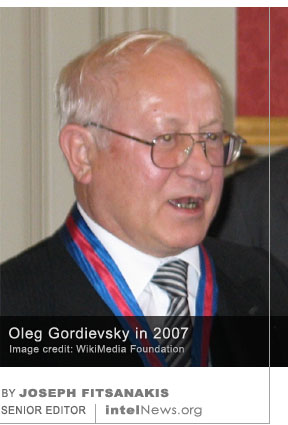
Oleg GordievskyBRITISH MEDIA REPORTED THE death on Saturday of Oleg Gordievsky, arguably the most significant double spy of the closing stages of the Cold War, whose disclosures informed the highest executive levels of the West. Having joined the Soviet KGB in 1963, Gordievsky became increasingly disillusioned with the Soviet system of rule following the 1968 invasion of Czechoslovakia.

By 1974, Gordievsky had established contact with Danish and British intelligence and was regularly providing information to Britain’s Secret Intelligence Service (MI6). After 1982, when Gordievsky was posted to the Soviet embassy in London, MI6 deliberately subverted his superiors at the embassy by expelling them. This effectively enabled Gordievsky to take their place and rise to the position of resident-designate of the KGB station in London.

Intelligence historians credit Gordievsky’s intelligence with having shaped the strategic thinking of British and American decision-makers in relation to the Soviet Union. Crucially, Gordievsky’s warnings to MI6 that the Kremlin was genuinely concerned about a possible nuclear attack by the West prompted British and American leaders to temper their public rhetoric against the Soviet Union in the mid-1980s. Some even credit Gordievsky with having helped the West avoid a nuclear confrontation with the Soviet Union.

In 1985, while undergoing interrogation by the Soviet authorities, Gordievsky was smuggled out of Russia by British intelligence, hidden inside a car that made its way to Finnish territory. He was subsequently sentenced in absentia to death for treason against the Soviet Union. In 1991, following an agreement between British and Soviet authorities, Gordievsky’s wife and daughters were allowed to join him in England.

According to Surrey Police, officers were called to a residential address in the city of Godalming on Tuesday March 4, where they found 86-year-old Gordievsky’s body, surrounded by members of his family. Godalming is a small market town in southeastern England, located around 30 miles from London. Surrey Police noted in a statement that the investigation into Gordievsky’s death was led by counterterrorism officers. However, his death was “not being treated as suspicious”.

Gordievsky spent nearly 40 hours in a coma in 2007, from which he eventually recovered. He subsequently claimed that he had been poisoned after taking sleeping pills tainted with a lethal toxin, which had been supplied to him by a man he referred to as a “business associate” with a Russian background.

Author: Joseph Fitsanakis | Date: 24 March 2025 | Permalink

European Union exploring spy satellites to replace its reliance on US network

European Space AgencyTHE EUROPEAN UNION IS  considering building its own military satellite network in an effort to reduce or eliminate its reliance on American satellite capabilities, according to reports. The London-based Financial Times newspaper said on Saturday that the exploratory project is being led by Andrius Kubilius, a veteran Lithuanian politician who is serving as the European Commissioner for Defense Industry and Space.

Speaking to The Financial Times, Kubilius confirmed that the European Union is considering the construction of a low Earth orbit (LEO) satellite system. Such a system would complement the European Union’s existing Copernicus Earth observation program, which is managed by the European Commission in partnership with the individual European Union member states. The costs and benefits of Copernicus are shared by member states and by several agencies, including the European Space Agency, the European Environment Agency, and the European Maritime Safety Agency.

Unlike Copernicus, a new LEO satellite system would primarily satisfy military priorities and would generate imagery updates every 30 minutes, thus providing near-real-time intelligence on targets. In contrast, Copernicus satellites are able to generate new imagery every 24 hours. Moreover, a new LEO satellite system would integrate into IRIS², an internet network of multi-orbit satellites intended to provide on-demand location-tracking, security surveillance and secure communications links to European Union member states. IRIS² is scheduled to become operational in 2027.

In his comments to The Financial Times, Kubilius acknowledged that the idea for a new European Union LEO satellite system was sparked by “changes in the geopolitical situation” relating to the United States. Subsequently, the European Union is exploring ways to “reduce its reliance on United States military assets”, he said. The commissioner admitted that such a project would be costly—perhaps in excess of $540 billion—as well as time-consuming. But there was much desire to proceed, he said.

In the meantime, the European Union is considering “commercial alternatives” until an independent European Union-run satellite network becomes fully operational, according to the The Financial Times.

Author: Joseph Fitsanakis | Date: 17 March 2025 | Permalink

Russia expels two UK diplomats, accuses London of sabotaging Trump peace plan

FSB RussiaTHE RUSSIAN FEDERATION HAS revoked the accreditation of two British diplomats over espionage allegations, while also accusing the United Kingdom of sabotaging the United States’ “peace plan” for Ukraine. The Russian Federal Security Service (FSB) said on Monday that the diplomatic expulsions involved two British men, a diplomat stationed at British embassy in Moscow, as well as a spouse of another British diplomat.

According to the FSB, the two men “intentionally provided false information” to Russian authorities when they were granted official permission to enter the country, which made them ineligible for continued accreditation. Additionally, the FSB claims it has in its possession evidence that the two men have been “carrying out intelligence and subversive work” on Russian soil, which “threatens the security of the Russian Federation”.

In February of this year, the United Kingdom expelled a Russian diplomat in an apparent response to earlier expulsions of British diplomats by Russia, which occurred in November 2024. The rounds of diplomatic expulsions between London and Moscow go back to at least 2022, after Russia invaded eastern Ukraine for the second time. This week’s expulsions raise the number of British diplomats that have been expelled from Russia to seven.

Meanwhile Russia’s Foreign Intelligence Service (SVR), which carries out intelligence operations abroad, has accused Britain of being “the world’s biggest warmonger”. In a statement shared with reporters on Monday, the SVR claimed that London was actively sabotaging American efforts to “secure peace” in Ukraine by “undermining the peacekeeping efforts” of United States President Donald Trump.

In a statement issued on Monday, the British Foreign and Commonwealth Office said it was not the first time that Russia had leveled “malicious and baseless accusations” against its diplomats.

Author: Joseph Fitsanakis | Date: 10 March 2025 | Permalink

Pentagon orders its cyber arm to stop operations against Russia [updated]

PentagonTHE UNITED STATES DEPARTMENT of Defense has reportedly ordered its Cyber Command to “stand down from all planning” of cyber operations aimed at Russia. According to technology news source The Record, the order was issued by President Donald Trump’s newly appointed Secretary of Defense, Pete Hegseth. Citing three anonymous sources familiar with the matter, the Record said US Cyber Command’s outgoing Director of Operations, Marine Corps Major General Ryan Heritage, communicated the order last week to all component commands.

Established in 2009, the US Cyber Command is among the 11 unified combatant commands of the US Armed Forces. It coordinates and directs cyber operations in the Department of Defense, having achieved a degree of autonomy from the National Security Agency (NSA), which has historically led the US military’s defensive and offensive cyber operations.

According to the Record, Secretary Hegseth’s order appears to encompass all offensive cyber operations aimed at Russia. These are carried out by US Cyber Command’s National Mission Teams, as well as all component commands, which reside under the US Armed Forces branches —namely the Army, Marine Corps, Air Force, and Navy. The order also appears to apply to all cyber operations carried out by the US European Command. However, the order does not apply to the NSA, according to the report.

The precise scope of Secretary Hegseth’s order remains unclear. The exact duration of the order is also not known at this time. But, according to the Record, Hegseth’s order provides “more evidence of the White House’s efforts to normalize ties with Moscow,” as the Trump administration continues to push for a negotiated end to the Russo-Ukrainian war.

In a separate development, Secretary Hegseth reportedly told Mexican government officials on Friday that the US military was “prepared to take unilateral action” to combat drug cartels in the country. According to the Wall Street Journal, which first reported this development, the Trump administration has begun transporting nearly 2,000 troops to the US-Mexican border, to assist in “machine operation, medical evacuation and administrative support.

UPDATE: The New York Times is also reporting this as of March 2, stating that move is “apparently part of a broader effort to draw President Vladimir V. Putin of Russia into talks on Ukraine and a new relationship with the United States.”

Author: Ian Allen | Date: 01 March 2025 | Permalink

Review of “Chinese Espionage Operations and Tactics” (Second Edition)

Chinese Espionage Operations and TacticsMUCH HAS HAPPENED IN the West and in China since Nick Eftimiades first published Chinese Espionage Operations in 1994. It was the first in-depth study of Chinese espionage operations, which for decades had been overshadowed by Soviet intelligence and their espionage operations.

Throughout much of the latter part of the 20th  century, United States and other Western security services viewed Chinese intelligence and security services as being focused on their own internal security matters. They were not nearly as well-known or recognized as other adversarial intelligence and security services.  Nick was one of first experts to shine a light on Chinese intelligence operations. Since that time, he has dedicated his career and untold time and efforts to better understand Chinese intelligence tactics and techniques.

In the second edition of the book, Nick provides a comprehensive analysis and assessment on how the espionage and intelligence threat from China has grown significantly over the past three decades. He explains this in very clear and unambiguous terms to anyone who seeks a better understanding of these threats. This book is a culmination of more 30 years of dedicated research and the analysis of hundreds of cases that involve China. It focuses, not only on traditional espionage cases and operations, but examines motives, techniques and tactics relating to economic espionage, the theft of trade secrets and the theft of academic research and development.

There are a number of detailed case studies and real-life examples in the book, which show it is not only Chinese government organizations that pose a significant threat to United States and Western interests, but also a multitude of actors —e.g., academia, business people and researchers, with access to universities, commercial entities and think tanks. Chinese intelligence operatives conduct activities in all these areas in order to help China fulfill its strategic information and technology requirements and objectives. Nick examines China’s Whole of Society approach to a number of recent traditional and non-traditional collection efforts.

Chinese Espionage Operations and Tactics is an absolute must-read for individuals who handle national security matters; for state and local officials who are engaged in discussions with Chinese officials; for American and other Western businesses who are, or who will be, doing business with Chinese counterparts; for those in academia and research institutes involved with technology research and development, and finally for those who seek a better understanding of the threats posed by China’s growing and expanding worldwide presence and intelligence apparatus.

Author: John N. Wanat* | Date: 19 February 2025 | Permalink

  • John N. Wanat retired as Assistant Director for Investigations, Office of Export Enforcement, Bureau of Industry and Security, Department of Commerce.

Israeli soldiers working for Iranian intelligence spied on the Iron Dome

Iron Dome IsraelLAST MONTH, ISRAEL ARRESTED two reservists following an investigation that lasted several months and centered on uncovering espionage for an Iranian state entity during wartime. The two reservists had completed their regular military service before joining the reserves.

The two soldiers, identified as Yuri Eliasfov and Georgi Andreyev, held sensitive positions, and a least one was serving as a member of staff in Israel’s Iron Dome air defense system. The soldier serving in the Iron Dome is accused by the police, the Israel Security Agency (ISA), and the Israel Defense Forces (IDF), of aiding the enemy during wartime, for which the penalty is life imprisonment or death without the discretion of the court. A prosecutor’s statement has been filed against the two soldiers.

According to the investigation, the espionage affair began when one of the suspects, who served in a classified security system, sought to make contact with Iranian intelligence on social media. During his search, he contacted an Iranian operator, who asked him to complete various tasks in exchange for payments. The investigation revealed that the two soldiers were recruited by Iranian intelligence through the Internet to carry out missions in exchange for payments.

They two men were initially required to spray anti-government graffiti in Tel Aviv and in Israel’s the northern region. Giorgi Andreyev, fearing the consequences of such actions, withdrew from the operation. “We are working for Iran and doing something dangerous,” he told Eliasfov. Despite this, however, Eliasfov, who is reportedly the main suspect in the case, continued his activities.

The undercover investigation revealed that Eliasfov, who serves in the Iron Dome system, filmed a video while participating in a classified information, which he then sent to his Iranian handler. He received $3,500 from the same Iranian official, while his at-times accomplice received $70. During his interrogation, Eliasfov claimed that he committed the acts due to being in a difficult financial situation and because he sought to obtain money easily.

One of the interesting findings that emerged from the investigation of the suspects was that other soldiers and family members were aware of Eliasfov’s initial actions and warned him that he was connecting himself with Iranian elements. Despite that, Eliasfov continued his espionage activities, which included filming a video from inside an Iron Dome facility. The footage reportedly contained classified material that could significantly endanger the security of the State of Israel. Read more of this post

DOGE breach of US Treasury data may harm CIA intelligence assets, officials warn

Department of the TreasuryUNITED STATES GOVERNMENT OFFICIALS have raised concerns that allowing Elon Musk’s Department of Government Efficiency (DoGE) access to Treasury Department databases could expose human intelligence assets operating abroad. On January 31, newly installed Treasury Secretary Scott Bessent gave two DoGE employees, Tom Krause and Marko Elez, read-only access to the Treasury Department’s payment system. Elez, 25, subsequently resigned from DoGE, following allegations that he had authored a series of racist tweets. However, last Friday Musk announced on X that he would rehire Elez.

According to The Washington Post, a senior Treasury employee filed a memorandum to Secretary Bessent, warning that any form of access to the department’s payment system by DoGE employees would “pose an unprecedented insider threat risk” to government secrets. The memo reportedly focused specifically on payments made by Treasury to human intelligence sources, which are typically recruited and handled abroad by the Central Intelligence Agency (CIA), the Defense Intelligence Agency (DIA), and other agencies of the United States Intelligence Community. Such payments are made to foreign assets who collect intelligence on behalf of American agencies, or Americans who work in an intelligence capacity without the use of diplomatic cover.

According to Newsweek, which followed up on the story, the memo noted that the Treasury Department employs several methods to disguise payments made to human intelligence sources. However, these methods remain vulnerable to detection by “people with the requisite know-how”, which would allow these assets to be identified and could place their lives in danger. As a result, DoGE’s access to the classified database posed an “unprecedented insider threat risk”, according to the memo. It advised Secretary Bessent to “suspend [DoGE’s] access immediately and conducting a comprehensive review of all actions [DoGE employees] may have taken on these systems”.

On Saturday a federal judge in the district of Manhattan issued a preliminary injunction that bars DoGE from accessing any Treasury Department databases that contain personally identifiable information. The injunction also instructs DoGE personnel to surrender back to Treasury all information they have obtained so far. A hearing to decide the next steps in the case is due to occur on February 14.

Author: Joseph Fitsanakis | Date: 08 February 2025 | Permalink

FBI’s top New York official urges personnel to ‘dig in’ for ‘battle’ with White House

FBITHE HEAD OF THE Federal Bureau of Investigation’s largest field office sent an email to his staff last night, urging them to “dig in” for “battle” after the White House began scrutinizing the Bureau’s investigation into the January 6 riots. James E. Dennehy, assistant director in charge of the FBI’s New York field office, sent a defiant email to FBI employees just hours after the Department of Justice (DOJ) began compiling the names of Bureau personnel who participated in the probe of the January 6, 2021, attack on the U.S. Capitol.

On January 31, President Donald Trump’s administration summarily dismissed nine senior FBI officials. The following day, the Bureau’s interim leadership received a DOJ directive instructing them to provide information on all employees involved in the January 6 investigation. This request applies not only to special agents but also to thousands of FBI personnel who provided support services for what remains the largest investigation in the agency’s history.

Approximately 15% of the FBI’s workforce —an estimated 6,000 employees— was involved in the investigation. On Sunday, around 4,000 of them received an email from the Department of Justice asking them to voluntarily disclose their role in the probe. Reports indicate that recipients must submit the requested information by 6:00 p.m. Eastern Time today. Many within the FBI fear this inquiry is part of a broader effort by the Trump administration to remove rank-and-file employees who worked on January 6 cases.

In response, Dennehy, a former U.S. Marine who joined the FBI after seven years in the Corps, sent an email on Sunday afternoon to personnel in the New York field office, delivering what appears to be a message of defiance. “Today,” he wrote, “we find ourselves in the middle of a battle of our own, as good people are being walked out of the FBI and others are being targeted because they did their jobs in accordance with the law and FBI policy.”

Dennehy praised the Bureau’s interim leaders, Brian Driscoll and Robert C. Kissane, for resisting DOJ requests to provide lists of FBI personnel, calling them “warriors.” He also recounted his Marine Corps experience, describing a time when he had to dig a five-foot-deep foxhole to survive, stating he would “dig in” similarly now. He emphasized that he had no plans to resign from the FBI or step down from his current position. Read more of this post

Ex-intelligence officials warn against building new casino near US spy agencies

ODNI DNIA GROUP OF FORMER United States government officials have warned against plans to build a new casino in a part of northern Virginia that is home to several intelligence agency facilities. The proposed casino would be built in Tysons, also known as Tysons’ Corner, an unincorporated community of about 30,000 residents, located between McLean and Vienna, west of the nation’s capital.

Part of the Washington metropolitan area, Tysons is adjacent to the Office of the Director of National Intelligence and the National Counterterrorism Center headquarters. It is also only a handful of miles from the headquarters of the Central Intelligence Agency (CIA), which is located in nearby Langley, Virginia. Several major government contractors have offices in Tysons, including BAE Systems, Northrop Grumman, Palantir Technologies, and Deloitte.

A bipartisan group of local lawmakers, headed by State Senate Majority Leader Scott A. Surovell (D-Fairfax), have proposed a bill that seeks to examine the possibility of building a casino complex in Tysons. The casino would be part of a mixed-use development that would include upscale apartments, a luxury hotel, and a concert venue. Supporters of the bill argue that the proposed development would bring jobs to the area and would elevate the quality of life of Tysons residents.

But the proposed plan is being resisted by a group calling itself National Security Leaders for Fairfax. The newly formed group is reportedly led by Anne Gruner, former deputy director of the CIA’s Weapons Intelligence, Nonproliferation and Arms Control Center, and Sally Horn, who served as a senior director in the Office of the Secretary of Defense. Last December, the group authored a letter [PDF] to local government officials, arguing that the existence of a casino in Tysons could potentially aid the machinations of foreign spies.

The letter decries “[t]he proximity of a Tysons casino to a significant population of government, military, and contract officials with access to highly secretive government intelligence, diplomatic, and defense information”. It cautions that, not only would a casino “attract organized crime —casinos always do— but also adversarial intelligence services looking to recruit those with such access whom they hope to blackmail”.

Gambling addiction has long been considered a vice that could endanger holders of security clearances, because it poses risks to their financial stability and personal integrity. Excessive gambling can lead to debt, which may make individuals vulnerable to coercion, bribery, or exploitation by adversaries seeking access to classified information. The behaviors associated with problem gambling —such as deception, secrecy, or desperation to recover losses— can potentially undermine the trustworthiness and reliability required for maintaining a security clearance.

But those who support the plan for the casino complex dismiss such claims. They argue that there are already several other casinos in the area and that building one more in Tysons would not alter the security dynamics. State Senator Surovell told The Washington Post, which reported about the proposed casino last week: “We already have a massive slots parlor 45 minutes west in West Virginia, [an] MGM [casino] right over the river [in Maryland] and sports gaming on every phone in the state”.

Author: Joseph Fitsanakis | Date: 27 January 2025 | Permalink

Is Trump signaling possible CIA covert operations against drug cartels?

CJNGTHERE WERE REPORTS LATE on Monday that United States President Donald Trump was considering authorizing covert operations by the Central Intelligence Agency (CIA) against drug cartels. During his inaugural address on Monday afternoon, Trump said he would be “designating the cartels as foreign terrorist organizations”. Later the same day, the incoming president signed an executive order to that effect.

According to US law, the Foreign Terrorist Organization (FTO) designation may be applied to non-US organizations which participate in activities that fall under the US Department of State’s definition of terrorism. Historically the FTO list has included leftwing militant groups, armed nationalist or separatist organizations, as well as Islamist violent extremist groups.

In some cases, FTO organizations have actively participated in the manufacture and distribution of illicit drugs. However, they are distinguished from purely criminal organizations by the overarching political motives that guide their activities. In contrast, drug cartels are primarily motivated by financial profit and tend to engage in politics only to the extent that doing so will boost their money-making ability.

While signing his executive order on Monday evening —one of nearly a hundred he signed that day— President Trum said he would instruct his administration “to use the full and immense power of federal and state law enforcement to eliminate the presence of all foreign gang criminal networks” from the US and Mexico.

According to some observers, the FTO designation is “a strong indication” that the new US president plans to issue a presidential finding —a classified directive issued by the commander-in-chief— authorizing the CIA to engage in covert action targeting the drug cartels. A number of Trump allies have reportedly compiled a list of targeted cartels, which are located mostly in Mexico. They include notorious criminal organizations, such as the Cartel Jalisco Nueva Generación (CJNG), the Sinaloa Cartel, and the Gulf Cartel.

Additionally, the FTO designation might constitute the first step toward an American military presence inside Mexico, or missile strikes directed against designated FTO strongholds, including drug production and storage facilities. In November of last year, there were reports in the American media claiming that key figures in the incoming Trump administration were contemplating launching a military invasion of northern Mexico.

Author: Joseph Fitsanakis | Date: 21 January 2025 | Permalink

Italian spy chief’s sudden resignation described as ‘seismic development’

Elisabetta BelloniTHE SUDDEN RESIGNATION OF Italy’s spy chief last week was described by some news outlets as a “seismic development” in the domestic political scene of the Group of Seven (G7) member state. In May 2021, the  then-Prime Minister Mario Draghi appointed Elisabetta Belloni to lead the Department of Information for Security (DIS). The widely respected career diplomat thus became the first woman to lead an Italian intelligence agency.

Previously Belloni held positions in the Directorate-General for Political Affairs and Security of the Ministry of Foreign Affairs of Italy. She also served in several Italian embassies in Europe, notably Bratislava and Vienna. Belloni is commonly viewed as a career civil servant who has successfully served under various political administrations, without expressing any political preferences. Throughout her career, Belloni has refused to espouse partisan political views, which has only increased the respect with which she is viewed.

There is no known history of friction between Belloni and Giorgia Meloni, a rightwing populist who emerged as Italy’s first woman prime minister in October 2022. On the contrary, Belloni was viewed as an administrator who had gained Meloni’s trust. However, a report last week by the center-left La Repubblica newspaper claimed that Belloni detested Meloni’s constant interference in security affairs and found it difficult to truly gain the prime minister’s trust. The newspaper claimed that the spy chief tended her resignation on a phone call with the prime minister, telling close associates that she “couldn’t take it any more”.

In a subsequent interview published in the Corriere della Sera newspaper, Belloni said that “last few months of her mandate [had] been a real war of attrition”. Given the key position that Belloni held in the Italian cabinet, her sudden resignation has reignited the discussion about the phenomenon of executive overreach in Italian politics, as non-political career officials are resigning or being pushed out and are replaced by political appointees.

Meanwhile the prime minister announced last Thursday that she would appoint Vittorio Rizzi as Belloni’s successor in the DIS. A law enforcement official with a background in cybersecurity, Rizzi is currently serving as deputy director of the Internal Intelligence and Security Agency (AISI), the domestic security agency of Italy. He was appointed to that role by Meloni in September 2024.

Author: Joseph Fitsanakis | Date: 13 January 2025 | Permalink