FBI reorganizes cyber-crime and foreign cyber-espionage divisions as cases rise
October 2, 2020 Leave a comment

The United States Federal Bureau of Investigation is reorganizing its cyber-crime and foreign cyber-espionage divisions in order to combat growing activity in those areas, while also increasing its cross-agency contacts. The goal is to reinforce investigations into computer hacking perpetrated by organized cyber-criminals, as well as by foreign states aiming to steal government and corporate secrets.
According to the Reuters news agency, the FBI made the decision to reorganize its cyber divisions after Internet-based crime and espionage cases rose to unprecedented levels in the past year, a trend that is partly driven by the COVID-19 epidemic. Aside from the damage caused to national security, the financial loss associated with computer hacking is said to be incalculable.
In an interview with Reuters, Matt Gorham, assistant director of the FBI’s Cyber Division (established in 2002), said the reorganization includes both the Bureau’s cyber-crime and foreign cyber-espionage wings. It also includes increased FBI emphasis on the National Cyber Investigative Joint Task Force (NCIJTF), an amalgamation of cyber-security specialists from dozens of US federal agencies, including the Secret Service, the National Security Agency, the Department of Homeland Security and the Central Intelligence Agency.
Under the new system, the NCIJTF will serve as the coordinating body of the US government’s cyber-security efforts. Additionally, said Gorham, the FBI is creating “mission centers” located within various cyber units, and connect their work with the NCIJTF. These mission centers will include concentrations on specific cyber-espionage actors, such as Iran, North Korea, China or Russia. Lastly, the restructured NCIJTF will increase its contacts with domestic and foreign law enforcement agencies, such as the Australian Federal Police, as well as with telecommunications service providers, which are engaged on the front lines of the fight against cyber-crime and cyber-espionage.
► Author: Ian Allen | Date: 02 October 2020 | Permalink
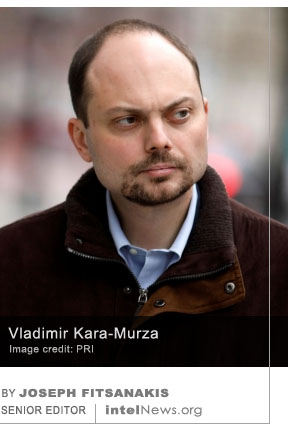 A United States-based Russian opposition activist, who claims he was poisoned twice by the Kremlin, is suing the United States government to force the release of records about his case, but is being met with resistance. The plaintiff is Vladimir Kara-Murza, 38, a senior figure in the Open Russia Foundation, a political pressure group founded by Mikhail Khodorkovsky. Khodorkovsky, an ultra-wealthy Russian businessman living in self-exile in Switzerland, is one of Vladimir Putin’s arch-enemies.
 Intelligence reports by the Federal Bureau of Investigation (FBI), the Department of Homeland Security (DHS) and other American security agencies warn that domestic extremists are preparing to wage violence in November, with one official calling the situation a “witch’s brew” that could spell unprecedented chaos throughout the country.
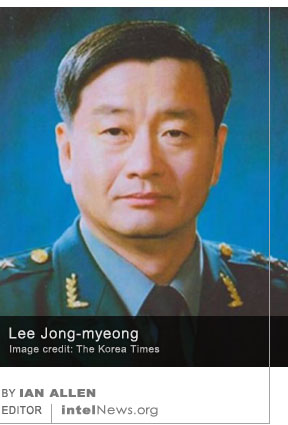 A former deputy director of South Korea’s spy agency has been given a prison sentence for diverting funds from the agency’s clandestine operations budget, in order to aid South Korea’s disgraced former President, Lee Myung-bak, who has himself been sentenced to 15 years in prison.
 Four highly trained paramilitary officers of the United States Central Intelligence Agency (CIA) died during a secret maritime operation off the coast of the Philippines in 2008, according to a new report. Yahoo News, which
 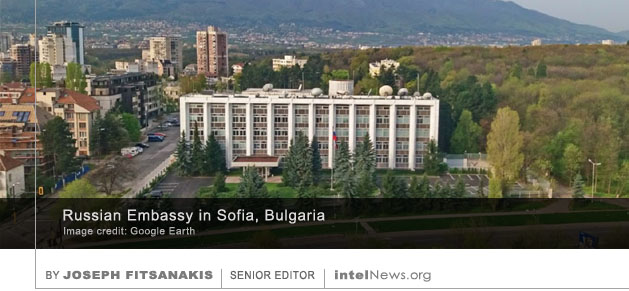 Bulgaria, a once close Soviet ally, which is now a member of the European Union and the North Atlantic Treaty Organization, has expelled two Russian diplomats whom it accuses of conducting military espionage. This raises to five the number of Russian diplomats who have been expelled from Bulgaria for espionage in the past year.
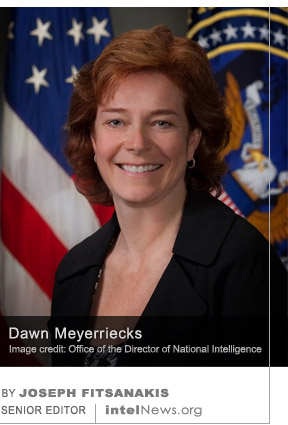 The United States Central Intelligence Agency has announced the creation of a new advanced research laboratory system that it hopes will allow it to compete with Silicon Valley for attracting top technical talent. The initiative, announced on Monday, is called CIA Labs, and it aims to attract scientists and engineers with an interest in advanced research projects that have applied potential in the area of national security.
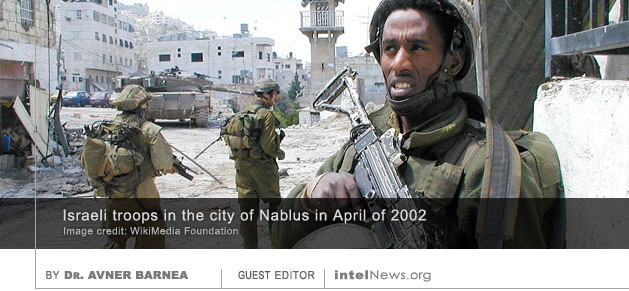 On the 20th anniversary of the outbreak of the second intifada (October 2000), the debate arises again in Israel as to whether the Palestinian move was an initiative of Chairman Arafat and the Palestinian Authority or whether it was a spontaneous evolution on the Palestinian side that largely surprised not only Israel but also the Palestinians.
 A former employee of British intelligence has strongly denied accusations, which surfaced last week in the European press, that he gave secrets to two Chinese operatives in exchange for money. Some news outlets have suggested that he is currently under investigation by at least one European government.
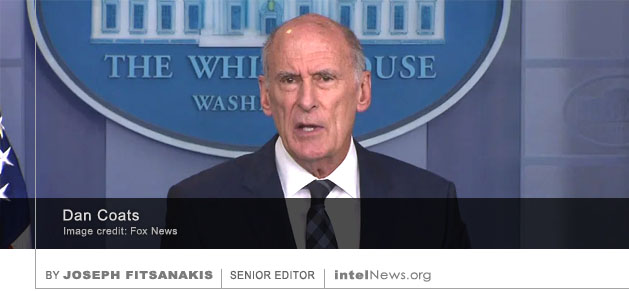 The former United States Director of National Intelligence, who served in the administration of President Donald Trump as the highest-ranking intelligence official until 2019, has warned that American democracy may not survive the upcoming presidential election. In a stark
  An Iranian plot to kill the United States’ ambassador to South Africa was reportedly uncovered by American intelligence agencies, which believe Tehran is still seeking to avenge the assassination of General Qassem Soleimani in January of this year. The head of the Islamic Revolutionary Guard Corps, Iran’s elite paramilitary force, was killed by a US drone strike during a visit to the Iraqi capital Baghdad, sparking major tension between Washington and Tehran.
 Intelligence insiders, including a former senior Central Intelligence Agency operations officer who spent decades in the Middle East, have described the establishment of official relations between Israel and some Gulf States as “the biggest change in the region in decades”.
 The President of Venezuela, Nicolás Maduro, announced on Friday the arrest of an alleged “American spy”, who was reportedly arrested near the largest oil refinery complex in the country. The alleged spy, who has not been named, was reportedly in the vicinity of the Paraguaná Refinery Complex, which is known as the third largest refinery complex in the world. It combines the Amuay, Bajo Grande and Cardón refineries, which together produce nearly a third of Venezuela’s daily oil output.
 The former head of intelligence at the United States Department of Homeland Security (DHS) has filed a whistleblower complaint, alleging that he was pressured to manipulate his analyses for political reasons. The 24-page complaint was filed on Tuesday with the Office of the DHS Inspector General. The whistleblower is identified as Brian Murphy, who served as acting chief of intelligence for the DHS. The contents of the complaint have been






 intelNews.org
Foreign spies target Walter Reed hospital for Trump’s health data, say experts
October 6, 2020 by Joseph Fitsanakis 1 Comment
Intelligence agencies from all over the world are almost certainly targeting the medical facilities and personnel involved in providing healthcare to United States President Donald Trump, according to intelligence insiders. The purpose of these efforts, which are considered “routine tasking” in intelligence circles, is to determine the status of America’s continuity of government plans and to acquire advanced warning of the plans and intentions of the White House, according to sources.
At least two reports emerged in the past few days about the strong probability that foreign intelligence operatives are currently seeking to collect sensitive biomedical information about Trump, who is battling a coronavirus infection. SpyTalk’s Jeff Stein wrote on Sunday that foreign spies are likely involved in efforts to place sources in places where discussions about the health of the American president are occurring. The targets of these efforts are not necessarily White House or other Trump administration officials. On the contrary, according to Politico’s Lara Seligman and Natasha Bertrand, these operations can target hospital staff, including doctors and administrators, as well as cleaners who have access to the US president’s bodily fluids and waste.
Some observers have criticized conflicting information given to the media about the US president’s health, as illustrated by White House physician Sean Conley’s comical efforts to evade the topic last week, after he was asked repeatedly by reporters if Mr. Trump had been on supplemental oxygen. Foreign spies are likely to have accessed detailed information about the US president’s health, and may have better information on the subject than the American public, said Politico.
Another intelligence tasking that foreign spies may be involved in is exploiting Mr. Trump’s time of physical weakness for propaganda purposes. The aim of such efforts would be “to paint America as unable to handle the pandemic”, thus creating “a crisis of confidence in the chain of command” and casting doubt on the ability of America to protect its senior leadership from the pandemic, according to intelligence insiders.
► Author: Joseph Fitsanakis | Date: 06 October 2020 | Permalink
Filed under Expert news and commentary on intelligence, espionage, spies and spying Tagged with biomedical intelligence, Donald Trump, News, United States