US military given ‘continuity of government’ standby orders for COVID-19 pandemic

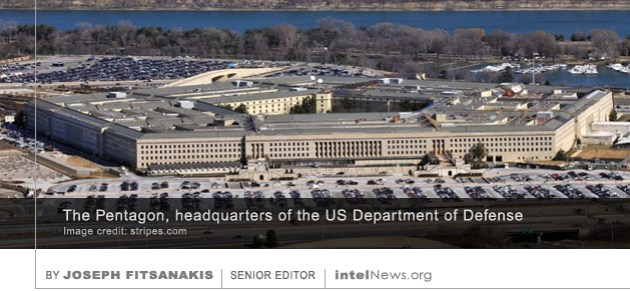
PentagonFor the first time in the modern history of the United States, the Department of Defense has been given standby orders to ensure the “continuity of government”, in response to the COVID-19 pandemic. These extraordinary measures, which include evacuating White House officials to remote quarantined locations, and devolving the nation’s leadership to “second-tier officials”, were originally meant for the aftermath of a nuclear war.

However, according to Newsweek, “Above-Top Secret” contingency plans are now in place, in case the nation’s Constitutional power successors are incapacitated by the pandemic. Standby orders have been issued for a series of plans under the US Northern Command (NORTHCOM), which was created in response to the 9/11 attacks as a homeland defense military authority.

These operations are codenamed OCTAGON, FREEJACK and ZODIAC, said Newsweek, and include CONPLAN 3400 (homeland defense if the US itself is the battlefield), CONPLAN 3500 (defending civil authorities in an emergency), and CONPLAN 3600 (defending the National Capital Region from an attack). Newsweek added that the Defense Secretary, Mark T. Esper, has authorized NORTHCOM to “prepare to deploy” in support of these “potential extraordinary missions”. These include “the possibility of some form of martial law”, where military commanders would be given executive powers across the US until a new civilian leadership would emerge.

An added complication to these plans is that the military itself is vulnerable to the coronavirus pandemic, which makes for “extraordinary circumstances”, said Newsweek. In recognition of this vulnerability, the Department of Defense has instituted unprecedented restrictions for off-base activities of military personnel. Having first banned overseas travel, the Pentagon is now keeping all uniformed personnel on or nearby military bases across the country and the world. Newsweek added that several other national security agencies are following the Pentagon’s contingency plans, and that continuity personnel at the White House are “readying [for an] evacuation”.

Author: Joseph Fitsanakis | Date: 18 March 2020 | Permalink

US Department of Health computers targeted by hackers amidst COVID-19 crisis

Health and Human ServicesA cyberattack, coupled with a disinformation campaign, targeted the computer systems of the United States Department of Health and Human Services (HHS), in what officials believe was an effort to undermine America’s response to the coronavirus pandemic.

The cyberattack reportedly took place on Sunday night, when online administrators at HHS noticed an abnormal spike in requests to the department’s servers. The number of requests grew to several million within a few hours, according to Bloomberg News, which first reported the incident. A few hours later, a campaign of disinformation was launched against the HHS, along with text messages warning that martial law would be declared across the nation and a two-week curfew would be imposed by the Armed Forces.

The disinformation campaign prompted a tweet by the US National Security Council on Sunday. The tweet warned against “fake” text messages spreading unsubstantiated rumors. There was no elaboration about the content of these text messages. On Monday, the HHS acknowledged that its computer systems had come under attack the previous evening. However, it said that the hackers behind the attack had failed to compromise the integrity of the Department’s computer systems, and that no data had been stolen.

Later on Monday, the HHS said that it was still investigating what it described as “a significant increase in activity” on its computer infrastructure. But it added that its systems remained “fully operational” and that the functionality of its networks had suffered “no degradation”. An HHS spokesman said the Department had augmented its cybersecurity protections in light of the COVID-19 emergency. Consequently, it had suffered no loss of operational capacity or data as a result of the cyberattack.

Speaking at the White House on Monday, HHS Secretary Alex Azar said that the source of the cyberattack was under investigation and refused to speculate as to the identity of the culprit or culprits. However, Bloomberg said that some US government officials suspect that the attack “may have been the work of a foreign actor”. On March 13, the US news network NBC cited experts from several cybersecurity firms who warned that spy agencies around the world were sending out coronavirus information in an attempt to “hack and spy on their targets”.

Author: Joseph Fitsanakis | Date: 17 March 2020 | Research credit: M.S. | Permalink

New York governor asks Trump to mobilize army to prevent COVID-19 meltdown

Andrew CuomoThe governor of New York has asked United States President Donald Trump to mobilize the Army in order to avoid a healthcare meltdown that will be “worse […] than what we are seeing in Italy”. In an open letter published in the Sunday edition of The New York Times, Governor Andrew Cuomo warned that hospitals in the state of New York will soon reach the point of medical no-return if the federal government does not step in.

Governor Cuomo said that intensive care units in hospitals throughout the state of New York —one of America’s most populous, with 20 million residents— were already at an 80 percent capacity as of yesterday. He added that if a few hundred more New Yorkers were to require hospitalization from acute COVID-19 illness, the state’s healthcare system would lack the capacity to treat them. As things stood yesterday, said Governor Cuomo, New York was short of “thousands of ICU beds [and] thousands of ventilators”. This scarcity pointed to “a greater failing and a worse situation than what we are seeing in Italy, where lives ‎are being lost because the country doesn’t have the health care capacity” to accommodate the wave of patients caused by the pandemic, said the governor.

To address the problem, Governor Cuomo urged President Trump to take an unprecedented step, namely to mobilize the US Army Corps of Engineers in order to retrofit public buildings throughout the state into medical facilities. These would include schools, gyms and college dorms, said Cuomo, adding that the state lacked “the physical capacity” to construct new medical facilities or retrofit existing buildings into medical units on its own.

The New York governor went on to add that the new medical facilities would have to be ready to use within a matter of weeks, if the state’s healthcare system was to avoid the very real possibility of a full-blown medical disaster. As of last night it was not clear whether the White House would respond to Governor Cuomo’s request.

Author: Joseph Fitsanakis | Date: 16 March 2020 | Permalink

Bahrain accuses Iran of ‘biological aggression’ as COVID-19 stirs Gulf tensions

Tehran IranA senior Bahraini cabinet minister on Thursday accused the Iranian government of ‘biological aggression’ for spreading COVID-19 to several other countries in the Gulf, a claim that Iran promptly rejected. The allegation refers to Iran’s customary practice of not stamping the passport of visitors from some Sunni-majority nations.

The practice aims to shield visitors from perceived discrimination upon their return to their Sunni-majority home countries. Several Sunni Gulf states, including the United Arab Emirates, Saudi Arabia, Kuwait and Bahrain, have either criminalized or openly discourage trips to Iran by their Shi’a citizens. The latter are often viewed as suspicious or disloyal by their own governments. However, many of them continue to travel regularly to Iran in order to visit some of Shi’a Islam’s most revered pilgrimage sites.

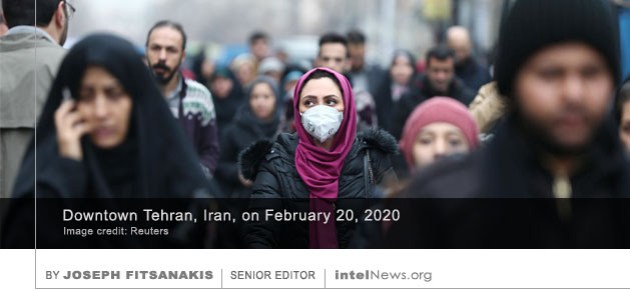
Thousands of Shi’a pilgrims from predominantly Sunni nations have been repatriated to their home countries following the outbreak of COVID-19, which is also known as coronavirus. Earlier this week, Bahrain announced that at least 77 of its citizens, who were recently repatriated from Iran on government-supplied airplanes, tested positive for the disease. However, many others returned home from Iran on their own and are hesitant to tell local authorities that they have traveled to Iran, fearing discrimination or —in some cases— imprisonment. Since the passports of these individuals are not stamped with Iranian entry visas, local authorities have no way of telling whether they have recently traveled to Iran.

On Thursday, Bahrain’s Minister of Interior, General Sheikh Rashid bin Abdulla al-Khalifa, condemned Iran on Twitter for its “behavior, [which] has allowed the disease to travel abroad and put in danger our safety and health and that of others”. General al-Khalifa added that Iran’s behavior constituted “a form of biological aggression that is criminalized under international law”. But Iran’s Ministry of Foreign Affairs responded by rejecting the claim that the practice of not stamping passports was related to an intention by Tehran to spread the coronavirus to the Gulf region.

Bahrain’s accusation came less than a week after Saudi Arabia publicly chastised its citizens who have traveled to Iran and issued a reminder that traveling to Iran is considered a criminal act.

Author: Joseph Fitsanakis | Date: 13 March 2020 | Permalink

US agencies in turf battle over classification level of COVID-19 meetings

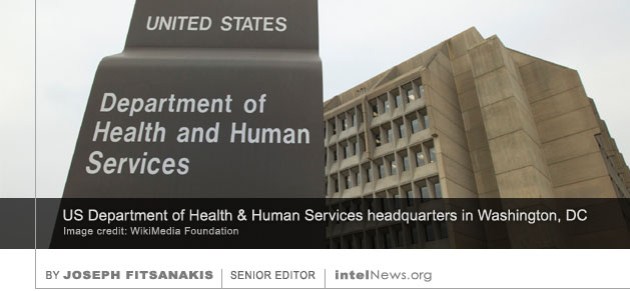
Department of Health & Human ServicesA number of United States government officials have expressed dismay about the White House’s treatment of top-level meetings about the coronavirus (COVID-19) as classified, a move described by some as “not normal”. On Wednesday the Reuters news agency cited “four Trump administration officials” in claiming that several dozen meetings to discuss COVID-19 were held in top-secret settings. This, they say, was unnecessary and posed barriers to coming up with an effective response to the contagion. Other sources, however, claim that the meetings had to be classified because they included secret information on China.

The meetings in point have been held since mid-January at a high-security conference room located at the headquarters of the Department of Health & Human Services (HHS) in Washington, DC. The HHS is largely in charge of the US government’s response to COVID-19, as it oversees several relevant agencies including the US Centers for Disease Control and Prevention. From the very beginning, the National Security Council —a White House decision-making body chaired by the president— ordered that the meetings be treated as classified. This meant that participants had to have top-secret security clearances in order to attend.

This decision allegedly excluded several government officials from these meetings, including leading US government biosurveillance and biosecurity experts who should have had a place at those meetings. “We had some very critical people who did not have security clearances who could not go”, one source said. Reuters quotes an unnamed “high level former official […] in the George W. Bush administration” who describes the decision to limit access to these discussions “about a response to a public health crisis” as “not normal”. But another government source told Reuters that the meetings were classified because they “had to do with China”. Yet another source said that the small number of participants was necessary to prevent potentially damaging leaks to the media.

Meanwhile, Time magazine alleged on Wednesday that a timely report by the Office of the Director of National Intelligence (DNI), which includes a section on pandemics, has been delayed. In previous years, the report, entitled Worldwide Threat Assessment, has warned that the world is not prepared for new strains of influenza that could prompt a pandemic. The report was scheduled to be released to Congress on February 12, but it remains unaccounted for. Members of the intelligence committees in Congress told Time that they did not expect the report to be released any time soon.

Author: Joseph Fitsanakis | Date: 12 March 2020 | Permalink

Militaries around the world scramble to contain impact of COVID-19

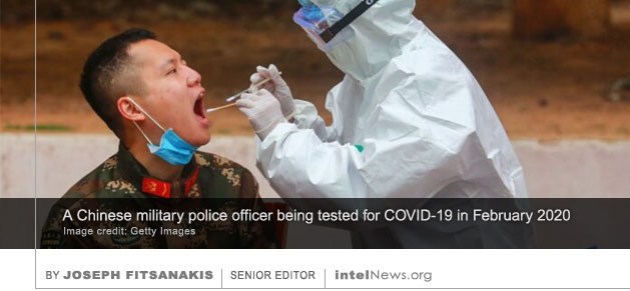
COVID-19 ChinaMilitary forces around the world are scrambling to contain the impact of COVID-19 on military readiness, as the virus continues to infect troops and commanders at an alarming rate. On Tuesday, the Polish government announced that General Jaroslaw Mika, who serves as general commander of Branches of the Armed Forces, had tested positive for the coronavirus. General Mika is believed to have contracted the virus during a military conference that took place in the German city of Wiesbaden, where North Atlantic Treaty Organization commanders gathered to plan an American-led military exercise.

Also on Tuesday, the United States Department of Defense said that the commander of the US Army in Europe, Lieutenant General Christopher Cavoli, participated at the Wiesbaden conference, along with several other US Army staff members. They are currently being tested for exposure to COVID-19. Meanwhile the Reuters news agency reported that the US Pentagon acknowledged that “the US military’s official tally of servicemembers and related personnel who have been infected by the coronavirus likely undercounts the actual total”. Sources told the news agency that the low age and good health of American troops was “a mixed blessing of sorts”, since it allows US servicemembers to survive the virus but at the same time reduces their symptoms that would normally trigger testing for COVID-19.

The government of Taiwan said on Tuesday that over 400 members of its armed forces had entered self-imposed quarantine in order to prevent a possible COVID-19 outbreak among military personnel. This brings the total number of Taiwanese servicemembers who are currently in quarantine to over 2,000, which includes two generals. The country’s Minister of Defense, Yen De-fa, insisted on Tuesday that the virus had not impacted Taiwan’s military readiness.

Chinese officials have not provided information about the effect of the coronavirus on the country’s military. The Chinese-language website of The Epoch Times said last week that, according to unnamed insiders, the Chinese People’s Liberation Army had “forcibly isolated” tens of thousands of servicemembers this month. There are no reports of specific numbers in the Chinese media or non-Chinese news outlets.

Finally, according to Daily NK, a South Korean website that specializes on news from North Korea, approximately 180 North Korean soldiers have died as a result of contracting COVID-19 in the past month. The website cited “a source inside the North Korean military”, who said that Pyongyang had forcibly quarantined at around 3,700 soldiers of all ranks to prevent the spread of COVID-19 in the country’s military.

Author: Joseph Fitsanakis | Date: 10 March 2020 | Permalink

Google removes Iranian government’s COVID-19 app amidst claims of espionage

Iran Ministry of Health and Medical EducationAn Android application developed by the Iranian government to assist in coordinating the country’s response to the COVID-19 epidemic has been removed by Google amidst accusations that it may be used to track Iranian dissidents. The application, named AC19, was released several days ago by Iran’s Ministry of Health and Medical Education. Its release was announced through a text message sent by the Iranian government to every mobile telephone subscriber in the country. The text message urged citizens to download the application through a dedicated website or third-party app stores, including the Google Play Store. Millions have since done so.

The purpose of AC19 is to help coordinate the nationwide response to COVID-19, known as coronavirus, in a country that is experiencing one of the world’s most prolific outbreaks of the disease. App users can register using their unique phone number and determine whether their flu-like symptoms resemble those of COVID-19. The app’s developers argue that it can help keep people from flooding local hospitals throughout the country, which are already overwhelmed.

But some users have raised concerns that the app also requests access to the real-time geolocation data of users, which it then stores in remote databases. As technology news website ZDNet reports, some have accused the government in Tehran of using the AC19 app in order to track the movements of citizens. An expert consulted by ZDNet to examine the app’s technical details said that it did not appear to contain unusually intrusive features or functions.

However, the company used to develop the app, called Smart Land Strategy, has previously built apps that, according to ZDNet, were used by the Iranian intelligence services and were subsequently removed from the Google Play Store. Some Iranians claim that, given the connection between AC19 and Smart Land Strategy, it is possible that the new app may be used in the future by the Iranian government to spy on citizens, despite the fact that it may be presently useful in efforts to contain the COVID-19 epidemic.

The app continues to be available through Iranian government websites and app sites other than Google’s.

Author: Ian Allen | Date: 10 March 2020 | Permalink

Coronavirus: Comparing America’s bungling fiasco with Taiwan’s stunning success

Coronavirus Task ForceThe coronavirus (COVID-19) is quickly becoming the greatest security challenge of our time. The ease of transmission and high death rate of this disease, coupled with the asymmetric challenges it poses to our planet’s social, economic and political structures, threaten the very cohesion of our global system. This is especially true of Western societies, whose highly sophisticated organizational features make them especially susceptible to all forms of large-scale disruption. Few of those of us who are alive today in the West have ever faced a threat with the all-encompassing characteristics, disruptive capacity and persistent nature of COVID-19.

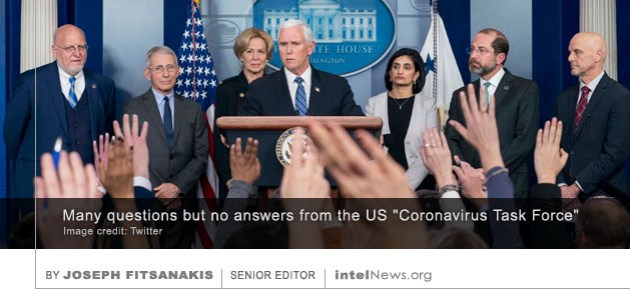
But no American would get this impression by watching the daily briefings of the so-called White House “Coronavirus Task Force”. The uncomfortable smiles and awkward acquiescence of its members, part of an unconvincing effort to assure Americans that “all is well”, coupled with their seemingly unending competition to offer lavish praises to each other, make for a truly uncomfortable viewing experience. Such astounding manifestations of mediocrity would be somewhat tolerable if they came alongside actionable information that Americans could use to protect themselves and the future of their country —preferably something beyond “washing your hands for at least 20 seconds”.
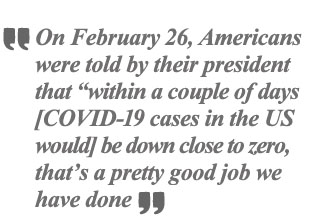
On February 26, Americans were told by their president that “within a couple of days [COVID-19 cases in the US would] be down close to zero, that’s a pretty good job we’ve done”. By that time, China was feverishly implementing the largest quarantine in human history. Ten days later, Italy began to quarantine 16 million people —a quarter of its population— in its northern regions. Meanwhile, Britain has begun re-hiring retired nurses to prepare for the coming unprecedented wave of medical emergencies, while France has banned all large meetings in its territory. But in America it’s business as usual: the National Collegiate Athletic Association (NCAA) announced on Sunday that all its tournament games nationwide will be held with fans despite growing concerns about the coronavirus. Not a single senior government official has stepped forward to address Americans’ growing anxiety about the potentially unprecedented degree of disruption that the US economy, including the nation’s supply chain, healthcare, transportation, education, entertainment, and services sectors are going to be experiencing in the coming months.

Additionally, Americans expect the so-called “Task Force” to provide non-politicized explanations of the ongoing failures of the US government’s treatment to the COVID-19 crisis, which continue to allow the virus to spread in our communities unabated. For instance, why did the US decline to use the World Health Organization’s diagnostic test for the disease, which had been made available to dozens of nations by the end of January? Or why does access to testing kits remain at alarmingly low levels, so much so that a frustrated New York Governor Andrew Cuomo recently described the US Centers for Disease Control and Prevention’s response to COVID-19 as “flat-footed”? So grave is this situation, that on March 8 The Washington Examiner —arguably America’s leading conservative publication— opined that COVID-19 “is exposing how deeply unsuited [Donald Trump] is to deal with a genuine crisis that he can’t bluff his way through”.

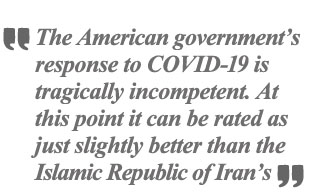
The American government’s tragically incompetent response to COVID-19 (at this point just slightly better than the Islamic Republic of Iran’s) hurts even more when one compares it with that of Taiwan —an island nation of 23 million, which the US often views as a client state. In January, when COVID-19 began making news headlines, experts predicted that Taiwan would end up with the world’s second-highest number of COVID-19 cases. This was primarily due to the country’s geographical proximity to mainland China —just 81 miles from the Chinese shore— as well as the extensive transportation network that links the two nations. Over 1.2 million Taiwanese either live permanently or work in China, while nearly 3 million Chinese citizens visit Taiwan every year. Even more ominously, the COVID-19 outbreak occurred right before the Lunar New Year, which is the busiest travel season for both Chinese and Taiwanese holidaymakers.
But Taiwan has managed to spectacularly defy all early predictions about a potential COVID-19 epidemic. As a group of researchers from the University of California Los Angeles, Stanford University, RAND Corporation and the Koo Foundation in Taiwan, explain in The Journal of the American Medical Association, the reason dates back to 2003. That year’s severe acute respiratory syndrome (SARS) outbreak prompted the Taiwanese government to establish the National Health Command Center (NHCC). Since then, the NHCC has operated as a central command system that coordinates the activities of Taiwan’s Central Epidemic Command Center, the Biological Pathogen Disaster Command Center, the Counter-Bioterrorism Command Center, and the Central Medical Emergency Operations Center. Intelligence collected and analyzed by these centers is quickly distributed to central, regional and local authorities in all parts of the country.

The authors explain that, on December 31, the day when the World Health Organization notified national authorities of the first accounts of a severe pneumonia with unknown causes in the Chinese city of Wuhan, NHCC personnel began to board planes arriving from Wuhan. They began testing all passengers and crew on those planes for flu-like symptoms before allowing them to deplane. By January 5, NHCC personnel were reaching out to anyone who had traveled to Wuhan in the past fortnight and testing them for flu-like symptoms. By that time, the NHCC had already set up a nationwide toll-free hotline, which has since become decentralized to serve individual regions.

On January 27, the NHCC worked in collaboration with Taiwan’s National Health Insurance Administration (NHIA) to integrate the database containing the recent travel history of passengers with their NHIA identification card data. They also integrated the same database with national tourism and immigration data. Within 24 hours, the NHCC was reaching out to all citizens of Taiwan, as well as tourists and immigrants, who had traveled to the Wuhan region during the previous month. Using this big-data analytics approach, Taiwanese authorities were able to generate real-time alerts that were sent to individual doctors for use during clinical visits, so that clinical symptoms could be matched with patients’ travel histories.
Those who had traveled to regions of China that were considered high-risk, were immediately quarantined at home for 14 days. Their movements were tracked through their mobile phones to ensure compliance with quarantine instructions. Meanwhile, all those who exhibited flu-like symptoms but had tested negative for influenza in weeks prior, were re-tested for COVID-19.

Considering the above, it is hardly surprising that, by March 9, Taiwan —located just 81 miles off the coast of China— had just 45 confirmed COVID-19 cases, with a single death. Importantly, this is not because the Taiwanese are not testing their citizens —unlike the US or, even more outrageously, Turkey, which continues to report zero cases of COVID-19. Taiwan has tested more people than all of the nations of the Americas combined. The low number of COVID-19 cases in Taiwan is due to one thing, and one thing alone: a preemptive approach to the security of the nation by an enlightened leadership and a forward-thinking government system. Which is precisely what the US lacks at this grave time for the nation’s future.

* Dr. Joseph Fitsanakis is associate professor in the Intelligence and National Security Studies program at Coastal Carolina University in the United States.

Author: Joseph Fitsanakis | Date: 09 March 2020 | Permalink
US Pentagon insists it can continue to function despite COVID-19 outbreak

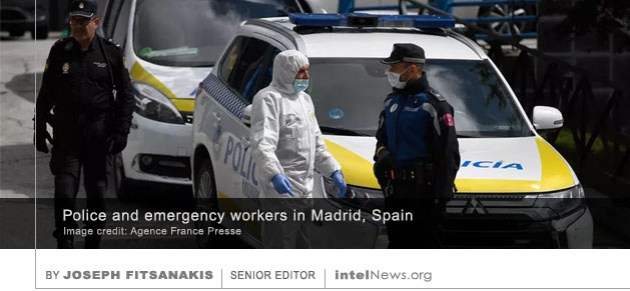
PentagonThe United States Department of Defense has insisted that it can continue to function uninterrupted, despite claims by some media outlets that American military readiness may soon begin to degrade as a result of the coronavirus (COVID-19) outbreak.

During a press conference on Thursday, US Secretary of Defense Mark Esper said he was “fully confident” that the Pentagon could perform its functions uninterrupted by the spread of the coronavirus. He added that he was expecting to receive a proposal early next week about how the Pentagon —the world’s largest office building, staffed by 20,000 employees— could prevent or mitigate the spread of the virus. Meanwhile, he said, the Pentagon’s National Military Command Center —designed for a nuclear attack— would be able to sustain the Department of Defense’s employees “for weeks at a time, if they have to be locked down inside the building if we have some type of outbreak”.

He did not comment on reports from last week, according to which senior American military commanders expressed concerns about the state of the country’s military readiness by the end of March. Late on Thursday, the US European Command announced the early termination of a joint military exercise that was underway in Israel, as a precautionary measure against COVID-19. A few days earlier, Pentagon officials canceled a joint military exercise in South Korea. Meanwhile, leading US defense contractor Lockheed Martin announced on Thursday that it had halted production at its F-35 plants in Italy and Japan. The company said that production at its factories in Texas continued uninterrupted.

Defense Secretary Esper said yesterday that the US military’s worldwide efforts on COVID-19 were being coordinated by US Norther Command, which was preparing for “short- and long-term scenarios, domestic and international situations”. He did not elaborate on that statement. Also on Thursday, the Pentagon announced that it had started administering coronavirus screenings to all new and potential recruits for all branches of the Armed Forces.

Author: Joseph Fitsanakis | Date: 05 March 2020 | Permalink

Chinese cybersecurity firm accuses CIA of 11-year cyberespionage campaign

CIA headquartersA leading Chinese cybersecurity firm has accused the United States Central Intelligence Agency of using sophisticated malicious software to hack into computers belonging to the Chinese government and private sector for over a decade.

The accusation against the CIA comes from Qihoo 360, a prominent cybersecurity firm headquartered in Beijing. On Monday, company published a report of its investigation on its website, written in both Chinese and English. The report identifies the hackers as “the CIA Hacking Group (APT-C-39)”, and says that the group has carried out activities against “China’s critical industries” for at least 11 years.

The report claims that APT-C-39 targets included China’s energy and civilian aviation sectors, Internet service providers, scientific research universities and organizations, and various government agencies —which it does not name. The majority of the hacker group’s targets were located in Beijing, and also in China’s Zhejiang and Guangdong provinces.

According to Qihoo 360, APT-C-39 must be a “state-level hacking organization”, judging by the hacking tools that it used. These tools, such malware named by forensics experts as Grasshopper and Fluxwire, are believed to have been designed by the CIA. They were leaked in 2017 by the international whistleblower website WikiLeaks. American authorities have charged a former CIA programmer, Joshua Schulte, with leaking the malware. Schulte denies the charges.

The Qihoo 360 report also claims that the hours during which APT-C-39 hackers appear to be active correspond to the working hours of the East Coast of the United States. It also suggests that one goal behind the hacking operations against airline industry targets was to access the travel itineraries of senior figures in China’s political and industrial circles.

Author: Ian Allen | Date: 04 March 2020 | Permalink

Swiss government files criminal complaint over Crypto AG scandal involving CIA

Crypto AGSwitzerland’s Federal Department of Finance has filed a criminal complaint “against persons unknown” over media reports that a leading Swiss-based cryptological equipment manufacturer was secretly owned by the United States Central Intelligence Agency (CIA).

The complaint relates to Crypto AG, the world’s leading manufacturer of cryptologic equipment during the Cold War, whose clients included over 120 governments around the world. Last month, The Washington Post and the German public broadcaster ZDF appeared to confirm reports that had been circulating since the early 1980s, that Crypto AG was a front for American intelligence. According to the revelations, the CIA and West Germany’s Federal Intelligence Service (BND) secretly purchased the Swiss company in the 1950s and paid off most of its senior executives in order to buy their silence. The secret deal, dubbed Operation RUBICON, allegedly allowed the US and West Germany to spy on the classified government communications of several of their adversaries —and even allies, including Austria, Italy, Spain, Greece, Jordan, Saudi Arabia and the United Arab Emirates.

The revelation about the secret deal has shocked Swiss public opinion and embarrassed the government of a nation that bases its national identity and international reputation on the concept of neutrality. For this reason, the Swiss Federal Department of Finance has filed a criminal complaint about the case. The complaint was announced by the Office of the Swiss Attorney General on Monday, following reports in the Swiss media. It said that it received a criminal complaint by the State Secretariat for Economic Affairs (SECO), which is the part of the Finance Department that authorizes exports of sensitive software or hardware. SECO officials argue that they were deceived into authorizing the export of Crypto AG’s products without realizing they had been compromised by the company’s secret agreement with the CIA and the BND. Accordingly, the secret agreement violates Swiss federal law governing the regulation of exports, SECO officials claim.

The Office of the Attorney General said it would review the criminal complaint and decide whether it warrants criminal proceedings. Meanwhile, a probe into the alleged Crypto AG-CIA-BND conspiracy, which was launched by the Swiss government last month, is already underway, and is expected to conclude in June. The Swiss Federal Assembly (the country’s parliament) is also expected to launch its own investigation into the alleged affair.

Author: Joseph Fitsanakis | Date: 03 March 2020 | Permalink

DR Congo military intelligence chief found dead hours before court appearance

Delphin KahimbiThe head of military intelligence of the Democratic Republic of the Congo was found dead on Friday, just hours before he was due to testify before the country’s National Security Council. General Delphin Kahimbi, Deputy Chief of Staff of the DRC Armed Forces, and director of its military intelligence wing, was facing accusations of involvement in an alleged plot to depose the country’s new President, Félix Tshisekedi.

Tshisekedi took over from Joseph Kabila in January of 2019, in what was hailed at the time as the first peaceful transition of power in the DRC since the 1960s. Kabila, who headed the country from 2001 until 2019, has remained a powerful figure in Congolese politics, and participates in a governing coalition with Tshisekedi. But many of Kabila’s supporters want to see Tshisekedi removed from power, and accuse him of assuming the presidency after a fraudulent election. General Kahimbi was among Kabila’s supporters who voiced disagreements against Tshisekedi’s presidency.

Kahimbi rose through the ranks of the military in the 1990s and became a popular military figure after leading a bloody counterinsurgency campaign against secessionist rebels in the eastern DRC. But many accused him of carrying out human rights violations and subverting democratic politics in Africa’s second-largest country. Earlier this year, the European Union placed General Kahimbi in its sanctions list for alleged violations of human rights. Around the same time the United States began pressuring the Tshisekedi government to bring Kahimbi to justice for his role in alleged human rights abuses under the Kabila regime.

On Wednesday, General Kahimbi was briefly arrested by police and was subsequently released on bail. He was summarily suspended from duty and was due to appear before the DRC’s National Security Council on Friday morning. But local reports said he was found dead at his home in the Congolese capital Kinshasa, just hours before he was due to appear before the Council. His wife, Brenda Kahimbi, told the Reuters news agency that he had suffered a heart attack and was pronounced dead in hospital. There are rumors in Kinshasa that he committed suicide, but this is disputed by his family and supporters.

The DRC Armed Forces Council confirmed General Kahimbi’s death, but refused to comment on the cause of his death, or on the precise accusations that he was facing. Late on Friday, the Council released a statement praising General Kahimbi’s contribution to the national security of the DRC. It also announced the launch of an investigation into the general’s death.

Author: Joseph Fitsanakis | Date: 02 March 2020 | Permalink

US intelligence agencies using ‘wide range’ of spy tools to monitor coronavirus

CDC AtlantaUnited States intelligence agencies are using “a wide range” of tools, ranging from open-source collection to communications interception and human intelligence, to collect desperately needed data about the spread of the coronavirus, according to sources. As of late last week, some of the most dependable data on the spread of the virus, known as COVID-19, came from military channels of information, according to Yahoo News’ National Security and Investigations Reporter Jenna McLaughlin.

Writing last Friday, McLaughlin cited “two sources familiar with the matter”, who said that the Office of the Director of National Intelligence and the Central Intelligence Agency’s Global Issues Mission Center were collecting and analyzing real-time data on the coronavirus. The spread of the disease was also being monitored by the National Center for Medical Intelligence, which assesses the impact of disease outbreaks on American and foreign military personnel, said McLaughlin. She added that the intelligence generated by these agencies was being channeled to the Centers for Disease Control and Prevention and the Department of Health and Human Services, which lead the White House’s Task Force on COVID-19.

A major concern of the US Intelligence Community is that the Chinese, Iranian and other governments around the world may not be sharing comprehensive data on the spread of the virus and its impact. “No data means spying”, one unnamed source told McLaughlin. According to Reuters’ Mark Hosenball, US intelligence agencies have been using “a wide range of intelligence tools”, including human intelligence and electronic communications interception to track the spread of COVID-19. A major question that US intelligence agencies are trying to answer is whether governments like China’s or Iran’s have effective “continuity operations” plans in place, which relate to preserving the main functions of government during a major national disaster.

According to Hosenball, there is pessimism among US intelligence experts about the ability of developing countries around the world to respond to a massive COVID-19 outbreak. One example is India, whose dense population and rudimentary public-health infrastructure raises serious concerns about the government’s ability to protect the country’s population from a major pandemic. The report adds that there “deep concern” in US government circles about the possibility that Iran may be covering up the details about the spread of COVID-19.

Author: Joseph Fitsanakis | Date: 28 February 2020 | Permalink

US-Taliban peace deal will empower ISIS in Afghanistan, say insiders

ISIS Islamic State AfghanistanAn imminent peace agreement between the United States government and the Taliban will inadvertently empower the Islamic State in Afghanistan, according to a number of insiders, who warn that the soon-to-be-announced deal may have grave unintended consequences for the war-ravaged country.

After nearly two decades or war, the United States is close to concluding a peace agreement with the Taliban, the Pashtun-based Sunni group that has waged an Islamist insurgency against the American-supported government of Afghanistan since 2001. The two sides have said that they will be signing a peace settlement on February 29, providing that an ongoing agreement for a week-long reduction in armed violence holds. If the current reduction in violence continues unabated, the United States has agreed to remove most of its troops from the country, while the Taliban have agreed to initiate peace negotiations with the Afghan government.

But a team of journalists with the American television program Frontline, who are working on the ground in Afghanistan, report that the impending peace deal may bear unintended consequences. They report that numerous sources in Afghanistan are warning that the peace deal will result in an increase in membership for the Islamic State forces in the country. This will happen, they say, because Taliban fighters who object to a peace treaty with Washington will abandon the Taliban and join the Islamic State. Some Frontline sources claim that the majority of the Taliban’s foot soldiers are preparing to join the Islamic State if a deal is struck between Washington and the Taliban.

The Frontline team quotes one Islamic State commander in Afghanistan, who claims that the peace deal will “make the caliphate rise”, as “Taliban fighters have promised to join us”. The United States is trying to pre-empt this expected trend, according to reports. The Pentagon expects that, as soon as the peace treaty with the Taliban is signed, it will need to redirect its remaining troops in the country to focus their attention to the forces of the Islamic State.

Author: Joseph Fitsanakis | Date: 27 February 2020 | Permalink

Russian spy who tried to kill Bulgarian arms dealer is now a diplomat, report claims

Emilian GebrevA Russian intelligence officer, who was allegedly involved in an attempt to kill a Bulgarian arms dealer in Sofia in 2015, is now a diplomat, according to report published on Tuesday by the investigative website Bellingcat. The website also claimed that there is a possible connection between the intelligence officer and the attempted assassination of Russian intelligence defector Sergei Skripal in England in 2018.

In January, prosecutors in Bulgaria charged three Russian men with attempted murder. The men were identified as Sergei Fedotov, Sergei Pavlov and Georgy Gorshkov, all of them residents of Moscow, according to Bulgarian prosecutors. They were charged with attempting to kill Emilian Gebrev (pictured), a wealthy Bulgarian defense industry entrepreneur and trader. Gebrev was hospitalized for several days for signs of poisoning, along with his son and one of his company’s executives. All of them eventually made a full recovery. Gebrev’s lawyers claim that he suffered from “intoxication with an unidentified organophosphorus substance”.

The case had been shelved for several years, but the Bulgarian state revived it following the attempted assassination of Skripal, which British officials blamed on the Russian state. British authorities charged two men, Anatoly Chepiga and Alexander Miskin —both of them allegedly Russian military intelligence officers— with attempting to kill Skripal. In February of 2019, Bulgarian officials claimed that there might have been a link between the attacks on Skripal and Gebrev. Last December, Bulgaria’s chief prosecutor announced that his office was investigating the alleged link between the two cases.

Now Bellingcat has said that it has discovered the real name of one of the three Russian men who were allegedly involved in the attempted killing of Gebrev. According to Bellingcat, the man, identified by Bulgarian authorities as Georgy Gorshkov, is in fact Yegor Gordienko, who is currently posted under diplomatic in Switzerland. According to the investigative website, Gordienko, 41, is currently serving as third secretary at the Russian Federation’s mission to the World Trade Organization in Geneva. State prosecutors in Bulgaria and the United Kingdom are investigating reports that Gordienko/Gorshkov was present in those countries when the attacks against Gebrev and Skripal took place, said Bellingcat.

Author: Joseph Fitsanakis | Date: 26 February 2020 | Permalink