ISIS is tenacious, well-funded and quickly reasserting itself, new UN report warns
February 3, 2020 1 Comment
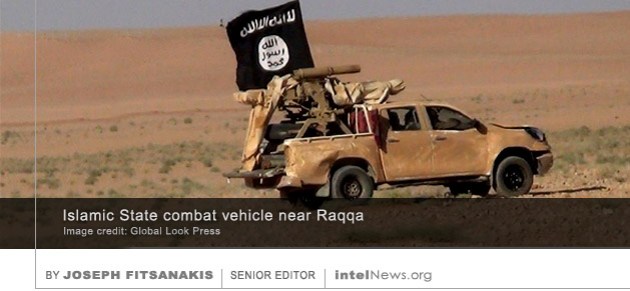 The Islamic State remains committed to its goals and continues to utilize ample funding sources, according to a new report by the United Nations. The report warns that the militant Sunni group, which was previously known as the Islamic State of Iraq and Syria (ISIS), is quickly reasserting itself in the Middle East.
The report (.pdf) was authored by a committee of the UN’s Security Council that monitors the impact of UN-imposed international sanctions designed to weaken the Islamic State, al-Qaeda, and groups aligned with them. It was completed on January 20 and submitted to the UN Security Council last week. Its authors state that the information used to compile it came from intelligence shared with the UN by its member states.
The report recognizes that the Islamic State has suffered significant defeats in the field of battle, which have shattered its once formidable military and logistical power. Despite these setbacks, however, the militant group remains “tenacious and well-funded”, with much of its financial income stemming from sound investing practices in business opportunities throughout the Middle East, says the report. Meanwhile, its armed units in Syria continue to sell protection and carry out extortion, now even during daylight hours, it adds. The group’s steady funding even allows it to continue to provide monthly pensions to close family members of its dead fighters.
Additionally, says the report, the Islamic State has learned to take advantage of the deficiencies of Syrian and Iraqi security forces, and is now carrying out progressively brazen armed attacks against a variety of military and civilian targets. Although it is operationally weak, it continues to aspire to launch attacks in Europe in the future. Additionally, its leaders continue to seek ways of freeing thousands of the group’s supporters from detention camps in Syria and Iraq.
The report concludes that the death of the group’s leader, Abu Bark al-Baghdadi, and his replacement by Amir al-Salbi (also known as Abdullah Qardash) is not expected to signal drastic changes in the Islamic State’s strategic direction. However, Qardash is not an Arab and may not stay at the group’s helm for long, as an Arab Emir would be more likely to be met with acceptance by the group’s wilayats, or provinces, the report adds.
► Author: Joseph Fitsanakis | Date: 03 February 2020 | Permalink
 The Czech intelligence services foiled a secret plan by North Korea to smuggle weapons parts and surveillance drones, leading to the expulsion of a North Korean diplomat from the country, according to a report. The report,
  One of the United Nations’ most sensitive computer systems was targeted in a highly sophisticated cyber-espionage operation that appears to have been sponsored by a state, according to a leaked study. The study was leaked to the media earlier this week, and was reported by the Associated Press on Wednesday.
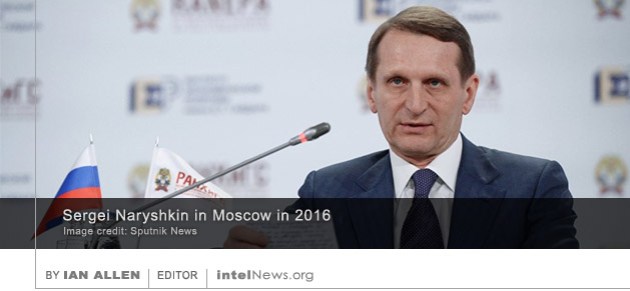 In an extremely rare move, the head of Russia’s spy agency has disclosed the identities of several undercover officers during an event marking the centenary of the KGB and its modern-day successor, the Russian Foreign Intelligence Service, or SVR.
 Russian authorities detained a Japanese journalist last month, and eventually expelled him after accusing him of espionage, according to sources. Even though it occurred last month, the incident was reported only on Monday by Russia’s RIA Novosty news agency.
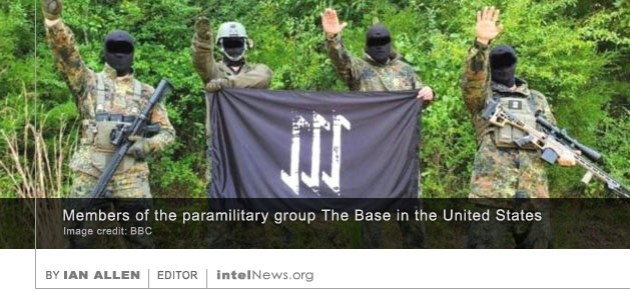 The mysterious leader of an American far-right paramilitary group, which authorities say is seeking to overthrow the United States government, runs the organization from Russia, according to a probe conducted by the BBC. The group, which calls itself The Base, is thought to have been formed in the summer of 2018. Since then, it is believed to have recruited dozens of members using encrypted messaging applications.
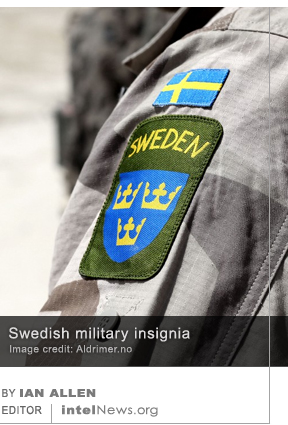 A man who rose through the ranks of the Swedish Armed Forces by using forged credentials, and worked as an intelligence officer in NATO while liaising with the Russian security services, did not betray national secrets, according to Swedish officials.
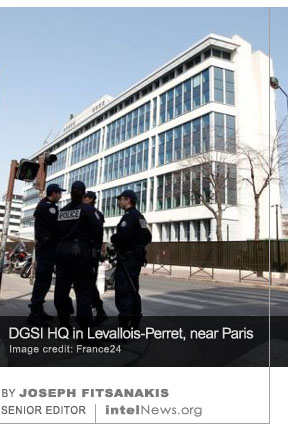 An officer in France’s elite counterterrorism agency is to be tried along with four accomplices for selling forged identity documents and private data on the darknet. The case first emerged in 2018, after officers with France’s Central Office for the Prevention of Illegal Immigration (OCRIEST) detected a seller of high quality forged copies of official documents on the darknet.
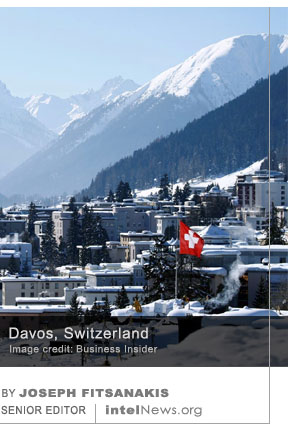 A Swiss newspaper has revealed a previously unreported detention of two Russian diplomats in the luxury Swiss Alpine resort of Davos, which is currently hosting the annual meeting of the World Economic Forum (WEF). The development prompted British authorities to warn some British citizens participating in the WEF meeting that they may be in physical danger.
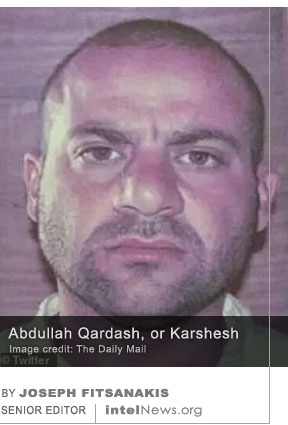 Western intelligence agencies have reportedly confirmed that a non-Arab is now leading the Islamic State for the first time in the organization’s history. Rumors of a new leader of the group began to circulate just hours after American forces
 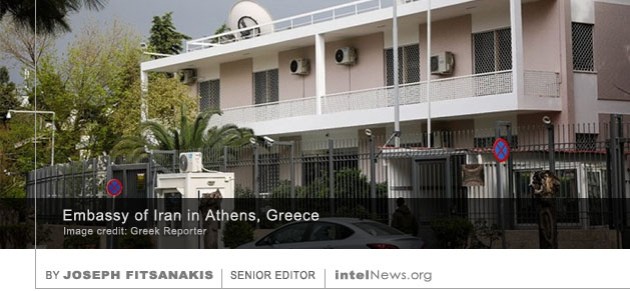 Iran has issued a warning against Greece, saying that it will retaliate if the United States attacks the Islamic Republic using its military bases on Greek soil. It is the first time that Iran has threatened to launch attacks against a member of the European Union in connection with the recent rise in tensions between Tehran and Washington.
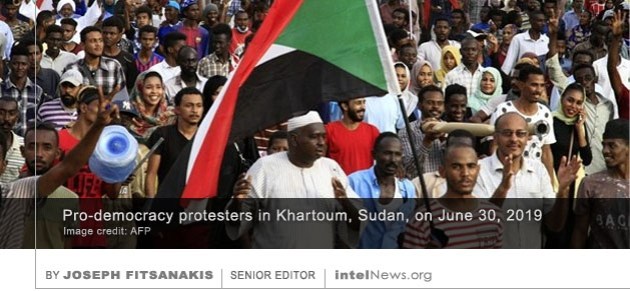 There was chaos in the Sudanese capital Khartoum yesterday, as hundreds of members of Sudan’s intelligence agency staged an armed uprising against the country’s new government. At least five people —including two soldiers— are believed to have died in the uprising, while several dozen intelligence officers were reportedly arrested.
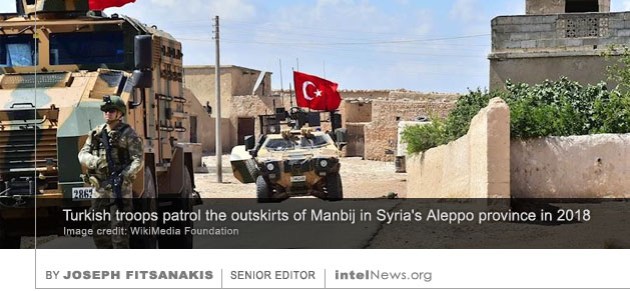 In a move that surprised observers, the intelligence chiefs of Turkey and Syria —two bitter rivals in the ongoing Syrian civil war— met in Russia on Monday. The meeting was held in Moscow and was acknowledged by officials from both sides, making it the first explicit contact between Turkish and Syrian intelligence in over a decade.
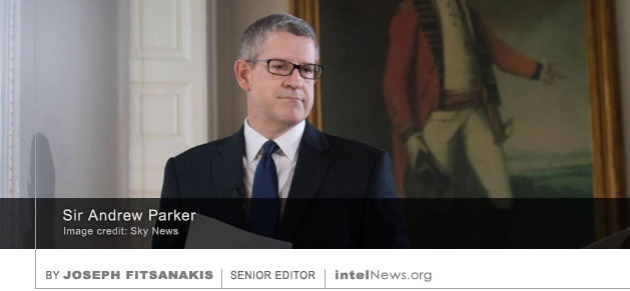 The director of Britain’s domestic intelligence agency has dismissed warnings by the United States that intelligence sharing between the two allies will be impeded if London decides to use Chinese-made telecommunications hardware. The British government has come under relentless pressure by Washington to bar Huawei Technologies, one of the world’s leading telecommunications hardware manufacturers, from competing for contracts to build the United Kingdom’s 5th generation cellular communications infrastructure.






 intelNews.org
Denmark arrests three Iranian separatists for spying for Saudi Arabia
February 5, 2020 by Joseph Fitsanakis Leave a comment
According to the PET, the three Iranians are members of a group calling itself the Arab Struggle Movement for the Liberation of Ahvaz (ASMLA). Known also as Al-Ahwaziya, the group was established in 1980. It calls for a separate state for ethnic Arabs who live the oil-rich province of Khuzestan, in Iran’s southwest.
PET director Finn Borch Andersen told reporters on Monday that the three Iranians were recruited in 2012 by the General Intelligence Presidency (GIP), Saudi Arabia’s primary intelligence agency. They allegedly spied on pro-Iranian groups and individuals in Denmark and other countries northern Europe on behalf of the GID. They reported regularly to their handler, who was an undercover intelligence officer at the Saudi embassy in Copenhagen, according to the PET.
In October 2018, one of the three Iranian men was targeted for assassination by Iranian intelligence, but Danish authorities managed to prevent it with an elaborate security operation. A Norwegian man of Iranian background was arrested during the operation and remains in detention in Denmark. Throughout that time, the PET continued to monitor the three Iranian separatists, and proceeded to arrest them this week.
Late on Monday, the Danish Ministry of Foreign Affairs summoned the Saudi ambassador to Copenhagen in order to file an official complaint about Saudi espionage activities on Danish soil. According to the Danish media, the ambassador of Denmark to Saudi Arabia contacted the oil kingdom’s government to protest about the incident.
► Author: Joseph Fitsanakis | Date: 05 February 2020 | Permalink
Filed under Expert news and commentary on intelligence, espionage, spies and spying Tagged with ASMLA, Denmark, GIP (Saudi Arabia), immigration intelligence, Iran, Khuzestan (Iran), News, PET (Denmark), Saudi Arabia