Israel has secretly worked with Emirates against Iran for decades, report alleges
June 12, 2018 Leave a comment
 A lengthy exposé by a leading American newsmagazine has claimed that Israel and the United Arab Emirates, two countries that officially have no relations, have been secretly collaborating for more than two decades. Their secret cooperation has been extremely tight and has included clandestine weapons sales and intelligence-sharing, according to the exposé, which was published on the website of The New Yorker on Monday and will feature in the magazine’s print edition on June 18. The lengthy piece, which deals with the changing geopolitics of the Middle East, is written by Adam Entous, national security correspondent for The Washington Post, who has previously reported for more than two decades for Reuters and The Wall Street Journal.
Officially, Israel and the UAE have never had bilateral relations. The Emirates, an Arab federal state ruled through an absolute monarchical system, does not recognize Israel as a country. Consequently, the two Middle Eastern states have no official diplomatic, economic or military relations. But in his lengthy article published on Monday, Entous claims that Israeli and Emirati officials have been meeting in secret for at least 24 years. He alleges that the first clandestine meeting between the two sides happened in 1994 in Washington, after Abu Dhabi sought to purchase a number of American-made F-16 fighter jets. The US warned the UAE that Israel would veto the deal, fearing that these fighter jets in the hands of Arabs may eventually be used against it. But Israel did not pose a veto. Motivated by the Oslo I Accord, which it had signed the previous year, the Israeli government of Prime Minister Yitzhak Rabin secretly reached out to the Emiratis and offered “to discuss the matter directly” with them.
The first series of meetings between the two sides took place “off the record […] in a nondescript office in Washington”, says Entous. Israeli and Emirati officials were diametrically at odds over the Palestinian issue, but were in almost complete agreement on the topic of Iran. Abu Dhabi saw Iran as a major threat to the stability of the Middle East, and so did Israel. Following the secret meetings, Israel lifted its objections to Washington’s sale of F-16s to the Emiratis. That, says Entous, helped “build a sense of trust” between the two Middle Eastern countries. By the end of the 1990s, there were allegedly regular secret meetings between Israeli and Emirati officials, which included the sharing of military, security and intelligence data.
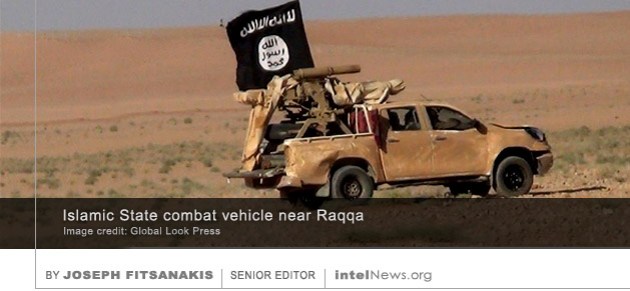 In a recent series of interviews to promote his new book, Anatomy of Terror, former FBI special agent and current counterterrorism expert Ali Soufan insists that the Islamic State remains potent and dangerous.
  way out. The group’s meteoric rise marked a watershed moment in the modern history of militant Sunni Islam. Even if it is militarily annihilated —a prospect that is far from certain— its physical absence will in no way erase its impact and influence among its millions of supporters and sympathizers. In fact, experts warn that the group is —like al-Qaeda before it— proving to be resilient and able to withstand intense military pressure from its enemies. Currently, all signs show that the Islamic State is actively reorganizing under the command of its leader, Abu Bakr al-Baghdadi. The prolonged absence of the Iraqi-born al-Baghdadi has prompted wild speculation about this supposed demise or severe incapacitation. There are even some who
  The majority of government-sponsored hacking now targets cell phones, not personal computers, according to researchers who say that political dissidents are especially targeted by totalitarian regimes around the world. Until 2015, most government-sponsored hacking operations were directed against the personal computers of targeted individuals. However, experts
 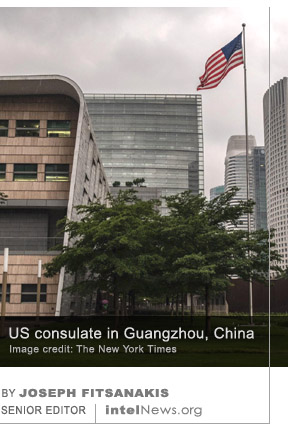 The United States has evacuated at least two more diplomatic personnel from its consulate in the Chinese city of Guangzhou, after they experienced “unusual acute auditory or sensory phenomena” and “unusual sounds or piercing noises”. The latest evacuations come two weeks after the US Department of State
  The online social media company Facebook shares data about its users with a Chinese telecommunications company that has been flagged in United States government reports as a threat to security. The New York Times
 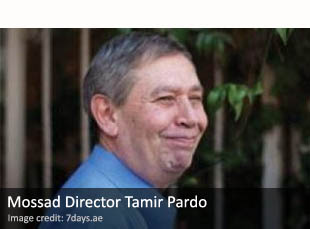 Israeli officials have denied reports that the head of the country’s internal security service was asked by the prime minister to spy on the director of the Mossad intelligence agency and the head of the military. The denials were prompted by allegations that will be made in full on Thursday, when the latest installment of the investigative news program Uvda (Fact) will be aired on Israel’s Channel 12 television channel. According to the program, the Israeli Prime Minister Benjamin Netanyahu requested that the personal phones of senior Israeli security officials, including those of the heads of the Mossad and the military, be wiretapped for security reasons.
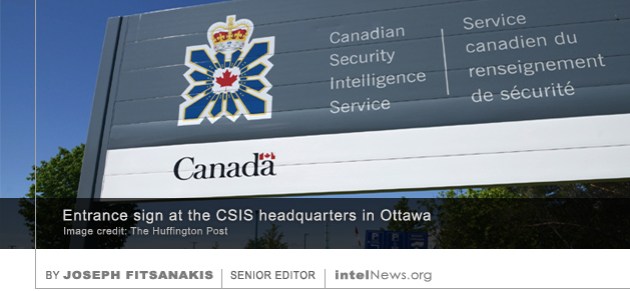 China’s influence in New Zealand is so extensive that it threatens the traditionally close intelligence contacts between New Zealand and its Western allies, according to a report written by the Canadian spy agency. Since World War II, New Zealand has been a member of what is sometimes referred to as the UK-USA Security Agreement. Known also as the UKUSA Agreement or the Five Eyes alliance, the pact, which was strengthened in 1955, provides a multilateral framework for intelligence cooperation between the United Kingdom, the United States, Canada, Australia, and New Zealand. But a new report produced by Canadian intelligence warns that Chinese political and economic influence in New Zealand is making it difficult for the Pacific Ocean island country to continue to operate within the framework of the agreement.
 Pakistan has officially barred a former director of its powerful intelligence agency from leaving the country, after he co-authored a controversial book with his Indian counterpart. Asad Durrani is a retired Pakistani Army general who served as director-general of Pakistan’s Directorate for Military Intelligence between 1988 and 1989. From 1990 to 1992, he served as director of the Inter-Services Intelligence Directorate, arguably Pakistan’s most powerful government institution. Durrani, 77, has been severely criticized in some Pakistani circles for co-authoring a book entitled The Spy Chronicles: RAW, ISI and the Illusion of Peace, with his Indian counterpart, A.S. Daulat. Daulat, 78, headed India’s Research and Analysis Wing from 1999 to 2000.
 France has confirmed the arrest of two French intelligence officers who are accused of spying for the Chinese government. It appears that the two officers were captured and charged in December. However, their arrests were not publicized at the time, because French counterintelligence officials wanted to avoid alerting more members of a possible spy ring, which some say may include up to five French citizens. It was only last Friday, a day after French media published leaked reports of the arrests, that the French government spoke publicly about the case.
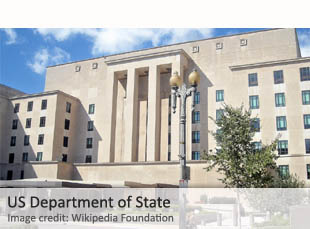 The United States Department of State has warned its personnel stationed in China of the danger of experiencing “unusual acute auditory or sensory phenomena accompanied by unusual sounds or piercing noises”. The warning, issued on May 23, has prompted comparisons to similar phenomena that were reported by US diplomatic personnel in Cuba in 2016. Last September, Washington recalled the majority of its personnel from its embassy in Havana and issued a
 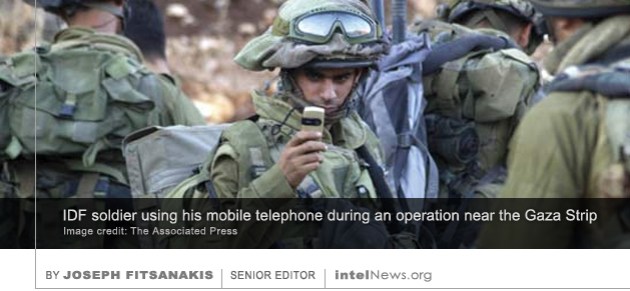 The Pakistani military is suspected of having orchestrated a lucrative intelligence collection campaign using mobile phones, which targeted diplomats from India, Israel and Australia, as well as from North Atlantic Treaty Organization (NATO) member countries such as the United States and Britain. Others targeted in the operation include officials from Iraq, Iran and the United Arab Emirates. News of the alleged spy operation was published earlier this month by Lookout Mobile Security, a security software company based in the United States.
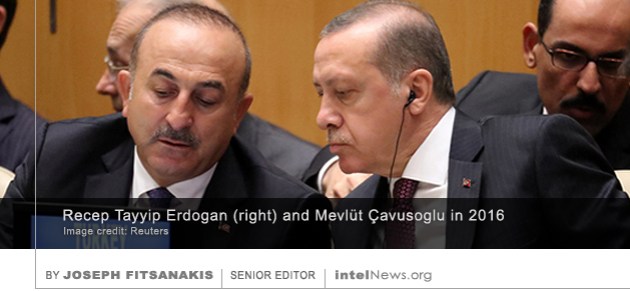 A number of European intelligence agencies have reportedly warned the Turkish government of a possible assassination attempt against the country’s president, Recep Tayyip Erdoğan, during an official state visit to Bosnia and Herzegovina. On Sunday the Turkish leader embarked on a week-long visit to the Balkans, beginning with Bosnia, which along with Albania is seen as Turkey’s strongest political ally in Europe. During his visit to Bosnia, Mr. Erdoğan is scheduled to meet with Bakir Izetbegovic, one of the country’s three presidents. He is also scheduled to address a rally of expatriate Turks in the Bosnian capital Sarajevo, held in support of his ruling Justice and Development Party.








US imposes sanctions on companies for helping Russian spy agencies
June 13, 2018 by Ian Allen 1 Comment
But the Russian firm that features most prominently in Monday’s announcement is Divetechnoservices, an underwater equipment manufacturer. The US alleges that the FSB paid the company $15 million in 2011 to design equipment for use in tapping underwater communications cables. According to Washington, equipment designed by Divetechnoservices is today used by a fleet of Russian ships that sail on the world’s oceans searching for underwater communications cables to tap. One such ship, according to reports, is the Yantar (pictured), ostensibly an oceanic research vessel, which Washington says is used to detect and tap into underwater communications cables.
In addition to Divetechnoservices, the US Treasury has named three individuals who will face economic sanctions due to what Washington says is their personal involvement with the underwater hardware manufacturer. They are: Vladimir Yakovlevich Kaganskiy, the company’s owner and former director; Aleksandr Lvovich Tribun, who serves as Divetechnoservices’ general director; and Oleg Sergeyevich Chirikov, identified as the manager of Divetechnoservices’ underwater surveillance program. These men —all Russian citizens— will not be able to enter into business relationships with American companies or citizens. On Tuesday, Russia’s Ministry of Foreign Affairs dismissed the latest round of US sanctions as an act of desperation. The White House would fail in its effort to “force the Russian Federation to change its independent course of action in the international arena”, said the Russian Ministry of Foreign Affairs.
► Author: Ian Allen | Date: 13 June 2018 | Permalink
Filed under Expert news and commentary on intelligence, espionage, spies and spying Tagged with Aleksandr Lvovich Tribun, Digital Security (company), Divetechnoservices, Embedi, ERPScan, FSB, News, Oleg Sergeyevich Chirikov, Russia, underwater telecommunications cables, United States, US Department of the Treasury, Vladimir Yakovlevich Kaganskiy, Yantar (ship)