November 1, 2017
by Joseph Fitsanakis
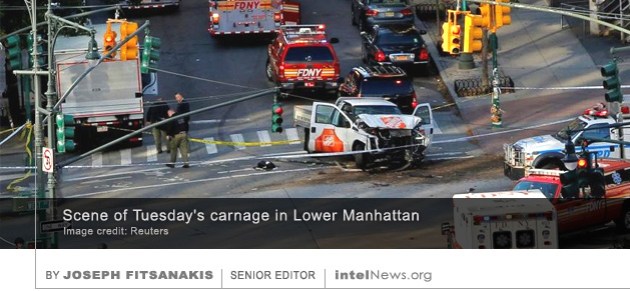 News reports hastened to describe Tuesday’s atrocity in Lower Manhattan as “the worst terror attack in New York since September 11, 2001”. The comparison may be numerically accurate. Moreover, the deaths caused by the attack are nothing short of tragic. But if the Islamic State’s deadliest response to its retreat in the Middle East is a clumsy truck driver armed with a pellet gun, then Americans have little to fear from the terrorist group.
For months now, Western counter-terrorism experts have been bracing for a change of tactics by the Sunni group, which in 2014 controlled territory in Iraq and Syria equal to the size of England. The prevailing theory in security circles is that, as the Islamic State is forced to retreat in the Middle East, it will unleash waves of sleeper cells against Western targets abroad. This concern is logical, given the militant group’s obsession with its public image. At every turn since its dramatic rise in 2013, the Islamic State has consciously tried to project an appearance of strength that is far greater than its actual capabilities. In its public statements, the group has consistently extolled its ability to strike at distant targets regardless of its territorial strength in the Middle East. This applies especially to attacks by the Islamic State in Europe, which have tended to come in response to intense media speculation that the group’s territorial hold may be weakening.
One presumes that a terrorist attack in New York, a symbolic site in the ‘war on terrorism’, would aim to do just that: namely project an image of continuing strength and convince global audiences that the group remains potent. Yet, despite the tragic loss of eight lives, Tuesday’s attack in Manhattan did nothing of the sort.
To begin with, an attack on cyclists with a rented utility vehicle is hardly ground-breaking at this point. In the past 18 months, we have seen similar types of attacks in London (on two separate occasions), in Barcelona’s Las Ramblas mall, in downtown Berlin, and in Nice, where a 19-ton cargo truck was used to kill 86 people. Terrorist groups are by nature conservative in their operations, preferring to use low-tech, time-tested methods to dispense  violence, rather than risk failure by breaking new ground. But at a time like this, when the very existence of the Islamic State hangs in the balance, one would think that the group would consciously try to intimidate its opponents by showing off some kind of revolutionary new weapon. That did not happen on Tuesday.
Additionally, the perpetrator of the attack, Uzbek immigrant Sayfullo Saipov, is hardly an inspiring figure for Islamic State supporters. After running over a group of unsuspecting cyclists, the 29-year-old Florida resident clumsily smashed his rented truck head-on into a vehicle that was far larger and heavier than his own, thus completely destroying his vehicle’s engine and effectively disabling his only weapon. He then jumped out of the truck, apparently wielding a pellet gun and a paintball gun. Mobile phone footage captured from a nearby building shows Saipov walking in a disoriented manner through Manhattan traffic before being shot by police officers. If —as it seems— the Islamic State was behind that attack, it would mean that modern history’s most formidable terrorist group failed to get a pistol in a country where firearms are in some cases easier to secure than nasal decongestant.
Choice of weapon aside, one does not need to be a counter-terrorism expert to conclude that Saipov lacked basic operational and planning skills. His attack behavior shows that he had failed to carry out even rudimentary prior reconnaissance of the area where he launched his attack. He even appears to have failed to read Tuesday’s New York Post. Had he done so, he would have known that  the heavily attended annual Village Halloween Parade was scheduled to take place on the very same street, just two hours after he launched his deranged attack.
Once again, the question is: if the Islamic State does not utilize its deadliest and most capable operatives now, when its very existence in its Middle Eastern stronghold is being directly challenged, then when will it do so? By all accounts, the militant group’s leaders are well-read on recent history. They are therefore fully aware that, in the post-9/11 age, clumsy, low-tech, limited terrorist strikes by lone-wolf operatives lack the capacity to intimidate civilian populations, especially in New York.
Western counter-terrorism agencies and citizens alike should remain vigilant; but early evidence shows that the Islamic State is simply too weak to launch sophisticated, large-scale strikes against Western targets abroad. As I have argued before, the threat level would change if the militant group acquires chemical weapons or other tools of mass terrorism. For now, however, it is safe to state that the Islamic State’s capabilities do not pose anything close to an existential threat to the West.
► About the author: Dr. Joseph Fitsanakis is Associate Professor in the Intelligence and National Security Studies program at Coastal Carolina University. Before joining Coastal, Dr. Fitsanakis built the Security and Intelligence Studies program at King University, where he also directed the King Institute for Security and Intelligence Studies. He is also deputy director of the European Intelligence Academy and senior editor at intelNews.org.
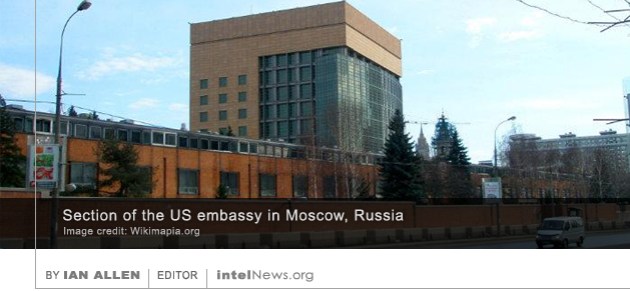 Several American diplomatic facilities in Russia, including the United States embassy in Moscow, as well as consulates in other major Russian cities, will be guarded by a firm with ties to a former senior KGB official. The New York Times reported on Tuesday that the company, Elite Security Holdings, is headquartered in Moscow but has offices throughout Europe and the former Soviet republics. The firm has its roots in an earlier venture co-founded by former KGB official Viktor G. Budanov. The 82-year-old Budanov served as director of the KGB’s K Directorate, also known as Second Chief Directorate, which was responsible for counterintelligence. Budanov no longer owns any part of Elite Security Holdings. But his son, Dimitri Budanov, is believed to be in charge of the firm’s headquarters in the Russian capital. The family is known to be politically close to Vladimir Putin, who served together in the KGB with Viktor Budanov in East Germany in the 1980s.
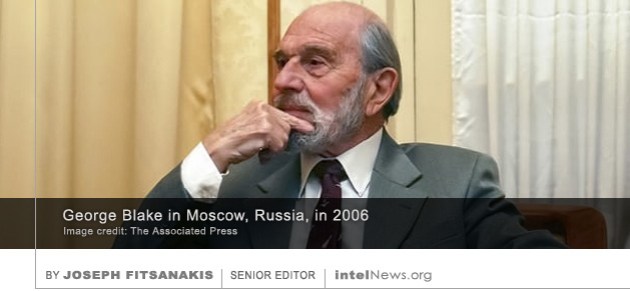 One of the Cold War’s most recognizable spy figures, George Blake, who escaped to the Soviet Union after betraying British intelligence, issued a rare statement last week, praising the successor agency to Soviet-era KGB. Blake was born George Behar in Rotterdam, Holland, to a Dutch mother and a British father. Having fought with the Dutch resistance against the Nazis, he escaped to Britain, where he joined the Secret Intelligence Service, known as MI6, in 1944. He was serving in a British diplomatic post in Korea in 1950, when he was captured by advancing North Korean troops and spent time in a prisoner of war camp. He was eventually freed, but, unbeknownst to MI6, had become a communist and come in contact with the Soviet KGB while in captivity. Blake remained in the service of the KGB as a defector-in-place until 1961, when he was arrested and tried for espionage.
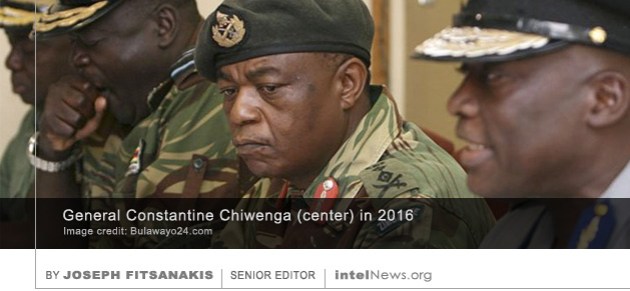 Political affairs in Zimbabwe took an unprecedented turn on Monday, as the chief of the armed forces warned the country’s President, Robert Mugabe, that the military would “not hesitate to step in” to stop infighting within the ruling party. General Constantino Chiwenga, Commander of the Zimbabwe Defence Forces, took the extremely rare step of summoning reporters for a press conference at the military’s headquarters in Harare on Monday. A direct intervention of this kind is unprecedented in the politics of Zimbabwe, a country that is tightly ruled by its authoritarian President, Robert Mugabe. Mugabe is also President and First Secretary of the Zimbabwe African National Union – Patriotic Front (ZANU-PF), the party that has dominated Zimbabwean politics since it assumed power in 1980.
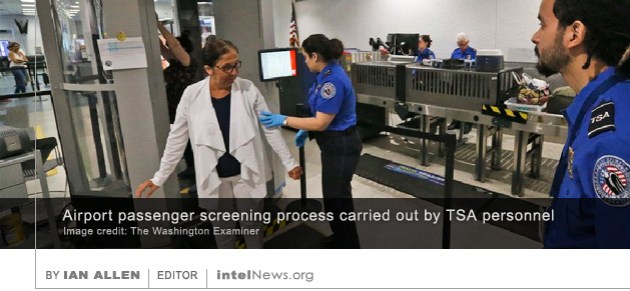 Attempts by undercover investigators to smuggle weapons, explosives and contraband aboard American passenger flights were successful between 70 and 80 percent of the time in the past year, according to reports. The results of the investigations were revealed in Congress behind closed doors on Wednesday of last week, prompting lawmakers to severely criticize the United States Transportation Security Administration (TSA). The TSA was founded in November 2001 in direct response to the tragic events of September 11 of that year. It is primarily concerned with air travel and is responsible for ensuring the safety of the traveling public across the US.
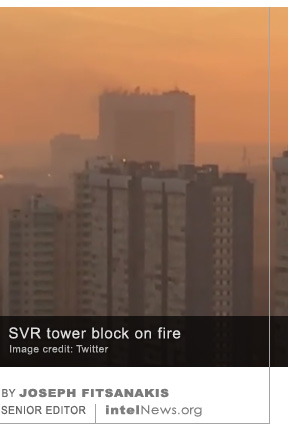 A massive fire that broke out at a top-secret spy facility in Moscow on Wednesday brought to the foreground prior reports about the unprecedented growth of the headquarters of Russia’s foreign spy service. The fire was reported at a government compound in Yasenevo, a leafy district on the southern outskirts of the Russian capital. The compound serves as the headquarters of the Russian Foreign Intelligence Service, known by its initials, SVR. The SVR is one of the successor agencies to the Soviet-era KGB. During Soviet times, the present-day SVR was known as the First Chief Directorate or First Main Directorate of the KGB. Despite its name change, however, its mission remains the same, namely to collect secrets from targets outside the Russian Federation —often through the use of espionage— and to disseminate intelligence to the president.
 Despite its ongoing territorial retreat, the Islamic State of Iraq and Syria is earning over $4 million a month from its involvement in the oil trade, according to a leading expert in the finances of the group. In the past, a sizeable portion of the Islamic State’s income came from oil revenues, as the group controlled several major oilfields in northern Iraq and eastern Syria. But the loss of its territory in the past year has delivered a sharp blow to the Islamic State’s finances. The group has lost virtually every oilfield that it used to control in northern Iraq, while two weeks ago it
 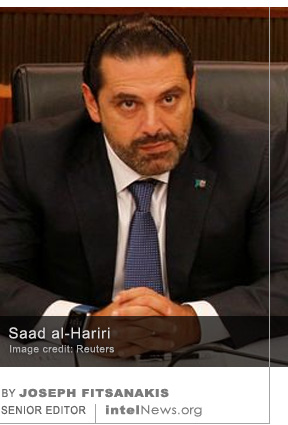 Western intelligence services warned Lebanon’s former Prime Minister Saad al-Hariri of an assassination plot against him, thus prompting him to resign on Sunday, according to Saudi news media. Hariri is a Saudi-born Lebanese politician, reputed to be one of the world’s wealthiest people. He is the second son of the late Rafiq Hariri, who ruled Lebanon for much of the 1990s but was assassinated in 2005. Saad al-Hariri spent most of his life in Saudi Arabia, the United States and France, but returned to Lebanon in 2014 to lead the Future Movement, a center-right political party supported by Sunni Muslims and some Christians. He became prime minister in 2016.
 Dozens of Saudi senior figures, some of them among the world’s wealthiest people, have been fired or arrested, as the king and his son appeared to be removing their last remaining critics from the ranks of the security services. The unprecedented arrests took place without warning less than two hours after state-run media announced the creation of a new “supreme committee to combat corruption”. A
  Israeli Prime Minister Benjamin Netanyahu reportedly asked the United States President Donald Trump to allow Jonathan Pollard, an American who spied on his country for Israel in the 1980s, to immigrate to Tel Aviv. Pollard, a former intelligence analyst for the US Navy, was released from an American prison in 2015, after serving 30 years for selling US government secrets to Israel. Throughout Pollard’s time in prison, the government of Israel
 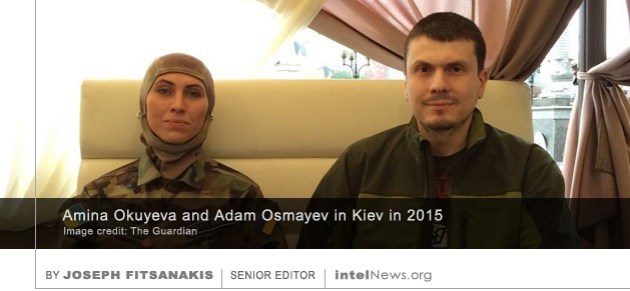 An armed attack in the outskirts of Kiev has killed the wife of a Chechen commander of a Ukrainian paramilitary unit, who is wanted in Russia for an alleged plan to kill President Vladimir Putin. Adam Osmayev is believed to have survived the attack, but his wife, Amina Okuyeva, was reportedly shot in the head and died on the spot. Osmayev, a Russian Chechen, became widely known in Ukraine in February of 2012, when he was arrested by police in Odessa, a major port city located on the northwestern shore of the Black Sea in the country’s south. He was found to be carrying forged identity documents. When police searched his apartment, they found large quantities of illegal explosives. Authorities in Moscow told the Ukrainian government that Osmayev was involved in a conspiracy to kill Russian President Vladimir Putin. A Chechen associate of Osmayev, Ilya Pyanzin, was handed over to Russia by the Ukrainians and was given a 10-year prison sentence by a Moscow court.
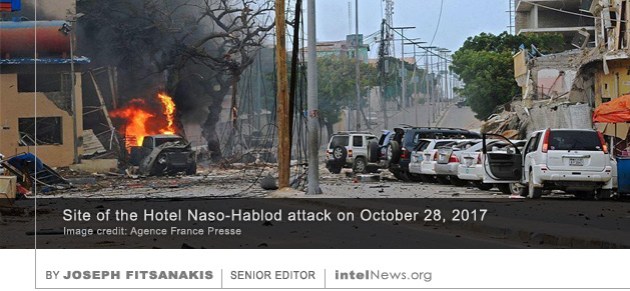 A group of Islamist gunmen who stormed a well-known hotel in the Somali capital on Saturday, killing and wounding dozens, convincingly posed as officers of the country’s intelligence agency, according to officials. The attack began when a truck was driven in broad daylight through the front gate of Naso-Hablod, a hotel located a few blocks from the presidential palace in Mogadishu. Shortly after the hotel’s front entrance was demolished, five heavily armed men rushed to the scene and entered the building. They told police forces and the hotel’s private security guards that they were officers of the National Intelligence and Security Agency (NISA) of Somalia.
 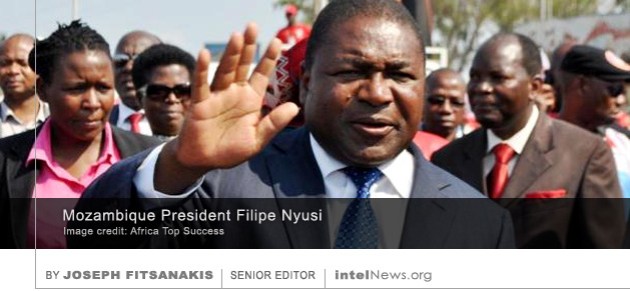 In a surprise move, the president of Mozambique has fired the head of the military and the director of the country’s intelligence service, two weeks after attacks by an unidentified group left 16 people dead in a northern town. The attacks occurred on October 5 and 6 in Mocimboa da Praia, a small town of about 30,000 people located along Mozambique’s extreme northern coastline. The town lies only a few miles south of Mozambique’s border with Tanzania and within sight of several offshore gas fields in the Indian Ocean. According to local
 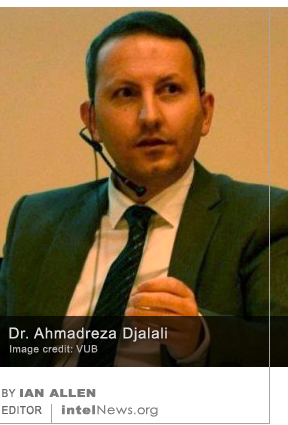 A court in Iran has sentenced a prominent Iranian academic to death for allegedly helping Israel assassinate nuclear scientists and sabotage Tehran’s nuclear program. Four Iranian physicists, who were employed in Iran’s nuclear program, are known to have been






 intelNews.org
Three former South Korean spy chiefs charged with illegally diverting secret funds
November 20, 2017 by Ian Allen Leave a comment
As part of his anti-corruption campaign, Mr. Moon has overseen the purging of numerous senior officials from the NIS, after the agency admitted that it tried to influence the outcome of the 2012 presidential election in favor of Mrs. Park. In the latest round of corruption charges, the three former directors of the NIS are accused of funneling payments of between $45,000 and $91,000 a month to the office of the president. The cash allegedly came from what the prosecutors described as “special operational funds” and was meant for highly secret undercover operations. As such, it was not subject to parliamentary oversight or annual audits, according to prosecutors. The secret funds were allegedly used by Mrs. Park for bribes in exchange for political favors, according to the indictment.
Prosecutors claim that the indictments of the three former NIS chiefs reveal high-level collusion between Mrs. Park’s conservative Liberty Korea Party, also known as the Grand National Party, and the spy agency. Earlier this month, two presidential aides who served under Mrs. Park were arrested for transferring the cash payments in briefcases from the NIS to the president’s office. Two of the three former NIS directors, Nam Jae-joon and Lee Byung-kee were denied bail and are currently in jail. The third, Lee Byung-ho, was not deemed to be a flight risk and remains free while preparing his defense.
► Author: Ian Allen | Date: 20 November 2017 | Permalink
Filed under Expert news and commentary on intelligence, espionage, spies and spying Tagged with corruption, Lee Byung-ho, Lee Byung-kee, Nam Jae-joon, National Intelligence Service (South Korea), Park Geun-hye, South Korea