Finnish reporter destroys computer with hammer to protect spy source
December 19, 2017 3 Comments
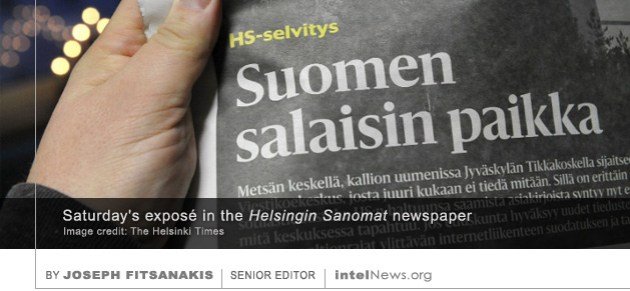 An investigative journalist in Finland, who recently co-authored an exposé of a Finnish intelligence program targeting Russia, destroyed her computer with a hammer, prompting police to enter her house on Sunday. The journalist, Laura Halminen, co-wrote the exposé with her colleague, Tuomo Pietiläinen. Titled “The Secret Behind the Cliff”, the article appeared in the Saturday edition of the Helsingin Sanomat, Finland’s highest-circulation newspaper. It reveals the existence of a sophisticated electronic interception station in the northern suburbs of Jyväskylä, a city of about 140,000 people that is located in central Finland. Based on classified documents dating as far back as 1999, the article claims that the Finnish intelligence services have operated the top-secret program in Jyväskylä for years. It focuses on monitoring the maneuvers of Russian military units stationed around the St. Petersburg area, allegedly by tracking electromagnetic radiation emissions.
Over the weekend, the Finnish government reacted angrily to the Helsingin Sanomat report, accusing the newspaper of “revealing the content of highly classified documents” that are “critical to the [country’s] security and may cause grave damage to it”. The government, however, argues that the newspaper revealed without proper authorization the contents of classified military documents that were marked TOP SECRET, which is a crime under Finnish law. But the newspaper’s editors argue that the public has a right to know about the surveillance project. The dispute between the newspaper and the government reached new heights on Sunday evening, when a team of police officers arrived at the home of Helsingin Sanomat journalist Laura Halminen. The newspaper claims that the police raided Halminen’s house in connection with the Jyväskylä revelations. According to the Helsingin Sanomat the reporter said she destroyed her computer in order to safeguard information relating to future articles. However, there are some who believe that she destroyed the computer in order to safeguard the identity of the source of the information that led to Saturday’s exposé. However, argues that they intervened only after Halminen destroyed her home computer with a hammer, creating a fire and prompting an emergency response by the fire brigade. Police officers who arrived with the fire brigade called for reinforcements after they began to suspect that Halminen may have been trying to destroy evidence connected with a criminal investigation.
Helsingin Sanomat editors claim that police left Halminen’s house after confiscating the remains of her damaged computer, several mobile phones, an iPad, and over a dozen USB flash drives. The newspaper’s editors said that the raid on the reporter’s home was “uniquely exceptional” in the history of journalism in Finland, and claimed that the police did not present Halminen with a search warrant prior to raiding the premises. But Police authorities argue that Finnish law allows them to conduct warrantless searches for national-security-related cases, and that their actions were observed by an appointed lawyer. The lawyer took possession of all evidence removed from Halminen’s house, to ensure compliance with Finnish law. The government has since said that it will launch a criminal probe to find out the source of the leak to the newspaper.
► Author: Joseph Fitsanakis | Date: 19 December 2017 | Permalink
► IntelNews thanks AiT, N.H. and A.S. for their help in ensuring the factual accuracy of this report
 Authorities in Poland have charged three high-level military intelligence officials with acting in the interests of Russia. The three include two former directors of Polish military intelligence and are facing sentences of up to 10 years in prison. The news broke on December 6, when Polish authorities announced the arrest of Piotr Pytel, who was director of Poland’s Military Counterintelligence Service (SKW) from 2014 to 2015. It soon emerged that two more arrests had taken place, that of Pytel’s predecessor, Janusz Nosek, and Krzysztof Dusza, Pytel’s chief of staff during his tenure as SKW director.
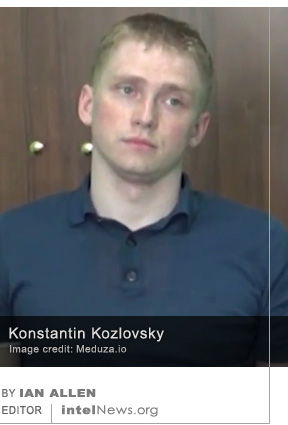 A member of a prolific Russian hacker group reportedly stated in court that he was hired by the Russian government to break into the computer systems of the Democratic Party in the United States. The hacker, Konstantin Kozlovsky, operated online as a member of Lurk, a notorious hacker group whose members are believed to have stolen in excess of $45 million from hundreds of companies since 2011. Most of the group’s members were apprehended in a
 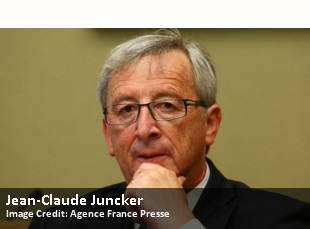 A judge in Luxembourg has launched a criminal investigation into whether officials working for the country’s former Prime Minister and current European Commission President, Jean-Claude Juncker, tried to conceal his role in a spy scandal. Until he stepped down from his post in 2013, Juncker, a member of Luxembourg’s Christian Social People’s Party, was Europe’s longest-serving elected leader, having served as Prime Minister since 1995. His resignation from his post came after a parliamentary inquiry found that the country’s State Intelligence Service (SREL) had engaged in serious criminal activity.
 A Russian court has sentenced an Estonian aircraft business executive to 12 years at a maximum security prison, allegedly for having spied on Russia a decade ago. Little is known about the case of Raivo Susi, who co-owns two companies that are involved in the sale and maintenance of non-commercial aircraft. The Estonian businessman’s activities include the partial ownership of Aerohooldus OU, which provides training jet aircraft for use by the Air Force of Estonia –a member state of the North Atlantic Treaty Organization (NATO).
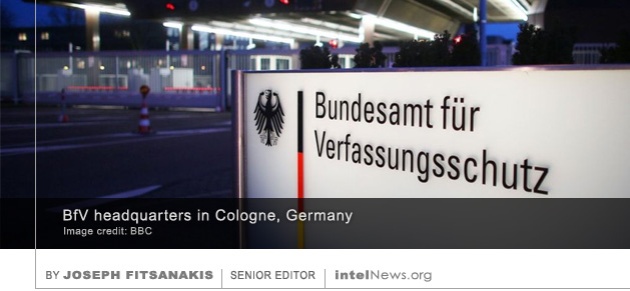 In an unusual step, German intelligence officials have issued a public warning about what they said are thousands of fake LinkedIn profiles created by Chinese spies to gather information about Western targets. On Sunday, Germany’s Federal Office for the Protection of the Constitution (BfV) held a press conference in which it said that it had discovered a wide-ranging effort by spy agencies in China to establish links with Westerners. The agency said that it undertook a 9-month investigation, during which it identified 10,000 German citizens who were contacted by Chinese spy-run fake profiles on LinkedIn. Across Europe, the number of targets could be in the hundreds of thousands,
  A senior former commander of one of Syria’s largest Kurdish rebel groups, who recently defected to Turkey, has accused the United States of agreeing to let thousands of heavily armed Islamic State fighters escape from Raqqa in exchange for conquering the city without a fight. The Syrian city served as the de facto capital of the Islamic State from early 2014 until October of this year, when it was captured by a coalition of forces supported by the United States and other Western powers. The Syrian Democratic Forces (SDF), a predominantly Kurdish militia, was among the groups that captured Raqqa. One of its spokesmen, Talal Silo, told Western media correspondents back in October that the Western-backed coalition had allowed fewer than 300 hardline fighters of the Islamic State to leave the war-ravaged city during the final stages of the battle.
 The former director of Poland’s military counterintelligence agency has been questioned by the country’s military police, over allegedly illegal cooperation with Russian intelligence. From 2006 to 2012, General Piotr Pytel was head of Poland’s Military Counterintelligence Service (MCS), which is responsible for domestic security and for ensuring the war-readiness of Poland’s armed forces. According to government prosecutors, General Pytel struck an illegal agreement with the Russian Federal Security Service, the FSB, in 2010. The alleged agreement concerned the return to Poland of troops who had been sent to serve in Afghanistan with the International Security Assistance Force (ISAF). Several hundred Polish troops participated in ISAF, a NATO-led security mission in Afghanistan, established by the United Nations Security Council in 2001.
 The Turkish government has issued a warrant for the arrest of a former officer in the United States Central Intelligence Agency, which Ankara claims was instrumental in the failed July 2016 attempt to topple the government of Turkish President Recep Tayyip Erdoğan. The move comes amidst heightened tensions in relations between Ankara and Washington. The two NATO allies have
  The United States Central Intelligence Agency and the White House are considering several proposals to hire private companies to carry out covert operations abroad, according to a report. BuzzFeed News said on Thursday that the proposals were communicated to the White House in the summer. The news site, which described the proposed plans as “highly unusual”,
  A senior Chinese People’s Liberation Army (PLA) military official, who was seen as a close ally of President Xi Jinping, has allegedly committed suicide, according to Chinese state media. Zhang Yang was one of the most high-profile generals in the Chinese PLA. His rise to power after Xi became president of China was meteoric. He was appointed member of the Central Military Commission (CMC) of the Communist Party of China, which exercises political supervision of the Chinese armed forces. In addition to his role in the CMC, Zhang directed the General Political Department of the PLA’s Ground Force, which made him the top political commissar in the army.
 Files released on Monday by the British government reveal new evidence about one of the most prolific Soviet spy rings that operated in the West after World War II, which became known as the Portland Spy Ring. Some of the members of the Portland Spy Ring were Soviet operatives who, at the time of their arrest, posed as citizens of third countries. All were non-official-cover intelligence officers, or NOCs, as they are known in Western intelligence parlance. Their Soviet —and nowadays Russian— equivalents are known as illegals. NOCs are high-level principal agents or officers of an intelligence agency, who operate without official connection to the authorities of the country that employs them. During much of the Cold War, NOCs posed as business executives, students, academics, journalists, or non-profit agency workers. Unlike official-cover officers, who are protected by diplomatic immunity, NOCs have no such protection. If arrested by authorities of their host country, they can be tried and convicted for engaging in espionage.
 A temporary ban issued by United States authorities on laptop computers onboard some commercial flights earlier this year came from a tip by Israeli intelligence, according to a new report. The report was published last week in the American magazine Vanity Fair. It
  Ukraine fired its deputy-head of foreign intelligence and expelled a Belarussian diplomat a day after the government of Belarus claimed that it busted a Ukrainian spy ring that recruited local agents. The chain of events began on October 25, when the Belarussian Committee for State Security (KGB) arrested a Ukrainian journalist. The journalist, Pavlo Sharoyko, is based in the Belarussian capital Minsk and works as the Belarus correspondent for the National Radio Company of Ukraine —the country’s public broadcaster. Even though Sharoyko was arrested in October, his imprisonment was not publicly announced by Belarus until last Saturday. On Tuesday, November 21, at a press conference held at the KGB headquarters in Minsk, KGB spokesman Dmitry Pobyarzhin








Russia announces detention of Norwegian citizen on espionage charges
December 20, 2017 by Joseph Fitsanakis Leave a comment
According to reports in the Russian media, Berg was arrested two weeks ago by officers of the Russian Federal Security Service (FSB), the agency responsible for domestic security and counterintelligence. He is now in detention and is accused of receiving classified information relating to the Russian Navy. It is believed that Berg received the classified documents from an unnamed Russian national, who was arrested by the FSB in early December and now faces charges of high treason. No further information has been made public about Berg’s arrest. Relations between Norway and Russia have been tense in recent years, partly due to attempts by the two nations to assert control over undersea territories in the arctic region, which are becoming accessible due to global warming. In 2015, Norway’s state broadcaster accused the FSB of pressuring a Norwegian newspaper, The Barents Observer, to fire one of its journalists who covered fossil fuel exploration in the Arctic Ocean. But the Russian government denied that it has played any role in the journalist’s firing.
Norway’s Ministry of Foreign Affairs said on Tuesday that it had established contact with a Norwegian national who was behind bars in Russia, but did not give the person’s name or further details. Berg’s family in Norway said the last time they had news from him was two weeks ago, when he was holidaying in Moscow. The Russian state prosecutor’s office said that Berg’s lawyers had filed an appeal against his detention, but that the Norwegian would remain in jail until his appeal is heard in court.
► Author: Joseph Fitsanakis | Date: 20 December 2017 | Permalink
Filed under Expert news and commentary on intelligence, espionage, spies and spying Tagged with counterintelligence, espionage, Frode Berg, FSB, military intelligence, News, Norway, Office of the Norwegian Border Commissioner, Russia