Iran upholds death sentence for man accused of helping Mossad kill scientists
October 25, 2017 Leave a comment
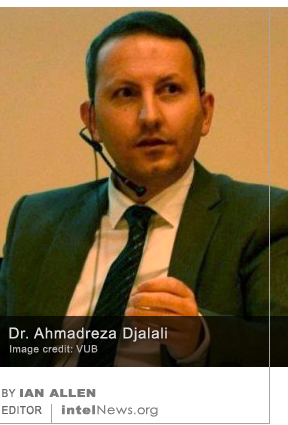 A court in Iran has sentenced a prominent Iranian academic to death for allegedly helping Israel assassinate nuclear scientists and sabotage Tehran’s nuclear program. Four Iranian physicists, who were employed in Iran’s nuclear program, are known to have been assassinated between 2010 and 2012. Most were killed by magnetic bombs that were placed on their vehicles by unknown assailants, who were then able to escape on motorcycles. Tehran believes that the assassinations were carried out by the Mossad, Israel’s external intelligence agency, with the help of agents recruited by the Israelis from within Iran’s nuclear program.
On Tuesday, Iranian authorities revealed that one of these alleged Israeli agents has been sentenced to death following a secret trial. The office of Tehran’s public prosecutor did not name the alleged agent, but said that he admitted holding “several meetings with the Mossad”. During those meetings, the agent allegedly “provided [the Mossad] with sensitive information about Iran’s military and nuclear installations”, according to Iranian authorities. The Iranians claim that the agent, who is himself a physicist, gave Israel the names and addresses of at least 30 senior members of Tehran’s nuclear program. The list included nuclear physicists, engineers, as well as intelligence and military officials with nuclear specializations. In return for supplying inside information, the Israelis helped the alleged agent secure permanent residency in Sweden and financed his move there, according to the Iranian prosecutor’s office. Iran claims that the information given to the Mossad by the agent resulted in the assassination of at least one Iranian scientist.
In a statement published on Monday, the international human-rights pressure group Amnesty International identified the alleged Mossad agent as Ahmadreza Djalali, an expert in disaster medicine. Djalali’s name had been reported before in connection with a trial in Iran, but authorities in Tehran had not mentioned any connection between the accused and the assassination of Iranian nuclear scientists. Amnesty said that Djalali has taught and carried out research at several European universities, including the Universiteit Brussel in Brussels, lUniversity of Eastern Piedmont in northern Italy, and the Karolinska Institute in Stockholm, Sweden. It is believed that he was arrested in Iran in 2016, during a visit from Sweden, where he has been living for several years. Iranian media said that Djalali was sentenced to death on October 21, and must appeal by November 10 if he wants to challenge his death verdict.
► Author: Ian Allen | Date: 25 October 2017 | Permalink
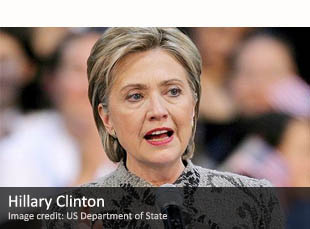 A major reason behind the Federal Bureau of Investigation’s decision to arrest ten Russian spies across the United States in 2010 was their increasing proximity to the then-Secretary of State Hillary Clinton, it has been claimed. The spies had been specifically instructed by their handlers in Moscow to target Clinton, who was seen as the most likely successor to US President Barack Obama, according to recently released FBI files. Ten Russian deep-cover spies, who had no official cover and thus no diplomatic immunity, were
 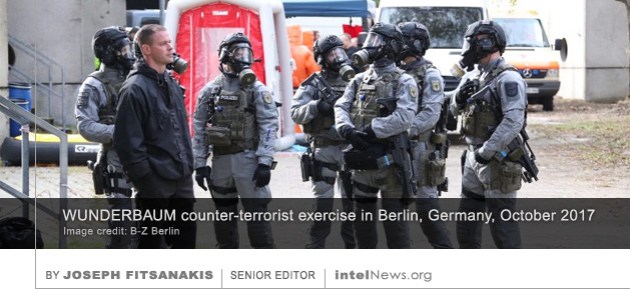 A German newspaper reported last week that at least one European intelligence agency has already warned that the Islamic State is exploring the use of chemicals for attacks in Europe. Such an eventuality would be a radical departure from prior attacks by the Islamic State in the West. In the past, the militant group has shown a strong preference for low-tech means of dispensing violence, such as firearms, vehicles and knives. But it has utilized chemical substances in Iraq and Syria, and its technical experts have amassed significant knowledge about weaponized chemicals.
 There’s a reason why America has not experienced another 9/11, and it’s not because militants are not trying. Through a series of sweeping reforms prompted by the tragic events of that day, United States intelligence and security agencies have become extremely efficient at preventing large-scale terrorist and criminal violence. Using increasingly sophisticated methods of intelligence collection, analysis and even prediction, counter-terrorism and security experts have neutralized countless attempts to replicate —or even surpass— the horror of 9/11.
 Montana. Most important of all, they work alone, which makes it immensely difficult to sense their murderous intentions. Counter-terrorism and security experts are trained to detect possible attacks by penetrating the communications between members of a conspiracy. When the operative is a lone wolf, and does not communicate his or her plans, the points of possible penetration diminish, as does the possibility of detection.
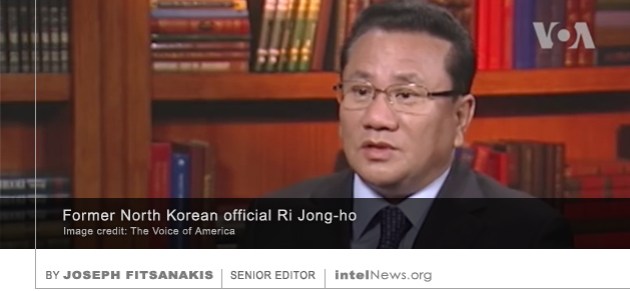 North Korean Supreme Leader Kim Jong-un has consolidated his position by killing hundreds of domestic critics in recent years, but he lacks confidence and will not go to war against outside powers, according to a senior North Korean defector. Ri Jong-ho was a senior official in North Korea under its previous leader, the late Kim Jong-il. He rose through the ranks of the Workers’ Party of Korea and was directly mentored by Kim, who personally appointed him to a post in Bureau 39. The powerful body is in charge of securing much-needed foreign currency for Pyongyang —often through illegal activities— and partly funds the personal accounts of the ruling Kim dynasty.
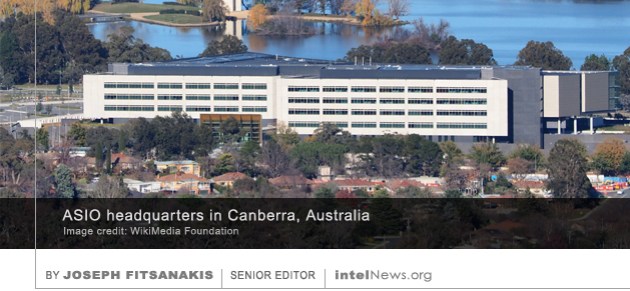 The primary intelligence agency of Australia says its resources are overextended as the country faces “espionage and foreign interference [of an] unprecedented” scale. In its annual report to the Australian houses of parliament, which was produced on Tuesday, the Australian Security Intelligence Organisation (ASIO) says it lacks resources to counter “harmful espionage” and “malicious activity” against the country. The unclassified report is published every year as a summary of a much longer classified report, which is shared with senior government officials and senior civil servants. It is endorsed by ASIO Director Duncan Lewis, who serves as Australia’s Director-General of Security.
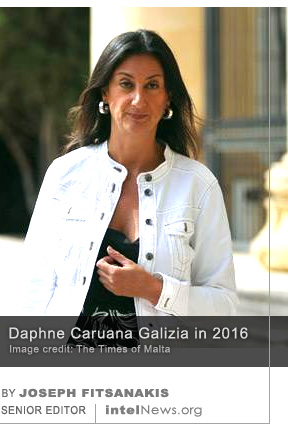 Malta’s best known investigative journalist, whose reporting about offshore tax evasion prompted a major political crisis in the European Union member-state, has been killed by a powerful bomb near her home. Daphne Caruana Galizia, who died Monday, aged 53, gained international prominence last year, when she used information from various sources, including the leaked “Panama Papers”, to accuse senior members of Malta’s government of implication in tax-evasion schemes. Her reporting led to the resignation and eventual re-election of the country’s Labor government last year.
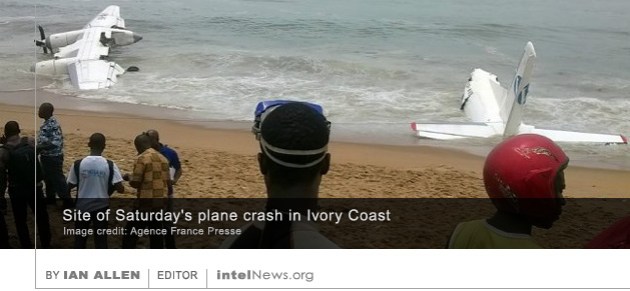 A plane crash that killed four off Côte d’Ivoire last week had been chartered by the French military as part of its counterinsurgency mission in West Africa, it has been admitted. Ivorian authorities identified the aircraft as a Ukrainian-made Antonov transport airplane. It reportedly took off from Ouagadougou, the capital of Burkina Faso, on last Saturday morning. Shortly afterwards, the aircraft crash-landed in the Atlantic Ocean past Abidjan, one of West Africa’s largest cities, on the southern coast of Côte d’Ivoire. Local officials said the airplane broke in half and immediately caught fire. Of the ten people that were on board, four are reportedly dead; six others are seriously hurt. Reports said that the four dead passengers were all Moldovan nationals. Two other Moldovans and four French nationals were injured.
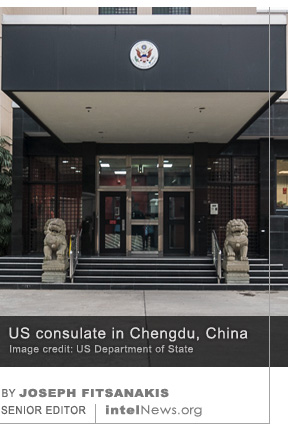 An American diplomat stationed in China was abducted and interrogated for several hours by Chinese authorities, who believed him to be an officer of the Central Intelligence Agency working under official cover. The alleged abduction took place in early 2016 but was revealed this week by the online news outlet Politico. The website said that the diplomat, who has not been named, was stationed at the United States consulate general in Chengdu, a city of 14 million that is the administrative capital of western China’s Sichuan province. Founded in 1985, the US consulate in Chengdu is one of Washington’s seven diplomatic and consular posts in China. It is staffed by 130 people, approximately 30 of whom are Americans and 100 are locally hired Chinese citizens. The facility’s consular district includes several Chinese provinces, including the politically sensitive Tibet Autonomous Region.
 Israeli spy services were reportedly behind the United States government’s recent decision to purge Kaspersky Lab antivirus software from its computers, citing possible collusion with Russian intelligence. Last month, the US Department of Homeland Security issued a directive ordering that all government computers should be free of software products designed by Kaspersky Lab. Formed in the late 1990s by Russian cybersecurity expert Eugene Kaspersky, the multinational antivirus software provider operates out of Moscow but is technically based in the United Kingdom. Its antivirus and cybersecurity products are installed on tens of millions of computers around the world, including computers belonging to government agencies in the US and elsewhere. But last month’s memorandum by the US government’s domestic security arm alarmed the cybersecurity community by alleging direct operational links between the antivirus company and the Kremlin.
 A symposium about the life, activities and legacy of World War I-era double spy Mata Hari is to take place in London this month, on the 100th anniversary of her death by execution. Mata Hari was born Margaretha Geertruida Zelle in Holland in 1876. In 1895 she married Rudolf MacLeod, a Dutch Army Captain of Scottish descent serving the Dutch colonial administration of what is now Indonesia. She eventually divorced the alcoholic and abusive MacLeod, who was 20 years her senior, and joined the circus in Paris. Eventually she became wildly popular as an exotic dancer, a position that placed her in direct and close contact with several influential men in France, including the millionaire industrialist Émile Étienne Guimet, who became her longtime lover. Several of her male devotees came from military backgrounds from various European countries. Most historians agree that by 1916 Mata Hari was working for French intelligence, gathering information from her German lovers. However, in February of the following year she was arrested by French counterintelligence officers in Paris and accused of spying on behalf of the German Empire. French prosecutors accused her of having provided Germany with tactical intelligence that cost the Triple Entente the lives of over 50,000 soldiers.
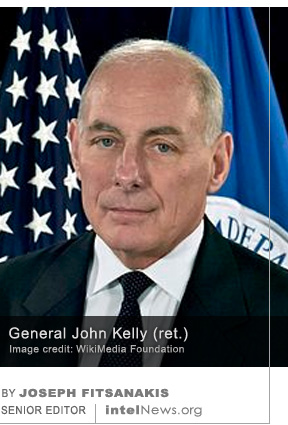 The personal cell phone of the White House Chief of Staff John Kelly (photo) was compromised by persons unknown and may have been bugged for nearly a year, according to United States government officials. General Kelly retired from the US Marine Corps in 2016, after serving as chief of the US Pentagon’s Southern Command, where he supervised American military operations in Latin America and the Caribbean. Soon afterwards, he was appointed by US President Donald Trump to lead the Department of Homeland Security, which he joined in January of 2017. Six months later, however, he replaced Reince Priebus, who resigned abruptly from the post of White House Chief of Staff, citing differences over management style with the Trump administration.
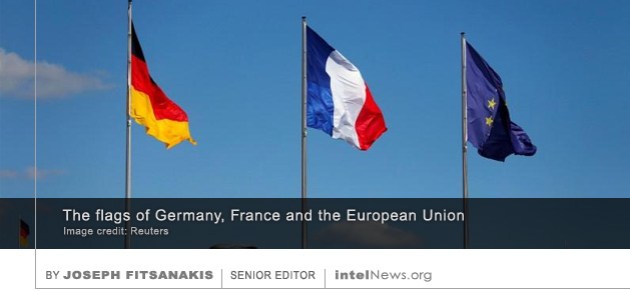 Germany’s two most senior intelligence officials have dismissed suggestions by European officials and leaders, including the president of France, to create a Europe-wide intelligence agency. The numerous deadly attacks carried out by Islamic State supporters across Europe in recent years have given rise to calls from various quarters for the establishment of a new intelligence service that would combine resources from every member-state of the European Union. Last month, the European Union’s Commissioner for Migration, Home Affairs and Citizenship, Dimitris Avramopoulos,
 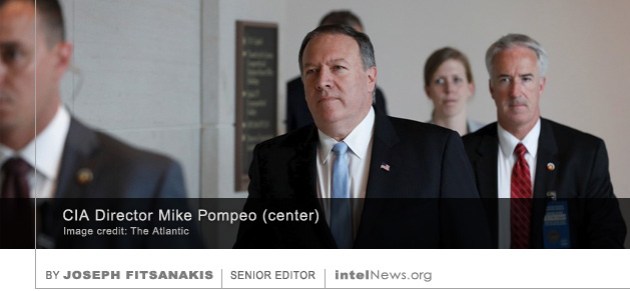 The man appointed by President Donald Trump to lead the United States Central Intelligence Agency has outlined his plans to promote more aggressive intelligence operations and combat what he described as “red tape” in the agency’s culture. Mike Pompeo, a former aerospace and oil executive, who is a member of the conservative Tea Party movement, assumed the directorship of the CIA in January of this year. He succeeded John Brennan, a career CIA officer, who has been an outspoken critic of the Trump administration’s attitude to intelligence since he left office in January.







Officials puzzled by attacks that killed 16 in relatively stable Mozambique
October 26, 2017 by Joseph Fitsanakis Leave a comment
Two weeks after the attacks, however, the ideological backgrounds and motives of the assailants remain unclear. Mozambique has seen armed attacks by guerrillas before, but these are usually attributed to Renamo, a rightwing paramilitary group that was financially supported by Rhodesia and apartheid-era South Africa during the Cold War. The group is still in existence, but has mostly transformed itself into a political party. Its military wing declared a unilateral ceasefire in December of last year, which has been broadly observed. Importantly, the government did not attribute the Mocimboa da Praia attacks to Renamo. But if Renamo was not behind the attacks, then who was it? Local reports have mentioned a so-called “radical Islamist sect”; but Mozambique is a predominantly Christian country and does not have a history of Islamic radicalism. Nor is there known activity in Mozambique of African Islamist groups like Boko Haram or Al-Shabaab, which are strong in western and eastern Africa respectively.
In the days following the attacks in Mocimboa da Praia, police detained 52 people, including Muslim religious leaders, and confiscated half a dozen firearms, as well as hundreds of rounds of ammunition. But by the middle of last week, police officials began to dismiss earlier claims that the attackers were linked to an organized terrorist group. Some southeastern Africa watchers have suggested that the assailants were members of Swalissuna, a locally based militant opposition group that rejects the authority of the central government in capital Maputo, located in Mozambique’s south. The group is virtually unknown and is believed to have been founded in 2011 or 2012. It has no religious affiliation and its members are motivated by domestic grievances related to economic restructuring, corruption and political reform.
On Tuesday, Mozambique President Filipe Nyusi announced the surprise replacement of the country’s two most powerful security officials. Lagos Lidimo, director general of the State Information and Security Service (SISE), which reports directly to the President, was dismissed overnight and replaced by Julio Jane, who until Monday was the commander of the Mozambican National Police. Also replaced was Graça Chongo, head of the country’s armed forces. His replacement has not yet been named.
► Author: Joseph Fitsanakis | Date: 26 October 2017 | Permalink
Filed under Expert news and commentary on intelligence, espionage, spies and spying Tagged with Filipe Nyusi, Graça Chongo, Lagos Lidimo, Mozambican National Police, Mozambique, News, Newstex, State Information and Security Service (Mozambique)