US spies confirm Qatar’s claims that its media were hacked by Emirates to spark crisis
July 18, 2017 Leave a comment
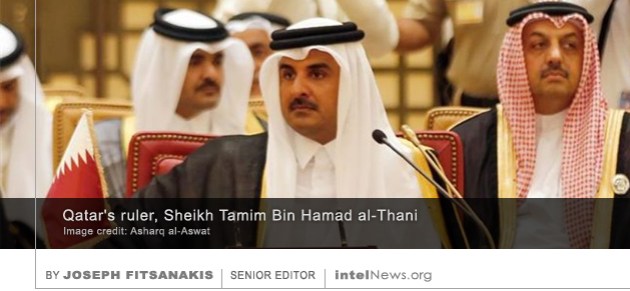 American officials appear to confirm Qatar’s allegations that its news media were hacked by its Gulf adversaries, who then used the fake news posted by hackers to launch a massive campaign against it. Tensions between Qatar and other Muslim countries have risen since late May, when the country’s state-controlled news agency appeared to publish an incendiary interview with Qatar’s Emir, Sheikh Tamim Bin Hamad al-Thani. In the interview, which appeared on May 24, the sheikh appeared to praise Saudi regional rival Iran as a “great Islamic power” and to express support for the militant Palestinian group Hamas. On the following day, Saudi Arabia, the United Arab Emirates, Egypt and Bahrain immediately banned all Qatari media —primarily Al Jazeera— from broadcasting in their territories and broke diplomatic relations with Doha. Later on, they declared a large-scale commercial embargo against the small oil kingdom. They have since threatened war unless Qatar changes its alleged support for Iran and for a number of militant groups in the region.
The Qatari government has dismissed the embargo as unjust and has claimed that Sheikh al-Thani’s controversial interview was fake, and was placed on the country’s state-owned news agency and social media as a result of a computer hack. It has also claimed to have evidence of a number of iPhones that were used from locations in Saudi Arabia and the Emirates to launch the hacks on its networks. Qatari officials have also said that an investigation into the incident is underway, but their claims have been criticized as outlandish by Qatar’s regional rivals.
Now, however, a report by The Washington Post claims that American officials have uncovered evidence that Qatar’s allegations of a computer hack are true. The paper cited “US intelligence and other officials” who spoke “on the condition of anonymity”. The officials said that US intelligence agencies recently became aware of a meeting of senior UAE state administrators that took place on May 23 in Abu Dhabi. At the meeting, the officials discussed a plan to hack Qatari news websites and social media, in order to post incendiary messages that could be used to spark a row between Qatar, the Saudi government and its allies. The alleged computer hacks is reported to have taken place on the following day. According to The Post, the only thing that US intelligence is unsure about is “whether the UAE carried out the hacks itself or contracted to have them done” by a third party.
The Post said that several US intelligence agencies, including the Central Intelligence Agency and the Federal Bureau of Investigation, refused to comment on its report. The paper received a response from the UAE embassy in Washington, DC, which said that the Emirates had “no role whatsoever in the alleged hacking described in the article”.
► Author: Joseph Fitsanakis | Date: 18 July 2017 | Permalink
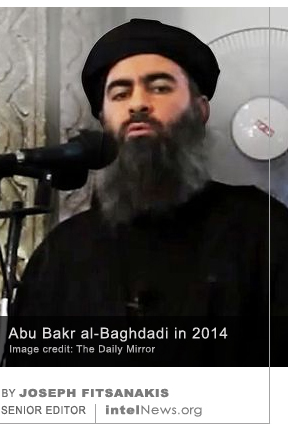 A senior Iraqi intelligence official has rejected assurances given by Russia that Abu Bakr al-Baghdadi, the founder and leader of the Islamic State, is dead, insisting instead that the Iraqi-born cleric is alive in Syria. In mid- June, Russia’s Ministry of Defense said that, according to its sources, al-Baghdadi
 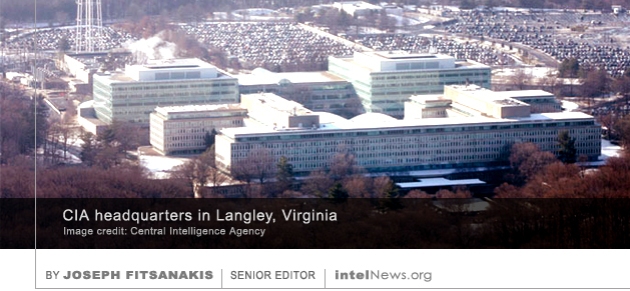 A contractor for the United States Central Intelligence Agency has complained in an interview that no action has been taken in the seven years since he revealed a “billion-dollar fraud” and “catastrophic intelligence failure” within the Agency’s ranks. John Reidy argues that his case illustrates the unreasonable delay that impedes investigations by whistleblowers like him inside the CIA. Individuals like him, he argues, are forced to seek justice through leaks to the media, something which could be avoided if the CIA’s Office of the Inspector General addressed concerns more promptly.
 Staff at a Russian disaster relief center in southern Serbia have rejected claims by American officials that the facility operates as an espionage arm of Moscow’s foreign policy in the Balkans. The Russian-Serbian Humanitarian Center was built in 2012, at a cost of nearly $40 million, following an agreement between Belgrade and Moscow. Its
  Russia is planning to expel approximately 30 American diplomats from its territory, and seize buildings and property belonging to the United States Department of State, according to Russian media reports. The expulsions will be in response to the expulsion last December of 35 Russian diplomats stationed in the US by the administration of President Barack Obama. In addition to expelling the diplomats, Washington also reclaimed two “recreational facilities” (in reality intelligence outposts) that were used by the Russians in New York and Maryland. The White House said that the expulsions were ordered in response to alleged efforts by Russia to interfere in the 2016 US presidential election.
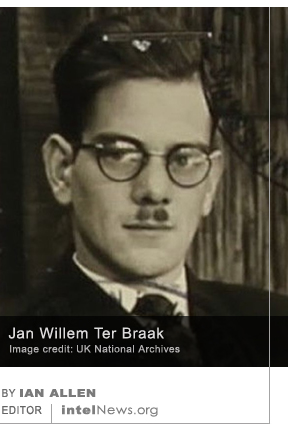 The unmarked grave of a Dutch-born Nazi spy, who killed himself after spending several months working undercover in wartime Britain, will be marked with a headstone, 76 years after his death by suicide. Born in 1914 in The Hague, Holland, Englebertus Fukken joined the National Socialist Movement in the Netherlands, the Dutch affiliate of the National Socialist German Workers’ Party led by Adolf Hitler, in 1933. In 1940, shortly after the German invasion of Holland, Fukken, who had been trained as a journalist, was recruited by the Abwehr, Nazi Germany’s military intelligence. Abwehr’s leadership decided to include Fukken in the ranks of undercover agents sent to Britain in preparation for Operation SEA LION, Germany’s plan to invade Britain.
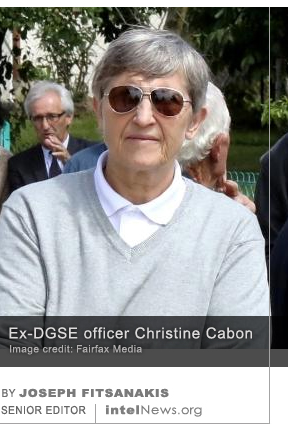 A French spy who infiltrated the environmentalist group Greenpeace and in 1985 helped bomb the organization’s flagship, the Rainbow Warrior, has spoken to the media for the first time. The British-based activist organization had purchased the trawler from the British government in 1977 and used it to carry out maritime research and other operations. In July 1985, the Rainbow Warrior, captained by the American environmental activist Peter Wilcox, was docked at the port of Auckland, New Zealand. It was being prepared to lead a flotilla of vessels to the French Polynesian atoll of Mororoa, in order to try to stop a planned nuclear test by the French military.
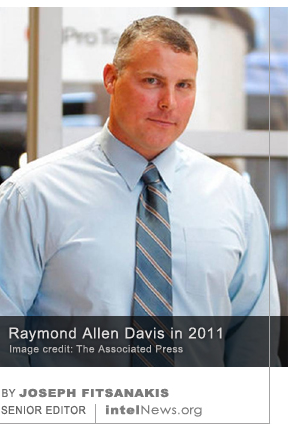 A former contractor for the United States Central Intelligence Agency, who was released from a Pakistani prison in 2011 despite being implicated in a double murder there, says he was freed with the help of senior Pakistani officials. Raymond Allen Davis was a CIA contractor posted in the US consulate in Pakistan’s Punjabi capital, Lahore, which is also the country’s second-largest city. It has been
 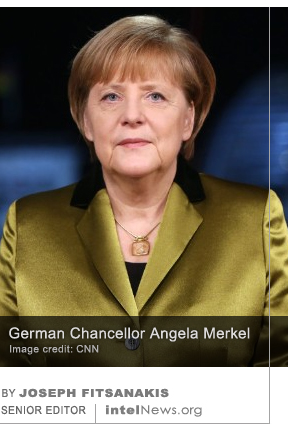 A lengthy parliamentary report on American intelligence activities in Germany was presented last week in Berlin, but was condemned by opposition parties as insufficient and incomplete, prompting calls for a new investigation. The parliamentary probe was initiated in 2013, following a series of
 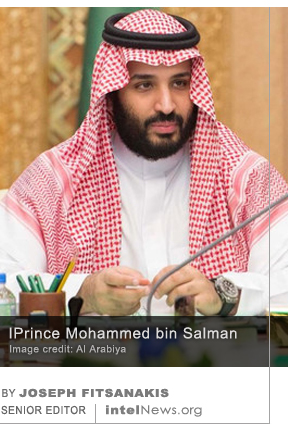 One of Saudi Arabia’s most powerful men, who until last week was first in line to the throne, is reportedly under house arrest. If true, this development would reveal a deep and growing division within the ruling House of Saud. Until the early hours of June 21, Crown Prince Mohammed bin Nayef, 57, was the officially appointed successor to the Saudi ruler, King Salman. In addition to running the country’s feared security services, Prince Nayef was close to Washington, and is a trusted friend of numerous American intelligence officials. But on June 21, King Salman announced radical changes to the line of succession to the throne, stunning the Saudi establishment and international observers alike. The announcement, which came shortly after midnight, completely deposed Prince Nayef from the line of succession.
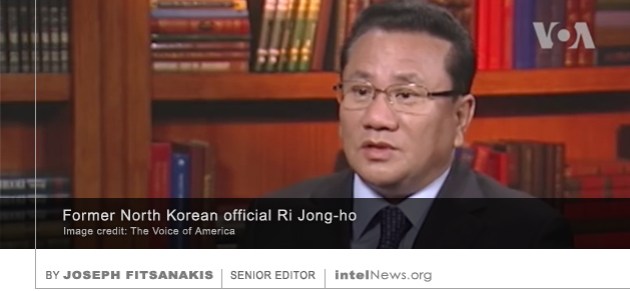 The government of North Korea uses intermediary firms in Singapore to import thousands of tons of Russian oil each year, according to a senior North Korean defector who has spoken publicly for the first time since his defection. Ri Jong-ho was a senior official in the Democratic People’s Republic of Korea under its previous leader, the late Kim Jong-il. He rose through the ranks of the Workers’ Party of Korea and was directly mentored by Kim, who personally appointed him to a post in Bureau 39. The powerful body is in charge of securing much-needed foreign currency for Pyongyang —often through illegal activities— and partly funds the personal accounts of the ruling Kim dynasty.
 A senior military intelligence officer, who commanded a Ukrainian special-forces unit that fought against the Russians in eastern Ukraine, was killed on Monday when his car exploded in broad daylight in Kiev. Initially, the Ukrainian government sources simply said that the dead driver of the car was a member of the Ministry of Defense’s Main Directorate of Intelligence. Later, the casualty was
  American intelligence services have made use of a little-known confidentiality exception to spy on the financial activities of foreign banks who have accounts with the United States Federal Reserve, according to Reuters. Established in 1913, the Federal Reserve System is the central banking structure of the US. It oversees and regulates the nation’s financial institutions, and is tasked with —among other things— maintaining the stability of the American financial system. Additionally, however, the Federal Reserve offers a host of financial services to official (government-owned or sanctioned) foreign institutions. Thus, over 250 foreign banks (typically central banks) from dozens of countries have deposited nearly $3.3 trillion in assets at the Federal Reserve Bank of New York, one of 12 Federal Reserve Banks in the US. Depositing assets at a US Federal Reserve Bank, allows these foreign ‘depository institutions’ to use the US Federal Reserve as a ‘custodial institution’. Through it, they get direct and immediate access to American debt markets, where they can trade directly in dollars — the reserve currency of the global economy.
 General Yuri Ivanovich Drozdov, who held senior positions in the Soviet KGB for 35 years, and handled a global network of Soviet undercover officers from 1979 until 1991,






 intelNews.org
US plans to beef up Cyber Command, separate cyberwar operations from NSA
July 19, 2017 by Joseph Fitsanakis Leave a comment
According to media reports, US President Donald Trump has decided to follow the Pentagon’s suggestion. After several months of delay, his administration is now preparing to announce a major reinforcement of the US Cyber Command, and a formal separation between its functions and those of the NSA. According to the American news network PBS, which broke the news on Monday, the idea behind the move is to give the Cyber Command more operational autonomy and to allow it to establish its own mission statement, which will be distinct from that of the NSA. The latter is an intelligence organization, which means that it primarily seeks to exploit adversary networks for purposes of collecting information. Broadly speaking, therefore, the NSA finds operational adversary cyber networks far more useful than destroyed networks. That tends to clash with the goals of the US Cyber Command, whose tactical goals often center on launching destructive attacks on enemy networks. It is believed that the impending change will allow it to do so without the interference of the NSA.
According to PBS, which cited anonymous sources in its report, the details of the separation “are still being worked out”. Furthermore, some observers caution that the Cyber Command will continue to rely on NSA technology and expertise for years to come, until it is able to carry its own weight. There is even less discussion about the view of the NSA on the matter, which some claim is notably negative. However, the move appears to have been decided, and the Cyber Command’s budget will be increased by nearly 20% to $647 million in the coming year, reflecting its elevated role in US defense.
► Author: Joseph Fitsanakis | Date: 19 July 2017 | Permalink
Filed under Expert news and commentary on intelligence, espionage, spies and spying Tagged with cyberwar, News, NSA, Policy, United States, US DoD Cyber Command