February 14, 2017
by Joseph Fitsanakis
 The ongoing security crisis in the United States reached new heights last night as Michael Flynn, President Donald Trump’s national security advisor, resigned. In his letter announcing his decision, the former general admitted that he “inadvertently” gave members of the Trump administration “incomplete information” about his conversations with the Russian ambassador to the US in December of last year. This development is only the latest in a series of unprecedented incidents in Washington. The city, and by extension the country, are now in a deep and profound security crisis with unpredictable consequences for the US and its allies.
The sense of normality in America’s capital, the seat of government of the world’s most powerful nation, is becoming increasingly scarce, as the country faces one astonishing situation after another. Today, three weeks after Donald Trump assumed the reins of power in DC, the relationship between the Executive and the Intelligence Community is almost nonexistent. A growing  number of former insiders warn that senior intelligence officials are —in the words of former National Security Agency officer John Schindler— “beginning to withhold intelligence from a White House which our spies do not trust”. Last month, Steve Hall, a former senior member of the Central Intelligence Agency’s National Clandestine Service, cautioned that officers at Langley are suspicious of the White House’s links with Russia. Currently, Michael Flynn, who served as director of the Defense Intelligence Agency, and the man chosen by the president to serve as his national security advisor, is being investigated as part of a counterintelligence probe by the Federal Bureau of Investigation and is facing a separate set of questions from the military. On Tuesday, Senior Republican lawmakers called for a Congressional investigation into Moscow’s alleged proximity with the Trump White House.
Meanwhile, the (now former) acting attorney general and several judges have sought to stop the president from violating Constitutional norms with the imposition of an ill-fated travel ban. In response,  Mr. Trump summarily fired the head of the Department of Justice and openly challenged the legitimacy of a judge who ruled against his executive order. The president did not even address the concerns of the Intelligence Community, which largely views the travel ban as nonsensical, unworkable and counterproductive. Mr. Trump also dismissed the significance of a “Dissent Channel” memorandum, signed by over 1,000 State Department employees —an unprecedented number with no parallel in American diplomatic history— who openly objected to the violation of “core American and constitutional values that we, as federal employees, took an oath to uphold”.
Discord and disharmony are not novel concepts in American political life. But the current situation is anything but conventional. It is not normal for the president to summarily fire the chief legal counsel to the US government —acting or not. Nor is it normal for his national security advisor, a man who is privy to the most sensitive secrets of the US government, to be the subject of a counterintelligence investigation, and for one of his senior aides to be denied a security clearance by the CIA. It is unprecedented for a US president to question the usefulness of the North Atlantic Treaty Organization while seemingly consenting to Russia’s annexation of an important American ally —namely Ukraine. It is equally remarkable to watch conservative governments in Western Europe warn against US policies and even refuse to have Mr. Trump address their parliaments. We are witnessing unparalleled developments of inconceivable magnitude, with implications that may well shape the future of America and its place in the world.
These are not partisan considerations, which this website shies away from as a matter of policy. Rather, they are political observations that go to the very heart of America’s ability to govern itself, provide security to its citizens and lead the Western world in our century. Anyone who rejects the notion that the US is currently at the onset of one of the most serious crises in its modern political history is simply disconnected from empirical reality. Anyone —Republican or Democrat— who tries to exploit the current crisis for narrow political gain is not simply foolish, but dangerous to the wellbeing of this country. Mr. Trump’s many friends and adversaries within and without his political party must reach out to him and attempt to mend the damage he has inflicted on America’s government, while preventing further injury to the machinery of national administration. It is every sane person’s hope that the president will take heed at this crucial time, and introduce the much-needed qualities of caution and prudence to his inexperienced administration. History will be particularly unkind to him and his colleagues if they fail to act responsibly. The world is watching.
► Author: Joseph Fitsanakis | Date: 14 February 2017 | Permalink
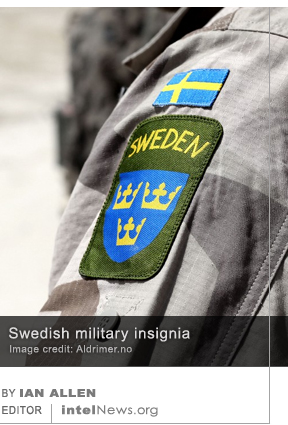 The military intelligence service of Sweden warned last week that there were increasing incidents of espionage perpetrated against Sweden by operatives identified “beyond doubt” as agents of foreign powers. In its annual report for 2016, the Swedish Military Intelligence and Security Service (MUST) said large numbers of spies were detected around “sensitive installations” mostly of a military nature. Headed by an Army general, MUST is responsible for military intelligence and counterintelligence in Sweden. Every year it produces a report of its activities for the Swedish government and defense establishment, and also publishes a declassified version. Its latest report warns about growing attempts by foreign countries to “gather intelligence about Sweden’s defense assets and capabilities”.
 The White House has instructed the Central Intelligence Agency to halt military support to armed groups that are associated with the Free Syrian Army (FSA), a group opposed to Syrian President Bashar al-Assad. Some believe that the move indicates a change in American policy under United States President Donald Trump. But Syrian rebel commanders say they believe the move is temporary, and that military aid will be restored. For several years, the CIA has
  A Japanese television channel has aired
 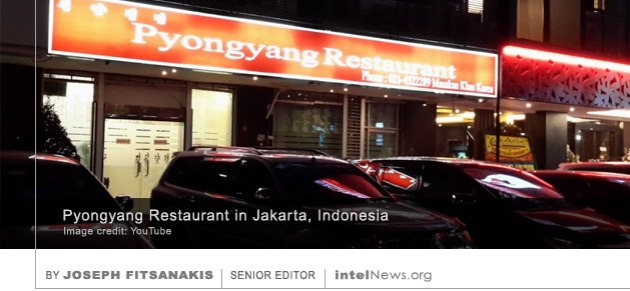 Indonesian authorities said on Sunday that they will investigate a North Korean restaurant in the country, after a Singaporean news agency claimed it was being used as a center for espionage. The announcement comes amidst heightened tensions between North Korean and its neighbors, following the
 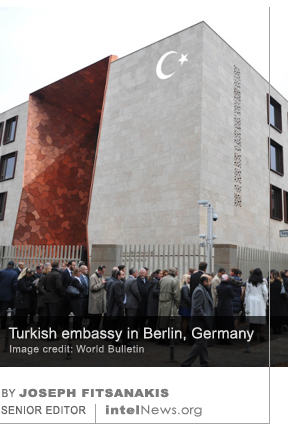 Turkish state agencies have asked the country’s diplomats stationed all over Europe to spy on Turkish expatriate communities there, in an effort to identify those opposed to the government, according to a German report. The government of Turkish President Recep Tayyip Erdoğan accuses members of the so-called Gülen movement of orchestrating a military coup in July of last year, which resulted in an armed attack on the country’s parliament and the murder of over 200 people across Turkey. The Gülen movement consists of supporters of Muslim cleric Fethullah Gülen, who runs a global network of schools, charities and businesses from his home in the United States. The government of Turkey has designated Gülen’s group a terrorist organization and claims that its members have stealthily infiltrated state institutions since the 1980s.
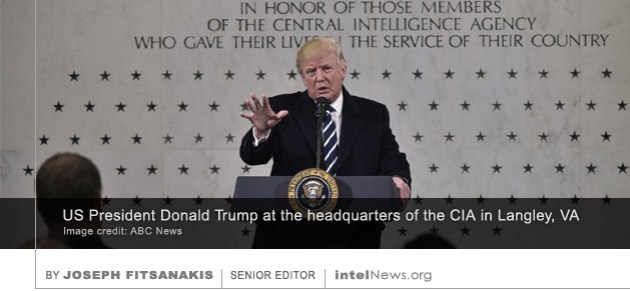 In a leading article published on Wednesday, The Wall Street Journal alleged that American intelligence officials are choosing to withhold sensitive intelligence from President Donald Trump, fearing that it might be compromised. The WSJ, America’s leading newspaper by circulation, which is highly influential in conservative circles,
 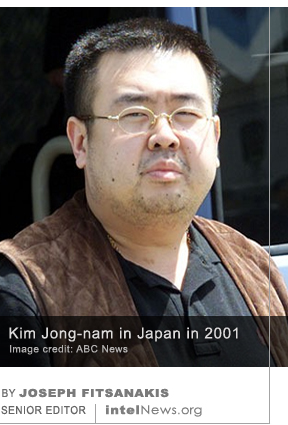 Two women have been arrested in the past 48 hours in connection with the assassination of Kim Jong-nam, half-brother of North Korea’s supreme leader, who died in Malaysia on Monday. Kim, the grandson of North Korea’s founder Kim Il-Sung, died after two women approached him at the Kuala Lumpur International Airport and splashed his face with liquid poison. Some reports suggest that he was injected with a poisoned needle.
  The half-brother of North Korean Supreme Leader Kim Jong-un has been killed in an audacious attack in Malaysia, reportedly by two female assassins who used a poisonous substance to murder him. Kim Jong-nam, was the eldest son of Kim Jong-il, and grandson of Kim Il-Sung, who founded the Democratic People’s Republic of Korea in 1948. However, he left the country in 2007, reportedly after it became clear that his younger half-brother, Kim Jong-un, was the regime’s preferred successor to his father, Kim Jong-il.
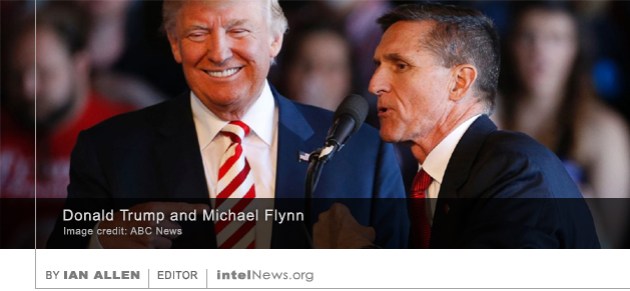 A senior aide to Michael Flynn, National Security Adviser to United States President Donald Trump, will have to step down from his post because his application for a security clearance was rejected, say sources. Flynn had chosen Robin Townley, a former intelligence officer in the US Marine Corps, to serve as Senior Director for Africa on the National Security Council, a forum chaired by the president, which makes key decisions on domestic and foreign issues. Townley, who is described as “one of Flynn’s closest deputies”, held a top-secret security clearance for many years during his government career. But joining the National Security Council requires a so-called “sensitive compartmented information” clearance. This elite-status clearance allows designated individuals to access government programs and operations that are deemed highly sensitive.
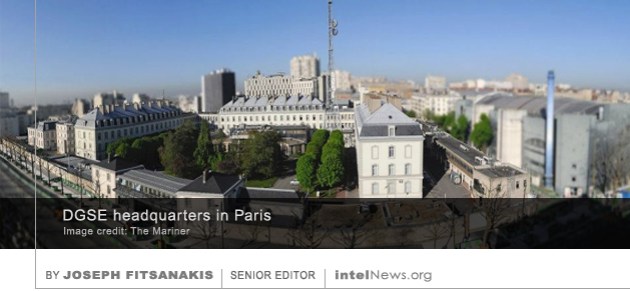 France’s primary intelligence agency warned the country’s government this week that Russia has launched a secret operation to try to influence the outcome of the upcoming French presidential election in favor of the far right. According to the Paris-based weekly newspaper Le Canard Enchaîné, France’s Directorate-General for External Security (DGSE) has notified the country’s leadership that a covert operation by the Kremlin is already underway, and is expected to intensify in the run-up to April’s election. The spy agency allegedly believes that Russian efforts aim to promote Marine Le Pen, leader of the ultra-right National Front. Le Pen wants to curb immigration to France and remove the country from the European Union.
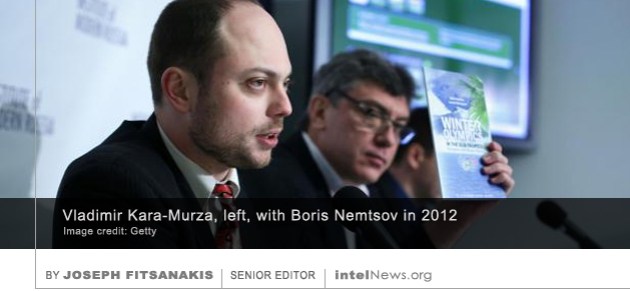 A prominent member of the Russian opposition and vocal critic of the Kremlin, is fighting for his life in a Moscow hospital as a result of “acute poisoning from an undefined substance”, according to his doctors. Vladimir Kara-Murza, 35, is a senior figure in the Open Russia Foundation, a political pressure group founded by Mikhail Khodorkovsky. Khodorkovsky, an ultra-wealthy Russian businessman who was once estimated to be worth over $15 billion, has been living in Switzerland since 2013. Immediately prior to that, he served a 10-year prison sentence in Russia for tax evasion. In 2013, Kara-Murza was a member of a network of Putin critics who helped organize opposition protests in Moscow and Saint Petersburg. He also co-authored a number of reports accusing the administration of Russian President Vladimir Putin of corruption.
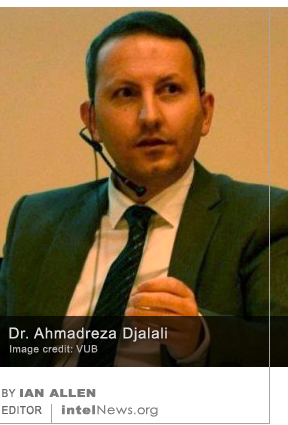 An Iranian scientist who works at a university in Belgium has been sentenced to death in Iran, allegedly for spying. According to his family and his employer in Belgium, Dr. Ahmadreza Djalali is currently in prison in Tehran. Dr. Djalali, 45, is professor of disaster medicine at the Vrije Universiteit Brussel (VUB), a Dutch-speaking university located in the Belgian capital. For the past few years, Dr. Djalali has been based in Italy, where he teaches in the VUB’s European Master’s program in Disaster Medicine. According to an
 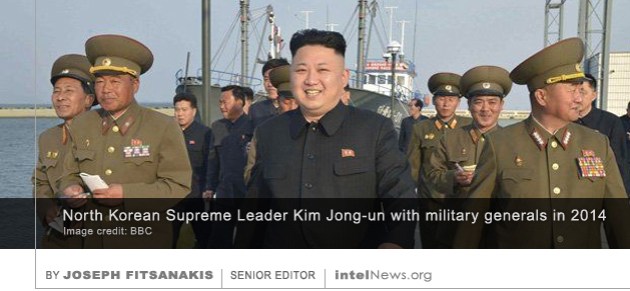 Observers of North Korean politics raised alarm bells over the weekend, as it emerged that Supreme Leader Kim Jong-un fired his spy chief, interfering for the first time with a state institution that had not until now experienced major purges. The news circulated on Friday, following a report by South Korea’s Ministry of Unification —Seoul’s government department responsible for promoting the reunification of Korea. The ministry said that, according to its sources in the North, General Kim Won-hong had been dismissed from his post as Minister for State Security.








Analysis: African intelligence run amok and prospects for reform in The Gambia
February 28, 2017 by intelNews 1 Comment
There has been slow but gradual progress in getting the discipline to understand this fact, to understand how important the study of intelligence is outside of the Five Eyes. In recent years, particular emphasis has been paid to Russia, China, Pakistan, Iran, and Israel, just to name several case studies. But the countries of Africa, unfortunately, have largely remained a near-blank analytical slate when it comes to deeper work on the continent’s various intelligence communities. As recent events in The Gambia show, that absence needs to be rectified at a time when some deeply disturbing aspects of state development and political stability hang in the balance.
A few days ago, nine intelligence officers, among them the ex-head of the Gambian National Intelligence Agency (NIA), were arrested and charged with the murder of Ebrima Solo Sandeng, a top political opposition figure. Sandeng, the National Organizing Secretary of the United Democratic Party (UDP), died in custody after being arrested for his participation in a protest demanding electoral reforms back in April of 2016. The protests were geared to influencing the December 2016 presidential election, which ultimately saw the defeat of incumbent President/Strongman Yahya Jammeh to Adama Barrow. Jammeh had corruptly governed the country since rising to power as a young military officer in a bloodless military coup in 1994.
The official docket accused Yankuba Badjie and eight other members of the NIA of “conspiring amongst themselves to take part in the murder of Solo Sandeng”. Back on April 14, 2016, Sandeng and five other members of the UDF party were arrested by police and taken to Mile 2 Prison where, after two days of torture, Sandeng died of shock and respiratory failure. Read more of this post
Filed under Expert news and commentary on intelligence, espionage, spies and spying Tagged with Adama Barrow, Africa, Analysis, Gambia, Matthew Crosston, National Intelligence Agency (Gambia), State Intelligence Services (Gambia), Yahya Jammeh