Canadian judge bars Chinese PhD student from entering, citing espionage concerns
January 8, 2024 5 Comments
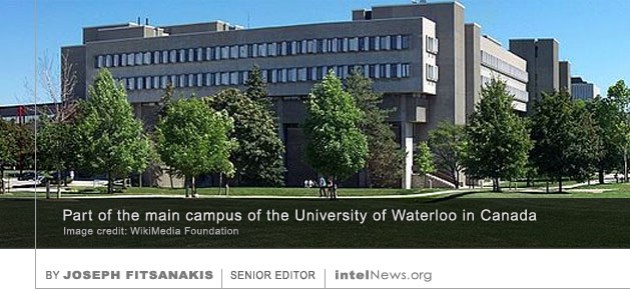 IN AN UNPRECEDENTED AND potentially highly consequential decision, a judge has barred a Chinese PhD student from entering Canada over concerns he might be pressured to spy by the government of China. The case could have “ripple effects” on universities across Canada and possibly even all of North America, according to legal experts.
The central figure in the case is Yuekang Li, a citizen of China, who was accepted into the Mechanical and Mechatronics Engineering PhD program of the University of Waterloo. Li stated in his application that his goal was to return to his home country after receiving his PhD and work to “improve its public health system”. However, when Li applied for a graduate student visa, his application was denied by an officer of Immigration, Refugees and Citizenship Canada (IRCC), the government department that oversees applications for entry visas into the country.
In deeming Li inadmissible to Canada, the IRCC officer in charge of his case reportedly cited the student’s strong interest in microfluidics, a niche branch of nanotechnology with a wide range of applications in the biopharmaceutical industry. The IRCC officer also noted growing concerns in the West about the use of students and researchers as “non-traditional collectors of information” by the government in Beijing. In a number of such cases, Chinese students and researchers have been given permission by the Chinese state to work abroad with the understanding that they will deliberately collect information that will benefit China’s military-industrial complex.
Li promptly challenged the IRCC’s decision, which ended up being heard in Federal Court. Li’s legal representatives argued that the rejection of his application for a student visa relied on “an overly broad definition of espionage” and engaged in “speculation”, rather than factual evidence. But on December 22, Federal Court Chief Justice Paul Crampton sided with the IRCC.
In his decision, which was made available late last week, the judge agrees with the IRCC’s view that the graduate research Li proposed to carry out at the University of Waterloo would fall under the definition of “non-traditional espionage”. He referred to China as a “hostile actor” and cautioned that such actors “increasingly make use of non-traditional methods to obtain sensitive information in Canada or abroad, contrary to Canada’s interests”. Given that new reality, Canada’s legal understanding of what constitutes “espionage” must evolve”, Judge Crampton argues in his decision.
► Author: Joseph Fitsanakis | Date: 08 January 2024 | Permalink
 MIDDLE EAST OBSERVERS WERE hardly surprised by yesterday’s news of the apparent assassination of Hamas leader Saleh al-Arouri in Lebanon. Not only was al-Arouri a
  Yesterday’s assassination at the very heart of Hezbollah’s lair was nothing short of a demonstration of the Mossad’s competency in special operations.
 THE UNITED STATES CENTRAL Intelligence Agency (CIA) has sharply stepped up its activities on China, but Chinese espionage operations remain formidable and continue to pose challenges for American decision-makers, a new report claims. Citing “interviews with more than two dozen current and former American officials and a review of internal Chinese corporate documents and public [Chinese government] documents”, the New York Times
 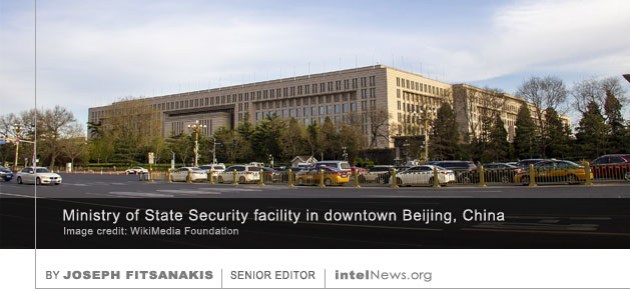 A LONGTIME BELGIAN POLITICIAN worked as a spy for Chinese intelligence for at least three years, according to a joint investigation by a consortium of European news media. Until last week, the politician, Frank Creyelman, 62, was a leading member of Vlaams Belang, a far-right separatist party that draws nearly the entirety of its support from northern Belgium’s Dutch-speaking Flemish regions. In addition to seeking to separate Flanders from Belgium, Vlaams Belang opposes immigration and multiculturalism, with much of its criticism directed at Islam.
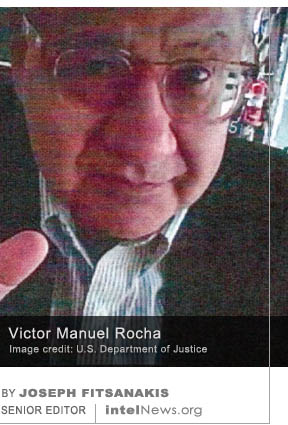 LAST WEEK THE UNITED States Department of Justice announced the arrest of Victor Manuel Rocha, 73, a former senior American diplomat, whose career included stints as ambassador and advisor to the National Security Council and the United States Southern Command. Cuban intelligence allegedly recruited Rocha when he was a student in the 1970s and inspired him to spend his entire professional life in search of opportunities to supply intelligence to Cuba —and possibly Russia and China. United States Attorney General Merrick Garland
  principal officer in the United States Interests Section in Cuba —effectively the second-in-command in Washington’s de facto embassy in Havana.
 IT HAS BECOME CLEAR that Hamas had up-to-date intelligence on Israeli targets prior to the attack on October 7, 2023, the largest and most devastating terrorist attack in Israel’s history. Hamas did not have access to clandestine information sources but rather relied on open-source intelligence (OSINT) to understand the structure and weaknesses of Israel’s defense system along the border fence. In addition to publicly available maps, Hamas meticulously gathered online intelligence about specific sites within the Israeli communities near the Gaza Strip.
 interests of national security, the public’s ‘right to know’ purview is substantial. Thus, significant amounts of information are available online.
 the Israeli Military Intelligence was dissolved, for reasons that remain to be investigated. CNN was among many news outlets that have
 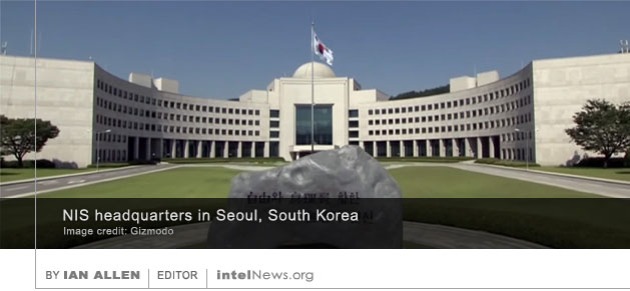 IN A SURPRISING MOVE that has stirred curiosity across Asia, South Korean President Yoon Suk Yeol has abruptly ousted the entire senior leadership of the National Intelligence Service (NIS), a powerful entity in the country. The
  AUTHORITIES IN ITALY ARE investigating a series of suspicious cash withdrawals that were made from accounts belonging to the Russian embassy in Rome, according to reports in the Italian press. On November 14, the Rome-based daily La Repubblica
  THE FRENCH GOVERNMENT HAS accused Russia of carrying out a disinformation campaign using stenciled images of Stars of David that mysteriously appeared in the streets of Paris late last month. The stars, between 60 and 80 in number, were found in the 14th arrondissement of the French capital, as well as in several Parisian suburbs in the early hours of October 31. The stars (see accompanying picture) are all blue and all have the same size. They appear to have been hurriedly stenciled and have no accompanying text.
 SINCE OCTOBER 7, WHEN Hamas launched its surprise attack on Israel, many more details about the intelligence failure have emerged. It appears that Israeli intelligence officials have warned for years about military exercises held by Hamas in the Gaza Strip, which have included practice raids on cities deep inside Israel. However, the Israel Military Intelligence (IMI) did not heed to the warnings, because it considered Hamas operationally incapable of carrying out such raids. Instead, the IMI estimated that the Hamas leadership aimed to arrive at a settlement with Israel. That seems like the result of a highly successful disinformation operation, which added significantly to the effectiveness of the sudden attack on Israel on October 7.
 large number of settlements simultaneously. It also believed that such an operation would go against the spirit of Hamas leadership’s spirit intention to settle with Israel.
 Indeed, a preventive course of action should have been in place even in the absence of specific intelligence warnings —if only to enable the IDF to repel a surprise attack by Hamas. There was no need to estimate what Hamas would do in order to prepare for a surprise attack.
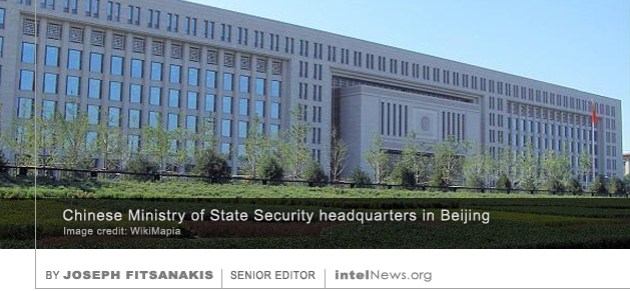 BEIJING HAS ACCUSED “FOREIGN governments” of collecting data on China through hundreds of fake meteorological stations that have been illegally installed throughout Chinese territory. The announcement appears to form part of a broader “people’s anti-espionage war” that the Communist Party of China
  A FORMER SOVIET KGB officer, who now lives in the United Kingdom under witness protection, can sue the British state for revealing his identity to Latvian authorities, which may have put his life in danger, a judge has ruled.
  THE GROWING LIST OF assassinations of prominent Russians and Ukrainian separatists shows that the Ukrainian intelligence services are using “liquidations” as a weapon of war, according to The Washington Post. Citing “current and former Ukrainian and United States officials”, the paper
  Crimea, the local head of the domestic security agency, the Ukrainian Security Service (SBU) defected to Russia.








Analysis: Israel underestimated Hamas while overestimating its own capabilities
January 10, 2024 by intelNews Leave a comment
Filed under Expert news and commentary on intelligence, espionage, spies and spying