Analysis: Will ISIS claim responsibility for Istanbul airport attack? (updated)

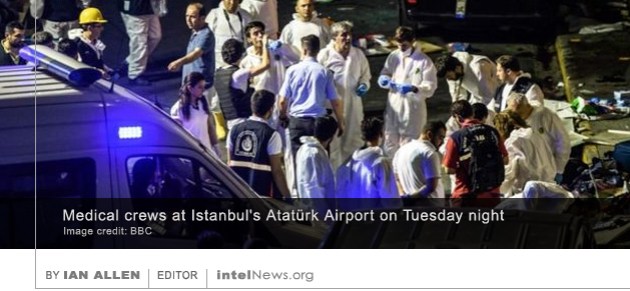
Istanbul Airport TurkeyTurkish security and counterterrorism officials are blaming the Islamic State of Iraq and Syria for Tuesday’s bloody attack at Istanbul’s Atatürk airport, which left at least 41 people dead and nearly 300 injured. But will ISIS claim responsibility for the attack? And if not, why not? ISIS is indeed the most likely culprit of Tuesday night’s terrorist attack. The modus operandi of the three attackers, which some unconfirmed reports suggest Turkey has now confirmed were foreign nationals, matches that of previous ISIS attacks on high-profile international targets. More importantly, the style of the attack does not fit the profile of the secessionist Kurdistan Workers’ Party, known as PKK, which almost always targets uniformed personnel in Turkey.

There is no shortage of motives for ISIS to target Turkey. The militant group wants to destabilize Turkey, which it sees as a prime market for spreading its ideas, especially among the country’s disenfranchised religious working class. The attack at Istanbul’s airport happened in the holy month of Ramadan, the most revered time on the Muslim religious calendar, during which ISIS said would launch a wave of violence around the world. Last but not least, foreign and domestic intelligence agencies had warned the Turkish government in recent weeks of an impending large-scale attack by ISIS, saying that the group was anxious to re-galvanize its supporters after suffering heavy military defeats in Iraq and Syria. Since the start of 2015, experts have connected ISIS to at least seven different attacks on Turkish soil, most of them in large urban centers like Ankara and Istanbul. However, the only attacks the militant group has claimed responsibility for were against Syrian anti-ISIS activists based in southern Turkey. In contrast, ISIS has shied away from officially linking itself with deadly attacks against high-profile targets in Turkey. This latest attack may fall in line with that pattern.

But why would ISIS not claim responsibility for such a media-savvy strike? There is no question that the Sunni Islamist group wants to destabilize Turkey’s economy, a goal that it sees as key to its success. That explains Tuesday night’s attack on one of the country’s busiest transport hubs during the peak of the tourist season. At the same time, however, ISIS is aware that Turkey’s main concern in the Middle East is not Sunni Islamism, but the rise of the PKK and other secessionist Kurdish groups. The latter are some of ISIS’ most formidable military adversaries, and the Islamist group would rather not distract Turkey from its escalating war against the Kurds. What’s more, because Ankara has been paying most of its attention to Kurdish separatists, ISIS has been able to build an extensive network of operatives inside Turkey, and it does not want to see it demolished by Turkish security forces. ISIS is therefore engaged in a delicate balancing act: on the one hand it wants to destabilize Turkey so as to export its sectarian war to one of the world’s most populous Sunni Muslim nations. On the other hand, however, it does not want to alter Turkey’s security priorities, which are mostly focused on Kurdish militias.

What will it mean if ISIS breaks with the typical pattern and does claim responsibility for Tuesday’s attack in Istanbul? That would be equivalent to an official declaration of war by the Islamic State against the Turkish Republic, a call for arms issued to all pro-ISIS networks in Turkey for the opening of a northern front in this widening regional conflict. It could also spell trouble for Turkey’s beleaguered security forces, which will be forced to divide their attention between two foes, the PKK in the east and in urban centers, and ISIS in the south and in popular tourist resorts throughout the country.

Author: Ian Allen | Date: 30 June 2016 | Permalink

German cabinet approves spy service reform in wake of NSA controversy

BND - IAThe senior executive body of the German government has approved draft legislation that reforms the country’s intelligence services, following revelations that Germany helped the United States spy on European states. The legislation is seen as a response by the German government to a number of recent public controversies involving the Bundesnachrichtendienst, Germany’s Federal Intelligence Service, known as BND.


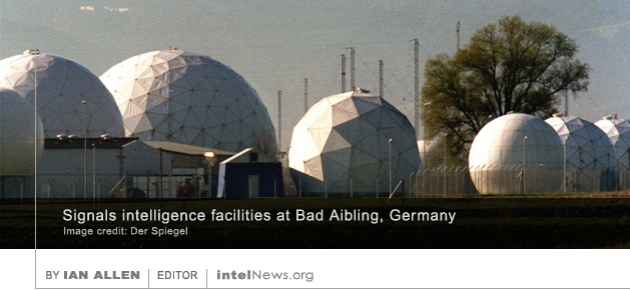
In 2015, the BND was found to have secretly collaborated with the US National Security Agency (NSA) in spying on several European governments and private companies. According to German investigative magazine Der Spiegel, the BND used its facilities at Germany’s Bad Aibling listening station to help the NSA spy on, among other targets, the palace of the French president in Paris, the headquarters of the European Commission in Brussels, and the France-based European conglomerate Airbus. In response to the revelations, Airbus filed a criminal complaint against the German government, while Belgium and Switzerland launched official investigations into the joint BND-NSA activities.

The extent of the BND-NSA collaboration prompted widespread public criticism in Germany. In response to the criticism, German Chancellor Angela Merkel promptly fired the director of the BND in April of this year, in a move that surprised many. Gerhard Schindler, who had headed the BND since 2012, was replaced by Bruno Kahl, a senior official in the German Federal Ministry of Finance, who did not come from within the ranks of the BND. Additionally, the German chancellor authorized a parliamentary inquiry into the operations of the BND, which was completed last spring. The resulting 300-page report forms the basis of the draft legislation that was approved on Tuesday by the German cabinet.

The new legislation bans the BND from spying on foreign governments or corporations for the benefit of German companies. It also prevents it from spying on targets within the European Union, unless the operation pertains to “information to recognize and confront threats to internal or external security”. This is taken to mean operations relating to suspected terrorist activity that directly threatens German national security. The legislation also calls for the establishment of a new independent oversight body consisting of senior judges and representatives of the Office of the Federal Prosecutor, whose job will be to evaluate and approve the BND’s proposed espionage activities against foreign targets.

The legislation will need to be finalized through its approval by the German Federal Parliament, known as the Bundestag. The body is expected to approve the legislation before the beginning of its official summer break in mid-July.

Author: Ian Allen | Date: 29 June 2016 | Permalink

Harassment of diplomats is part of escalating US-Russian ‘gray war’

US embassy in RussiaA notable increase in incidents of harassment of American diplomats stationed in Europe by Russian intelligence personnel appears to be part of what some officials describe as an escalating “gray war” between the US and Russia. For over a year now, American State Department personnel stationed in Europe have been complaining of a systematic campaign of “harassment and intimidation” against them and their families by Russian intelligence operatives. The campaign is allegedly being waged in Moscow and other European capitals, and has prompted one US diplomat to say that he and his colleagues were “feeling embattled out there in the embassy”. The Washington Post, which published the story on Monday, said that the diplomats’ concerns about the Russian campaign of intimidation were raised again at a recent meeting in Washington of US ambassadors serving in Europe and Russia.

According to The Post, some of the harassment can be characterized as routine, and involves Russian intelligence personnel conducting surveillance of American diplomats, taunting them at social events, or bribing local journalists to report negatively on their activities. But these pranks have allegedly become uglier and even criminal after 2014. The Post said that it had read “a series of secret memos” sent to the State Department by US embassies and consulates in Russia and Europe, which suggest that the increasing harassment of American diplomats is connected to the sanctions imposed by the US on Russia after its military intervention in Ukraine. In some instances, Russian intelligence operatives broke into the homes of American diplomats at night and rearranged the furniture, or turned on all the lights and electronic equipment before leaving. In another case, a US diplomat’s children were followed to school, while another’s car tires were slashed repeatedly, said the paper.

The State Department’s press secretary John Kirby told The Post that incidents of overt harassment of US diplomatic personnel by Russian government employees had indeed increased. Norm Eisen, America’s former ambassador to the Czech Republic, told the paper that the intimidation was part of “the gray war” between Washington and Moscow, which has escalated following Russia’s intervention in the Ukraine.

A statement from the Russian embassy in Washington denied that the Russian government was behind the alleged incidents. But it went on to state: “In diplomatic practice there is always the principle of reciprocity and, indeed, for the last couple of years our diplomatic staff in the United States has been facing certain problems”. This statement can be seen to imply that Russia is responding to instances of intimidation of its diplomats by US authorities. The statement added: “The deterioration of U.S.-Russia relations […] was not caused by us, but rather by the current [US] administration’s policy of sanctions and attempts to isolate Russia”. The Post said that US Secretary of State John Kerry raised the issued directly with Russian President Vladimir Putin during his visit to Moscow in March, but that the harassment has continued. US President Barack Obama is apparently aware of the situation, but has ordered US intelligence agencies “not to respond with similar measures against Russian diplomats”, said the paper.

Author: Ian Allen | Date: 26 1 June 2016 | Permalink

Experts warn about Brexit’s effects on European, NATO cooperation

BrexitAfter Thursday’s Brexit vote, European and American security officials have tried to pacify concerns about major disruption of longstanding Western security cooperation arrangements. But experts stress that the international security landscape will be significantly impacted by Britain’s decision to leave the European Union (EU). As early as Thursday night, British defense, military and intelligence officials launched a marathon of phone calls in order to reassure their European and American counterparts that the United Kingdom was not going to retreat from its role in security pacts with Europe and the North Atlantic Treaty Organization (NATO).

On Friday, the office of NATO Director General Jens Stoltenberg issued a statement assuring the public that Britain’s decision to leave the EU would not impact on NATO’s security arrangements. On Sunday, however, a new statement by Stoltenberg appeared to revise his earlier comments. It argued that Britain was “the biggest provider of security in Europe” and that its eventual exit from the EU “matters”, adding that the West’s security situation post-Brexit was “more unpredictable […] than before”. Citing security officials from both sides of the Atlantic, including Stoltenberg, The Wall Street Journal opined on Sunday that Brexit “could have a profound effect on global security”, but stressed that its precise impact remains uncertain. Some officials warned that, in the long run, Britain’s exit from the EU would weaken its military, which is Europe’s most powerful. This could happen through a possible breakup of the country, with Scotland and Northern Ireland splitting from the United Kingdom in reaction to Brexit. Alternatively, Britain’s worsening economic situation could prove detrimental to its overall defense spending.

On Saturday, United States Navy Admiral (ret.) and former NATO commander James Stavridis, argued that NATO will benefit from Brexit, because it will allow the United Kingdom to devote “more resources and manpower to support” NATO’s mission. There will also be a “reduction in the […] battlefield competition between NATO and the EU”, said Adm. Stavridis, which “will likely produce a stronger NATO”. Others, however, disagreed. Citing several current and former officials, The Wall Street Journal warned that Britain’s exit from the EU would result in the loss of a quarter of the EU’s combat power. That could prompt Germany, France, and other EU nations to increase their military spending, in order to advance a more unified defense policy among EU nations. That could bring about a unified EU military headquarters, or even a joint European Army, which NATO has traditionally resisted, as it believes it would duplicate resources and undermine transatlantic cooperation. But with Britain leaving the EU, a staunch pro-NATO voice that strongly objected to the creation of a European Army ceases to exist. That could open the door to the creation of a European Army, say experts.

Last but not least, the UK was a strong player lobbying in favor of instituting EU-wide sanctions against Russia in the wake of the war in eastern Ukraine and Russia’s annexation of Crimea. With London now removed from the decision-making center in Brussels, the voices from EU member states like Spain, Italy and Greece, which argue for abandoning the sanctions against Moscow, are likely to grow louder, said The Wall Street Journal.

Author: Ian Allen | Date: 27 June 2016 | Permalink

US, UK, had secret plan to bomb Middle East oil facilities if Soviets invaded

Iraq Oil Petroleum CompanyRecently uncovered documents shed further light on an ultra-secret plan, devised by the British and American governments, to destroy oil facilities in the Middle East in the event the region was invaded by Soviet troops. The documents, published on Thursday by George Washington University’s National Security Archive, were found in the British government archives and date from 1951 to 1955. They describe a top-secret United States plan known as NSC 26/2, which was approved by the National Security Council in 1949 and authorized by President Harry Truman. The plan aimed to prevent the use of Middle East oil facilities by Soviet troops if the latter were able to successfully invade the region.

American documents from the 1950s describe NSC 26/2 as a “denial policy”, which called for a secret collaboration between Middle East-based American and British oil companies. The goal was to sabotage or completely destroy oil facilities and equipment that were in British and American hands, before the Soviets could take them over. The most sensitive part of the plan was the need to keep it secret from the governments of Middle Eastern countries like Iran, Iraq, and Saudi Arabia, even though most of them were allies of the West at the time.

The existence of NSC 26/2 was first revealed in 1996, when the American newspaper Kansas City Star published an extensive article about it, written by Steve Everly. But the recently unearthed British documents shed more light than ever before on the intelligence aspects of the secret plan. Specifically, they reveal the leading role played by the Central Intelligence Agency in implementing the details of the plan in nearly every Middle Eastern country, including Kuwait, Bahrain, Qatar, Iran, Iraq, and Saudi Arabia. As part of the plan, the CIA systematically inserted what the National Security Archive describes as “undercover operatives” into posts in American and British oil companies. Their mission was to collect inside information and recruit other oil employees to facilitate the requirements of NSC 26/2. In essence, says the National Security Archive, the CIA created “a paramilitary force ready to execute the denial policy”.

Some of the documents also show that American and British leaders discussed the possibility of bombing —in some cases using nuclear weapons— some oil facilities in countries like Iraq and Iran that were state-owned and thus had no Western connections. In 1953, NSC 26/2 was updated and replaced with NSC 176, which was later renamed NSC 5401. The plan continued to call for the destruction of oil facilities in the Middle East, using “direct action”, if they were close to being seized by Soviet troops.

Author: Ian Allen | Date: 24 June 2016 | Permalink

Recent gains against ISIS are not enough, may actually backfire, say experts

First Post HWestern experts and intelligence officials are warning that the recent military gains made against the Islamic State of Iraq and Syria (ISIS) are not enough to damage it, and may in fact make the group stronger in the long run. Undoubtedly, the impressive momentum of ISIS, which calls itself the Islamic State, has been curtailed, and the image of invincibility that it once projected is no longer there. Observers estimate that the Sunni militant group has lost nearly a fifth of its territory in Syria, while it is no longer in control of about half of the land it used to occupy in Iraq. As a result of these territorial defeats, ISIS has lost a third of its oil production, which is believed to account for half of its overall revenue. Earlier this month, US President Barack Obama said that, as ISIS continues to concede territory, it is “losing the money that is its livelihood”.

But US intelligence officials do not seem to agree. Speaking on June 16 before the US Senate’s Select Committee on Intelligence, John Brennan, Director of the Central Intelligence Agency, cautioned against triumphalism. He told senators that the efforts of the international military coalition against ISIS “have not reduced the group’s terrorism capability and global reach”, adding that ISIS would “have to suffer even heavier losses of territory, manpower, and money for its terrorist capacity to decline significantly”. According to Reuters, a number of US intelligence officials and counterterrorism experts support Brennan’s views. The news agency said on Wednesday that many experts are warning that the military campaign on the ground was “far from eradicating [ISIS] and could even backfire”.

The fact that local troops fighting ISIS are almost completely composed of Shiite Arabs from Iraq and Iran, or are Kurdish Peshmerga, could add legitimacy to ISIS as the protector of the Sunni Arab minority in the region. There are also reports of human rights violations against Sunnis by the advancing Shiite forces, including an unconfirmed allegation that 49 Sunni men of fighting age were executed after surrendering to the anti-ISIS coalition in Falluja. Additionally, if ISIS loses much more territory, it will be tempted to simply abandon conventional fighting tactics and turn into a guerrilla group. Reuters quotes RAND Corporation analyst Seth Jones, who argues: “It looks like the areas that the Islamic State has lost, they are generally abandoning, and that would mean preparing to fight another way”. That could mean that ISIS fighters intend to blend in with the urban population and launch a campaign of sabotage, assassination and disruption of government services.

As ISIS has lost ground in Iraq and Syria, the flow of foreign fighters intending to join the organization has dropped significantly. But that is not necessarily a good thing, says Reuters. These fighters, who in the past were instructed to join ISIS in the Middle East, may now be told to launch lone-wolf terrorist attacks abroad. The Reuters report cites one terrorism expert, Hassan Hassan, of the Royal Institute of International Affairs in London, who argues that the international appeal of the Islamic State is not connected to the group’s military performance in the Middle East. In other words, its popularity among its Western followers will persist even if all of the group’s territorial strongholds are lost to its adversaries.

Author: Ian Allen | Date: 23 June 2016 | Permalink

American spy for Israel released after 30-year sentence ‘still a threat to US’

Pollard - aSenior United States intelligence officials have filed parole documents arguing that an American Navy analyst, who was recently released from prison after serving a 30-year sentence for spying for Israel, continues to pose a threat to national security. Jonathan Jay Pollard is a former intelligence analyst for the United States Navy, who has was jailed in 1985 for selling American government secrets to Israel. During his trial, the US government successfully argued that Pollard was one of the most damaging spies in American history, having stolen a high volume of classified documents in a relatively short period of time.

But Pollard was recently released from prison, having served his full 30-year sentence. However, as part of the conditions of his release, Pollard must consent to the US government having constant access to the hard drive of his personal computer and internet browsing history. He is also obligated to wear a GPS device at all times, which tracks his daily movements in New York, where Pollard has been living since his release from prison. Some intelligence observers, including Newsweek correspondent Jeff Stein, have voiced concerns that Pollard may be tempted to travel abroad in order to collect funds that his Israeli spy handlers may have deposited for him in offshore bank accounts as payment for his past acts of espionage.

Now Pollard’s lawyers have filed a legal brief arguing that his parole conditions are unnecessary and excessive, and that the US government should ease them considerably. However, documents filed late last week with the US Parole Commission by senior intelligence officers acting on behalf of the US Intelligence Community, make the case that Pollard’s parole conditions should continue unchanged. In a report published on Tuesday, the Daily Beast’s Shane Harris says the intelligence officers argue “forcefully” in the documents that Pollard “still poses a risk to national security”. One of the documents (.pdf), filed by Jennifer Hudson, Director of the Information Management Division at the Office of the Director of National Intelligence, uses particularly stark language in support of maintaining Pollard’s parole conditions. Hudson argues that “some of the sources and methods used to develop some of the intelligence exposed by Mr. Pollard not only remain classified but are still in use by the Intelligence Community today”.

Harris quotes an unnamed “former senior US intelligence official familiar with Pollard’s case”, who argues that the spy may have known which “up-and-coming” Israeli or other Middle Eastern leaders US intelligence had recruited or was trying to recruit as agents in the early 1980s. These individuals may today be in positions of prominence, and Pollard may be able to harm them. In her declaration filed with the Parole Commission, the ODNI’s Hudson argues that Pollard could also compromise information gathered from US agents in Israel and elsewhere, which could potentially reveal their identities. “Even in cases where [these agents are] no longer alive, such disclosure can place in jeopardy the lives of individuals with whom the source had contact”, she writes.

There is, of course, another reason too, says Harris, for the resistance put up by the US Intelligence Community against easing Pollard’s restrictions: “US spies don’t easily forgive, and they don’t forget”, he says. Pollard’s former colleagues are still angry about his monumental betrayal. The Daily Beast says it contacted one of Pollard’s lawyers for a comment, but there was no response.

Author: Ian Allen | Date: 22 June 2016 | Permalink

Iran says it foiled ‘massive terrorist attack’ by Sunni militants

TehranIranian intelligence officials said on Monday that they foiled “one of the largest terrorist attacks ever planned” against the country, allegedly plotted by Sunni militants aiming to inflict mass casualties during the month of Ramadan. A statement by the Islamic Republic’s Ministry of Intelligence said that the attacks had been planned to take place simultaneously in the capital Tehran and several other Iranian cities. Iranian state-owned news agencies reported that an unspecified number of suspects had been arrested and were under interrogation by the authorities.

The statement by the Intelligence Ministry provided few details, but said that the suspects were arrested in several raids conducted across Iran. It added that “a great deal of explosives and ammunition” were confiscated in the raids. The Iranian Students News Agency (ISNA), which has close links with the Iranian government, said that the raids were personally coordinated by Rear Admiral Ali Shamkhani. Shamkhani is secretary of the Supreme National Security Council of Iran, which is effectively the country’s national security council. Another government-controlled news agency, Fars, said that the terrorist plot aimed to attack civilian targets during the holy month of Ramadan, which is the most revered time on the Muslim religious calendar. Iran’s official state news agency, IRNA, reported on Monday that the attacks had been planned for last Thursday, a day in the Iranian religious calendar when festivities are held to commemorate the death of Khadija bint Khuwaylid, the first wife of the Prophet Mohammed.

None of the media reports identified those who were allegedly connected with the planned attacks. However, the reports repeatedly used the term ‘takfir’, a derogatory epithet used to describe Muslims who display militancy against those whom they consider to be ‘unbelievers’. The term is frequently employed by state-owned Iranian media to refer to the followers of the Islamic State, which Iran has been battling for over a year in support of the Syrian government of President Bashar al-Assad. However, IRNA referred to the alleged plotters as “Wahhabi takfiris”, possibly implying a link with Saudi Arabia, where Wahhabism is the state-promoted religious dogma. Relations between Iran and Saudi Arabia have sunk to unprecedented lows in recent years. Last month, Iran said it would not allow religious pilgrims to visit Saudi Arabia for the annual hajj pilgrimage, because the Saudi authorities had not responded to Tehran’s requests to provide security for Iranian pilgrims.

Author: Ian Allen | Date: 21 June 2016 | Permalink

Islamic State’s online army is a Russian front, says German intelligence

Cyber CaliphateA German intelligence report alleges that the so-called ‘Cyber Caliphate’, the online hacker wing of the Islamic State, is in fact a Russian front, ingeniously conceived to permit Moscow to hack Western targets without retaliation. The group calling itself Cyber Caliphate first appeared in early 2014, purporting to operate as the online wing of the Islamic State of Iraq and Syria (ISIS), later renamed Islamic State. Today the Cyber Caliphate boasts a virtual army of hackers from dozens of countries, who are ostensibly operating as the online arm of the Islamic State. Their known activities include a strong and often concentrated social media presence, and computer hacking, primarily in the form of cyber espionage and cyber sabotage.

Since its inception, the Cyber Caliphate has claimed responsibility for hacking a number of European government agencies and private media outlets. Its targets include the BBC and French television channel TV5 Monde, which was severely impacted by cyber sabotage in April of 2015. The Cyber Caliphate said it was also behind attacks on the servers of the United States Federal Bureau of Investigation, the Department of Defense, and the website of the Pentagon’s US Central Command. The US has since retaliated, both with cyber attacks and physical strikes. One such strike resulted in the killing of Junaid Hussain, a British hacker of Pakistani background, who was said to be among the Cyber Caliphate’s senior commanders. Hussain, 21, was reportedly killed in August 2015 in Raqqa, the Islamic State’s de facto capital in Syria, reportedly after clicking on a compromised link in an email, which gave away his physical whereabouts.

Now, however, a German intelligence report claims that the Cyber Caliphate is not associated with the Islamic State, but is rather a fictitious front group created by Russia. According to German newsmagazine Der Spiegel, which said it had seen the classified report, German authorities suggest that the Cyber Caliphate is in fact a project of APT28 (also known as ‘Pawn Storm’), a notorious Russian hacking collective with close ties to Russian intelligence. The German intelligence report echoes previous assessments by French authorities, which in 2015 stated that the TV5 Monde cyber attack was a false flag operation orchestrated by APT28. Also in 2015, a security report by the US State Department concluded that despite the Cyber Caliphate’s proclamations of connections to the Islamic State, there were “no indications —technical or otherwise— that the groups are tied”.

Author: Ian Allen | Date: 20 June 2016 | Permalink

Russia ‘mobilizing for war’ warns Canadian intelligence report

CSIS Canada A report by Canada’s primary intelligence agency warns in stark language that Russia is “retooling its military for a fight” and appears to be “mobilizing for war”. The classified report was accessed by the Canadian Broadcasting Corporation (CBC), the country’s state-owned broadcaster. According to the CBC, the document was produced by the Canadian Security Intelligence Service (CSIS), Canada’s primary national intelligence service. It is titled 2018 Security Outlook and is described by the CBC as a “distillation” of information from open sources and publicly available academic research, without input from internal CSIS assessments.

The 104-page report contends that, in the absence of any serious opposition inside Russia, the hardline nationalistic policies of Russian President Vladimir Putin are going unchallenged and becoming “more deeply entrenched”. When assessed collectively, Putin’s maneuvers in the area of national defense reveal that he is “retooling [the Russian] military for a fight”, claims the CSIS report. It goes on to add that Moscow “is not modernizing its military primarily to extend its capacity to pursue hybrid warfare”. The term ‘hybrid warfare’ is used by some experts to describe Russia’s utilization of irregular military tactics during its invasion and annexation of Crimea in 2014, and many believe that it points to the future evolution of Russian military thinking. But the CSIS document argues that President Putin is primarily modernizing Russian “conventional military capability on a large scale” and argues that “the state is mobilizing for war”.

The CSIS report is believed to be among several reasons why Ottawa is considering contributing hundreds of troops to a new 4,000-strong North Atlantic Treaty Organization (NATO) force that is expected to be stationed in the Baltic States in the coming months. The Canadian intelligence agency argues in favor of a more aggressive NATO policy vis-à-vis Russia in its report, stating that the economic sanctions imposed by the West on Moscow after the annexation of Crimea are not working. Instead of faltering due to outside economic pressures, the Kremlin “appears to be coherent, durable and united”, says CSIS. Consequently, “Western assessments that Russia is vulnerable to economic collapse and disruptive internal discontent are exaggerated”, according to the report. The document concludes that Russia is “adapting to diversity [by] deliberately tilting [its economy] to security, rather than economic freedom”.

Author: Ian Allen | Date: 16 June 2016 | Permalink

Elite Hamas military commander reportedly defects to Israel

Kerem Shalom border crossingA senior member of the military wing of Hamas, the Palestinian militant group that governs the Gaza Strip, is believed to have defected to Israel. News of the rumored defection first appeared on the website of Al-Hayat al-Jadida, the official newspaper of the Palestinian Authority, which is based in the West Bank. On Tuesday, Al-Hayat said that the man, a member of the Izz ad-Din al-Qassam Brigades, Hamas’ military wing, had not been seen for several days.

The alleged defector was later named as Bassam Mahmoud Baraka, and reportedly comes from a well-known family in Kahn Younis, on the southern sector of the Gaza Strip. Baraka’s father is believed to be a religious judge that serves in Gaza under Hamas’ jurisdiction. According to Al-Hayat, the missing man is an elite member of the al-Qassam Brigades and specializes in operating inside the numerous underground tunnels that are said to span the entirety of the Palestinian enclave. The tunnels are of strategic importance to Hamas, as they secretly connect it with the outside world, despite Israeli efforts to prevent the trafficking of goods and people to and from the Gaza Strip. Some Israeli military officials believe that Hamas operatives are able to travel from one end of the Strip to the other without having to emerge from the ground. Since the 2014 Israeli invasion of Gaza, Tel Aviv has said that it views the elimination of Hamas’ vast underground tunnel network as a national security priority.

According to Palestinian websites, Baraka told members of his family that he was stepping out for a brief hike but never returned. He is believed to have voluntarily approached the border fence that separates Gaza from Israel and surrendered himself to a group of Israeli soldiers. Al-Hayat reports that Baraka’s family has already been informed from representatives of the Red Cross that he is in Israeli hands. Palestinian sources suggest that the Israeli soldiers that took in Baraka were aware of his pending defection and were waiting for him at the border. He was also reportedly carrying a laptop computer with him.

Israel is known to aggressively recruit informants in the Gaza Strip, many of them affiliated with Hamas. In 2010 it was revealed that Mosab Hassan Yousef, whose father is a senior Hamas official, was a secret informant for Shin Bet, Israel’s domestic security agency. Yousef defected to Israel and is now believed to be living in the United States.

Author: Ian Allen | Date: 15 June 2016 | Permalink

Former CIA, NSA directors, retired generals, launch gun control group

HaydenFormer directors of the Central Intelligence Agency, the National Security Agency, as well as several 3- and 4-star generals and admirals have launched a new effort to control the sales of guns in the United States. The effort is certain to attract attention after last weekend’s deadly mass shooting in Orlando, Florida. The group, which calls itself Veterans Coalition for Common Sense, is led by former CIA Director David Petraeus, former CIA and NSA Director Michael Hayden, and US Army General (ret.) Stanely McChrystal. The group’s advisory committee includes recognizable figures such as that of Admiral Eric Olson, who led US Special Operations Command from 2007 to 2011 and was the first US Navy SEAL to be appointed to four-star rank. Other advisory committee members include high-ranking veterans from every branch of the US Armed Forces, such as R. Adm. Jamie Barnett, Brig. Gen. Stephen Cheney and Air Force commander Lt. Gen. Norman Seip.

The group was formally launched at a press conference in Washington, DC, on Friday, just hours before Sunday morning’s mass shooting in Orlando. The organizers of the new effort said it came out of the 120,000-member strong Veterans for Responsible Solutions, a project spearheaded by USN R. Adm. Barnett in 2013, after the mass shooting at the Washington Navy Yard, which killed 15 people. Another group that has offered support for the new effort, and will act as its parent organization, is Americans for Responsible Solutions, a non-profit organization that promotes gun control in compliance with the US Constitution. It was founded shortly after the 2012 shooting at the Sandy Hook Elementary School in Newtwon, CT, which killed 28. The organization’s founders are former NASA astronaut Mark Kelly and his wife, Gabrielle Giffords, whose Congressional career was cut short in January 2011, after she and 18 other people were shot in Tucson, AZ.

During their press conference on Friday, Veterans Coalition for Common Sense leaders said each had “swore an oath to protect our Constitution and the homeland”. But they were now “asking our leaders to do more to protect our rights and save lives”, they added. The group said they aimed to encourage their elected representatives to “do more to prevent gun tragedies”, including closing legal loops on gun background checks, strengthening gun control laws more broadly, and focusing on the mental health component that appears to be part of many mass shootings. In a separate development, another former Director of the CIA, John McLaughlin, said on Monday that “an assault weapons ban makes sense, at least to me”. In an interview with news site OZY, McLaughlin said that, in his personal view, “it is way past time for an assault weapons ban”.

Author: Ian Allen | Date: 14 June 2016 | Permalink

Opinion: Islamic State’s strategy will affect America’s gun control debate

Orlando shootingOut of the myriad of questions emerging from Sunday morning’s massacre in Orlando, two are perhaps most pressing. One concerns internal security in the United States; the other relates to the broad strategy of the Islamic State, the militant Sunni Muslim group that claimed responsibility for the bloody attack. The two topics are closely related.

Like most issues in modern-day America, the topic of internal security is heavily politicized, with public debate dominated by Democratic and Republican partisans. Predictably, each side is using Sunday’s massacre to advance its political agenda. It cannot be denied that, rightly or wrongly, gun ownership is a deeply entrenched feature in the American understanding of citizenship for a variety of social and historical reasons. It is equally undeniable that America’s liberal gun laws make it extremely easy for aspiring terrorists to acquire weapons. Recent mass shootings show that even those with documented mental illnesses or individuals who have been questioned by the Federal Bureau of Investigation for possible links to terrorism, like Omar Mateen, are legally able to purchase high-powered weapons. This reduces the number of people that are needed to inflict mass casualties and directly assists the work of terrorist groups. Furthermore, the ability of aspiring terrorists to legally acquire high-powered weaponry exceeds America’s law enforcement and intelligence capabilities, and thus directly threatens the security of daily life in the country.

Judging by other recent mass shootings, and the speed with which the relentless news cycle moves on to other stories, this latest massacre is unlikely to have a major impact on US gun laws. However, if the attack in Orlando proves to be part of a broader strategy by the Islamic State, then the center of the debate on gun control in America may shift in unprecedented directions.

Most commentators agree that the Islamic State is currently retreating not only in its Syrian and Iraqi strongholds, but also in Libya, where it appears to be losing its control of the strategic port of Sirte. The possibility of losing its territorial base may radically alter the group’s modus operandi and strategic goals. Historically, the Islamic State has focused on what can be described as its core terrain, which includes Iraq, Syria, the Sinai Peninsula, and to a lesser extent Jordan and Lebanon. Back in 2014, Islamic State leaders could have urged the group’s tens of thousands of followers in the West to carry out the jihad there. But they didn’t, because the grand strategy of the Islamic State is to secure a territorial base in the Middle East before taking on bigger tasks. Islamic State supporters were therefore urged to join the fight to establish a territorially secure caliphate in the Middle East instead of attacking Western targets. The latter have of course been attacked, but this has been done primarily for two reasons: first, to discourage Western countries from getting directly involved in the war against the Islamic State; second, to encourage Islamophobia in the West and further-marginalize already disaffected Western Muslim youth, driving them to join the Islamic State.

But should the militant Sunni group be territorially defeated, it might decide to change its tactic and begin unleashing its followers in the West. Or if it is sensing that it is losing control of its self-proclaimed caliphate, it may already be already changing its strategy. There is currently no evidence that Omar Mateen was in touch with the Islamic State prior to committing Sunday’s massacre. But if he did, the Orlando massacre may have been an early indication of the Islamic State’s change of direction. Perhaps, then, the US is in for a lot more of these carefully targeted and lethally executed strikes.

It may be that the blood of over 50 people spilled in Orlando will not seriously affect the gun control debate. But if these killings increase in frequency and lethality, American society will face a number of unprecedented dilemmas that combine the issues of gun rights, domestic security and citizenship.

Author: Ian Allen | Date: 13 June 2016 | Permalink

Intelligence officers among five killed in rare terrorist attack in Jordan

Baqa'a JordanA rare armed attack on a Jordanian intelligence agency facility has left five people dead, including three intelligence officers. The attack took place on Monday at the General Intelligence Department (GID) building in the Baqa’a refugee camp, located just north of the capital Amman. Built in 1968, Baqa’a is the largest of Jordan’s 10 government-sanctioned refugee camps, and houses 100,000 Palestinians —approximately 10 percent of the country’s 1 million-strong Palestinian population. Witnesses said the attack was carried out by a single individual, who appeared to be operating alone. He is said to have slowly made his way up to the building before pulling a gun and shooting the guard dead. He then entered the building and began firing, killing four more people, three of them GID intelligence officers. He then fled the scene before police arrived.

Monday’s attack was an extremely rare terrorist incident in Jordan, whose population is largely shielded from the carnage in neighboring Iraq, Syria and Lebanon. The last time a major terrorist attack took place in Jordan was in 2005, when suicide attacks against three luxury hotels in Amman killed 60 people and injured near 100. The attacks was carried out by Al-Qaeda in Iraq, the group that later rebranded itself as the Islamic State of Iraq and Syria (ISIS). In November of this year, a Jordanian police officer opened fire at a training center near the capital, killing five people, two of them Americans. He was later shot dead by security guards.

It is believed that Monday’s attack was carried out by someone who was inspired by ISIS. Jordan has been an ISIS target for a long time, because of its strategic alliance with the United States in the war against the militant Sunni group. Last year, the government of Jordan made the country’s Prince Hassan airbase available to the US-led coalition that is fighting ISIS. Additionally, Jordan is the only Arab country that is actively taking part in the bombing campaign against ISIS. Late on Monday, government sources in Amman said a suspect had been apprehended following a shootout with police in the Jordanian capital. He is said to have been acting alone. There is no word yet on whether he is a Jordanian citizen and/or a resident of Baqa’a.

Author: Ian Allen | Date: 07 June 2016 | Permalink

Revealed: Iran’s Khomeini had secret dealings with US in 1979

KhomeiniNewly declassified files show that Ayatollah Khomeini, who led Iran after the 1979 Islamic Revolution, had a secret channel of communication with the United States, and even sent a personal letter to US President Jimmy Carter. On January 16, 1979, after nearly a year of street clashes and protests against his leadership, the king of Iran, Mohammad Reza Shah Pahlavi, fled the country for the US. His decision to leave was strongly influenced by his American advisors, who feared that Iran was heading toward a catastrophic civil war. The Shah’s departure did little to calm tensions in the country. Protesters —many of them armed— engaged in daily street battles with members of the police and the military, who remained loyal to Pahlavi. Meanwhile, a national strike had brought the Iranian oil sector to a standstill, thereby threatening to bring about a global energy crisis. Moreover, the country was home to thousands of American military advisors and the Iranian military was almost exclusively funded and supplied by Washington. The Carter administration worried that the weaponry and technical knowledge might fall into the hands of a new, pro-Soviet government in Tehran.

It was in that tense and highly unpredictable context that the White House opened a secret channel of communication with Ayatollah Khomeini. Newly declassified US government documents show that these secret contacts began on January 15, 1979, just days before Khomeini returned to Iran from France, where he had been living in exile. The files have been accessed by the BBC’s Persian service, and allegedly contain “diplomatic cables, policy memos, meeting records” and other documents. They show that the first meeting between US government officials and Khomeini’s team took place in Neauphle-le-Château, a small village located a few miles west of Paris. It was led by Warren Zimmermann, a political secretary at the US embassy in Paris, and Ebrahim Yazdi, an Iranian-American physician who was Khomeini’s chief of staff in France. Through these secret meetings, Washington signaled to Khomeini on January 18 that American advisors in Tehran would not oppose a discussion about changing the Iranian constitution in order to abolish the monarchy and turn the country into a republic.

Khomeini letterNine days later, on January 27, Dr. Yazdi gave Zimmerman a letter written by Khomeini and addressed to President Carter. The letter, which addressed Carter in the first person, was cabled to the Department of State from the US embassy in Paris and, according to the BBC, reached the US president. In the letter, Khomeini promises to protect “America’s interests and citizens in Iran” if Washington pressured the Iranian military to stand aside and allow him and his advisers to return to Iran. Khomeini’s fear was that the royalist Iranian military would not allow a new government to take hold in Tehran. But the exiled cleric was aware of America’s influence in Iranian military circles, which at the time were effectively under the command of General Robert Huyser, Deputy Commander of US Forces in Europe, who had been dispatched to Tehran by President Carter. Before answering Khomeini’s letter, the White House sent a draft response to the embassy in Tehran for input and advice. But Khomeini did not wait for Washington’s response. On February 1, he returned to Iran, where he was greeted by millions of people in the streets and welcomed as the next leader of the country. Meanwhile, Washington had already instructed General Huyser to rule out the so-called “option C”, namely a military coup carried out by the Iranian armed forces.

The documents unearthed by the BBC show that, despite their apparent recalcitrance, the US government and Ayatollah Khomeini were far more engaged with each other than has generally been assumed. The revelations would appear to especially affect the official narrative of the Islamic Republic, which claims that Khomeini managed to take command of the Islamic Revolution despite frantic attempts by Washington to stop him. Perhaps not surprisingly, Tehran has dismissed the BBC’s revelations, calling the documents “fake” and denouncing what it described as “hostility from the British”. The Department of State has refused comment on the BBC’s revelations.

Author: Joseph Fitsanakis | Date: 06 June 2016 | Permalink