Reactions to US Senate’s CIA report fall along party lines

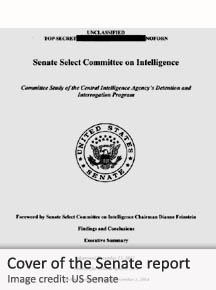
Cover of the Senate reportBy JOSEPH FITSANAKIS | intelNews.org
Almost immediately following the release of the United States Senate Intelligence Committee’s summary-report on the Central Intelligence Agency’s interrogation program, American public figures began to hurriedly fall in line along predictable partisan positions on the subject. The 500-page document, released on Tuesday, represents the publicly available version of a 6,000-page report that dismisses the CIA’s post-9/11 detention and interrogation program as an intelligence failure. It also details instances of systematic use of torture by the Agency and accuses it of lying to Congress and the Executive about the effectiveness of its detention methods. But the published report was boycotted by the Senate Committee’s Republican Party members; consequently, it was authored solely by the group’s Democratic Party members, who currently constitute a majority in the Committee. Its Republican members, led by Senator Saxby Chambliss (R-Ga), released an alternative 160-page minority report that dismisses the majority document as an inaccurate and hastily produced account, which endangers American national security. The Republican-supported minority statement praises the CIA for weakening al-Qaeda in the years after 9/11 and lambasts its critics for “misrepresentations of fact” rooted in “political motivations”. Meanwhile, as senior officials in the administration of US President Barack Obama voiced support for the Senate report, an anonymous group of former senior CIA officials launched a website lambasting it as “the single worst example of Congressional oversight in our many years of government service”. IntelNews understands that the website, entitled “CIA Saved Lives”, is organized by Bill Harlow, the CIA’s public-affairs director from 1997 to 2004, who is close to the Agency’s former Director, George Tenet. Tenet was a trusted advisor of then-US President George W. Bush, and led the CIA during the implementation of the early stages of the post-9/11 interrogation program. The CIA’s own response to the Senate report came in a public press release that acknowledged “serious mistakes” in the interrogation program while defending its alleged effectiveness in weakening of al-Qaeda. Rare examples of public figures that broke party lines were Susan Collins (R-Me), the only Senate Intelligence Committee Republican not to endorse the minority report, and Senator John McCain (R-Az). McCain, who underwent years of torture as a prisoner of war in North Vietnam, said the CIA’s use of torture “stained [America’s] national honor” and had done “much harm and little practical good”.

Irish police mole helped entire IRA leadership avoid capture in 1974

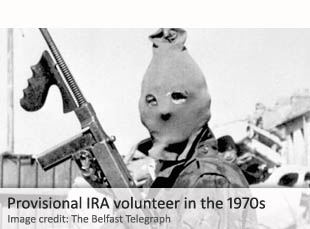
Provisional IRA volunteer in the 1970sBy JOSEPH FITSANAKIS | intelNews.org
The former intelligence director of the Provisional Irish Republican Army has claimed that an informant within the Irish police helped the entire leadership of the militant organization avoid capture during a raid in 1974. The raid was conducted in December of 1974 by Garda Síochána, the police force of the Republic of Ireland, in the village of Feakle, County Claire, in western Ireland. On the day of the raid, the entire leadership of the Provisional IRA was taking part in a secret meeting with Protestant clergy, which had been pursued by the separatist organization following the so-called pub bombings in the English cities of Guildford and Birmingham. The bombings were meant to take the war in Northern Ireland to the British mainland, but were eventually deemed disastrous to the image of the IRA. Nearly 30 people died in the bombings, while hundreds were injured, many of them seriously. The secret meeting between the IRA’s leadership and Protestant clergy was part of a wider negotiation campaign between republican separatists and pro-British loyalists, which eventually led to a ceasefire that lasted until the start of 1975. However, an informant had given the Garda accurate information about the meeting location between the IRA senior command and Protestant clergy, and the agency’s Crime and Security Branch planned to swoop on the meeting and arrest the republican militants. However, in an interview with British newspaper The Guardian, the IRA’s former director of intelligence, Kieran Conway, said the IRA leadership managed to escape arrest thanks to “a tip-off from high-placed figures within the Garda”. Conway joined the IRA in 1970 and became director of its intelligence wing in 1974. He left a year later and joined again in 1981 during the hunger strikes by republican prisoners. He left for good in 1993, in protest against the IRA’s decision to sign the Downing Street Declaration, which formed the basis of the IRA’s eventual decision to decommission its weapons and enter the political process. Conway also told The Guardian that the IRA had the support of “prominent members of the Irish establishment” including mainstream politicians, senior bankers, stockbrokers and journalists. Many of these supporters provided safe houses for members of the IRA in affluent neighborhoods of Irish capital Dublin, he claimed. Conway was speaking to promote his recently published book, called Southside Provisional: From Freedom Fighter to the Four Courts. This is not the first time allegations have surfaced about IRA moles inside the Irish Garda. In 2011, an Irish government investigation unearthed intelligence reports claiming that an informant within the agency helped the IRA plan the killings of a judge and two senior British police officers in the 1980s.

NSA spies on every cell phone company in the world, new data shows

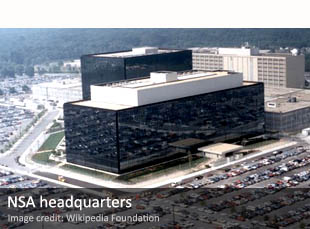
NSA headquartersBy IAN ALLEN | intelNews.org
The United States National Security Agency has spied on virtually every cell phone manufacturer and provider in the world in an attempt to uncover security weaknesses that can be exploited for surveillance, according to newly leaked data. It also appears that the NSA has worked to sabotage the technical security features of commercial telecommunications systems in order to be able to spy on their users. The documents were released on Thursday by The Intercept’s Ryan Gallagher, who said he acquired them from American defector and former NSA computer technician Edward Snowden. The documents reveal the existence of an NSA project codenamed AURORAGOLD, which appears to have been operational since at least 2010. It has targeted telephone companies in virtually every country in the world, including in the US, as well as in nations closely aligned with Washington, such as Australia, Germany, United Kingdom, France and New Zealand. The project has been carried out by at least two separate NSA units, whose existence appears to have been publicly disclosed for the first time. One is the Wireless Portfolio Management Office, which is tasked with outlining and implementing the NSA’s strategy for penetrating wireless telecommunications systems. The other is the Target Technology Trends Center, whose mission is to track the development of emerging communications technologies so as to detect security innovations that could prevent the NSA from spying on their users. The leaked documents show that, as of late spring of 2012, the NSA had collected detailed technical information on nearly 70 percent of the world’s cellular telecommunications networks and was preparing to spy on the email accounts of their employees. The goal was to acquire technical blueprints and other planning papers that could help the NSA penetrate those networks. According to Gallagher, the broad scope of AURORAGOLD appears to be aimed at “ensuring virtually every cellphone network in the world is NSA-accessible”. But the publication quotes leading cellphone security experts who express strong skepticism over the NSA program. One of them, the University of Virginia’s Karsten Nohl, warns against any policy that aims to deliberately install security vulnerabilities on telecommunications networks. “Once NSA introduces a weakness, a vulnerability, it’s not only the NSA that can exploit it”, he says. Another security expert, F-Secure’s Mikko Hypponen, cautions that criminals and spies from every country could be among AURORAGOLD’s “inadvertent beneficiaries”. The Intercept spoke to an NSA spokeswoman, who said the Agency was committed to ensuring “an open, interoperable and secure global Internet”. But she declined to discuss AURORAGOLD.

After China, Russia may ban some Apple products, fearing espionage

Russian State DumaBy JOSEPH FITSANAKIS | intelNews.org
Parliamentarians in Russia are preparing a bill that would prevent lawmakers from using several Apple products, including iPhones and iPads, due to fears that they are susceptible to penetration by foreign intelligence agencies. A group of lawmakers in the State Duma, the lower house of the Federal Assembly of Russia, have drafted the bill, which argues that State Duma deputies with access to confidential or classified government information should be banned from using iPhones and iPads, among other Apple products. One deputy, Dmitry Gorovtsov, from the center-left Just Russia party, said parliamentarians should simply “switch to simple mobile phones”, preferably produced by Russian manufacturers, and should use them “only for phone calls”. Last month, the Russian Ministry of Defense stepped in to deny media reports that it was about to ban Apple products. The denial came in response to a leading article in mass circulation daily Izvestia, which cited an unnamed Defense Ministry employee as saying that the Russian armed forces were about to ban the use of iPhones by all servicemen. The article claimed the move was designed to stop “information leaks”. But a Russian Ministry of Defense spokesman, Major General Igor Konashenkov, told a press conference that the Russian armed forces had no plans to ban “the mobile devices of a certain manufacturer”. The news from Russia comes a just months after authorities in China announced the removal of some Apple products from a government procurement list, reportedly because of fears that they were susceptible to electronic espionage by the United States. As intelNews reported at the time, nearly a dozen Apple products were removed from the Chinese government list; they included the iPad and iPad Mini, as well as MacBook Air and MacBook Pro products —though interestingly the inventory of removed items did not include Apple smartphone products. The Russian State Duma initiative to ban some Apple products has already been approved by a security-related committee and has now been forwarded to the Duma Council. The latter will consider the bill for approval, before sending it to a plenary session on the floor of the Duma for discussion. The process is expected to take up to two weeks.

Israeli ex-spy chief says Netanyahu policies ‘will destroy Israel’

Carmi GillonBy IAN ALLEN | intelNews.org
The former director of Israel’s internal security service has warned that the policies of the Israeli government could lead to the complete destruction of the country. Carmi Gillon, Israel’s former ambassador to Denmark, led the Shin Bet, also known as Israel’s Internal General Security Service, from 1994 to 1996. In a scathing attack against Israel’s current Prime Minister, Benjamin Netanyahu, Gillon accused him of being “an egomaniac” heading “a bunch of pyromaniacs” in government, who are leading the state of Israel “to its final destruction”. Gillon, 64, was speaking on Saturday evening at the “Peace Now” rally, organized outside the official residence of the Prime Minister in Jerusalem. Participants in the rally were protesting against the so-called Jewish State Law, a bill currently being discussed in the Israeli Knesset, which seeks to officially define Israel as “the nation state of the Jewish people”. The effort enjoys broad support from the Israeli right, including from Prime Minister Netanyahu. But it has been condemned by the country’s left, as well as by non-Jewish citizens of Israel, as a deliberate attempt to marginalize approximately a quarter of Israel’s population, which is non-Jewish. Some critics claim that Netanyahu and his supporters are attempting to prevent Israel from ever becoming a binational state, consisting largely of Jewish and Arab citizens, thus forever eliminating the so-called ‘one-state solution’ to the Jewish-Palestinian problem. The bill had been scheduled to be voted on in the Knesset on Wednesday, but its supporters in the Israeli parliament postponed the vote, following a wave of popular anger against the bill that has erupted throughout Israel in recent days. Speaking on Saturday at the rally in Jerusalem, Gillon said the Jewish State Law would “enshrine Israel’s status as a Jewish state” and would “eat the body of the entire nation like a cancer”. He added that he was speaking “with full professional authority” and urged opponents of the bill to “fight this fascism” that was propagated by “Bibi Netanyahu and the extreme right”. Later on Saturday, Israel’s former President, Shimon Peres, also spoke out against the proposed bill, which he described as “an attempt to undermine [Israel’s] Declaration of Independence for political interests”. He added that, if enacted, the bill would “damage the country both at home and abroad” and would “erode the democratic principles of the State of Israel”.

Pollard’s Mossad handler says he failed to follow agreed escape plan

Jonathan PollardBy JOSEPH FITSANAKIS | intelNews.org
A convicted spy who betrayed American secrets to Israel in the 1980s was captured by the FBI because he failed to follow a prearranged escape plan to flee America for Israel, according to his Israeli former handler. Jonathan Jay Pollard is a former intelligence analyst for the United States Navy, who has so far served nearly 29 years in prison for selling American government secrets to Israel. Ron Olive, an Assistant Special Agent at US Navy Counterintelligence, who in cracked the Pollard case, leading to the spy’s arrest and conviction, has called Pollard the most damaging spy in American history. “Pollard stole so many documents, so highly classified, more so than any other spy in the history of this country, in such a short period of time”, he said in 2012. On November 21, 1985, while under investigation by the Federal Bureau of Investigation, Pollard panicked and attempted to gain asylum at the Israeli embassy in Washington, DC. However, he was thrown out by embassy guards and was immediately arrested by FBI agents, who had surrounded the Israeli embassy. Ever since his arrest and conviction, Pollard and his family have repeatedly hinted that his Israeli handlers failed to protect him when he sought their help. But in an interview on Israeli television, Rafi Eitan, Pollard’s handler at the time of his arrest, placed the blame squarely on Pollard himself. Eitan was at the time head of the Scientific Relations Office, an obscure unit inside Israeli intelligence agency Mossad, for which Pollard had agreed to spy in exchange for money. On Monday, he told Israel Channel 2 television’s flagship investigative program Uvda that Pollard had been specifically instructed by the Israelis to stay away from their Washington embassy. Instead, said Eitan, the American spy had agreed to follow “a prearranged escape plan that would get him safely out of the United States”. But instead of following the plan as soon as he was approached by the FBI, Pollard waited for three days before panicking and deciding to go to the Israeli embassy without giving his Mossad handler prior notice. Eitan told his Channel 2 interviewers that he received a telephone call notifying him that Pollard was at the gates of the embassy asking for asylum, while the embassy had been surrounded by FBI personnel. “I immediately said ‘throw him out'”, said Eitan, “and I don’t regret it”, since offering Pollard asylum in the presence of a strong FBI force around the Israeli embassy, would have “created an even greater crisis between the United States and Israel”, said the former Mossad spy handler. Eitan added that he took full responsibility for the decision to abandon Pollard. As for the decisions that led to Pollard’s arrest, he said: “you can’t wage war without making mistakes”.

Islamic State shuts down phones in Mosul to stop informants

Mosul, IraqBy JOSEPH FITSANAKIS | intelNews.org
The Islamic State has cut off all telephone service provision in the largest city under its control, reportedly in an effort to stop spies from passing information to Syrian, Iraqi and American intelligence services. Militants from the Islamic State, also known as the Islamic State of Iraq and al-Sham (ISIS), conquered the northern Iraqi city of Mosul in June. They encountered almost no resistance upon entering the Sunni city of over a million inhabitants, as the crumbling Iraqi military kept hastily retreating south. Today Mosul is the most populous urban center under direct Islamic State rule. In July, the group’s seldom-seen leader, Abu Bakr al-Baghdadi, used Mosul as the backdrop of his propaganda video, in which he announced the official establishment of the Islamic State, a militant Sunni caliphate that is administered strictly through sharia law. Just weeks later, on August 8, the United States military began conducting airstrikes in Mosul, targeting senior Islamic State personnel there. The precise effects of these airstrikes are under debate in strategy circles in Washington, Baghdad and elsewhere. Last Thursday, however, residents of Mosul told the Associated Press news agency that Islamic State authorities had decreed the temporary termination of all telephone provision in the city. The measure was allegedly taken in order to prevent informants in and around Mosul from tipping off adversary intelligence agencies as to the physical whereabouts of senior Islamic State commanders. The measure was reportedly announced in the evening of Wednesday, November 26, through a radio station in Mosul that acts as the official news organ of the Islamic State in the Iraqi city. The Associated Press reported scenes of “chaos” and “paralysis” in the streets of Mosul on Thursday, as businesses came to a virtual standstill following the decision by the Islamic State to terminate telephone provision throughout the city. Some observers note that this move by the Islamic State constitutes a drastic change from the group’s standard tactic so far, which has centered in the efficient provision of basic services to the Sunni populations under its control, in an effort to win over their ideological support and political allegiance. Moreover, Mosul, whose population is almost uniformly Sunni, and is viscerally opposed to the Shiite-dominated government in Baghdad, is generally believed to be an Islamic State stronghold. If the militant group is finding it difficult to ensure the allegiance of Mosul’s population, then this could be a sign of fragmentation within the ranks of its supporters in all of northern Iraq. The Associated Press said some residents of Mosul are reportedly still able to access the Internet, which operates through a network that is separate from that of the telephone system.

White House weighs increased CIA involvement in Syrian war

Syrian rebelsBy JOSEPH FITSANAKIS | intelNews.org
The government of the United States is considering plans to augment the Central Intelligence Agency’s clandestine role in Syria, amid fears that similar efforts by the US Department of Defense are failing. The CIA’s involvement in the Syrian civil war began in 2012, when US President Barack Obama issued a classified presidential finding that authorized Langley to arm and train opposition militias. The clandestine program was initially based in training camps in Jordan before eventually expanding to at least one location in Qatar. The CIA currently vets and trains approximately 400 opposition fighters every month with the help of commandos detailed to the Agency from the Pentagon. But the program may be about to escalate considerably, according to The Washington Post. The paper said last week that the option of expanding CIA arming and training operations in Syria was on the agenda at a recent meeting of senior national-security officials in Washington. The paper said that the proposed escalation of CIA operations in the region “reflects concern” about the slow pace of similar programs run by the US Department of Defense, which aim to train and arm anti-government militias. The latter have so far proved unable to counter the dominance of a host of al-Qaeda-inspired groups operating along the Iraqi-Syrian border. Earlier this month, a major CIA-backed armed group, known as Harakat Hazm, abandoned many of its positions in northern Syria, after it came under attack by Jabhat al-Nusra, an official al-Qaeda affiliate. Along with territory, Harakat Hazm left behind significant amounts of war material supplied to it by the US Pentagon. The Post said that other moderate opposition militias are beginning to view al-Qaeda-linked groups as their most viable option in defeating the Syrian regime of President Bashar al-Assad, something which is worrying the White House. Spokesmen for the US government refused to comment on the report of a possible increase of CIA operations in Syria, or on whether the White House had reached a decision on the matter.

Turkish prosecutor indicts 13 with tapping PM’s phone

Recep Tayyip ErdoğanBy JOSEPH FITSANAKIS | intelNews.org
Turkeys’ chief public prosecutor has indicted 13 suspects with charges of wiretapping the personal telephone of the country’s former prime minister. Authorities believe the suspects are part of a broader criminal conspiracy whose members wiretapped phones belonging to senior political figures, as well journalists and government administrators, including judges and military officials. The indictment was presented on Tuesday before the 7th high criminal court in Turkish capital Ankara. It accuses the 13 suspects of conducting systematic “political and military spying”, and claims they targeted the personal telephone communications of Turkey’s President, Recep Tayyip Erdoğan, who was prime minister at the time. The charges represent the culmination of a tumultuous period of antagonism between Mr. Erdoğan and his critics in Turkey, who accuse him of absolutism and megalomania. Last July over 100 members of the country’s police force were arrested in raids that took place on all over Turkey. They were accused of illegally wiretapping the telephones of senior government figures including Mr. Erdoğan and Hakan Fidan, director of Turkey’s National Intelligence Organization, known as MİT. Hadi Salihoglu, Istanbul’s chief prosecutor, said at the time that the alleged conspirators had concocted a fake police investigation of a made-up terrorist organization called Tevhid-Selam (Al-Quds Army, in English), in order to justify the wiretapping of the officials’ phone lines. However, critics of Mr. Erdoğan noted that one of the police officers arrested in July was the former deputy chief of the Istanbul police department’s financial crimes unit, which earlier this year led an investigation into alleged corrupt practices by senior members of Erdoğan’s former cabinet. The investigation led to the exposure of corrupt practices by several cabinet members and their families, and resulted in several ministerial resignations. Several months ago, a wiretapped conversation emerged in the media, in which Mr. Erdoğan can allegedly be heard discussing with his son how to hide large sums of money. Some observers have expressed the view that the leaked telephone conversation between the two men emerged from the Tevhid-Selam investigation, which may be why Mr. Erdoğan has now decided to shut it down and arrest those behind it. The 13 suspects are expected to stand trial in Ankara once the court approves the indictment by the office of the prosecutor. Mr. Erdoğan is listed as a plaintiff in the indictment.

Russia expels Polish, German diplomats in ongoing spy row

Polish embassy in MoscowBy JOSEPH FITSANAKIS | intelNews.org
The Russian government has formally expelled several Polish and German diplomats in what appears to be a tit-for-tat move, following the removal of Russian envoys from Warsaw and Berlin on charges of espionage. The Polish government expelled a number of Russian diplomats last week, after it announced the arrest of two Polish citizens in Warsaw, on charges of spying for a foreign intelligence agency. Polish media reported that a colonel in the Polish Army had been arrested by security personnel for operating as an unregistered agent of an unnamed foreign country. Subsequent media reports said a second man, a lawyer with dual Polish-Russian citizenship, had also been arrested. According to unconfirmed Polish media reports, the two men had been recruited by the GRU, Russia’s military intelligence agency. Last Friday, Polish media reports said that four Polish diplomats stationed in Moscow had been given 48 hours to leave the country. One report suggested that the diplomats included an employee of the political section of the Polish embassy in the Russian capital, as well as three military attachés. The four had reportedly left the country by Sunday night. Authorities in Moscow said they had been forced to take the step of expelling the Polish diplomats following Warsaw’s “unfriendly and unfounded step” of ordering a number of Russian envoys to leave Poland. The four Poles were officially declared “unwanted persons” in Russia for “activities incompatible with their [diplomatic] status”, which is considered code-language for espionage. Also on Monday, the Russian Ministry of Foreign Affairs ordered the expulsion from Moscow of a German diplomat, just hours after a Russian diplomat was asked to leave the German city of Bonn by German authorities. Diplomatic sources said the German diplomat, a female employee at the German embassy in Moscow, was expelled in direct response to the earlier removal of the Russian diplomat, who was exposed as a spy following an extensive surveillance operation that lasted several months. German authorities refused to comment on the case. In Poland, Minister of Foreign Affairs Grzegorz Schetyna said simply that Warsaw “now considered the matter closed”.

Mossad’s top agent in Lebanon speaks publicly for first time

Amin al-HajjBy JOSEPH FITSANAKIS | intelNews.org
A spy for Israel, who is described as one of the Jewish state’s most valuable intelligence assets in the Middle East, has broken his 30-year silence and has accused his Israeli handlers of having “thrown him to the dogs”. Amin al-Hajj was born in 1955 into one of the Lebanese Shia community’s wealthiest and most powerful clans. In the early 1970s, al-Hajj entered the inner circle of former Lebanese President Camille Chamoun, an outspoken leader of the country’s Christian community, who subsequently played an instrumental role in Lebanon’s civil war. Al-Hajj shared Chamoun’s detestation of Lebanon’s Palestinian community, which he held as responsible for sparking the civil war that lasted from 1975 to 1990 and destroyed the country. He helped direct and train Chamoun’s bodyguards and regularly represented the Christian politician in secret meetings with officials from Israel. The latter supported Chamoun’s pro-Phalangist Tigers Militia during the civil war. It was during those meetings that the Israelis sensed al-Hajj’s hatred for the Palestinians and gradually recruited him as an asset. He went on to serve the Mossad as one of its most effective agents in the Middle East. Soon after his recruitment, al-Hajj assumed the operational codename RUMMENIGGE, after German soccer superstar Karl-Heinz Rummenigge, who was at the peak of his career in the late 1970s. Al-Hajj’s Israeli handlers claim that he consistently refused to accept money from the Israeli government, saying he wanted to help Israel because he “thought it would be the only force that could fight the Palestinians” in Lebanon. Eventually, RUMMENIGGE built an entire network of agents in Lebanon, Cyprus and elsewhere, which numbered over a dozen and included at least two senior officials in Palestinian group Fatah, who provided him with information in exchange for financial compensation. In 1987, however, the PLO began to suspect that al-Hajj was collaborating with Israel and tried to kill him. He managed to escape with his wife to Israel, where he remains today. He is currently facing no fewer than nine separate death sentences in Lebanon. However, soon after he received protection in Israel, al-Hajj’s relations with the Israeli intelligence community turned sour. Read more of this post

News you may have missed #885

Shin BetBy IAN ALLEN | intelNews.org
►►Americans’ cellphones targeted in secret US spy program. The US Justice Department is scooping up data from thousands of mobile phones through devices deployed on airplanes that mimic cellphone towers, a high-tech hunt for criminal suspects that is snagging a large number of innocent Americans, according to people familiar with the operations. The US Marshals Service program, which became fully functional around 2007, operates Cessna aircraft from at least five metropolitan-area airports, with a flying range covering most of the U.S. population, according to people familiar with the program.
►►Israel’s usually secretive spy agencies get into public spat. Israel’s domestic intelligence agency, known as the Shin Bet, has been trading barbs with the military over whether faulty army intelligence left Israel unprepared for war with the militant group Hamas in the Gaza Strip. The spat went high-profile this week when Israel’s Channel 2 aired a report featuring Shin Bet officials –-rendered in pixilated, shadowed form-– claiming the military had brushed aside the agency’s assessment, months before fighting erupted in July, that an armed conflict with Hamas was in the making.
►►Poland mulls military intelligence brigade close to Belarus border. Polish Armed Forces will make emphasis on the unfolding of reconnaissance troops and will set up a separate brigade and military command in the north-east of the country, National Defense Minister Tomasz Siemoniak said on Thursday. The region he visited is located along the border with Belarus and close to the border with Russia’s westernmost Kaliningrad region, an exclave on the south-east shore of the Baltic Sea.

Lithuania charges state employee with spying for Belarus, Russia

Belarus and LithuaniaBy IAN ALLEN | intelNews.org
Prosecutors in Lithuania have charged an employee of a state-owned airline navigation services provider with spying for neighboring Belarus, though it is presumed the compromised information may have also been shared with Russia. Lithuanian government prosecutor Darius Raulusaitis told reporters at a news conference on Monday that the man charged was a Lithuanian national living and working in capital Vilnius. He has been identified only with his initials, which are R.L. The alleged spy is being accused of collecting information relating to Lithuania’s military strength with the intention of sharing it with unregistered agents of Belarus. He has also been charged with passing information on what the Lithuanian prosecutor described as “strategically important companies” in the Baltic republic. His alleged targets are said to include Oro Navigacija, Lithuania’s state-owned aviation company, for which he worked. Court documents accuse R.L. of surreptitiously photographing documents in his office at Oro Navigacija’s headquarters, and then transferring them to facilities belonging to the General Staff of the Armed Forces of Belarus. Raulusaitis told reporters that R.L. had been charged with “spying against the Lithuanian Republic on orders of intelligence services of the Belarus Republic”. He added, however, that Lithuania’s State Security Department (VSD) considered it likely that “any information obtained by the Belarus secret service” had been “shared with the Russian [intelligence] services”. At a separate news conference, VSD Director Gediminas Grina said that passing classified information to Belarus “is the same to us as spying for Russia”. Belarus is arguably Russia’s closest European ally; many international observers consider Belarus a supranational part of the post-Soviet Russian Federation. Regular intelNews readers will recall that in 2012 Belarus arrested a military attaché at the Lithuanian embassy in Belorussian capital Minsk, after accusing him of running an espionage ring allegedly incorporating an undisclosed number of Belorussian nationals. Lithuanian authorities said earlier this week that R.L. is one of two Lithuanian citizens arrested in 2013 following a three-year investigation by the VSD. The second suspect, who has not been named, is reportedly under “pre-trial investigation”, which is expected to take “weeks or months’ to complete. The announcement of the charges against R.L. marks the first time Lithuanian authorities have leveled charges of espionage against an individual since 2004, when the former Soviet republic joined the European Union. If found guilty, R.L. faces up to 15 years in jail.

High-profile US diplomat probed by FBI counterintelligence

Robin L. RaphelBy IAN ALLEN | intelNews.org
A highly experienced American diplomat, who is commonly described as “a fixture in Washington foreign policy circles”, is reportedly being investigated by counterintelligence agents of the Federal Bureau of Investigation. The Washington Post named the diplomat last week as Robin L. Raphel, who served as United States ambassador to Tunisia before being appointed as assistant secretary of state for South Asian affairs, during the administration of US President Bill Clinton. The New York Times described Ms. Raphel as one of the US Department of State’s highest-ranking female diplomats. She is considered an expert on Pakistan and until recently served as an adviser to the Department of State’s special representative for Afghanistan and Pakistan. Ms. Raphel officially retired from the Foreign Service in 2005 and joined the ranks of Cassidy & Associates, a high-powered government-relations firm based in Washington, DC, which is known to have performed lobbying assignments on behalf of the government of Pakistan. In reporting the alleged investigation of Ms. Raphel by the FBI, The Washington Post said last week that the nature of the probe was “unclear”. But it stated that FBI counterintelligence agents had searched the former diplomat’s house and office. Citing unnamed government sources, The New York Times reported that the FBI was trying to determine why Ms. Raphel had taken classified information to her house, and whether she had shared it, or planned to share it, with a foreign government. There was no mention in the article of the identity of the foreign government that may have been privy to classified information allegedly taken home by Ms. Raphel. Media reports suggested that the former diplomat had been placed on leave and stripped of all her government security clearances as part of the ongoing FBI investigation. Insiders note that it is extremely rare for such a prominent figure in Washington to become the subject of an FBI counterintelligence investigation.

UK report warns about sexual entrapment by foreign spies

UK Ministry of DefenceBy IAN ALLEN | intelNews.org
A leaked report issued by military authorities in the United Kingdom cautions British officials to be aware of attempts by Chinese and Russian intelligence services to compromise them using sexual entrapment. The London-based Sunday Times newspaper said it had acquired a copy of the document, entitled Manual of Security, authored by the United Kingdom’s Ministry of Defence for use by senior officials. The manual warns that foreign intelligence services are known to employ sexual entrapment or romantic attachment as a means of compromising their targets. The document singles out the Russian Federal Security Service (FSB) and the Chinese Ministry of State Security as two adversary agencies that are known to employ sexual entrapment on a regular basis. British officials are warned in the document that the FSB could gain classified information by exploiting “knowledge of marital infidelity or sexual activity the target may wish to hide”. The Times spoke to an unidentified “senior military official”, who told the paper he was recently approached by “a very attractive blonde woman in her early 30s” in a hotel in the Russian city of Saint Petersburg. The woman began telling him of her fascination with vintage British sports cars, which happened to be the British official’s favorite hobby. He eventually terminated the encounter after he became suspicious of the woman’s motives. But he remains puzzled as to how the woman knew details of his personal hobbies. In 2009, the British Foreign Office had to recall its deputy consul-general in the Russian city of Ekaterinberg, after he appeared in an explicit video on YouTube having a sexual encounter with two Russian prostitutes. Many speculated at the time that the video had been posted online by the FSB in an attempt to embarrass the diplomat and have him removed from Russia. Later that year, London’s former deputy mayor, Ian Clement, admitted he was lured by a female Chinese secret agent, who drugged him and ransacked his Beijing hotel room after having sex with him. Clement said he fell for what he called “the oldest trick in the book” while in Beijing to “build contacts with potential investors” for the 2012 Summer Olympics in London. Sir Christopher Meyer, a career diplomat with the Foreign Office, who served in several countries during his career, including the Soviet Union, has written about the case of Sir Geoffrey Harrison, Britain’s ambassador to Moscow from 1965 to 1968. The ambassador, said Sir Christopher, “had to leave [the Soviet capital] in a hurry, having fallen for the charms of his Russian maid –trained and targeted, of course, by the KGB”. Read more of this post