CEO of private bank shot dead in Liechtenstein

Bank FrickBy JOSEPH FITSANAKIS | intelNews.org
The chief executive officer of a private bank in the alpine principality of Liechtenstein has been shot dead at the bank’s headquarters, according to reports. Liechtenstein police said Monday that a 48-year-old bank executive had been shot dead inside the underground car park of the bank’s headquarters. The report said the fatal shooting took place in the village of Balzers, located near Liechtenstein’s border with Switzerland. The police statement did not name the bank or the executive. Later on Monday, however, Swiss news outlet Schweizer Radio und Fernsehen (The Voice of Switzerland) identified the shooting victim as Jürgen Frick, CEO of Bank Frick. Headquartered in Balzers, the family-run bank was founded in 1998 as a private financial establishment. In addition to its Liechtenstein office, Bank Frick also maintains a branch in London’s Mayfair district, in the United Kingdom. Liechtenstein police said on Monday it was looking for a suspected gunman, identified as Jürgen Hermann, a former fund manager, who was spotted in the bank’s surveillance cameras around the time of the shooting. Hermann, who lives in Liechtenstein’s Mauren municipality, was also seen fleeing the scene of the crime in Smart car. Swiss media later reported that Hermann describes himself on his personal website as “the Robin Hood of Liechtenstein” and as the tax-haven’s “public enemy No. 1”. German media said Hermann has been involved in longstanding feuds with the government of Liechtenstein over “financial issues”. In his website, the suspected shooter has uploaded statements demanding that the government of Liechtenstein returns to him “investments worth millions”, which were allegedly “destroyed by the financial mafia of Liechtenstein”. The principality’s police say they found Hermann’s driver license and passport thrown by the side of a road near the river Rhine, and suspect that Hermann might have killed himself. Read more of this post

Analysis: Time for Western spy agencies to refocus on Russia?

Pro-Russian celebrations in CrimeaBy JOSEPH FITSANAKIS | intelNews.org
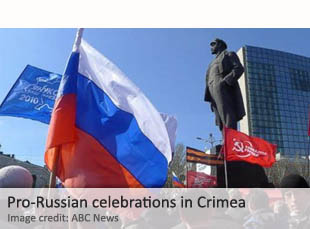
During the Cold War, Western intelligence agencies relied on legions of Soviet specialists to make sense of the Kremlin’s policy maneuvers. The American Intelligence Community in particular was almost exclusively engaged in collecting information on the USSR. To the extent that American intelligence collectors were active in countries other than the USSR, it was primarily in order to monitor Soviet activity. The implosion of the Soviet Union brought about a relaxation of Western intelligence collection efforts against Russian targets, a process that was further fueled by the 9/11 attacks. The latter turned the attention of Western intelligence collectors on Islamist-inspired militancy in the Middle East and other predominantly Muslim regions. The legions of Western Sovietologists and Russia specialists saw their careers stagnate, as counterterrorism became the predominant buzzword in intelligence circles. But the recent invasion and annexation of Crimea by Russia is prompting a reexamination of intelligence collection priorities among Western spy agencies. A recent analysis piece by the Reuters news agency suggests that some Western intelligence planners view the events in Crimea as “demonstrating a dramatic need for renewed focus” on Russia. There is concern among intelligence specialists, says Reuters, that no signals chatter was detected in Russia in the weeks prior to the invasion of Crimea to indicate an imminent Russian takeover of Ukrainian territory. This alleged weakness is coupled by concerns among some foreign-policy planners that the West is potentially entering “a new era of […] confrontation with Moscow”, argues Reuters. If this is true, then Western intelligence agencies will need to replenish their level of expertise on Russia, which, according to some intelligence insiders, “has diminished drastically” in the last decade. Read more of this post
News you may have missed #875 (CIA edition)

Boris PasternakBy IAN ALLEN | intelNews.org
►►Ex-CIA head criticizes Pollard release rumors. General Michael Hayden, the former Director of the CIA, said Sunday that he doesn’t think releasing Jonathan Pollard to save the Israeli-Palestinian peace talks is a good idea. Hayden, a Bush administration appointee, told Fox News Sunday that “it’s almost a sign of desperation that you would throw this into the pot in order to keep the Israelis talking with the Palestinians”.
►►CIA official dies in apparent suicide. An unnamed senior CIA official has died in an apparent suicide this week from injuries sustained after jumping off a building in northern Virginia. A source close to the agency said the man who died was a middle manager and the incident occurred after the man jumped from the fifth floor a building in Fairfax County. CIA spokesman Christopher White confirmed the death and said the incident did not take place at CIA headquarters in McLean, Va.
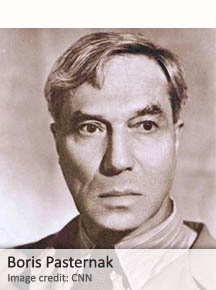
►►How the CIA turned Doctor Zhivago into a Cold War weapon. Newly disclosed documents indicate that the operation to publish Boris Pasternak’s Doctor Zhivago in several Eastern European languages was run by the CIA’s Soviet Russia Division, monitored by CIA director Allen Dulles and sanctioned by President Dwight Eisenhower’s Operations Coordinating Board, which reported to the National Security Council at the White House. The board, which oversaw covert activities, gave the CIA exclusive control over the novel’s “exploitation”. The “hand of the United States government” was “not to be shown in any manner”, according to CIA records. IntelNews has reported previously on allegations that the CIA may have influenced teh Swedish Academy’s decision to award the 1958 Nobel Prize for Literature to Pasternak.

US created fake social network firm to foster dissent in Cuba

Cell phone user in CubaBy JOSEPH FITSANAKIS | intelNews.org
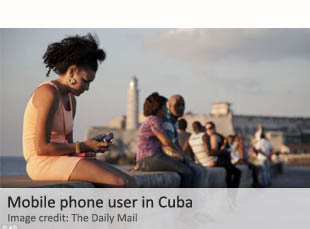
A United States government agency secretly created a bogus social networking platform in order to foment political unrest in Cuba, according to a report by the Associated Press. Over 40,000 subscribers regularly used the ZunZuneo social networking service that began operating in the communist Caribbean island in 2009. The service, dubbed “Cuba’s Twitter” was based on SMS messages sent via mobile telephone subscribers. Its rapid success was attributed to the strict controls over Internet usage that are in place in Cuba, as well as the population’s relative lack of access to networked computers. But The Associated Press revealed on Thursday that ZunZuneo was in fact a secret program devised by the US Agency for International Development (USAID), which is a federal body operating under the Department of State. The news agency reported that the US government was able to conceal its role in building and sustaining the network by operating through a complex system of front companies set up in the Cayman Islands and in Spain. The latter were used to register ZunZuneo’s parent company and to pay the company’s bills, as well as to route millions of subscribers’ text messages without the involvement of servers based on US soil. The report stated that ZunZuneo’s corporate website even carried “bogus advertisements” strategically placed to give the site a realistic corporate look. It is worth noting that the social networking service suddenly stopped working in 2012, without providing a warning or an explanation to its tens of thousands of subscribers. But the Associated Press said the reason the service was terminated was that the US taxpayer’s money used to sustain the program simply run out. The news agency argued in its report that the program was covert in nature and should have been subjected to Presidential authorization and Congressional scrutiny. Read more of this post

Senate report: CIA misled US government about torture

CIA headquartersBy JOSEPH FITSANAKIS | intelNews.org
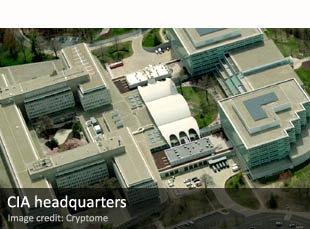
A United States Senate report on the use of torture to extract intelligence from terrorism detainees accuses the Central Intelligence Agency of severely overstating the usefulness of the information gained. Details of the long-awaited report, produced after a four-year investigation by the Senate Select Committee on Intelligence, have been leaked to The Washington Post. The paper reports that the probe is a damning indictment on the CIA’s ‘enhanced interrogation’ program, implemented during the administration of President George W. Bush. The report contains over 20 different conclusions. But the most critical are that the CIA misled the government and the American public by: (a) understating the severity of the interrogation methods used; and (b) overstating the actionable intelligence extracted through torture. The Post cites unnamed “US officials” who have reviewed the Senate report as stating that the CIA’s ‘enhanced interrogation’ program “yielded little, if any, significant intelligence”. According to one source, in some cases the Agency proceeded to waterboard terrorism detainees after recognizing that all actionable intelligence had already been extracted from them. In one instance, says the paper, nearly all valuable intelligence gained from al-Qaeda operative Abu Zubaida was extracted by CIA interrogators before he was subjected to waterboarding nearly 100 times. Notably, the Senate report also highlights deep divisions within the CIA, as many units protested the practices employed under the Agency’s interrogation program. But The Post also quotes “current and former officials” who are critical of the Senate report for containing “factual errors” and “misguided conclusions”. One CIA veteran told the paper that the 6,300-page document reflected “Federal Bureau of Investigation biases”, and that CIA officials are critical of the fact that one of the report’s main authors is a former FBI analyst.
Read more of this post

News you may have missed #874

Hamid AboutalebiBy IAN ALLEN | intelNews.org
►►Intel involvement in flight MH370 sparks terrorism speculation. Malaysian authorities have revealed secret services from the UK, the US and China have been involved in the investigations into the disappearance of the missing Malaysia Airlines flight MH370, adding to speculation that the plane’s disappearance could be down to terrorism.
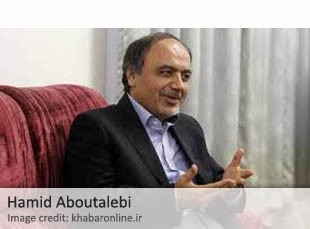
►►Iran picks former US Embassy hostage-taker as UN envoy. The Iranian government has applied for a US visa for Hamid Aboutalebi, Iran’s former ambassador to Belgium and Italy. Aboutalebi was a member of a group calling itself “Muslim Students Following the Imam’s Line”, a group of radical students controlled by Ayatollah Khomeini, who seized the US embassy in Tehran on November 4, 1979. A controversy over Aboutalebi’s appointment could prompt the Obama administration to take the unusual step of denying a visa to an official posted to the UN.
►►Analysis: Ukrainian Navy devastated by Russian move into Crimea. Ukraine’s maritime forces have been dealt a heavy blow by the Russian intervention in Crimea with 12 of its 17 major warships, nearly 40 support vessels, and much of its naval aviation assets now falling under Moscow’s control. Almost every Ukrainian naval base and ship on the peninsula has been seized by Russian forces or local pro-Moscow self-defense units. Over the past three weeks, the majority of the Ukrainian military personnel in Crimea have defected to the Russian military or resigned from military service.

NSA ‘high-target’ list includes names of 122 world leaders

NSA headquartersBy JOSEPH FITSANAKIS | intelNews.org
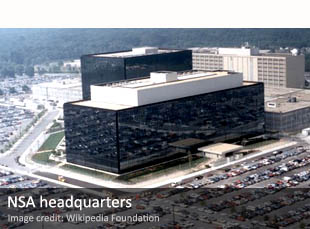
A list of high-priority intelligence targets published over the weekend includes the names of over a hundred current and former heads of state, who were systematically targeted by the United States National Security Agency (NSA). The list appears to be part of a wider “Target Knowledge Base” assembled by the NSA in order to help produce “complete profiles” of what the NSA calls “high-priority intelligence targets”. The list is contained in a classified top-secret briefing created by the NSA in 2009. It was published by German newsmagazine Der Spiegel, which said it acquired it from American intelligence defector Edward Snowden. Snowden, a former computer expert for the NSA and the Central Intelligence Agency, is currently living in Russia, where he has been offered political asylum. The leaked briefing explains the function of an extensive NSA signals intelligence (SIGINT) collection program codenamed NYMROD. The computer-based program is allegedly able to sift through millions of SIGINT reports and collate information on individual targets from the transcripts of intercepted telephone calls, faxes, as well as computer data. The list provided to Der Spiegel by Snowden contains 122 names of international political figures, said the newsmagazine, adding that all of them were “heads of foreign governments”. It includes the name of German Chancellor Angela Merkel, Syrian president Bashar al-Assad, Ukraine’s Yulia Tymoshenko, as well as Belarussian strongman Alexander Lukashenko. Colombia’s former President, Alvaro Uribe, and Malaysia’s Prime Minster from 2003 to 2009, Abdullah bin Haji Ahmad Badawi, also figure on the list. Interestingly, the leaders of Malaysia, Somalia, the Palestinian Authority and Peru top the NSA’s list of high-value executive targets. Read more of this post

US denies it offered to release American who spied for Israel

Jonathan PollardBy IAN ALLEN | intelNews.org
United States officials have denied reports in the Israeli media that Washington has offered to release an American serving a life sentence for spying for Israel. The Israel Army Radio, which is operated by the Israel Defense Forces, said on Wednesday that the administration of US President Barack Obama had offered to release Jonathan Jay Pollard, a former US Navy analyst who has so far served 28 years of a life sentence in a US prison, for spying on the US for Israel. Many in US counterintelligence consider Pollard, who acquired Israeli citizenship in 1995, one of the most damaging double spies in American history. But he is widely viewed as a hero in Israel, and many conservative Israelis, as well as pro-Israel Americans, are actively pressuring the US administration of President Barack Obama to release him. According to Israel Army Radio, the offer was placed on the negotiation table last week during Palestinian Authority President Mahmoud Abbas’s visit to Washington. Allegedly, the offer to release Pollard is part of an attempt by President Obama to revive the Palestinian-Israeli peace talks, which have stalled in recent months. The original US-brokered talks between the two sides included an agreement by Israel to release 104 Palestinian prisoners in four separate groups. The first three groups were released in 2013; but Israel is currently refusing to release the fourth and final group, originally scheduled to be freed this month, arguing that the prisoners in that group are all Israeli citizens and have no connection to the Palestinian National Authority. According to Israel Army Radio, Washington has offered to release Pollard in return for Israel’s release of the last batch of Palestinian prisoners, providing that the Palestinian National Authority will then return to the negotiation table. Late on Wednesday, however, US Department of State spokeswoman Jen Psaki told reporters that Washington had “no plans to release Jonathan Pollard”. Read more of this post

Leader of Ukrainian ultra-nationalists killed by security forces

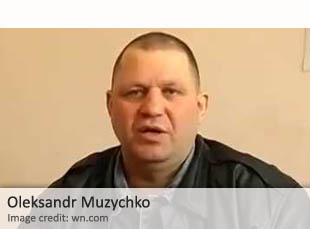
Oleksandr MuzychkoBy JOSEPH FITSANAKIS | intelNews.org
A senior official of Ukraine’s largest far-right group, which played a central role in anti-government protests earlier this year, has been shot dead by security forces, according to reports. The official, Oleksandr Muzychko, was the chief coordinator in western Ukraine of the Right Sector, known locally as Pravyi Sektor. The organization, which was founded in November of 2013, operates as an alliance of far-right Ukrainian nationalist groupings, whose ideological leanings range from ultra-conservative to openly neo-Nazi. The group’s active membership is estimated at below 10,000. However, its well-organized paramilitary wing was instrumental in helping demonstrators fight against government forces in the streets of Ukraine during the Euromaidan civil unrest that toppled the government earlier this year. Despite his vocal stance in favor of the anti-government demonstrators, Muzychko, who had in the past expressed strong anti-Russian and anti-Semitic views, was viewed as an embarrassment by Ukraine’s pro-Western authorities. The latter routinely referred to him as “a criminal” and “extortionist” —referring to his sting in prison following his conviction for extortion in 1999. Earlier this month, Russian authorities issued an arrest warrant for Muzychko, whom they accuse of having been part of a group of Ukrainian ultra-nationalists that fought alongside Muslim Chechen rebels against Russian forces in the Russian Caucasus. According to Ukraine’s Ministry of Interior, Muzychko, known locally as ‘Sashko Bily’, died during a shoot-out with Ukrainian security forces in a restaurant in the northwestern Ukrainian city of Rivne, which is considered a stronghold of the Right Sector. In a press conference on Tuesday, Ukraine’s Deputy Interior Minister, Vladimir Yevdokimov, said security forces had gone to the restaurant to arrest Muzychko and “three other gang members”. According to Yevdokimov, the high-profile Right Sector official was gunned down after he opened fire at the security forces, injuring one, and then tried to escape. But Ukrainian parliamentarian Oles Doniy told journalists that Muzychko had been killed under custody, after he was kidnapped by unknown assailants. Doniy said Muzychko’s body was later found “dumped with his hands tied behind his back and two bullet wounds in his heart”. Authorities in Kiev said the three “gang members” arrested at the site of the shootout had been taken in for questioning. Meanwhile, members of the Right Sector have threatened revenge for Muzychko’s killing.

Afghan officials see foreign spy agency behind bloody hotel attack

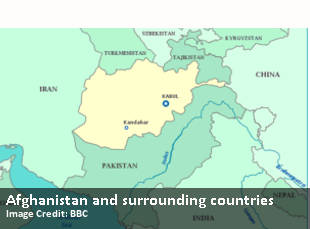
AfghanistanBy JOSEPH FITSANAKIS | intelNews.org
Afghanistan’s intelligence community believes a foreign spy agency was behind last week’s bloody attack on a luxury hotel that left nine people dead. Last Thursday evening, a group of young men entered the five-star Serena Hotel, located a few blocks away from the Presidential Palace and key government ministry buildings in Afghan capital Kabul. Three hours later, the men, who had hidden handguns in their shoes, entered the hotel restaurant and shot indiscriminately at patrons. They were eventually shot dead by Afghan Special Forces, but not before they had managed to shoot over a dozen people at point blank range, killing nine, including two Canadians, an American and a Paraguayan. Four children and a senior reporter with Agence France Presse were among the dead, while the wounded included an Afghan member of parliament. Many blamed the attack on the Taliban or the Haqqani network, an Islamist militant group responsible for countless high-profile attacks in Kabul and other Afghan cities. Soon afterwards, the Taliban issued a statement claiming responsibility for the attack, which they said was aimed at demonstrating the ease with which Afghan government security measures could be evaded. On Monday, however, a press release issued by the Office of the Afghan President said a “foreign intelligence service”, rather than an indigenous militant group, was behind the attack. The press release, which bore the signature of Afghanistan’s President, Hamid Karzai, said intelligence officials from the National Directorate for Security had briefed Afghanistan’s National Security Council about the findings of an investigation on the attack. In the statement, which was issued in both Pashto and English, the President’s Office said that neither the Taliban nor the Haqqani network “were even aware” that the attack at the Serena Hotel was going to take place. Instead, the operation “was a direct attack by an intelligence service outside the country”, said the statement. A subsequent announcement released by the Afghan government placed blame on Pakistani intelligence services, saying they were directly involved in the attack. It also stated that an unnamed “Pakistani diplomat” had been seen filming inside the Serena Hotel “a while ago”. Pakistan’s Ministry of Foreign Affairs rejected Kabul’s allegations, saying it was “highly disturbing that attempts are being made to somehow implicate Pakistan in this terrorist incident”.


Korean spy charged with forging Chinese files attempts suicide

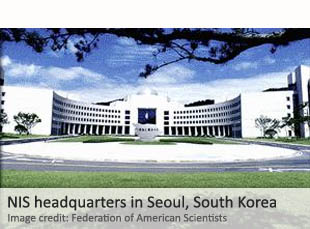
NIS headquarters in Seoul, South KoreaBy I. ALLEN and J. FITSANAKIS | intelNews.org
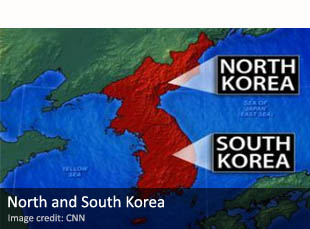
A South Korean intelligence officer, who was charged earlier this month with deliberately forging Chinese government documents, tried to kill himself inside a car on Sunday, according to local media. The officer, identified in reports only by his last name, Kwon, was fingered last week by South Korean media as the source of a set of documents used in a court case against a man accused of spying for North Korea. Yoo Woo-sung, a prominent North Korean defector living in the South, was arrested last year on charges of espionage. Government prosecutors accused Yoo of collecting information on at least 200 North Korean defectors living in the South while working for the Seoul city government. The prosecution produced a number of Chinese transit documents showing that Yoo had entered North Korea repeatedly from China, ostensibly in order to transport information to his handlers in Pyongyang. However, in a dramatic turn of events, the case against Yoo collapsed in August of 2013; this was followed by allegations that some of the documents presented to the court by the prosecutors had been forged. It now appears that the forged documents, which were travel records allegedly issued by the Chinese government, had been given to the prosecution by South Korea’s National Intelligence Service (NIS). Court documents surfaced last week identifying Kwon (named initially as ‘Kim’) as one of the sources of the forged documents. Kwon fervently denied the accusations, claiming that he too had been duped by a Chinese asset who gave him the forms. He also argued that that the asset was probably working for Chinese intelligence. On Sunday, however, Kwon apparently tried to kill himself at his home in a suburb of Seoul. Read more of this post

News you may have missed #873 (controversy edition)

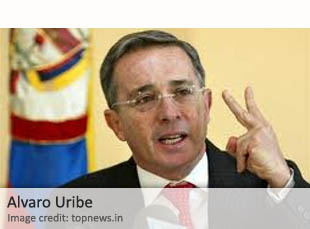
Alvaro UribeBy IAN ALLEN | intelNews.org
►►German parliament confirms NSA inquiry to start in April. Germany’s four major parties have unanimously approved a parliamentary inquiry into surveillance by the NSA and its allied counterparts, like the GCHQ in the UK. Another key question for the committee will likely be whether the German intelligence agencies were either aware of, or complicit in, the gathering of people’s data. A German newspaper reported that whistleblower Edward Snowden, currently in Russia, may testify via Skype.
►►Former Colombia spy chief sentenced over illegal wiretapping. Carlos Arzayus, former director of Colombia’s now-defunct intelligence agency DAS was sentenced to nearly ten years in prison on Thursday for his role in the illegal wiretapping of Supreme Court justices and government critics during the Alvaro Uribe administrations during the years 2002 to 2010. Additionally, Arzayus was ordered to pay damages to the victims of the wiretapping.
►►French spies allegedly spy on Orange customer data. The French intelligence agency in charge of military and electronic spying is massively collecting data and monitoring networks of telecoms giant Orange, Le Monde newspaper reported in its Friday edition. “The DGSE can read, like an open book, the origin and destination of all communications of Orange customers”, the paper said.

South Korean spy charged with forging Chinese government records

North and South KoreaBy IAN ALLEN | intelNews.org
Authorities in South Korea have charged an intelligence officer with forging Chinese government documents that were used in a court case against a man accused of spying for North Korea. IntelNews readers will remember the case of Yoo Woo-sung, a prominent North Korean defector living in the South, was arrested last year on charges of espionage. In May of that year, court documents revealed that Yoo had been arrested following testimony from his own sister, also a North Korean defector. She had apparently been sent to the South by the North Korean intelligence services, and tasked with collecting information on North Korean defectors living across the border. Prosecutors accused Yoo of collecting information on at least 200 North Korean defectors living in the South, while he worked for the Seoul city government. Yoo maintained his innocence throughout his trial. However, his protestations appeared untenable once the South Korean prosecution produced a number of Chinese transit documents showing that he had entered North Korea repeatedly from China, ostensibly in order to transport information to his handlers in Pyongyang. However, in a dramatic turn of events, the case against Yoo collapsed in August of 2013 amidst allegations that some of the documents presented to the court by the prosecutors had been forged. It now appears that the forged documents, which were travel records allegedly issued by the Chinese government, had been given to the prosecution by South Korea’s National Intelligence Service (NIS). Read more of this post

CIA places Iran operations division chief on administrative leave

CIA headquartersBy JOSEPH FITSANAKIS | intelNews.org
The chief of Iran operations at the United States Central Intelligence Agency has been placed on paid administrative leave, allegedly for creating a hostile work environment that ended up impeding the Agency’s output. According to The Los Angeles Times, many members of the CIA’s Iran operations division had launched an “open rebellion” against their 46-year-old chief, which the paper identified by name. In an article published on Saturday, The Times stated that the veteran intelligence officer, who has now been removed from the CIA’s headquarters in Langley, Virginia, had previously served at CIA stations in Iraq, Russia and the Balkans. The paper added that, in 2010, the CIA had to pull out the officer from Pakistan, after he was publicly named as the Agency’s station chief in Islamabad. Some American officials have identified Pakistan’s intelligence services as the source of the leak that led to the officer’s public exposure, which was allegedly intended as retribution to a series of previous drone attacks by the CIA on Pakistani soil. The Times quoted “three former officials” who accused the chief of the Iran division of exercising a divisive and abusive management style, which led many of the division’s senior employees to request to be transferred elsewhere in the CIA. One unnamed source told the paper that, as a result of the division chief’s treatment and the open rebellion by his staff, the Iran office “was not functioning”. The veteran officer was “sent home” two weeks ago, after an internal investigation by the Office of the CIA Inspector General found that he had essentially lost the trust and respect of the division’s staff. Read more of this post

Pro-Russian oligarch arrested —first sign of US sanctions on Russia?

Dmytro FirtashBy IAN ALLEN | intelNews.org
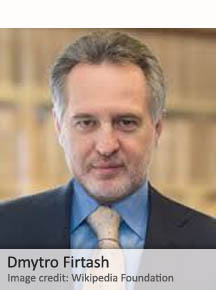
A well-connected Ukrainian oligarch, who is considered one of Russia’s most trusted energy sales intermediaries, has been arrested in Austria at the request of the United States. Some speculate that this may be a first direct sign of America’s response to Russia’s military invasion of Ukraine. In an article published last week, The Washington Post suggested that the arrest of Dmytro Firtash, a citizen of Ukraine, may be “the beginning of a US effort to inflict financial pain on Russia over its role in the Ukrainian crisis”. Firtash’s lucrative business activities are inextricably tied to Gazprom, the world’s largest extractor of natural gas and one of the most powerful corporations in existence. The company, whose activities typically account for around 10 percent of Russia’s annual gross domestic product, is one of Moscow’s primary exporters of energy and among its most important sources of foreign revenue. Throughout the last decade, Firtash’s company, RosUkrEnergo, acted as the primary mediator between Gazprom and Naftohaz, Ukraine’s national oil and gas company. The latter would import Russian natural gas from Gazprom through RosUkrEnergo, which would purchase it from the Russian company and sell it to the Ukrainians at a noticeably steeper price. Eventually, in 2009, the government of pro-Western Ukrainian Prime Minister Yulia Tymoshenko managed to remove RosUkrEnergo as a broker from the energy deals between Kiev and Moscow. But Tymoshenko, who became herself embroiled in a financial corruption scandal, was soon imprisoned. And in 2013, Gazprom approached the pro-Russian government of Ukrainian politician Viktor Yanukovych and offered to sell natural gas to Ukraine at a 33 percent discount, providing that RosUkrEnergo was permitted to return as Moscow’s natural gas distributor to Ukraine. Last Wednesday, a statement from the Ukrainian government in Kiev confirmed that the man identified only as “Dmytro F., 48” in a laconic Austrian police report was indeed Dmytro Firtash. Read more of this post