Spain shelves charges against French alleged ‘assassin’ spies
May 26, 2014 Leave a comment
 By JOSEPH FITSANAKIS | intelNews.org
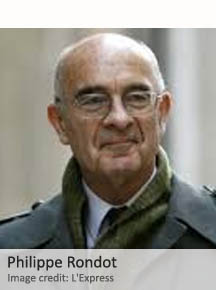
A court in Spain has quietly shelved charges against two French spies who were caught in Barcelona with a custom-designed sniper rifle. The two men were detained in the Catalonian town of Manresa in April of 2002. The Audi car in which they were riding was stopped at a checkpoint manned by members of the Mossos d’Esquadra, the Catalan regional police, who promptly searched it. In the back of the car, police officers found a large PVC tube that contained a sniper rifle complete with a laser telescopic light and a silencer. The two men carried French travel documents identifying them as “Christian Piazzole” and “Rachid Chaouati”. Piazzole’s documents were found to be false, and there were suspicions that Chaouati’s may also have been forged. Spanish authorities concluded that the two men, who admitted they were officers of France’s General Directorate for External Security (DGSE), were in Spain to conduct an assassination. In a words of a state prosecutor in Barcelona, the DGSE spies had come to Spain “to kill”. Their arrest prompted an emergency visit to Madrid of a high-level French government delegation headed by General Philippe Rondot, a former senior intelligence officer at the DGSE. Rondot told Spanish officials that the two men were “on a training exercise”. In October of 2002, the Spanish Ministry of Interior commanded the Office of the State Attorney General to grant the two French spies “provisional release”, based on the rationale that there had been no victims involved in the case. Piazzole and Chaouati were promptly released after Rondot provided personal assurances that they would return to Spain to attend their trial for illegal weapons possession in early 2004. The charges carried a maximum sentence of seven years. It was said at the time that, in exchange for the two spies’ release, Paris pledged to continue to assist Spanish intelligence in their efforts against the Basque separatist militants of ETA, and agreed to extradite a number of ETA members serving time in French prisons. However, soon after their release, Piazzole and Chaouati vanished. They were found to be in contempt of court after they failed to return to Spain for their 2004 trial, as agreed. Since that time, Spanish media have sought to solve the mystery of the two French spies, but have been met with a wall of silence from Spanish and French authorities. Read more of this post





















Alleged CIA spy seeks retrial after Iranian court slashes his sentence
May 27, 2014 by Ian Allen Leave a comment
A United States citizen held in Iran since 2011 on spy charges has appealed for a retrial after an Iranian court quashed his earlier death sentence for espionage. Amir Mirzaei Hekmati, a former Marine born in the US state of Arizona, was arrested in August of 2011 in Iran and charged with carrying out a covert mission for the Central Intelligence Agency. In December of 2011, Hekmati appeared on Iranian state television and acknowledged that he was an operative of the CIA. He said in an interview that he had been trained “in languages and espionage” while in the US Army and that, in 2009, after nearly a decade of intelligence training, he was recruited by the CIA and specifically prepared to carry out what intelligence operatives sometimes refer to as a ‘dangling operation’ in Iran. The aim of the mission, said Hekmati, was to travel to Tehran, contact Iran’s Ministry of Intelligence and National Security, and pose as a genuine American defector wishing to supply the Iranians with inside information about American intelligence. His immediate task was to gain the trust of Iranian authorities by giving them some correct information in order to set the stage for a longer campaign of disinformation aimed at undermining a host of Iranian intelligence operations. In 2012, Hekmati was sentenced to death for spying. Members of his family, however, who live in Michigan, have continuously denied that he is an intelligence operative and maintain that he traveled to Iran to visit his grandparents. Their denials have been echoed by the government in Washington, which has denied employing Hekmati in any intelligence capacity. In March of 2012, the Supreme Court of Iran quashed Hekmati’s death sentence and ordered a retrial, calling his previous prosecution “incomplete”. At the retrial, Iran’s Revolutionary Court overturned Hekmati’s initial espionage conviction, charging him instead with “collaborating with a hostile government”. His original sentence was reduced to 10 years in prison. But Hekmati’s lawyer, Mahmoud Alizadeh Tabatabaei, told journalists on Sunday that his client would appeal even that sentence, thus seeking an immediate release from prison. Read more of this post
Filed under Expert news and commentary on intelligence, espionage, spies and spying Tagged with Amir Mirzaei Hekmati, CIA, Dan Kildee, espionage, Iran, News, United States