Murdered British businessman ‘was MI6 operative’ (we told you so)

Neil HeywoodBy JOSEPH FITSANAKIS | intelNews.org |
An investigation by The Wall Street Journal has concluded that Neil Heywood, the British businessman who was murdered in China last November, was an active informant for British intelligence at the time of his death. The news appears to confirm intelNews’ assessment of April 2012 that Heywood was in fact connected with British intelligence. A highly successful financial consultant and fluent Chinese speaker who had lived in China for over a decade, Heywood was found dead on November 14, 2011, in his room at the Nanshan Lijing Holiday Hotel in Chongqing. His death led to the dramatic downfall of Bo Xilai and Gu Kailai, a husband-and-wife team of political celebrities who were found guilty in a Chinese court of killing the British businessman. Immediately after Heywood’s death, there was widespread speculation that he may have been a spy for MI6, Britain’s external intelligence service. On April 27, 2012, I argued that I was not aware of anyone “with serious knowledge of intelligence issues who was not completely certain, or did not deeply suspect, that Heywood had indeed collaborated with British intelligence at some stage during the past decade”. I wrote this in the face of an official denial by British Foreign Secretary William Hague, who had said earlier in the week that “Heywood was not an employee of the British government in any capacity”. Now an extensive investigation by The Wall Street Journal has concluded that the dead British businessman had been an MI6 operative “for more than a year” prior to his death. Read more of this post

News you may have missed #807

Noor Inayat KhanBy IAN ALLEN | intelNews.org |
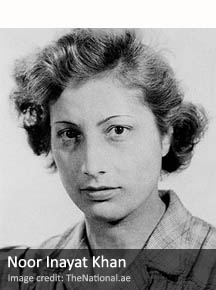
►►Britain to unveil statue of female SOE spy of Indian origin. Born in Moscow to an Indian father and an American mother, Noor Inayat Khan was in Paris when it fell to Nazi occupation. She immediately returned to London to volunteer for the war effort, joined the Women’s Auxiliary Air Force and was recruited by the Special Operations Executive (SOE). She was sent into France on a secret mission in June 1943, but was betrayed and captured a few months later. She was shot by the Nazis in Dachau in September 1944, aged 30, and was posthumously awarded the George Cross as well as the Croix de Guerre by France. She was one of only three women in the SOE to be awarded the George Cross.
►►US intelligence spending falls or second year in a row. The US government’s total spending on intelligence activities fell in 2012, the second year in a row of declining numbers after years of soaring security spending since the September 11 attacks in 2001. The Office of Director of National Intelligence, the top US intelligence authority, announced on Tuesday that total funding appropriated for the National Intelligence Program, covering activities of the CIA and high-tech spy agencies such as the National Reconnaissance Office, was $53.9 billion in Fiscal Year 2012, which ended on September 30. That was down from the $54.6 billion appropriated during Fiscal Year 2011, according to government officials and figures published by the private Federation of American Scientists.
►►Russia wants to park spy planes on French base. France has been asked by Moscow to allow two Russian spy planes to be deployed at a French base in Djibouti to help track down pirates. Russian Defense Minister Anatoly Serdyukov said last week that the Ilyushin Il-38 naval reconnaissance planes would improve Russia’s ability to spot pirates plaguing waters off the coast of Somalia. Djibouti is at the juncture of the Red Sea and the Gulf of Aden. The French base is home to several thousand French service members and a number of military aircraft.

News you may have missed #806

Mohammed DahabiBy IAN ALLEN | intelNews.org |
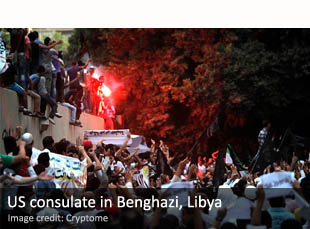
►►Most staff at US consulate in Libya were CIA personnel. Most of the personnel attached to the US diplomatic mission in Benghazi, the Libyan city where a US consulate was attacked ending with the deaths of four Americans, including Ambassador Christopher Stevens, were spies, according to The Wall Street Journal. The paper said 23 of the 30 Americans evacuated from Benghazi in the wake of the September 11, 2012, attack were employees of the CIA. Tyrone Woods and Glen Doherty, two of the men killed that day, and later publicly identified as contract security workers with the State Department, were in fact under contract with the CIA, said the paper.
►►India accuses Pakistan of printing counterfeit banknotes. The Central Economic Intelligence Bureau in India says that the Pakistani spy agency, the Inter-Services Intelligence Directorate (ISI) is printing counterfeit Indian and Bangladeshi currencies from the state-owned security printing presses “under special arrangement” and circulating the same through a well-organized network, which is coordinated by senior ISI officials. This is not the first time that the Indian government has accused Pakistan of counterfeiting Indian currency.
►►Jordan court to announce ex-spy chief’s sentence on November 11. A Jordanian criminal court has postponed a verdict in the case of Mohammed al-Dahabi, who ran the General Intelligence Department between 2005 and 2008 and is on trial for alleged embezzlement of public funds, money laundering and abuse of office. Presiding judge Nashaat Akhras said in court Sunday that the verdict will be pronounced November 11, without giving a reason. Dahabi was arrested in February, when inspectors from the Central Bank of Jordan suspected transactions worth millions of dollars had gone through his bank account.

Mossad, IDF ‘resisted order’ to prepare for Iran war in 2010

Ehud Barak and Gabi AshkenaziBy JOSEPH FITSANAKIS | intelNews.org |
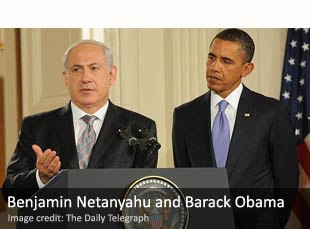
The heads of Israel’s army and main spy agency resisted an order issued by the Israeli Prime Minister to prepare for an all-out military attack on Iranian nuclear installations in 2010, according to a report aired today. According to Monday’s edition of Uvda (Fact), a popular investigative program on Israel’s Channel 2 television, the command to prepare for an attack was given by Israeli Prime Minister Benjamin Netanyahu and Minister of Defense Ehud Barak. The two men delivered the order to a meeting of senior cabinet ministers, telling them that the Israeli military’s preparedness level would be elevated to ‘P plus’, effective immediately. According to Uvda, ‘P plus’ meant that the Israeli armed forces should prepare to take military action at a moment’s notice. However, the then-Director of Israeli spy agency Mossad, Meir Dagan, who was present at the meeting, asked to speak and, according to Israeli newspaper Ha’aretz, which said it has seen the Uvda program, “came out sharply” against both Netanyahu and Barak. He told those present that elevating the military preparedness to ‘P plus’ was something that technically could only be decided at a meeting of Israel’s Political-Security Cabinet. Also known as “the inner cabinet”, the group, which consists of over a dozen Ministers and is led by the Prime Minister, is tasked with outlining and implementing Israel’s foreign and defense policy. Dagan told the two men that “only the [inner] cabinet is authorized to decide this” and warned them that they were “likely to make an illegal decision to go to war”. Dagan’s objection was later reinforced when General Gabi Ashkenazi, then-leader of the Israel Defense Forces, told the Prime Minister that the Israeli army was not ready to elevate its preparedness level to a ‘P plus’. Read more of this post

Israel admits assassinating Palestinian commander in Tunisia

Abu JihadBy JOSEPH FITSANAKIS | intelNews.org |
Authorities in Israel have authorized the publication of an interview acknowledging Israel’s role in the assassination of a senior Palestinian military commander in Tunisia in 1988. The target of the assassination was Khalil al-Wazir, better known as Abu Jihad, one of the co-founders of Fatah, the secular wing of the Palestinian Liberation Organization chaired by Yasser Arafat. In the 1960s and 1970s, Abu Jihad rose within the ranks of Fatah and eventually became commander of its armed wing, known as al-Assifa. However, he was killed on April 16, 1988, when a group of unidentified gunmen stormed his villa in Tunisian capital Tunis, before managing to slip away. In the past 23 years, the Israeli intelligence services have been repeatedly singled out as prime suspects in Abu Jihad’s assassination. Nearly 15 years ago, Israeli newspaper Yedioth Ahronot announced that it had secured an interview with an Israeli commando who had a leading role in the operation and had been the one who fired the shots that killed the Fatah commander. But the interview was blocked from publication by the Israeli military censors, who, under Israeli law, have the power to prevent the airing of information that might harm national security. In 2000, however, the commando, Nahum Lev, died in a motorcycle accident, which prompted the Israeli newspaper to renew its application for the ban on the interview to be lifted. This week, Israeli authorities officially lifted the ban, which allowed Yedioth Ahronot to run the interview with Lev. The airing of the interview was coupled by a more substantial account of the operation, which appeared in the specialist Israel Defense magazine. According to the article, the operation was planned over several months by the Israeli covert action agency Mossad and the Sayaret Matkal, a special forces unit of the Israel Defense Forces. It involved 26 commandos who allegedly reached the Tunisian shore on rubber boats. Several of them walked the streets of Tunis disguised as women tourists. Read more of this post

Analysis: Iranian-Israeli proxy war flares up in Sudan

Sudan and South SudanBy JOSEPH FITSANAKIS | intelNews.org |
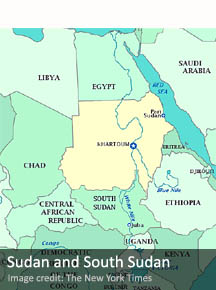
While much of the world focuses on the effects of hurricane Sandy in the eastern United States, the proxy war between Israel and Iran continues to flare up, this time in Africa. Last week, the government of Sudan accused Israeli of being behind a surprise bombing of a weapons factory in the Sudanese capital Khartoum. According to Sudan’s Minister of Information, Ahmed Belal Osman, four Israeli Air Force jets invaded Sudanese airspace and struck the Yarmouk military complex in Khartoum, inflicting heavy damages. There are unconfirmed claims that the factory was operated by the Iranian government and produced weapons that were smuggled through the Sinai Peninsula into the Gaza Strip, which is controlled by Palestinian group Hamas. On Tuesday, almost exactly a week after the alleged Israeli bombing took place, two Iranian warships arrived in Port Sudan, the country’s most important harbor, located on the Red Sea. The arrival of the vessels was confirmed by Iranian news agency IRNA, which said a helicopter carrier and a destroyer had docked at Port Sudan. The news agency, which is owned by the Iranian government, said the arrival of the ships was meant to contribute to anti-piracy efforts in the Red Sea. But non-Iranian news media, including British newspaper The Independent, quote observers who view the ships’ arrival in Sudan as an Iranian “show of support” for the Sudanese government. According to this explanation, Tehran’s decision to send the ships to the East African country is part of an ongoing proxy war between Iran and Israel taking place throughout the region. Read more of this post

News you may have missed #805 (analysis edition)

US consulate in Benghazi, LibyaBy IAN ALLEN | intelNews.org |
►►Should the US be wary of Huawei? Regular readers of intelNews know that this blog has been covering the subject of Chinese telecommunications hardware manufacturer Huawei for several years now. During the past few weeks, the United States Congress has flagged the company as being too closely associated with the Chinese intelligence establishment. Other countries have done so as well. But not everyone agrees. New York-based newspaper The Wall Street Journal said recently that “bashing Chinese companies on national security grounds seems like a risk-free strategy” for US politicians and added that, unlike Congress, American governors and mayors are eager to promote investment by Chinese companies. Moreover, Wired‘s Marcus Wohlsenemail suggests that, spies or no spies, US telecommunications companies should fear Huwaei, which is here to stay.
►►Should CIA share some of the blame for Benghazi? For the last month, the US media and Congress have been grilling the State Department for the security failures during the deadly assault on a US compound in Benghazi, Libya. But what if the State Department is the wrong target of scrutiny? According to a counter-theory advanced recently by The Washington Post‘s Dana Milbank, the CIA, not the State Department, bears some responsibility for the security lapse that led to the death of Ambassador Chris Stevens and three other Americans, but is flying under the radar due to the classified nature of its activities in Libya.
►►Could unmanned drones go rogue? Unmanned aerial vehicles, commonly known as drones, have been in the news a lot lately: the US Congress has given the green light for their use by state and local law enforcement, academic researchers, and the private sector. UAVs are rapidly becoming a new tool in patrolling US borders and in NATO military operations in Afghanistan and Pakistan. But non-state actors, including organized criminal gangs and drug cartels, may also be seeing the benefits of UAVs before too long. Read an interesting analysis piece that includes comments by intelNews‘ own Joseph Fitsanakis.

Taiwan arrests eight military officers for spying for China

China and TaiwanBy IAN ALLEN | intelNews.org |
Authorities in Taiwan have announced the arrest at least eight current and former military officers on suspicion of conducting espionage on behalf of China. The eight are accused of leaking Taiwanese military secrets to Beijing, in a case that some Taiwanese legislators described yesterday as one of the most serious instances of espionage in the island’s history. According to official statements issued yesterday, the person in charge of the alleged spy ring appears to be Lieutenant Colonel Chang Chin-hsin, who until his retirement earlier this year was charge of political warfare at the Naval Meteorology and Oceanography (METOC) Office. Based outside of Taipei, METOC is in charge of producing mapping data for use by Taiwan’s naval forces, including cartographic manuals used by Taiwanese warships and submarines guarding the Taiwanese coastline. Taiwanese authorities allege that Chang “initiated contacts” with Chinese mainland officials while still serving in the Taiwanese Navy. Following his recruitment, Chang gradually enlisted several other members of the Taiwanese military by offering hefty monetary bribes in exchange for military secrets. Taipei authorities claim that they found out about Chang’s espionage activities in March of this year, and that Taiwan’s Military Prosecutors Office gathered evidence against him before he was able to seriously compromise national security. Read more of this post

ExxonMobil executive shot dead ‘assassination-style’ in Brussels

Nicholas MockfordBy IAN ALLEN | intelNews.org |
A senior British executive of American multinational oil and gas corporation ExxonMobil has been killed in an alleged “assassination-style” shooting in Belgium. Nicholas Mockford, 60, was a technical support manager for ExxonMobil Chemicals, Europe, specializing in intermediate technology, also known as alternative energy generation. He was shot dead at 10:00 in the evening as he was leaving an Italian restaurant on Rue de Beyseghem, in Neder-over-Heembeek, a leafy suburb of Belgian capital Brussels, where he lived with his Belgian wife and three children from a previous marriage. British newspaper The Daily Telegraph, which published news of the incident last week, said that Mr. Mockford was killed on October 14. But the paper said a “judicial instruction” had been imposed on the case by the investigating judge, which amounted to a news blackout. According to reports, Mr. Mockford was with his wife Mary when he was shot in the attack, which witnesses said happened “very quickly”. The couple was allegedly seen walking across the street from the restaurant to their car, when all of a sudden several shots were fired. The Telegraph said that Mr. Mockford’s wife was left at the scene of the crime “covered in blood” and crying for help. Two men were apparently seen running away from the area where the shooting took place, carrying motorcycle crash helmets. Soon afterwards Mr. Mockford died on his way to the hospital, said the paper. Read more of this post

MI5 official’s diaries reveal tensions between UK, US spy agencies

Guy LiddellBy JOSEPH FITSANAKIS | intelNews.org |

Newly declassified personal diaries belonging to a senior British intelligence official reveal tensions between British and American spy agencies in the years immediately following World War II. The National Archives, an executive agency operating under the United Kingdom’s Secretary of State for Justice, released the diaries on Friday. They belong to Guy Maynard Liddell, a longtime British intelligence operative who rose to the post of Deputy Director General of MI5, Britain’s domestic intelligence agency. Liddell meticulously kept a diary during most of the 1940s and 1950s, in which he detailed both personal information and details of his work at MI5. Two volumes of his diaries (from 1939 to 1945, edited by Nigel West) have already been published. Now a third installment has been declassified by the National Archives, containing Liddell’s diary entries from the late 1940s and 1950s. The diaries project what some intelligence historians describe as “a certain friction” between postwar British and American intelligence services. Even though the two countries were largely viewed as allies in the immediate postwar period, their respective intelligence agencies did not always see eye to eye. In one instance, Liddell describes his American colleagues as “utterly incapable […] of seeing anybody’s point of view except their own” and accuses them of being “quite ready to cut off their noses to spite their faces”. He also comes across as skeptical of the then-newly established Central Intelligence Agency, which, he writes, “someday” may be able to produce information that would be “worth disseminating, evaluating, or coordinating”. In 1947, shortly after the CIA’s founding, Liddell wrote with a degree of uncertainty that “in the course of time, [the Agency] may produce something of value”. Further on he relayed the opinion of CIA Deputy Director Edwin Kennedy Wright, who apparently told British intelligence officials that in American intelligence organizations “500 people were employed to do what 50 people would do” in the UK. Read more of this post

News you may have missed #804

Jeffrey Paul DelisleBy IAN ALLEN | intelNews.org |
►►CIA officer reportedly among dead in Afghanistan bombing. The attack, which was carried out in a remote area of Kandahar Province, occurred when a guard working for the Afghan intelligence service detonated a suicide vest as a delegation of American coalition members and Afghan intelligence officials arrived at the intelligence office in the Maruf District. The blast killed Ghulam Rasool, the deputy intelligence director for Kandahar Province, two of his bodyguards, another Afghan intelligence official, and some Americans, including the CIA officer. A spokeswoman for the CIA declined to comment.
►►Canadian intel officer was ‘on Russian payroll for years’. Former navy intelligence officer Jeffrey Paul Delisle, who pleaded guilty this month to spying, was leaking secrets to Russia, sending classified data about Canada as well as the United States, according to David Jacobson, the US ambassador in Ottawa. So far, the Canadian government has refrained from revealing the identity of “the foreign entity” to whom Delisle passed the classified information. Ambassador Jacobson refused to specify the nature of the information, saying only that “there was a lot of highly classified material”.
►►Panama wants to adopt euro as legal tender. Panama, one of the fastest growing economies in Latin America, wants to adopt the euro as legal tender to run alongside the country’s US dollar economy. Panama’s President Ricardo Martinelli made the request to German Chancellor Angela Merkel during a visit to Europe. The president indicated he had every faith that the crisis in the eurozone would soon be at an end, adding that Panama “would be possibly the only country in the world to have two currencies, the euro and the dollar”.

Jordan claims arrest of seven-member Syrian spy cell in Amman

Jordan and its surrounding regionBy IAN ALLEN | intelNews.org |
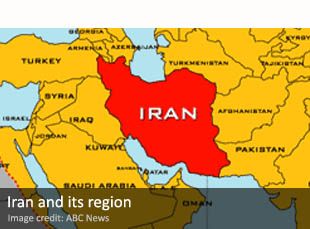
Security services in the Kingdom of Jordan announced on Tuesday the detention of seven Syrian nationals who were allegedly caught with sophisticated communications devices in their possession. The announcement was made in a laconic press release issued early yesterday evening by Jordan’s Public Security Directorate (PSD), which is the Kingdom’s counterintelligence agency operating under the Ministry of the Interior. The press release said a Syrian national had been arrested in Jordanian capital Amman following “intelligence tips”. Following his detention, the man allegedly told his interrogators that he was a member of a larger Syrian spy cell active in and around Amman. On Monday, PSD forces conducted simultaneous raids across Amman and the nearby city of irbid (50 miles north of the capital), and arrested another six Syrians. According to the PSD, the detainees were found to be in possession of 35 “advanced communications devices” that are “banned in the Kingdom of Jordan”. Sources tell intelNews that the devices are portable two-way radio transceivers, which appear to be satellite-enabled and to have encryption capabilities. In addition to the transceivers, Jordanian counterintelligence allegedly confiscated three laptop computers and a “night vision device”. Special Police Force spokesman Mohammed Khatib told reporters on Tuesday that the seven Syrians were collaborating with Jordanian authorities, but refused to provide specific information on their identities, condition or whereabouts. Read more of this post

France pressing for Western military intervention in Mali, claim sources

Mali and the Independent State of AzawadBy JOSEPH FITSANAKIS | intelNews.org |
The government of France is holding secret talks with American and other Western officials to explore options for a concerted military intervention in Mali, according to diplomatic sources. A Tuareg rebellion in the northern part of Mali, which began earlier this year, culminated in the unilateral declaration of the Independent State of Azawad. The new state, which borders Algeria, Mauritania, Niger and Burkina Faso, is controlled by the National Movement for the Liberation of Azawad (NMLA). The NMLA is partially staffed by former members of the Libyan Army during the rule of Colonel Muammar al-Gaddafi. But it is also said to incorporate armed members of Ansar Dine, the Movement for Unity and Jihad in West Africa (MUJAO) and Al-Qaeda in the Islamic Maghreb (AQIM), all of which claim to have links with al-Qaeda. Many French observers view the Independent State of Azawad as the African version of mid-1990s Afghanistan, which eventually served as the base for Osama bin Laden’s al-Qaeda. But even though the French government has come out in favor of armed intervention in northern Mali, it has denied persistent rumors that it is contemplating sending French troops in the West African country. Instead, Paris officially favors intervention by the Malian Army backed by African Union troops and using logistical support provided by the Economic Community of West African States (ECOWAS). However, in an article published yesterday, The Associated Press claimed that, behind the scenes, the French government is trying to convince the US and other Western countries to participate in a military intervention in Mali. Read more of this post

Comment: The Significance of the Killing of Lebanon’s Security Chief

The bombing that killed Wissam al-HassanBy JOSEPH FITSANAKIS*| intelNews.org |
Perhaps the only concrete reality reflected in last week’s assassination of Lebanon’s security chief is the confusion that continues to dominate Western reporting about Lebanese politics. On Friday, Lebanese capital Beirut experienced its most powerful bombing in nearly four years, when a car laden with explosives detonated killing at least eight and injured nearly 100 people. Among the dead was Brigadier General Wissam al-Hassan, head of the intelligence section of Lebanon’s national police force, known as the Internal Security Forces (ISF).  Hassan, a career intelligence officer, was a Sunni Muslim strongly associated with Lebanon’s former Prime Minister Rafik Hariri. Hariri, who was assassinated in Beirut in 2005, was openly anti-Syrian, as was Hassan. This political identification is extremely telling in a country like Lebanon, which has existed under near-complete Syrian political and military domination for the past three-and-a-half decades. Throughout this period, the position of different actors on the Syrian question has been the core defining parameter in Lebanese politics. The same applies to Lebanese institutions. As one such institution, the ISF is widely perceived as strongly anti-Syrian, and is often considered the main rival of the Security Organ of Hezbollah, the Shiite paramilitary group that controls most of southern Lebanon. Read more of this post

News you may have missed #803

Shakil AfridiBy IAN ALLEN | intelNews.org |
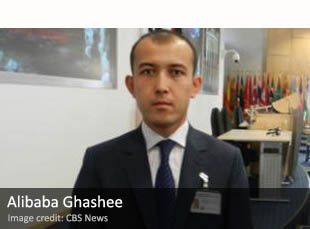
►►Phone seized from Pakistani doctor who helped CIA find bin Laden. Pakistani authorities have seized a Thoraya satellite phone from jailed doctor Shakil Afridi, who helped the CIA trace Osama bin Laden, and also arrested four police commandos guarding his cell. After interrogation, one of the four arrested commandos confessed that he had provided the satellite phone to Afridi. The doctor had reportedly made more than 68 calls from the satellite phone set and most of these calls were long-distance, but the authorities are assessing the satellite phone data to ascertain the country location.
►►US whistleblower protections extended to intelligence community. US President Barack Obama has extended whistleblower protections to national security and intelligence employees. A new Presidential policy directive says employees “who are eligible for access to classified information can effectively report waste, fraud, and abuse while protecting classified national security information. It prohibits retaliation against employees for reporting waste, fraud, and abuse”. The President has also instructed agencies, including the CIA, to establish a review process, within 270 days, that allows employees to appeal actions in conflict with the directive that affect their access to classified information. It is worth noting that the Obama administration has been criticized by open-government advocates for aggressively prosecuting self-described whistleblowers.
►►What do CIA spies do after retirement? What do former spies do when they quit the spy game? Plan covert action campaigns against the nasty old ladies in their homeowners’ association? Overthrow their city council for fun? No, the majority of former CIA case officers work as consultants or contractors within the US intelligence community. However, while returning to work as intelligence consultant is the norm, some few do forge a different path, applying lessons learned from government service to a new life in the private sector.