News you may have missed #702

James BamfordBy IAN ALLEN | intelNews.org |
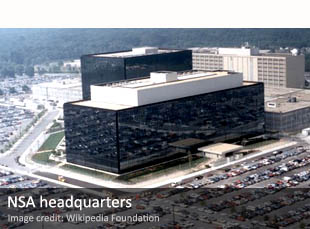
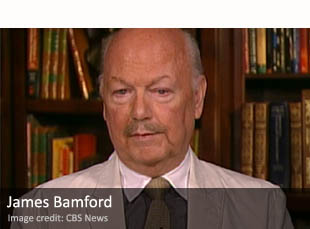
►►NSA chief denies domestic spying allegations. In a rare break from the NSA’s tradition of listening but not speaking, National Security Agency chief General Keith Alexander was grilled last week on the topic of eavesdropping on Americans in front of a House subcommittee. The questioning from Rep. Hank Johnson (D-Georgia) was prompted by Wired magazine’s cover story earlier this month on the NSA’s growing reach and capabilities. But author James Bamford (photo) and NSA whistleblower Thomas Drake insist that the NSA is quietly building America’s the largest spy center in Utah, as part of a secret domestic surveillance program codenamed STELLAR WIND.
►►NY police says it monitored Iran operatives taking photos. Speaking before the US House Homeland Security Committee, Michael Silber, director of New York Police Department Intelligence Analysis, said New York City Police have observed Iranian operatives photographing key transportation sites at least six times since September 11, 2001. He gave an example of six men on an East River sightseeing cruise in 2005, who paired off with maps and cell phones while taking photographs and videos of the bridges over the river. The NYPD determined each was on the payroll of Iranian government, one employed at Iran’s mission to the United Nations.
►►Major Canadian Cold War era mole hunt operation revealed. Newly released archival records show that even the cream of Canada’s foreign service was not immune from scrutiny in a top secret RCMP investigation known as Operation FEATHER BED. The probe, which stretched from the late 1950s into the 1970s, saw RCMP security branch investigators pore over the backgrounds of possible Communist sympathizers in the public service and political sphere —including a future Mountie spy chief. There is no evidence the highly confidential investigation ever identified a Soviet agent.

News you may have missed #701

Mohammed MerahBy IAN ALLEN| intelNews.org |
►►Ex-NASA scientist gets 13 years for spying for Israel. Former US government scientist Stewart Nozette was once on the cutting edge of space exploration, but he will spend 13 years in prison for trying to sell some of his country’s most closely guarded secrets. In 2009 Nozette sought to sell classified information to someone he thought was an Israeli Mossad officer but was in fact an FBI agent in an undercover sting operation. As intelNews explained back in 2010, Nozette was not simply a Mossad agent-wannabe, but had actually passed information to Israel in the past.
►►French intel under fire over Toulouse gunman. The French government went on the defensive last week amid questions over why its intelligence service had failed to deal with Mohammed Merah. The self-confessed al-Qaeda militant died in a police assault on his flat last Thursday, where he was tracked down after murdering seven people, including three children and three soldiers, in a series of attacks. With hindsight, Merah’s past appears to make him an obvious suspect —he had at least 15 criminal convictions, some with violence, had become a radical Islamist and travelled to Pakistan and Afghanistan. One press report said that in 2010 Merah forced a youth to watch videos of al-Qaeda hostage beheadings. When the boy’s mother complained, Merah allegedly attacked her, putting her in hospital for several days.
►►Ex-Mossad chief says Israel will know when Iran begins producing nukes. Former Mossad head Meir Dagan said he believes Israel will be aware when Iran moves to the stage of nuclear weapon production —for example, enriching uranium to a degree of 90 percent. Dagan said that at that stage Israel would have to attack the Iranian nuclear sites if the international community does not stop its program. Dagan said he believed the Israeli Air Force has the capability to significantly damage Iran’s nuclear sites, yet repeated previous warnings that such a strike will have serious repercussions.

Israel ‘conducts espionage incursions into Iran from Kurdish Iraq’

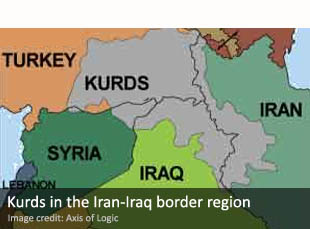
Kurds in the Iran-Iraq border regionBy JOSEPH FITSANAKIS & IAN ALLEN | intelNews.org |
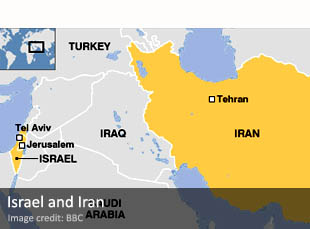
Israeli intelligence services are routinely using an undisclosed base in Iraqi Kurdistan to launch regular intelligence missions into Iran, according to The Sunday Times. The London-based newspaper cited unnamed “Western intelligence sources” in alleging that Israeli commandos and highly trained special forces members have been conducting cross-border operations from northern Iraq’s semi-autonomous Kurdistan province. But, says the paper, these risky intelligence missions have been intensified to an unprecedented degree in the past few months, as the Israelis are desperately seeking “smoking gun evidence” to convince the United States and the United Nations that Iran is actively constructing a nuclear warhead. The Israelis, according to the Times, deploy twelve-member fully armed teams into Iran on modified Black Hawk helicopters, which are able to fly for approximately 500 miles without needing to refuel. After landing into Iran, the Israeli commandos, who are usually in Iranian military uniforms, are transported to target locations in vehicles made to look like those used by the Iranian military. Their target destinations include Iranian military complexes such as that in Parchin, located 19 miles southeast of Tehran. The Times claims that the Israeli commando teams have also been to Fordow, near Qum, a heavily guarded former Islamic Revolutionary Guard Corps base that houses an underground uranium enrichment facility. The article claims that, once they reach their destination, the Israeli commando teams use “sensitive equipment” to monitor levels of radioactivity and record the magnitude of any explosives tests that might be carried out at those locations. IntelNews has paid particular attention over the years to reports of alleged cooperation between Israeli intelligence agencies and Kurdish groups in Iraq and elsewhere. Read more of this post

News you may have missed #700: analysis edition

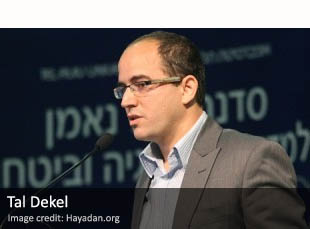
Tal DekelBy IAN ALLEN | intelNews.org |
►►Egypt struggles to advance spy satellite program. Since Egyptian technicians lost touch two years ago with an observation satellite they hoped would help carry the country into the “space club”, the country has struggled to make progress in gaining intelligence satellite capabilities, but it remains committed to the program. This is according to Tal Dekel, a research fellow at Tel Aviv University’s Yuval Ne’eman Workshop for Science, Technology and Security. He said few are aware of the extent of Egypt’s satellite program: “People talk about the Iranians, but no one talks about Egypt’s program, which includes much more than a satellite”.
►►China spying on Taiwan despite thaw. When Taiwanese security personnel detained a suspected spy for China at a top secret military base last month, they may have had a sense of déjà vu. Four suspected spies have been detained in Taiwan during the last fourteen months. The cases show that China is seeking information about systems that are integral to Taiwan’s defenses and built with sensitive US technology. A major breach could make Taiwan more vulnerable to Chinese attack.
►►US intel says water shortages threaten stability. Competition for increasingly scarce water in the next decade will fuel instability in regions such as South Asia and the Middle East that are important to US national security, according to an intelligence report from the US Director of National Intelligence. The report, drafted principally by the Defense Intelligence Agency, reflects a growing emphasis in the US intelligence community on how environmental issues such as water shortages, natural disasters and climate change may affect US security interests.

Libya’s spy chief was lured by French-Mauritanian intelligence trap

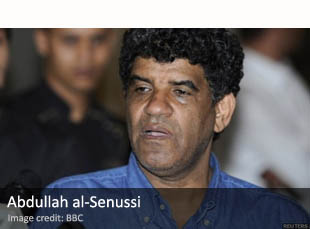
Abdullah al-SenussiBy JOSEPH FITSANAKIS| intelNews.org |
The arrest of Muammar al-Gaddafi’s spy chief in Mauritania last week was the culmination of a carefully planned French intelligence operation, which was secretly aided by the Mauritanian government, according to informed insiders. Abdullah al-Senussi, Colonel Gaddafi’s brother-in-law, who used to head the Mukhabarat el-Jamahiriya, Libya’s intelligence agency, was captured at the Nouakchott International Airport in the Mauritanian capital on March 17. He was detained as soon as he arrived there on a chartered flight from Mali. He had previously entered Mali from Niger, and was reportedly under the government’s protection. But the ongoing uprising of the pro-Gaddafi Tuareg in the north of the country, which has now resulted in a military coup in Bamako, caused the former Libyan spy chief to seek refuge elsewhere. According to a well-researched article by Reuters news agency, al-Senussi was gradually convinced to travel to Mauritania by the al-Me’edani clan, a pro-Gaddafi nomadic tribe that had previously worked for the Libyan security agencies and whose members had been given Libyan nationality by Colonel Gaddafi’s regime. The clan, says the Reuters article, was persuaded to turn its back on al-Senussi as part of a behind-the-scenes agreement between French and Mauritanian intelligence agencies. The deal was struck after a high-level agreement between the Nicolas Sarkozy government in Paris and the Mauritanian government of President Mohamed Ould Abdel Aziz. A career soldier and high-ranking officer, Abdel Aziz assumed power in the country in a 2008 military coup that was widely condemned by international bodies, including the United Nations. But the military regime in Nouakchott was pleased to see Paris engineer a thaw in relations between the two countries in 2009. Ever since then, the French government has publicly praised the regime of President Abdel Aziz as a “key partner” in combating terrorism. Mauritania’s decision to help France capture al-Senussi was a repayment to the country’s former colonial master for its support after the 2008 military coup, according to Reuters. Following his arrest, al-Senussi is believed to be held at the headquarters of the Mauritanian intelligence service in Nouakchott. Read more of this post

US denies arms dealer’s release is part of swap deal with Iran

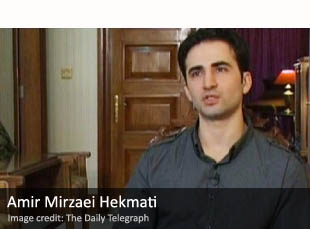
Amir Mirzaei HekmatiBy JOSEPH FITSANAKIS| intelNews.org |
The United States government has denied that the quiet release and deportation of an Iranian arms dealer is part of a secret deal to swap imprisoned agents with Iran. A US State Department spokesman confirmed on Tuesday that Iranian citizen and convicted arms smuggler Amir Hossein Ardebili had been released from US custody and was on his way back to Iran. Ardebili was captured and abducted by US government operatives in the Republic of Georgia in 2007, during a controversial sting operation. His abduction was the culmination of a three-year-long sting operation, during which he allegedly tried to arrange a clandestine shipment of sensitive military technology from the US to Iran. He was eventually extradited to the US in 2008, and sentenced the following year to five years in prison, for operating as an “arms acquisitions agent for the government of Iran”. Last month, however, he was discretely released from prison in Minnesota and handed over to US Immigration and Customs Enforcement for deportation. US State Department spokesman Noel Clay said that Ardebili was on his way to Tehran via Europe, because he had “completed serving his criminal sentence and has no legal immigration status in this country”. The spokesman also pointed out that Ardebili’s five-year prison sentence was meant to include the nearly two years he spent in Georgian and US detention, prior to his 2009 trial. But some observers, including Laura Rozen at Yahoo News, speculate that there might be a connection between Ardebili’s deportation and the reversal earlier this month of a death sentence imposed by a Tehran court on a former US marine captured in Iran on spy charges. Tehran recently announced that Amir Mirzaei Hekmati (pictured), from Arizona, who was captured in Iran while allegedly on a CIA mission, is to have his death sentence voided, and will face a retrial. Read more of this post

News you may have missed #699

Hilda MurrellBy IAN ALLEN | intelNews.org |
►►Diplomatic war over the arrest of Gaddafi’s spy chief. The Libyan authorities have confirmed the arrest in Mauritania of former Libyan leader Muammar Gaddafi’s intelligence chief, Abdullah al-Senussi, who was reportedly detained at Nouakchott airport. Senussi, 63, was Gaddafi’s brother-in-law, and has been described as one of his most trusted aides. But his arrest has kicked off an international row about which of his alleged crimes —ranging from terrorism to war crimes and mass murder— should take precedence in the pursuit of justice. The Mauritanians are now saying that they are willing to extradite al-Senussi, but this remains to be seen in practice.
►►Azerbaijan arrests 22 in alleged Iran spy plot. Azerbaijan has arrested 22 of its own citizens, on suspicion of spying for Iran. Weapons and ammunition were seized, authorities say, accusing the group of links to Iran’s Islamic Revolutionary Guard Corps. Their alleged targets included the US and Israeli embassies as well as Western-linked companies. Surveillance by the Azeri security services is reported to have helped foil the alleged Iranian-sponsored plot.
►►Was there MI5 link to murder of UK nuclear activist? One of Britain’s leading human rights lawyers, Michael Mansfield QC, has demanded a fresh police inquiry to establish what the British intelligence services knew about the murder of a prominent anti-nuclear campaigner. The lawyer said new evidence meant that an independent police force should be appointed to examine enduring concerns and inconsistencies relating to the death of Hilda Murrell, in March 1984.

News you may have missed #698

Cecilia LooströmBy IAN ALLEN | intelNews.org |
►►Swedish official sent top-secret intel briefing via Hotmail. A high-ranking official at Sweden’s Ministry of Defense sent notes on highly confidential arms trade negotiations with a Saudi Arabian official through a Hotmail email address. The four-page-long email, which details a secret conversation with a Saudi General, was sent in 2008 from assistant Under-Secretary for Defense Cecilia Looström, according to a Swedish newspaper.
►►Russian diplomat won’t deny espionage activity in Canada. Russia’s ambassador to Canada, Georgiy Mamedov, has refused to deny that his country carries out spy activity in Canada. He told a Canadian television reporter that “I am neither denying nor confirming [Russian espionage in Canada]. I would be a fool […] if I would confirm that we are doing as much”. He said Russia conducts intelligence activities in other countries —although he didn’t specify which— but refused to give any details on what activities, if any, are conducted within Canada.
►►New Taiwan spy case raises concerns. A Taiwanese air force captain surnamed Chiang is believed to have passed intelligence to China. Reportedly, Chiang’s uncle, who operates a business in China, helped pass on the information allegedly obtained by Chiang, which is said to have included classified material on Taiwan’s early-warning radar system as well as E-2T/E-2K Hawkeye surveillance aircraft. The case has rocked the Taiwanese military, as it comes a little more than a year after a high-profile spy for China was caught and is now serving a life sentence.

Breaking News: Russian troops land in Syria

Russian naval base in Tartus, SyriaBy JOSEPH FITSANAKIS| intelNews.org |
The Russian service of the BBC has confirmed that a contingent of Russian “antiterrorist special forces” have landed in Syria. The news first appeared on Monday on the websites of several Russian news agencies, including Interfax and RIA Novosti. The latter claimed that the Russian troops, who were said to be Marines, arrived in the Syrian port of Tartus onboard the tanker Iman, which is part of Russia’s Black Sea fleet. According to the report, the tanker is strictly tasked with performing “logistical tasks [including] the replenishment of fuel and food [and] providing maritime anti-piracy security in the Gulf of Aden”. According to a statement from the Russian Black Sea Command, the special forces had landed in Syria in order to “demonstrate the Russian presence in the turbulent region and possibly evacuate Russian citizens”. Shortly after the initial reports of the troops’ landing in Tartus, ABC News spoke to an anonymous source at the United Nations Security Council, who described the news as “a bomb” that was “certain to have serious repercussions” on the situation in Syria. Soon afterwards, however, an unnamed source in the Syrian Ministry of National Defense told the SANA news agency in Damascus that the reports of Russian troops landing in Syria were “completely devoid of truth” and said the presence of the Russian tanker was connected with an anti-piracy mission. The Russian Ministry of Defense also told reporters that the Iman is not a warship and that its crew is composed entirely of civilian personnel. But a separate report on the Russian-language service of the BBC claims that, although the vessel is indeed hydrographic —designed to collect undersea topographic data— it contains sophisticated dual-use hardware that can easily be used for intelligence collection. The BBC report repeats earlier claims by the Interfax news agency that the Russian ship arrived in Tartus with a large contingent of marine brigade and airborne assault battalion members. It also quotes sources from the Syrian opposition, which allege that Russian troops were indeed seen disembarking in Taurus. Read more of this post

News you may have missed #697: US edition

David PetraeusBy IAN ALLEN| intelNews.org |
►►What happens when CIA couples divorce? One retired CIA senior paramilitary officer, who served for more than two decades and lives in Virginia, said he was told several years ago that the divorce rate for the agency’s operations division was astonishingly high. But unlike the Pentagon, which studies how often service members split up, and knows, for instance, that 29,456 of 798,921 military couples divorced last year, the CIA does not keep official tabs on its employees’ divorce rates.
►►Spies exchange tips in the cloud. While some US federal agencies shy away from cloud computing for fear of losing control over their data, the intelligence community and military increasingly are turning to networked services expressly to exert tighter security restraints, according to Jim Heath, Senior Science Adviser for the National Security Agency.
►►CIA Chief: We’ll spy on you through your dishwasher. More and more personal and household devices are connecting to the internet, from your television to your car navigation systems to your light switches. CIA Director David Petraeus cannot wait to spy on you through them. Earlier this month, Petraeus mused about the emergence of an “Internet of things” —that is, wired devices— at a summit for In-Q-Tel, the CIA’s venture capital firm. “‘Transformational’ is an overused word, but I do believe it properly applies to these technologies”, Petraeus enthused, “particularly to their effect on clandestine tradecraft”.

Mossad, CIA, ‘agree Iran has no active nuclear weapons program’

Iran's Natanz nuclear enrichment facilityBy JOSEPH FITSANAKIS| intelNews.org |
Quoting American intelligence sources, The New York Times reports that intelligence agencies from the United States and Israel agree that Iran suspended its nuclear weapons program years ago, and that Tehran is not currently attempting to revive it. As intelNews has been reporting consistently since 2009, the overwhelming consensus in the US intelligence community is that the Iranian regime suspended all efforts to build a nuclear bomb in 2003. Furthermore, the US intelligence community maintains that the decision to turn Iran into a nuclear power has yet to be conclusively taken in Tehran. This was first outlined in the 2007 US National Intelligence Estimate (NIE), an annual report cooperatively authored by the heads of all US intelligence agencies. This consensus appears even wider after Sunday’s New York Times report, which maintains that, even though many hawkish Israeli politicians advocate aggressive action against Iran, Israel’s intelligence agency, the Mossad, is in broad agreement with the premise of the 2007 NIE. The Times cites an anonymous “former senior American intelligence official”, who says that, although Israeli intelligence planners direct “very hard questions” to their American counterparts, the “Mossad does not disagree with the US on the [Iranian] weapons program”, and that “there is not a lot of dispute between the US and Israeli intelligence communities on the facts”. Undeniably, the 2007 NIE has its detractors, including some who accuse the US intelligence community of refusing to realize “that Iran now has the capability to change the balance of power in the Gulf”. The latest report in The Times does not deny that there are “significant intelligence gaps” in Washington’s ability to understand Iran’s intentions. Iran, argues the report —correctly— is “one of the most difficult intelligence collection targets in the world”. Read more of this post

News you may have missed #696

NSA's Utah Data CenterBy IAN ALLEN| intelNews.org |
►►French spies to stage labor protest. The main union representing French domestic intelligence officers, those charged with counter-espionage and anti-terror investigations, called Wednesday on its members to stage a protest. The head of the SNOP union, which represents senior police officers and is the main labor body for members of the DCRI security agency, said his members planned a “gathering” at their Paris headquarters. A smaller union said it wanted no part in the protest, and it was not clear how many of the agency’s 4,000 intelligence officers planned to take part.
►►James Bamford on the NSA’s new spy center in Utah. Under construction by contractors with top-secret clearances, the blandly named Utah Data Center is being built in Bluffdale for the National Security Agency. A project of immense secrecy, it is the final piece in a complex puzzle assembled over the past decade. Its purpose: to intercept, decipher, analyze, and store vast swaths of the world’s communications as they zap down from satellites and zip through the underground and undersea cables of international, foreign, and domestic networks. The heavily fortified $2 billion center should be up and running in September 2013.
►►Author of unauthorized CIA book gave proceeds to charity. After former CIA officer Ishmael Jones wrote a book about the CIA without gaining prior approval from the Agency, the government sought and won a judicial ruling that Jones had acted in violation of his CIA secrecy agreement, and that he could be held liable for the breach. But the government’s current efforts to seize the financial proceeds from Jones’ 2010 book, The Human Factor: Inside the CIA’s Dysfunctional Intelligence Culture, have been frustrated by the fact that the author has already given the proceeds away to charity.

State prosecutors probe alleged plot to kill Greek prime minister

Kostas KaramanlisBy JOSEPH FITSANAKIS| intelNews.org |
Government prosecutors in Athens have opened a criminal investigation into an alleged plot to kill the Prime Minister of Greece in 2008, which was reportedly uncovered by Russian intelligence. In June of last year, Greek media claimed that the country’s National Intelligence Service (EYP) had been briefed by the Russian Federal Security Service (FSB) about the assassination plot. According to the Russian briefing, the plot, codenamed PYTHIA, was hatched by the intelligence agency of “a country allied to Greece”, and was targeted at conservative Prime Minister Kostas Karamanlis, who governed Greece from 2004 to 2009. The Russians claimed that Operation PYTHIA was purportedly aimed at preventing Athens from signing on to a series of energy deals with Moscow, including the ambitious South Stream pipeline project, which aims to connect Russian gas fields to the European energy market. On Wednesday, court official Nikos Ornerakis told a press conference in Athens that, based on preliminary investigations, Greek prosecutors considered the case credible and had filed a felony count of conspiracy “against persons unknown”. The Associated Press, which reported on the story, spoke to former Ambassador Ioannis Corantis, who headed Greece’s EYP intelligence service during the discovery of the alleged assassination plot. Ambassador Corantis confirmed that the EYP had indeed been briefed on Operation PYTHIA “by an official of the [Russian] FSB”, and that the briefing concerned a suspected assassination plot against Prime Minister Karamanlis. Read more of this post

News you may have missed #695

Nicolas Sarkozy and Muammar GaddafiBy IAN ALLEN| intelNews.org |
►►Spies meet over Syrian crisis. CIA chief David Petraeus met Turkey’s Prime Minister Recep Tayyip Erdogan on Tuesday for closed-door talks focusing on the crisis across the border in Syria. Meanwhile, General Murad Muwafi, who heads Egypt’s General Intelligence Directorate, left Cairo on Tuesday for a visit to Riyadh, Saudi Arabia. Also, US General Ronald Burgess, Defense Intelligence Agency Director, has arrived in Egypt and is expected to meet with several Egyptian officials to discuss the situation in Syria.
►►Gaddafi contributed €50m to Sarkozy election fund. Damaging new claims have emerged about the funding of Nicolas Sarkozy’s 2007 election campaign and his links with former Libyan leader Muammar Gaddafi. The French investigative website Mediapart claims to have seen a confidential note suggesting Gaddafi contributed up to €50 million to Sarkozy’s election fund five years ago.
►►Analysis: US relations on the agenda for Pakistan’s new spy chief. Yusuf Raza Gilani has appointed Lieutenant General Zahir ul-Islam as the new chief of the Inter-Services Intelligence (ISI) agency, the main spy arm of the Pakistani military, ending weeks of speculation he would extend the term of Lieutenant Gen Ahmed Shuja Pasha, due to retire on March 18. The new spymaster faces a tough task fixing ever-worsening ties with the United States, but analysts say he is unlikely to reform an institution accused of helping militants in Afghanistan.

Irish government ‘refused cooperation’ with probe into IRA attack

Warrenpoint ambushBy JOSEPH FITSANAKIS| intelNews.org |
The government of the Republic of Ireland allegedly ordered senior police officials not to assist an investigation into a 1979 attack by the Provisional Irish Republican Army that killed 18 British soldiers in the UK province of Northern Ireland. The attack, known as the Warrenpoint ambush, took place in the afternoon of August 27, when a British military convoy was blown up by a remote-controlled 500-pound fertilizer bomb hidden in a lorry loaded with straw bales. It was soon followed by a second massive bomb blast at a nearby house, and resulted in the British Army’s greatest loss of life in a single incident during the Northern Ireland Troubles. Now a retired officer of the Royal Ulster Constabulary (RUC), as the British police body in Northern Ireland was then known, has told an official government inquiry that the Irish government refused to collaborate with the investigation into the Warrenpoint ambush, and even ordered its senior police officers to distance themselves from it. The man, who testified behind closed doors through a video link from Belfast, cannot be named and is instead referred to in tribunal documents as ‘Witness 68’. All that is known about him is that he is a retired detective and retired from the RUC with a rank of Deputy Assistant Chief Constable. He told the Smithwick Tribunal that the government of the Republic of Ireland instructed its intelligence and law enforcement personnel to view the Warrenpoint ambush as a political crime and to abstain from the British-led criminal investigation into the killings. Consequently, in April 1980, when British RUC officials met with senior officers from the Garda’s (Irish police) Criminal Intelligence Division in Dublin, the Irish delegation informed British officials that the Irish Prime Minister, Jack Lynch, had given specific instructions that “no assistance would be given to the RUC”. Subsequently, the RUC discovered that a site located in the Republic of Ireland, which the British suspected had been used to detonate the bomb that exploded a few yards away at Warrenpoint, had been destroyed before forensic teams were able to examine it. Read more of this post