American held in Pakistan is acting CIA station chief

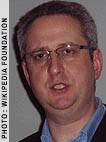
Raymond Allen Davis

Raymond Davis

By JOSEPH FITSANAKIS | intelNews.org |
A British and a Pakistani newspaper have confirmed that an American diplomat, who is being held in Pakistan for killing two armed men in Lahore, is in reality an employee of the Central Intelligence Agency. On January 25, former US Special Forces member Raymond Allen Davis (note: this may not be his real name) used an unregistered Glock semi-automatic pistol to shoot dead two passengers on a motorcycle, who he says tried to assault him while he was driving his car in Pakistan’s second largest city. Witnesses say Davis shot dead the one of the two men by firing ten shots from inside his vehicle, before stepping outside to shoot the second man as he was running away from the scene of the crime. Pakistani authorities say Davis’ claim to self-defense is discredited by the fact that the second man’s body was found almost 10 meters away from the motorcycle, bearing bullet wounds in his back. A third individual was struck and run over by a car carrying several armed Americans, whom Pakistanis say were also CIA operatives. The latter have since returned to the United States, according to Pakistani officials. Soon after Davis’ arrest, US President Barack Obama insisted that Pakistani authorities had illegally captured a “US consulate worker” of an “administrative and technical” capacity, attached to the US consulate in Lahore. Read more of this post

News you may have missed #477 (Germany edition)

  • German ex-foreign minister in spat with ex-CIA director. Former CIA Director, George Tenet, claims that he discovered “too damn late” that Curveball –the Iraqi defector who became a key source for the CIA and the German secret service (BND)– was a fabricator. But Germany’s former foreign minister, Joschka Fischer, has told journalists that the BND did in fact share its doubts about Curveball with the CIA.
  • German spy chief claims Mubarak to stay in Egypt [unconfirmed]. According to German newspaper Die Welt, Ernst Uhrlau, director of Germany’s BND federal intelligence agency, says he has “no evidence that former Egyptian President Hosni Mubarak wants to leave the country, and that his comment that he intends to stay and be buried in Egypt “is credible”.
  • Austrian on trial in Germany on charges of spying for Russia. An Austrian soldier is on trial in Germany, accused of spying for Russia’s Foreign Intelligence Service (SVR) and passing on sensitive information about European helicopter prototypes. Prosecutors at the Munich court allege that the unnamed 54-year-old Austrian army mechanic spied from 1997 to 2002.


Colin Powell wants answers over fake Iraq intelligence

Rafid Ahmed Alwan al-Janabi

Alwan al-Janabi

By IAN ALLEN | intelNews.org |
Regular readers of this blog will not be surprised by recent news that the Iraqi defector whose information helped build the Bush Administration’s case for invading Iraq in 2003, has admitted he lied about Saddam Hussein’s alleged weapons of mass destruction. Rafid Ahmed Alwan al-Janabi, known in intelligence circles as ‘Curveball’, arrived in Germany in 1999, where he applied for asylum, saying he had been employed as a senior scientist in Iraq’s biological weapons program. Serious doubts about al-Janabi’s reliability were expressed at the time by Germany’s Federal Intelligence Service, the BND, and by some in the CIA. Yet his testimony became a major source of US Secretary of State Colin Powell’s February 2003 speech before the United Nations Security Council, in which he layed out Washington’s case for war. A year later, both the BND and the CIA concluded that al-Janabi had been lying about his alleged biological weapons role, and that he was in reality a taxi driver from Baghdad, who had used his undergraduate knowledge of engineering to fool Western intelligence. Now al-Janabi, who still lives in Germany, has spoken to British newspaper The Guardian, and openly admitted that his story was completely fabricated. He told the paper that he was an “opposition activist” and that he lied to his German and American intelligence handlers in order to help “topple” the regime of Saddam Hussein. Read more of this post

US denies smuggling spy equipment into Argentina [updated]

Argentina

Argentina

By JOSEPH FITSANAKIS | intelNews.org |
The United States has denied charges by Argentine officials that it tried to smuggle espionage equipment into the South American country under the pretext of transporting training supplies for Argentine Federal Police. The charges were leveled on Thursday, after Argentine customs officials conducted what the US Department of State called an “unusual and unannounced” inspection of a US Air Force C-17 cargo plane that landed in the country. According to the Argentine government, the inspection turned up communications interception equipment, “powerful GPS” hardware, as well as “technological elements containing codes labeled secret”, among other items. The material, which had apparently not been listed in the plane’s manifest, was confiscated, while the C-17, along with its American passengers, most of whom were members of the US Special Forces, flew back to the US. Authorities in Argentina are now accusing the US Pentagon and the Department of State of trying to smuggle in the equipment without declaring it to customs officials, as is prescribed under international air cargo transportation laws. Read more of this post

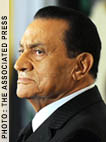
Mubarak delayed exit in order to move secret funds, say intel sources

Hosni Mubarak

Hosni Mubarak

By JOSEPH FITSANAKIS | intelNews.org |
One of the reasons why Egypt’s disgraced ex-president kept prolonging his rule amidst ferocious anti-government protests this month, was to transfer billions of dollars-worth of personal assets into bank accounts around the world. British newspaper The Sunday Telegraph quotes a “senior Western intelligence official” who claims that Hosni Mubarak’s fund managers began transferring his extensive fortune to numbered bank accounts during the first days of the popular revolution in Egypt. The intelligence official told The Telegraph that Western intelligence services were “aware of some urgent conversations” within the Mubarak family about how to best protect their fortune from Egyptian and international financial investigators. The Mubaraks may have thus pre-empted the freezing of their accounts in Zurich, which was announced by the Swiss government on Friday. In this, Hosni Mubarak appears to have learned from Tunisia’s former dictator, Zine El Abidine Ben Ali, who was forced to flee with his family to Saudi Arabia last month, without the benefit of his Swiss bank assets. The latter were frozen following an official request by the Tunisian government. In the case of Mubarak, whose vast $70 billion fortune is mostly managed by his son Gamal, it appears that most of his Swiss bank assets were moved to accounts in third countries in the days before his resignation and are thus “gone by now”, according to one US government official who spoke to The Telegraph on condition of anonymity. Read more of this post

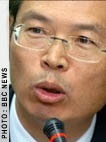
General arrested in Taiwan’s biggest spy scandal in 50 years

Lo Hsien-che

Lo Hsien-che

By JOSEPH FITSANAKIS | intelNews.org |
A “tall, beautiful and chic” Chinese female operative, who held an Australian passport, appears to be behind Taiwan’s most serious espionage scandal in almost half a century, according to news reports. The scandal centers on the arrest earlier this week of Major General Lo Hsien-che, who heads the Taiwanese military’s Office of Communications and Information. Taiwanese prosecutors said that General Lo is the most senior Taiwanese official to be arrested on espionage charges since the early 1960s. He had apparently been investigated for several months by Taiwanese counterintelligence investigators, who claim that Lo was recruited by Chinese intelligence while stationed in Thailand, between 2002 and 2005. Paris-based Agence France Presse cites The China Times in reporting that the General was lured by a female Chinese operative in her early 30s, who cajoled him with “sex and money”. Read more of this post

News you may have missed #476

News you may have missed #475 (Arab revolution edition)

  • Obama ‘disappointed’ with US intelligence on Tunisia. US President Barack Obama sent word to National Intelligence Director James Clapper that he was “disappointed with the intelligence community” over its failure to predict that the outbreak of demonstrations would lead to the ouster of President Zine el-Abidine Ben Ali in Tunis.
  • An Intelligence Failure in Egypt? The US intelligence community is like the offensive line of the government. They protect the quarterback all day long, and no one notices until they give up a sack. Which raises the question: was US President Barack Obama blindsided by the uprisings in Tunisia and Egypt?
  • Did US intelligence fail in North Africa? “One former official said US president Barack Obama recently urged the CIA to put as much effort into analysis of the situation in North Africa as into covert operations, including those targeting al-Qaida”.

Embassy cables show US spied on UK Foreign Office

Ivan Lewis

Ivan Lewis

By IAN ALLEN | intelNews.org |
The latest release of US embassy cables from whistleblower website WikiLeaks shows that the US Department of State ordered its diplomats to actively report on the personal lives of British Foreign Office officials. On several instances, American diplomats in London appear to have reported on the personal life of Ivan Lewis, a Labour Party politician who served as Minister of State for Foreign and Commonwealth Affairs during the closing days of Gordon Brown’s government. It seems that the reports on Lewis were compiled at the request of the State Department in Washington, which issued calls for specific background information on Lewis’ personal life. In response to the request, a memorandum was sent from the US embassy in London on August 12, 2009, suggesting that Lewis was “possibly prone to depression” and that he was described by one of his colleagues as “a bully”. The cable also indicated that Lewis had apologized “in 2007 to a female in his office who accused him of sexual harassment”, and suggested that the incident had been purposely leaked to the British media by Downing Street a few months later, after Lewis publicly joined the internal Labour Party revolt against Brown. Read more of this post

Egypt intelligence highlights Congress-CIA tensions

Egypt uprising

Egypt uprising

By IAN ALLEN | intelNews.org |
A US Congressional hearing over a career CIA official’s promotion turned into a heated exchange on Thursday, as Congress members accused America’s intelligence community of failing to provide forewarning of the political instability in Egypt. Speaking before the US Senate’s Select Committee on Intelligence, Stephanie O’Sullivan, former Director of the CIA Directorate of Science and Technology, was faced with an unexpected barrage of questions concerning the Agency’s alleged failure to provide US policy planners with accurate warning of the Egyptian popular uprising. Shortly after the start of the hearing, which was intended to deliberate O’Sullivan’s nomination for the position of Deputy Director of the Office of Director of National Intelligence, attention turned to Egypt, with members of the Committee pressuring the CIA executive to explain why the US intelligence community had failed to issue ample warnings on Egypt. O’Sullivan responded repeatedly that the CIA and other US intelligence services had provided warnings to Obama Administration officials in November and December of 2010, about extreme political volatility in North Africa. Read more of this post

News you may have missed #474

  • Israel jails Arab activist for spying. A court in Haifa has sentenced prominent Israeli Arab activist Ameer Makhoul to nine years in prison and another year suspended sentence for charges of spying and contacting a foreign agent from Lebanon-based Hezbollah.
  • Assange used disguise to evade surveillance new book reveals. WikiLeaks editor Julian Assange disguised himself as an old woman in a wig for fear he was being followed by US intelligence, according to a book published this week by British quality broadsheet The Guardian. According to another book, to be published by journalists at German weekly newsmagazine Der Spiegel, Assange expressed private fears that the content of the US embassy cables was too explosive for his organization to withstand.
  • US Congressman wants to know who wants to know. Republican Representative Darrell Issa wants to know the names of hundreds of thousands of ordinary American citizens who have requested copies of federal government documents in recent years. Issa, the new chairman of the House Committee on Oversight and Government Reform, saying he simply wants to “make sure agencies respond in a timely fashion to Freedom of Information Act requests”. Hmmm…

News you may have missed #473

  • Cyprus recognizes Palestine as independent nation. The Israeli assessment is that other European Union countries, including Britain, Sweden, Belgium, Finland, Germany, Denmark, Malta, Luxembourg, Austria and perhaps others are considering a similar move.
  • Top NZ intel scientist had falsified CV. British-born Stephen Wilce was hired as chief of New Zealand’s Defence Technology Agency in 2005, having got top level security clearance. Last year, he had to resign after it emerged that he had made a series of false claims about his past. But the question is how he passed security checks when he applied for the post in 2005.
  • Report uncovers widespread FBI intelligence violations. A new report by the San Francisco-based Electronic Frontier Foundation has found widespread violations in FBI intelligence investigations from 2001 to 2008. The EFF report suggests that FBI intelligence investigations have compromised the civil liberties of Americans to a greater extent than was previously assumed.

Analysis: Spy Agencies Failed to Predict Egypt Uprising

Egypt uprising

Egypt uprising

By JOSEPH FITSANAKIS| intelNews.org |
It is becoming increasingly clear that the ongoing popular uprising in Egypt represents the most important geopolitical development in the Middle East since the 1979 Islamic Revolution in Iran. In light of this, it is remarkable how unprepared foreign intelligence agencies have proven in forecasting the crisis. Even the Israelis were caught completely unaware: on January 25, the day when massive protests first erupted across Egypt, Major General Aviv Kochavi, newly appointed head of Israel’s Military Intelligence Directorate, told a Knesset committee that “there are no doubts about the stability of the regime in Egypt” and that “the Muslim Brotherhood is not organized enough to take over”. Instead, Kochavi focused on political volatility in Lebanon; ironically, the latter now seems like an oasis of tranquility compared to the explosive state of Egyptian politics. If the Israelis, whose very concept of national security is inextricably linked with developments in Cairo, were so unsuspecting of the popular wave of anger against the thirty-year dictatorship of President Hosni Mubarak, one can only imagine Washington’s surprise at the protests. Click here to read my article in Intelligent-Intelligence.com, a specialist publication edited by Kyle Cunliffe. Continue reading →

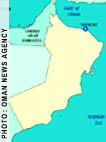
Emirates authorities deny Oman spy ring allegations

Oman

Oman

By IAN ALLEN | intelNews.org |
The government of the United Arab Emirates has denied operating an espionage network in the neighboring Sultanate of Oman, saying that spying goes against the country’s values. The official denial was issued in response to a news report by Oman’s state news agency, which said that Omani authorities had uncovered a spy ring targeting the country’s intelligence and military apparatus. According to the report, issued yesterday by the Oman News Agency, the country’s security services “discovered a spy network affiliated to the State Security Service in the United Arab Emirates”, leading to several arrests across the Sultanate. No further information was issued by the news agency, but Reuters quoted an anonymous Omani government source, who said that the alleged spy network was first uncovered two months ago, and that the arrestees include “Omani nationals”. The news of the espionage allegations have perplexed observers, who consider the UAE and Oman to be generally on good terms. Both countries belong to the Cooperation Council for the Arab States of the Gulf, an increasingly unified political and economic union that involves the region’s pro-Western oil states, including Saudi Arabia. One notable difference between the UAE and Oman is the latter’s traditionally close relations with Iran, with which it maintains common energy concerns. Read more of this post

Analysis: What is the CIA doing in Egypt?

Egypt

Egypt

By JOSEPH FITSANAKIS | intelNews.org |
Every time there is a popular uprising anywhere in the Muslim world, the minds of American intelligence planners go immediately to 1979, when the Iranian Revolution tore down almost overnight one of Washington closest allies in the Middle East. By ignoring the immense unpopularity of the Shah’s brutal regime, and by limiting its Iranian contacts among the pro-Shah elites in the country, the CIA was caught completely in the dark as the Islamic revolution unfolded. Could the same be happening now in Egypt? Hopefully not, says The Washington Post’s veteran intelligence correspondent Jeff Stein. As in the case of Iran under the Shah, the US has stood by the 33-year dictatorship of Hosni Mubarak, choosing to abide by the simplistic dogma of ‘either secular repression or anti-American Islamism’. But, unlike 1970s Iran, one would hope that US intelligence agencies have been able to develop useful contacts across the fragmented but dynamic and energized Egyptian opposition community, says Stein, quoting former US Defense Intelligence Agency official Jeffrey White. It is unlikely that the CIA and other agencies have fully embraced persistent calls, such as those by Emile Nakhleh, former head of the CIA’s program on political Islam, to develop trustworthy contacts inside the Egyptian Islamic Brotherhood, as well as groups close to it, such as Hamas and Hezbollah. Read more of this post