More underreported WikiLeaks revelations

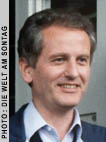
Julian Assange

Julian Assange

By JOSEPH FITSANAKIS | intelNews.org |
As the world’s media shift their attention to the consequences of the WikiLeaks revelations for its founder Julian Assange, as well as the reactions of American officials, the leaked diplomatic cables keep coming in, almost on an hourly basis. Some of the least noticed revelations include a 2009 dispatch from a US diplomat in Tel Aviv, which appears to confirm the close secret relations between Israel and the United Arab Emirates, despite the fact that these two countries have no official diplomatic connections. Another diplomatic cable reveals that Iranian intelligence officials approached their Canadian counterparts in 2008 and offered to share with them “information on potential attacks in Afghanistan”. Perhaps not surprisingly, the Canadians reacted guardedly, with Canadian Security Intelligence Service Director Jim Judd stating that his agency had “not figured out what they [the Iranians] are up to”. Read more of this post

Some underreported WikiLeaks revelations

WikiLeaks

WikiLeaks

By JOSEPH FITSANAKIS | intelNews.org |
There is little point in recapping here the bulk of disclosures contained in the ongoing WikiLeaks revelations. The news sphere is jam-packed with them —and perhaps this is the real story in the WikiLeaks revelations, namely the fact that espionage and intelligence issues have near-monopolized the global news cycle for the first time since the post-Watergate Congressional investigations of the 1970s. But it is worth pointing out a handful of news stories on the WikiLeaks revelations that have arguably not received the media coverage that they deserve. Undoubtedly the most underreported disclosure concerns a 2007 meeting between US officials and Meir Dagan, the then Director of Israel’s Mossad intelligence agency. During the meeting, Dagan apparently “presented US with five-step program to perform a coup in Iran“.  But there are other underreported disclosures. Take for instance the revelation that US Secretary of State Hillary Clinton personally authorized US diplomats to engage in all-out and indiscriminate spying on senior United Nations officials. Although there is nothing here that will surprise seasoned intelligence observers, the breadth of intelligence collection that US diplomats are instructed to engage in (which includes collecting credit card numbers and biometric data of UN officials) is astonishing and certainly unprecedented. Moreover, it should be noted that many senior UN officials are in fact American, which leads to the intriguing question of whether US diplomats are routinely required to engage in intelligence collection against American UN officials. Read more of this post
Blasts target Iranian nuclear scientists, killing one [updated]

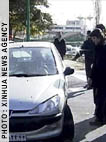
Shahriari's car

Shahriari's car

By JOSEPH FITSANAKIS | intelNews.org |
Teams of unknown assailants chose the first day of the WikiLeaks diplomatic revelations to attack two senior Iranian nuclear scientists in capital Tehran, managing to kill one of them. While the world is preoccupied with the WikiLeaks releases of United States diplomatic cables, two teams of motorcyclists, each consisting of a driver and a backseat rider, targeted the two scientists during the morning rush hour in Tehran, as they were driving to work with their wives in their cars. They attached small bombs to the car windows of their targets and detonated them from a relatively safe distance before speeding away through heavy traffic. The attackers managed to kill Dr. Majid Shahriari, a senior nuclear researcher and prominent professor at the Shahid Beheshti University in the northern suburbs of Tehran, who had taught at the Iranian armed forces’ Supreme National Defense University. Dr. Shahriari’s wife was injured in the attack. A separate bomb attack injured Dr. Fereydoon Abbasi Davan, who also teaches at Shahid Beheshti, and is described in Iranian media reports as “one of a handful of [Iranian] experts who are able to isolate isotopes” for the purpose of manufacturing uranium required for both nuclear energy and weapons. Read more of this post

News you may have missed #456 (Israel edition)

  • US Senate intel committee ex-chief wants Israel spy free. Former Democratic Senator Dennis DeConcini, who used to chair the US Senate Select Committee on Intelligence, has called for the release of Jonathan Pollard, a US Navy Intelligence Analyst who was found guilty in 1987 of spying on the US on behalf of Israel. Pollard “is guilty, but it’s time for this to be resolved in a better way”, said DeConcini.
  • Israel about to announce next Mossad chief. On Thursday, or at the latest, early next week, the Israeli Prime Minister will announce his pick for the top post at the Mossad. Despite widespread speculation, nobody really knows who will replace Meir Dagan, the current Mossad chief.
  • Mossad book authors accused of plagiarism. The Mossad, a new book on the major exploits of Israel’s storied spy agency, has been on the Israeli best-seller list for months. But if much of the text sounds familiar, it’s because the authors, Nissim Mishal and Michael Bar-Zohar, apparently relied on previously published material –without crediting the original sources.

News you may have missed #455

  • Israel says it did not kill German politician. Israel has rejected a claim by a Swiss chemistry professor that the 1987 murder of German politician Uwe Barschel had the hallmarks of a Mossad assassination. For more on Barschel see previous intelNews story here.
  • Foreign cyber spies targeted UK defense official. Foreign spies, probably working for the People’s Republic of China, targeted senior British defense official Joanna Hole, in a sophisticated spear phishing operation that aimed to steal military secrets. The plan was foiled last year when Hole became suspicious of an email she received from a contact she had met at a conference.
  • The 10 most interesting CIA-backed startups. America’s only federally funded venture capital firm, In-Q-Tel, was created in 1999 during the tech boom. The company invests in startups developing technologies that could prove useful to the CIA and other intelligence agencies.

Colombians blast Panama for sheltering ex-spy director

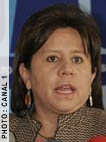
María del Pilar Hurtado

María Hurtado

By IAN ALLEN| intelNews.org |
Public prosecutors in Colombia have strongly criticized the Panamanian government for granting political asylum to one of Colombia’s former spy directors, who is facing charges of spying on opposition figures. María del Pilar Hurtado directed the highly disreputable Administrative Department for Security (DAS) from 2007 to 2008. But on October 31, she apparently left Colombia unobstructed, despite being among the chief subjects of a high-level investigation into political spying by DAS. Hours later, she surfaced in Panama, where she formally requested political asylum. The latter was granted on November 19, causing the amazement of public prosecutors in Bogota, who have accused the Panamanian government of subverting (what little is left of) Colombian justice. Hurtado is among 18 senior officials in the administration of Alvaro Uribe, a close ally of the United States and hardline proponent of Washington’s ‘war on drugs’. Critics of DAS accuse him of authorizing a massive program of political surveillance, which targeted the former Presidents, Supreme Court judges, prominent journalists, union leaders, human rights campaigners, and even European politicians. Read more of this post

Did Mossad kill German politician involved in Iran-Contra scandal?

Uwe Barschel

Uwe Barschel

By JOSEPH FITSANAKIS | intelNews.org |
Accusations of Israeli involvement in the suspicious death of a German politician have been revived, following new autopsy evidence revealed by a medical examiner. The case involves the death of Christian Democratic Union politician Uwe Barschel, who on October 11, 1987, was found dead in the bathtub of room 317 of the Beau-Rivage hotel in Geneva, Switzerland. His sudden death occurred less than a month after he was forced to resign from the post of Governor of West Germany’s Schleswig-Holstein state, following his involvement in a dirty-tricks campaign against his rival Björn Engholm, of Germany’s Social Democratic Party. Swiss authorities, based on an initial postmortem that revealed lethal levels of barbiturates in Barschel’s system, ruled the death a suicide. But now Dr Hans Brandenberger, who was one of the toxicological experts that examined Barschel, claims that he is possession of new evidence that points to murder as the cause of the German politician’s death. Read more of this post

News you may have missed #454

  • Georgia lets Russian envoy visit jailed spy suspect. Georgia says it has allowed a representative of the Russian consulate to meet with a Russian citizen detained on charges of espionage. The jailed man is one of 13 individuals suspected of spying for Russia, who were arrested by Georgian counterintelligence earlier this month. Four of the detained suspects are Russian citizens and nine are Georgian nationals.
  • Danish agency aware of CIA spying since 2004. The Danish security services have released a statement saying they have known since 2004 that the US Embassy in Copenhagen was collecting information on Danish citizens. Last week, several Scandinavian countries launched investigations into the activities of intelligence gathering networks employed by US embassies.
  • Iran charges German reporters with espionage. Iranian officers detained the journalists, who were pretending to be tourists, as they conducted an interview with the son of Sakineh Mohammadi Ashtiani, a 43-year-old mother of two, condemned to death by stoning.

News you may have missed #453

  • France accuses Iran of violence at Tehran embassy. A diplomatic standoff between France and Iran has ensued, after Paris accused Iran’s security services of committing “unacceptable acts of violence” on French diplomatic personnel at the French embassy in Tehran. The alleged incident happened as guests gathered at the embassy for a traditional Persian music concert. Iranian plainclothes security forces and uniformed police stopped about two-thirds of 130 invited guests from entering the building, and an unknown number of people were seen being taken away in unmarked vans.
  • CIA picks Air Force general to lead military ops office. The CIA announced Monday that it has chosen an Air Force Lt. Gen. Kurt A. Cichowski, who has extensive experience in Predator drones, to head its military affairs office. In 2009, Cichowski called the CIA drone assassination program a “phenomenal […] success”.
  • Aussie spies spooked out by student filmmakers. Three media students filming a tourist site near the controversial new headquarters of Australia’s spy organization, ASIO, in Canberra, prompted a late-night police check, apparently over security concerns.

Did FSB leak Russian double spy’s name to the media?

SVR seal

SVR seal

By JOSEPH FITSANAKIS | intelNews.org |
The revelation that a double agent betrayed the ten Russian deep-cover spies, who were arrested in the United States last summer, may have been leaked to the media as part of a turf war between two rival Russian spy agencies. On November 11, Russian newspaper Kommersant disclosed that a senior officer in Russia’s Foreign Intelligence Service (SVR) had defected to the United States shortly before the arrest of ten Russian deep-cover spies by the FBI, on June 27, 2010. The paper identified the alleged double agent as “Colonel Shcherbakov”, believed by veteran KGB officer Oleg Kalugin to be Aleksandr Vasilyevich Shcherbakov. The Kommersant disclosure was later confirmed by no other than Russian President Dmitry Medvedev. But who leaked Shcherbakov’s name to Kommersant, and why? According to Pavel Felgenhauer, military and intelligence correspondent for Russia’s Novaya Gazeta newspaper, the leak originated from within the Russian intelligence establishment. Specifically, Felgenhauer suggests that it was Russia’s Federal Security Service (FSB) that leaked the information to the media, in an attempt to score points against the SVR. Read more of this post

News you may have missed #452

  • Britain’s GCHQ turns to Google for help. GCHQ, Britain’s Cheltenham-based signals intelligence agency, is recruiting an expert on MapReduce, the patented number-crunching technique developed by Google to distribute the load of billions of web searches across its cluster of hundreds of thousands of commodity servers.
  • CIA double agent pleads guilty from prison. CIA officer Harold James Nicholson, who in 1997 was jailed for spying for Russia, has pleaded guilty to enlisting his son Nathan to sell the Russians more secrets and collect money owed to him by the Russian spy services.
  • Georgia offers to negotiate with Russia over spies. Tbilisi is ready for negotiations with Moscow on the repatriation of several alleged Russian spies arrested in Georgia, the country’s Deputy Foreign Minister Nino Kalandadze has said.

Israel intelligence source warns of West Bank collapse

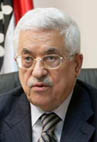
Mahmoud Abbas

Mahmoud Abbas

By JOSEPH FITSANAKIS | intelNews.org |
A senior source inside Israel’s intelligence community has warned that the continuing building of Israeli settlements in the Occupied Territories could cause the rapid collapse of the Fatah government in the West Bank. Speaking anonymously to the BBC, the intelligence official cautioned that Palestinian President Mahmoud Abbas, “is tired and fed up”, and that if he “continued to be humiliated” by Israel’s refusal to halt illegal settlement construction he might “step down and return home”. This would terminate the ongoing negotiations between Israel and Fatah, mediated by Washington, and could bring down the Fatah government in the West Bank, in a chaotic process that would ultimately “be a major setback for Israel”, said the official. Israeli settlements in East Jerusalem, the West Bank, and elsewhere, lack international recognition, and in recent years Israel has been pressured by its allies, including the United States, to stop residential expansion into the Palestinian Territories. Read more of this post

News you may have missed #451 (history edition)

Colombian agency spied on Spanish politician

DAS seal

DAS seal

By IAN ALLEN | intelNews.org |
An official report prepared for the Colombian government reveals that an illegal unit set up within the Colombian intelligence services spied on a member of the Spanish parliament. A copy of the report was leaked earlier this week to Spanish newspaper El Mundo, which has published an executive summary. The paper claims that Colombia’s scandal-prone and soon-to-be-dismantled DAS intelligence service spied on members of the Spanish-based Valencian Coordination of Solidarity with Colombia (CVSC), which works in support of victim’s of Colombia’s government-tied paramilitary groups. Specifically, in 2004, DAS agents spied on Spanish parliamentarian and CVSC activist Isaura Navarro, while she participated in Global Voices for Colombia, an international human rights conference held in Spain. El Mundo claims that the report, which was prepared for the Office of Colombia’s Inspector General, states that a team of DAS agents “closely monitored” Navarro and several other CVSC conference participants, collecting personal information, audio recordings and photographs. Read more of this post

News you may have missed #450

  • Nuke bomb material found in Georgia black market. Highly enriched uranium that could be used to make a nuclear bomb is on sale on the black market along the fringes of the former Soviet Union, according to evidence emerging from a secret trial in the Republic of Georgia.
  • CIA Director warns against leaks. Asserting that lives have been endangered and sources compromised by “a damaging spate of media leaks” in recent months, CIA Director Leon E. Panetta reminded the spy agency’s employees Monday that unauthorized disclosures of classified information “cannot be tolerated”.
  • US issues new unclassified information policy. The White House has issued an executive order to establish a uniform policy for handling “controlled unclassified information” (CUI), which is information that is restricted from disclosure because it involves personal privacy, proprietary data or law enforcement investigations not relating to national security.