News you may have missed #0141

Bookmark and Share

Irish leader used British-supplied bugs to spy on opponents: book

Charles Haughey

Charles Haughey

By IAN ALLEN | intelNews.org |
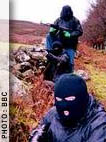
Charles Haughey, Ireland’s Taoiseach (head of government) in the late 1970s, and on two instances in the 1980s, used audio surveillance devices supplied by a British security officer to spy on his domestic political opponents. This allegation is made by George Clarke, a former officer in the Special Branch of the Royal Ulster Constabulary (the name of the British police force in Northern Ireland until 2001), in his book Border Crossing, which was published last week. In it, Clarke says he purchased the devices at a specialist store in London, in 1979, and later lent them to an intelligence officer in the Garda, the police of the Republic of Ireland, for use in spy operations against the Irish Republican Army (IRA). Several months later, however, when Clarke requested that the devices be returned to him, he was told that they were in the possession of Charles Haughey, and that he was so fond of them that he simply refused to give them back. Read more of this post

News you may have missed #0140

  • CIA Intellipedia gurus get Homeland Security Medal. Don Burke and Sean Dennehy, the CIA agents behind Intellipedia, have been awarded a medal for “promoting and expanding information-sharing in the Intelligence Community”. As intelNews noted last August, Intellipedia, the intelligence community’s version of Wikipedia, has grown markedly since its formal launch in 2006. It now averages more than 15,000 edits per day and is home to 900,000 pages and 100,000 user accounts.
  • Cuban Five resentencing delayed. A US federal judge has accepted requests from the lawyers of Antonio Guerrero, a member of the Cuban Five spy ring, to delay their resentencing, after the US government refused to turn over any national security damage assessments in the case. Washington accuses the Five of spying on the US for Cuba. But an appeals court ruled earlier this year that the sentences they received (ranging from 19 years to life) were too long. It appears that Guerrero’s sentence will be reduced from life to 20 years behind bars.
  • Was Christopher Columbus a spy? An independent researcher is raising eyebrows by suggesting that Columbus was a Portuguese spy who knew exactly what he was doing when he supposedly “got lost” in the Atlantic in 1492.

Bookmark and Share

Analysis: Major spy overhaul underway in South Africa

Moe Shaik

Moe Shaik

By IAN ALLEN | intelNews.org |
In July, Laurie Nathan, a former member of South Africa’s ministerial Review Commission on Intelligence, warned that a steadily declining culture of accountability in South Africa’s spy services was threatening the country’s constitutional order. Last week, based on the Commission’s findings and policy suggestions, the country’s minster for state security, Siyabonga Cwele, announced a “major restructuring” of South Africa’s security services. Already, the first generation of pro-ANC intelligence agents, who staffed the post-apartheid South African intelligence apparatus, is on its way out. The departures of Manana Manzini, who until recently directed the National Intelligence Agency (NIA), Loyiso Jafta, of the National Communications Centre, and Taki Netshitenzhe of the Electronic Communications Security, were accentuated by the retirement of ANC “superspy” Hilton Tim Dennis, who headed for many years the NIA’s Counter Espionage unit. Read more of this post

Clinton’s mysterious comment raises eyebrows in New Zealand

Hillary Clinton

Hillary Clinton

By JOSEPH FITSANAKIS | intelNews.org |
A comment by US secretary of state Hillary Clinton following a meeting with a senior New Zealand government official has raised questions by intelligence observers in the pacific nation. Speaking last Friday after an official meeting in Washington with her New Zealand counterpart, minister of foreign affairs Murray McCully, Clinton said the US “very much” values its diplomatic partnership with New Zealand. She then proceeded to say “[w]e are resuming our intelligence-sharing cooperation, which we think is very significant”. This latter comment struck many intelligence observers in Wellington as odd, and for a good reason: nobody was under the impression that the US-NZ intelligence cooperation had been disrupted. The mystery deepened when New Zealand prime minister John Key refused to explain Hillary Clinton’s remark when asked, saying simply “I just don’t comment on issues of national security”. Read more of this post

News you may have missed #0139

  • Pakistan tells US diplomat to be quiet. Perturbed by the recent remarks of US Deputy Chief of Mission in Islamabad, Gerald Feierstein, that top al-Qaeda and Taliban leaders are presently hiding in Quetta, Pakistan has summoned the US diplomat and demanded that he stops discussing intelligence issues in media. The move follows a closed-door meeting last week between the director of Pakistan’s Inter-Services Intelligence (ISI), Ahmed Shuja Pasha, and CIA director Leon Panetta.
  • Analysis: HUMINT worries al-Qaeda more than drone assassinations. The CIA-operated drone strikes in Afghanistan and Pakistan get all the headlines. But what’s really worrying al Qaeda are the agents in their midst, says Adam Rawnsley of Wired magazine’s Danger Room blog.
  • Chinese spymaster complains about US news leak. It has emerged that Major General Yang Hui, China’s most senior military intelligence official, recently made a secret visit to the US and complained to the Pentagon over the US press leak on the Chinese submarine that secretly shadowed the USS Kitty Hawk aircraft carrier in 2006. He said senior Chinese leaders suspect the Pentagon deliberately disclosed the encounter as part of an effort to send a “tough” message to China’s military.

Bookmark and Share

Indian government tells telecoms to avoid buying Chinese hardware

Huawei logo

Huawei logo

By IAN ALLEN | intelNews.org |
The Indian government has asked the country’s telecommunications companies to “refrain from buying Chinese telecommunications equipment”, because they may be used by Beijing to spy on India. The request was reportedly delivered to Indian telecommunications industry representatives by officials from India’s Department of Telecommunications, in a closed-door meeting earlier this week. Indian media report that the Department’s request has no legal backing, but is simply a call for Indian telecommunications providers to “self-regulate”. But the government is said to be working on official guidelines to restrict the domestic use of telecommunications hardware and software originating from countries considered “unfriendly” to India, including Pakistan, China and Egypt. Some industry observers have expressed fears that the pending restrictions will severely hinder the growth of India’s rapidly rising telecommunications sector. Read more of this post

News you may have missed #0137

  • Colombian paramilitaries active in Honduras. United Nations human rights officials have voiced concern at reports that right-wing paramilitaries from the United Self-Defense Forces of Colombia are active in Honduras following the military coup. Last September it was revealed that the United Self-Defense Forces of Colombia also participated in the planning of the failed 2002 coup attempt in Venezuela.
  • Lawsuit probes US government spying on GTMO attorneys. In Wilner v. National Security Agency, the Washington DC-based Center for Constitutional Rights argued on Friday that the US government must disclose whether it has records related to wiretapping of Guantánamo attorney conversations without a warrant.
  • France arrests CERN worker with alleged al-Qaeda links. France has arrested a researcher at the European Organization for Nuclear Research (CERN) for suspected links with the al-Qaeda Organization in the Islamic Maghreb (al-Qaeda’s North African wing). CERN, Europe’s particle physics lab, is known for a particle collider that aims to recreate conditions of the Big Bang.

Bookmark and Share

News you may have missed #0138

  • US intelligence turf wars plague email system. US intelligence officials have decided to shut down a Web-based, unclassified e-mail system, which had been heralded as an important step in the US intelligence community’s drive for better information sharing after 9/11. A Directorate of National Intelligence representative said “security concerns” led to the decision to shut down the e-mail system.
  • CIA Climate Change Center survives funding opposition. Republican lawmakers criticized the CIA’s plan to open the Center on Climate Change and National Security as a “misguided defense funding priority” and even tried to prevent appropriate funding last week. But they failed and so it appears that the Center will be established after all.
  • Colombia to rename spy agency to “CIA”. The restructuring of Colombia’s scandal-prone domestic spy agency, Administrative Department of Security (DAS), continues, as the government has announced that DAS will now be known as the Central Intelligence Agency (CIA), a new entity which will take over state and immigration intelligence and counterintelligence duties.

Bookmark and Share

Congress briefing on CIA activities halted after officials refuse to take oath

Gloria Luttig

Gloria Luttig

By IAN ALLEN | intelNews.org |
A US Congressional briefing on the CIA was unexpectedly halted on Wednesday, after Justice Department officials refused to take the oath. The briefing, by the House of Representatives Subcommittee on Oversight and Investigations, concerned the April 20, 2001 shooting down by the CIA of a Cessna 185 floatplane, which was suspected of transporting drugs from Colombia to Peru. The plane was actually carrying an American Christian missionary family, including two children, who were on their way to Lima, Peru. The attack on the plane resulted in the death of the mother and one of the children. As intelNews reported in November of 2008, a still-classified report by the Office of the US Inspector General concluded that the murder of the two Americans resulted from routine violation of intercept procedures by CIA operatives. Read more of this post

News you may have missed #0136

  • US Senate panel votes to extend PATRIOT surveillance powers. The Senate Judiciary Committee has approved a measure that would leave the controversial surveillance powers of the USA Patriot Act mostly intact.
  • So who was behind GhostNet cyberespionage? Cyber hawks in the West are eager to blame the Chinese government for the huge cyberespionage ring, managed to infiltrate nearly 1,300 mainly government and corporate computers in at least 103 countries, before it was detected last March. This is in contrast to the actual cybersecurity experts themselves, who insist that they still have no idea who was behind it.
  • US Pentagon creates website for access to secret science. The Pentagon’s Defense Technical Information Center (DTIC) has announced the creation of a new password-protected portal where authorized users can gain access to restricted scientific and engineering publications.

Bookmark and Share

Was woman convicted of hi-tech exports to Iraq victim of CIA plot?

Dawn Hanna

Dawn Hanna

By IAN ALLEN | intelNews.org |
The case of a Detroit woman convicted of exporting mobile communications equipment to the Saddam Hussein regime took an unexpected turn this week, after the man who mediated in the equipment transfer said he was acting on behalf of the CIA. A Detroit jury convicted Dawn Hanna last March for exporting the hi-tech equipment to Iraq, in violation of a US and UN-imposed embargo against the Saddam Hussein regime. The jury was apparently not convinced by Hanna’s claim that the purchaser of the equipment, who mediated in the transfer, had told her that the intended user of the hardware was the government of Turkey. But the case turned more complex this week, after Emad al-Yawer, a Jordanian businessman who mediated in the transfer, gave an interview to a Detroit TV station, in which he claimed he was working for the CIA when he facilitated the mobile equipment transfer. He told the station that the CIA intended to use the hi-tech equipment to track Saddam Hussein’s movements, in order to “send a smart bomb and blow him into smithereens”. Hanna’s parents point to this new, unexpected turn of events, and are requesting that the case be reopened. But the judge has so far refused to grant a new trial.

Bookmark and Share

Iran blames US, Saudis over defection of Iranian nuclear scientist

Manouchehr Mottaki

M. Mottaki

By JOSEPH FITSANAKIS | intelNews.org |
Iran’s foreign minister, Manouchehr Mottaki, has accused American and Saudi Arabian intelligence agencies of complicity in the recent disappearance of an Iranian nuclear scientist. Mottaki’s comments followed revelations in London-based Arabic-language daily, Al-Sharq al-Awsat, that the scientist, Shahram Amiri, defected to the West earlier this year. The paper said the researcher, who worked for the Islamic Republic’s nuclear energy program, defected during a hajj pilgrimage in Mecca, Saudi Arabia. It also claimed that another Iranian nuclear scientist, whose identity has not yet emerged, has disappeared, and may have defected, during a recent visit to the Republic of Georgia. The rumored disappearances may be part of Israel’s ongoing secret war on Iran’s nuclear program, which British newspaper The Daily Telegraph described last February as a covert “decapitation program” by Israeli intelligence, targeting Iran’s nuclear scientists. Read more of this post

News you may have missed #0135

  • More revelations in “unprecedented” book on MI5 history. More revelations in Christopher Andrew’s In Defense of the Realm include the disclosure that Margaret Thatcher tried to get MI5 to spy on British trade union activists when she was Prime Minister (MI5 refused). Meanwhile, Professor Andrew has begun serializing selected chapters of the book in The London Times, here and here.
  • Court lets Canadian spies snoop on targets overseas. A court ruling has permitted the Canadian Security Intelligence Service and the Communications Security Establishment to eavesdrop on Canadian nationals traveling overseas. Until now, the two agencies could spy on Canadians so long as they were within the country’s borders.
  • CIA endorses cloud computing. The CIA is emerging as one of the US government’s strongest advocates of cloud computing, even though “cloud computing as a term really didn’t hit our vocabulary until a year ago”, according to Jill Tummler Singer, the CIA’s deputy Chief Intelligence Officer. This article, however, fails to mention that the NSA is also moving to cloud computing in a big way.

Bookmark and Share

News you may have missed #0134

  • S. Korean government tries to silence anti-surveillance activist. Park Won-sun, the executive director of the Hope Institute, a civic think tank, says he will continue to criticize the country’s National Intelligence Service (NIS) for spying on civilians, despite charges filed against him by the government.
  • Cleric in CIA kidnap trial seeks millions. Hassan Moustafa Osama Nasr, an Egyptian cleric kidnapped by the CIA from a Milan street in 2003, has asked for €10 million ($15 million) in damages from the American and Italian defendants charged in his abduction.
  • Three US-based Chinese nationals accused of selling arms to China. Chinese nationals Zhen Zhou Wu, Yufeng Wei, Bo Li and Chitron Electronics and Shenzhen Chitron Electronics Co. Ltd., face a 38-count indictment for conspiring to violate the US Arms Export Control Act for allegedly exporting defense weapons and electronics, money laundering and filing false documents with the US Department of Commerce.

Bookmark and Share