US spy agencies warned Kabul would fall, but did not give precise timeline, says report
August 18, 2021 4 Comments

ANALYSES BY UNITED STATES INTELLIGENCE agencies about the dynamics of the Taliban insurgency in Afghanistan became progressively grim over the summer, but did not provide precise timelines of the impending disaster, according to a new report. In his television address on Monday, US President Joe Biden admitted that his administration had rested on inaccurate estimates about the ability of the Taliban to overrun Afghan government defenses. Some —including many in the US intelligence community— have interpreted that statement to mean that the assessments given to the White House by the intelligence agencies were faulty or otherwise inaccurate.
On Tuesday, The New York Times reported that the intelligence community continuously revised its assessments of the Afghan civil war in the past year. Earlier this year, the consensus among intelligence agencies was allegedly that the Afghan government could potentially remain in power for as long as two years after a US military withdrawal. But that consensus had been shattered by mid-summer, according to The Times. By July, intelligence reports, led by those produced by the Central Intelligence Agency (CIA), “had grown more pessimistic” and explicitly “laid out the growing risks to Kabul”, according to the paper. These reports also warned that the Afghan government, including its intelligence and military components, would not be able to withstand an assault on the capital and other major urban centers by the Taliban.
At the same time, however, these assessments were typically “not given a high confidence judgment” or a particularly high level of certainty by the agencies, according to the report. One source told the paper that “it was often hard to get [CIA] analysts to clearly predict how quickly [a Taliban victory] would occur”. Instead, its assessments “could often be interpreted in a number of ways, including concluding that Afghanistan could fall quickly or possibly over time”.
The Times report seems to indicate that the White House rested much of its decision-making on earlier assessments by the intelligence community, which projected a less radical pace of change in Afghanistan. For instance, one report from April of this year suggested that the Taliban were at least 18 months away from being able to conquer Kabul. The article also points out the possibility that different agencies may have had differing views on the speed with which the Taliban would conquer Afghanistan, with the CIA being on the more pessimistic end of the scale.
► Author: Joseph Fitsanakis | Date: 18 August 2021 | Permalink

 An employee of the British embassy in Berlin, who was arrested last week on suspicion of spying for Russia, drew the attention of the authorities after he stopped using his bank account, according to reports. The man, who was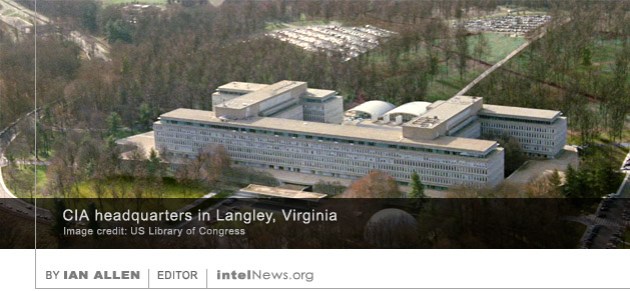
 An employee of the British embassy in Berlin has been arrested by German authorities, who charged him with spying for the intelligence services of the Russian Federation, according to reports. The German newsmagazine Focus
  A new documentary aired on Tuesday by the BBC offers new evidence of extensive involvement in Libya by the Wagner Group, a secretive security firm believed to operate on behalf of Russian military intelligence. After first appearing in Ukraine in 2014, the company has been seen to operate around the world as a private paramilitary entity. Its mission is allegedly to afford the Kremlin “plausible deniability” capabilities for operations in the Middle East, Africa and Eastern Europe. As intelNews has


 POLAND’S COUNTERINTELLIGENCE SERVICES HAVE arrested for the second time a former executive of the Chinese telecommunications manufacturer Huawei Technologies, who is accused of spying for Beijing. As intelNews has previously
  THE EX-MISTRESS OF SPAIN’S former king has sued him in a British court, claiming that he deployed agents from Spain’s intelligence service in a “campaign of unlawful covert and over surveillance” against her. Juan Carlos I, 83, was king of Spain from 1975 until his abdication from the throne in 2014. He now lives in self-imposed exile in the United Arab Emirates, having left Spain in August. His departure came amidst a barrage of media reports revealing his involvement in a host of financial scandals, which are still being investigated by Spain’s authorities.










German spy services face criticism for failing to anticipate swift Taliban victory
August 20, 2021 by Joseph Fitsanakis 2 Comments
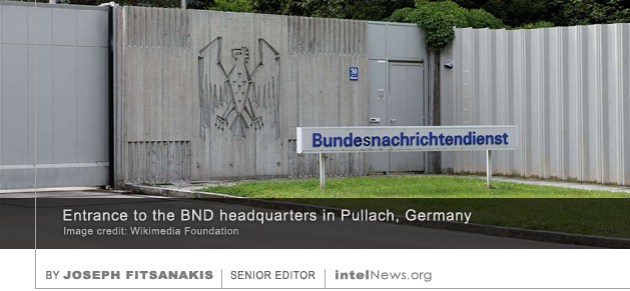
THE PRINCIPAL EXTERNAL INTELLIGENCE service of Germany, known as the Federal Intelligence Service, or BND, is facing growing criticism for allegedly failing to anticipate the swift ascendance of the Taliban in Afghanistan. Critics from every political faction have described the situation in Afghanistan as an “impending disaster” for German interests, and have questioned the BND’s effectiveness and competence.
In a statement to the Bundestag this past June, Germany’s Minister of Foreign Affairs, Heiko Maas, insisted that it was “inconceivable” that the Taliban “would, within just a few weeks, be able to seize power” in Afghanistan. In subsequent weeks, other leader members of Chancellor Angela Merkel’s cabinet echoed Maas’s statement. It now appears that, as German diplomats and intelligence officers were forced to leave hastily the Central Asian country, they left behind numerous “people employed in Germany’s interests”, analysis to the German national broadcaster, Deutsche Welle (DW).
In his according of the BND’s performance in the Afghan situation, DW journalist Marcel Fürstenau quotes former BND intelligence officer Gerhard Conrad, who claims that the spy agency lacked sources on the ground. Others, including University of London researcher Jan Koehler, tell Fürstenau that the German intelligence services failed to grasp the broader dynamics of Afghan society, which are permeated by “a lack of trust among the Afghan security forces in their own government”, and led them to surrender to the Taliban en masse.
The possibility of an official parliamentary investigation into the performance of the BND is now a strong prospect in the coming weeks, says Fürstenau. He adds that that several senior members of Chancellor Merkel’s government would have to testify behind closed doors during a probe. The soon-to-retire ‘iron lady’ of German politics may even have to testify after she leaves office, he concludes.
► Author: Joseph Fitsanakis | Date: 20 August 2021 | Permalink
Filed under Expert news and commentary on intelligence, espionage, spies and spying Tagged with Afghanistan, BND, Gerhard Conrad, Germany, Jan Koehler, News