Secret recordings show Peru’s jailed ex-spy chief trying to change election results
June 30, 2021 Leave a comment
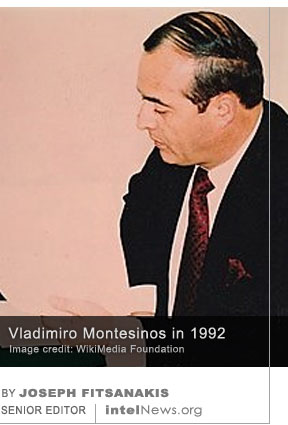 AUDIO RECORDINGS RELEASED LAST week appear to show Peru’s imprisoned former spy chief, Vladimiro Montesinos, trying to organize bribes for judges in an effort to alter the outcome of the recent presidential election. From 1990 to 2000, Montesinos headed Peru’s intelligence service, Servicio de Inteligencia Nacional (SIN). He worked in close cooperation with his political patron, Alberto Fujimori, who is currently serving a lengthy prison sentence for corruption and human-rights abuses. Like his boss, Montesinos is currently serving a 25-year prison sentence for setting up a sophisticated network of illegal activities during his SIN tenure. The crimes he committed include drug trafficking, bribing, extortion, as well as embezzlement.
Despite his dramatic fall from power, Fujimori remains popular in Peru. Earlier this month, his daughter, Keiko Fujimori, a rightwing populist, fought a neck-and-neck election contest with leftist school teacher and trade unionist Pedro Castillo. Castillo was provisionally declared the winner of the second and final round of the general election, with 50.12 percent of the votes cast, having received 44,263 more votes than Fujimori. The United States, the European Union and the Organization of American States declared the election as free and fair. But Fujimori, who has vowed to pardon her father and release him from prison if she wins, claims that Castillo’s victory was the result of widespread fraud. Now the National Jury of Elections, set up by the National Office of Electoral Processes, is auditing the election results across the nation.
The plot thickened on Saturday, when a veteran lawmaker, Fernando Olivera, released over a dozen recordings of conversations between the jailed Montesinos and a retired military commander, Pedro Rejas, who is a political ally of Fujimori. In the recordings, Montesinos is heard instructing Rejas to arrange monetary bribes for judges who staff the National Jury of Elections. The purpose of the bribes, says Montesinos, is to secure a victory for Fujimori. He also warns Rejas that if Fujimori does not win the election, she will probably end up in prison for corruption, like her father.
The prison authority of the Peruvian Navy, which oversees the maximum security prison that houses Montesinos, has confirmed that the recordings released by Olivera are authentic, and says it has launched an investigation into the matter. There are also some who believe that Rejas’ involvement in Montesinos’ conspiracy may indicate willingness by the Peruvian Armed Forces to organize a coup, in case Castillo becomes Peru’s next president. Meanwhile, Fujimori has said she felt “indignation” when listening to the recordings of Montesinos’ attempts to secure her electoral victory. She described Montesinos as a “criminal” who “betrayed all Peruvians” as head of the SIN.
► Author: Joseph Fitsanakis | Date: 30 June 2021 | Permalink
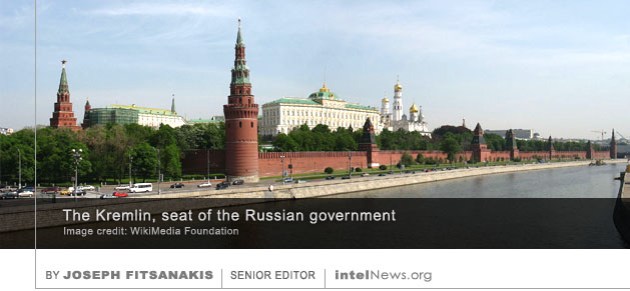
 Sensitive documents belonging to the British Ministry of Defense were found by a member of the public behind a bus stop last week, in what the BBC described as “a major embarrassment” for the British government. The documents number 50 pages; most are marked “official sensitive”, which is a low level of classification, but it means they are still subject to security requirements.












 intelNews.org
Senior Serb intelligence officials given prison sentences for war crimes
July 1, 2021 by Joseph Fitsanakis Leave a comment
TWO SENIOR FORMER OFFICIALS in the now defunct domestic security apparatus of Serbia have been given prison sentences totaling 24 years, after being found guilty of war crimes by a United Nations court. The crimes of the two officials stem from the Yugoslav Wars, a series of bloody ethnic conflicts that followed the breakup of the former Yugoslavia in 1991.
The two former officials, Jovica Stanišić, 70, and Franko “Frenki” Simatović, 71, deny that they trained Serbian elite police units in methods of exterminating non-Serb populations in various regions of the former Yugoslavia. The two men were initially acquitted of all charges against them by the International Criminal Tribunal for the former Yugoslavia (ICTY). But the initial ruling was quashed, and the two men were tried again, this time by United Nations Mechanism for International Criminal Tribunals, which took over ICTY’s operations after its mandate ended.
Stanišić directed the State Security Service (SDB), which operated under the Ministry of Internal Affairs of Serbia as the country’s primary domestic security agency. Simatović was an intelligence officer who, from 1991 until 1998, commanded the feared Special Operations Unit, known as JSO. The JSO was an elite police force that operated under Stanišić’s SDB. Prosecutors accused the two men of working under direct orders by Serb President Slobodan Milošević, with the aim of ethnically cleansing non-Serbian populations. Milošević died in 2006 in prison at The Hague, Netherlands, where he was held facing charges of genocide and crimes against humanity.
On Wednesday, each of the two men were given 12 years in prison. Simatović has already served eight years in prison, and Stanišić close to five. Both continue to deny the charges against them, and their lawyers said they would appeal the convictions.
► Author: Joseph Fitsanakis | Date: 01 July 2021 | Permalink
Filed under Expert news and commentary on intelligence, espionage, spies and spying Tagged with former Yugoslavia, Franko Simatovic, International Criminal Tribunal for the Former Yugoslavia (ICTY), Jovica Stanišić, State Security Service (Serbia), State Security Service Special Operations Unit (Serbia), war crimes, Yugoslav Wars