Spanish high court broadens illegal wiretap probe to include senior politicians
September 9, 2020 Leave a comment
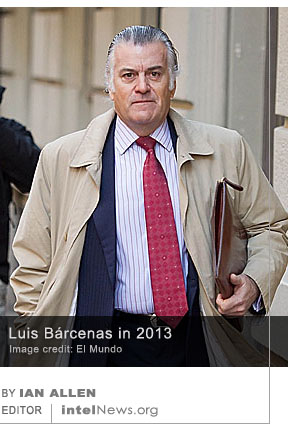 A court in Spain has begun to examine the findings of a long-running probe into an illegal network that spied on people in return for payments, which almost certainly implicates senior figures in the former governing party. The probe focuses on what is known in Spain as the Gürtel case, which is described by observers as one of the most extensive corruption scandals in Spanish political history. It centers on an extensive network of tax evasion, bribery and money laundering, which brought together leading business executives, criminal kingpins, and senior politicians from Spain’s conservative Popular Party (PP).
In May of 2018, Spain’s highest criminal court, the Audiencia Nacional, ruled that senior PP officials had enriched themselves with kickbacks and bribes, and had laundered the money with assistance from the criminal underworld. The scandal effectively brought an end to the government of conservative Prime Minister Mariano Rajoy later that year, and has virtually annihilated the once robust electoral popularity of the PP.
IntelNews has followed a series of scandals linked to the Gürtel case, notably a case involving José Manuel Villarejo, a 67-year-old former police chief, who was arrested in November of 2017 for carrying out illegal wiretaps, and remains in custody. According to Spanish prosecutors, Villarejo was in charge of an illicit information-collection enterprise that violated the privacy of hundreds of unsuspecting citizens. The latter were targeted by corporate competitors and individual wealthy clients. Many of Villarejo’s targets were eventually blackmailed by the recipients of information collected by the former police chief and his network.
Now a new side of the Gürtel case is about to emerge, as the Audiencia Nacional has unsealed a probe that sheds further light into Operation KITCHEN. This refers to an espionage effort connected to the Gürtel case, which targeted Luis Bárcenas, a senator and party treasurer of Spain’s conservative Partido Popular. Bárcenas had in his possession bookkeeping documents that shed light on a secret system for recording illicit funds in possession of PP administrators and senior party figures —for which Bárcenas was eventually given a 33-year prison sentence that he is currently serving.
Once senior government executives were notified by advisors that Bárcenas had these documents, and that he may be planning to share them with the authorities in order to secure a lighter prison sentence for himself, they allegedly set up an espionage operation aimed at preventing Bárcenas’ documents from ending up in the hands of the authorities. Villarejo was allegedly in charge of the espionage operation, which is how Operation KITCHEN connects with the broader Gürtel case. The probe of Operation KITCHEN was unsealed on Monday by Audiencia Nacional Judge Manuel García Castellón. A new series of prosecutions is now expected to take place in the coming weeks, in connection to Operation KITCHEN, which will almost certainly involve leading PP figures.
► Author: Ian Allen | Date: 09 September 2020 | Permalink
 American forces remain in Syria without a clear goal in sight, as the conflict there nears its 10-year anniversary, and with Russia having emerged as the principal guarantor of security in the war-torn country, according to insiders. In an
  The worldwide competition to invent a vaccine that can curtail the spread of COVID-19 has prompted a mission shift in major intelligence agencies around the world, which is “reminiscent of the space race”, according to The New York Times. In an article published on Saturday, the paper cited “interviews with current and former intelligence officials and others tracking the espionage efforts”, who suggest that the mission shift observed in spy agencies worldwide has been among the fastest in history.
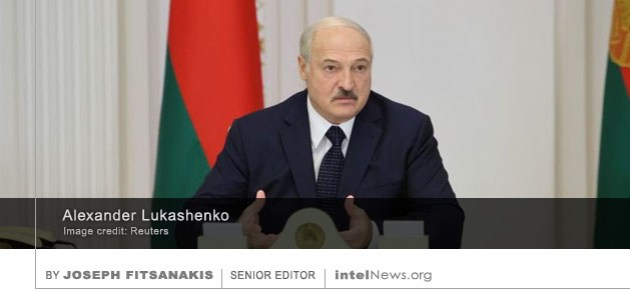 Belarusian President Alexander Lukashenko (pictured) replaced the heads of the intelligence service and other security bodies on Thursday, as he continues to face the most serious challenge to his 26-year rule. Mass protests have been held in urban centers since last month, when Lukashenko claimed victory with over 80 percent of the vote in the presidential elections, and returned to office for a record sixth term.
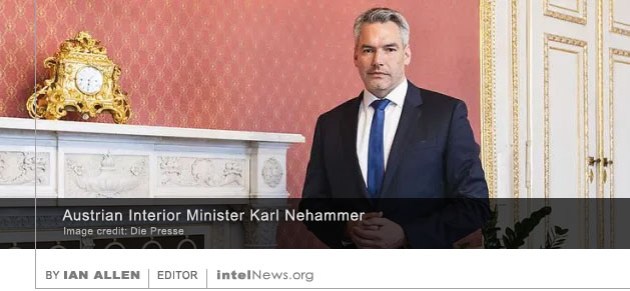 There were angry exchanges between Austrian and Turkish officials on Tuesday, after the Austrian government announced it would press charges against an individual allegedly caught spying for Turkish intelligence. The charges were
 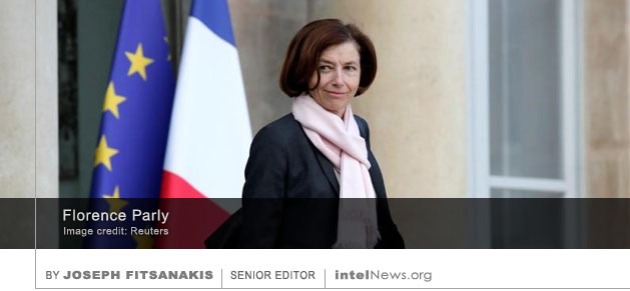 French authorities are reportedly investigating a senior military officer, who is serving with the North Atlantic Treaty Organization in Italy, for spying on behalf of Russia, according to a news report from France. On Sunday, France’s Minister of the Armed Forces, Florence Parly (pictured), gave a press conference in Paris, during which she provided limited information about the ongoing investigation. Parly
 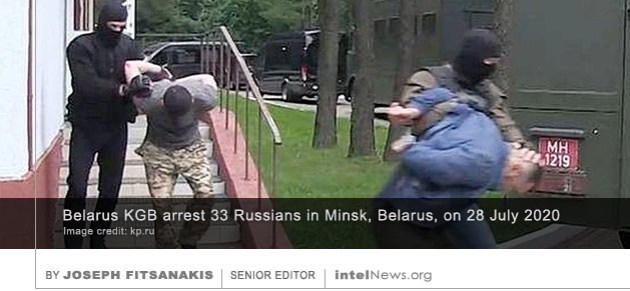 Russian President Vladimir Putin said in an interview that a group of Russian paramilitary contractors, who were arrested in Belarus last month, were lured there as part of a joint American-Ukrainian spy operation. On July 29, Belarussian secret services
 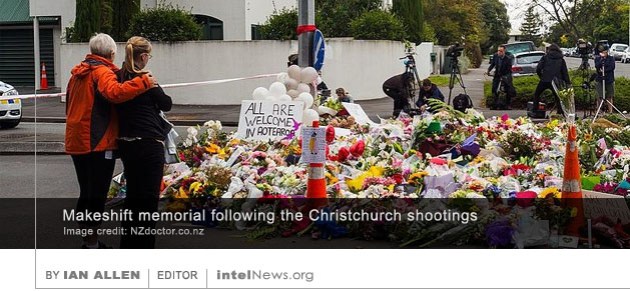 An Australian far-right militant, who killed 51 people at two mosques in New Zealand in 2019, used a commercial drone to spy on his targets and plan his attack months in advance, according to newly released information. On March 15, 2019, Brenton Tarrant killed a total of 51 people at the Al Noor and Linwood mosques, in the city of Christchurch. Using an AR-15 rifle, Tarrant, 29, shot his victims one by one, before being stopped by police as he was on his way to a third mosque in the area.
 The director of Denmark’s military intelligence service has been “relieved of duty for the time being”, following a series of whistleblower revelations, according to the country’s Ministry of Defense. Little is known about the precise nature of the revelations, but they are believed to relate to large-scale intelligence collection of information belonging to Danish citizens, which the spy agency is prohibited from accessing.
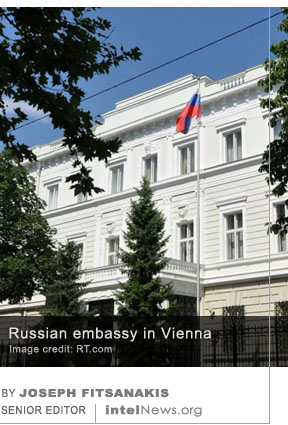 Russia has expelled a diplomat stationed at the Austrian embassy in Moscow, just hours after the Austrian Ministry of Foreign Affairs expelled a Russian diplomat from Austria, allegedly for engaging in espionage. Austrian officials reportedly gave the unnamed Russian diplomat until Tuesday, September 1, to leave Austrian soil, in a move that surprised observers, given the close relations between Austria and Russia in recent years.
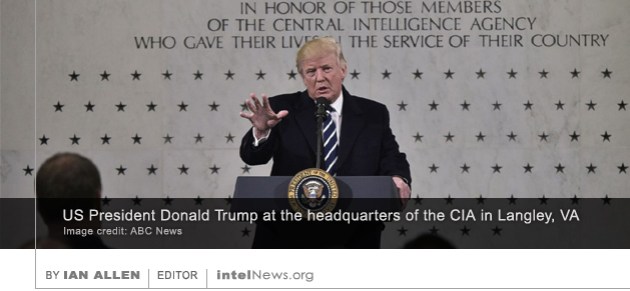 A group of former United States senior intelligence and national security officials, who support the Republican Party, launched today a campaign to deny Donald Trump a second term as president. Calling itself Former Republican National Security Officials for Biden, the group
 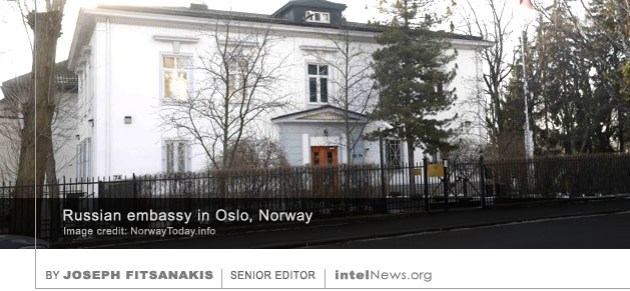 The government of Norway expelled a Russian diplomat on Wednesday, accusing him of committing espionage in a case that involves a Norwegian citizen, who has been arrested on charges of spying for Russia. Meanwhile local media named the Norwegian citizen involved in the case, while the Russian diplomat was also named yesterday in media reports.
 Authorities in Norway will not release the name of a man who was arrested on Saturday, reportedly after he met with a Russian intelligence officer in Oslo. The arrest of the unnamed man, who is a Norwegian citizen, was announced on Monday by the Norwegian Police Security Service, Norway’s counterintelligence agency.
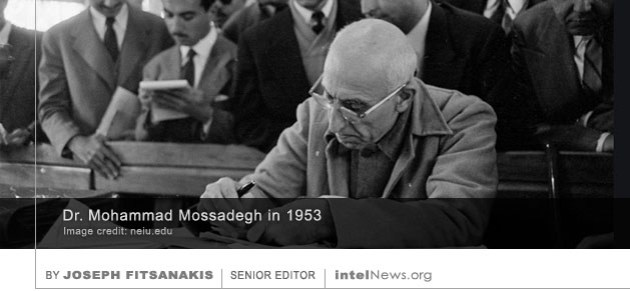 British researchers have found a lost interview by a senior British intelligence officer who led the joint Anglo-American coup in Iran in 1953. The coup overthrew the democratically elected government of Prime Minister Dr. Mohammad Mossadegh and reinstalled the shah (king) of Iran, Mohammad Reza Pahlavi, a close Western ally. London was alarmed by Dr. Mossadegh’s decision to nationalize the Anglo-Iranian Oil Company (later renamed to British Petroleum, or BP), which would deny Britain its lucrative stake in the Middle Eastern energy market. The British also viewed Dr. Mossadegh as being too close to the Soviet Union.








Ex-intelligence chief at US Department of Homeland Security files whistleblower claim
September 10, 2020 by Joseph Fitsanakis 4 Comments
Murphy alleges that his superiors, including senior officials in the DHS, engaged in “attempted abuse of authority” and possibly violated federal law. In his whistleblower complaint, Murphy says his supervisors essentially fabricated intelligence products on pressing security matters, in order to make them agreeable to President Donald Trump. In doing so, claims Murphy, these officials tried to “censor and manipulate the intelligence information” produced by DHS analysts, in order to further President Trump’s agenda.
In his complaint, Murphy identifies acting Secretary of Homeland Security Chad Wolf, his predecessor, Kirstjen Nielsen (pictured), and Wolf’s deputy, Ken Cuccinelli, as individuals who pressured him to change his intelligence products. The pressures allegedly began with reference to Russian interference in the US presidential elections of 2016. According to Murphy, his supervisors instructed him to “cease providing intelligence assessments on the threat of Russian interference in the United States, [and] instead start reporting on interference activities by China and Iran”.
The pressures, according to Murphy, later expanded to include efforts to get him to downplay the domestic terrorist threat posed by far-right organizations, and to accentuate purported links between terrorism and immigration to the US coming from Latin America. In late 2018, the then-DHS Secretary Kirstjen Nielsen told Congress that nearly 3,800 documented terrorists crossed the US border from Mexico. But Murphy alleges that the actual number was just three confirmed cases.
The complaint further alleges that Murphy was removed from his post in August of this year, and was “de facto demoted” after he confronted Wolf and Cuccinelli and refused to “manipulate intelligence for political reasons”. Murphy’s removal was one of a number of “retaliatory actions” against him for refusing to comply with his superiors’ pressures, according to the complaint.
► Author: Joseph Fitsanakis | Date: 10 September 2020 | Permalink
Filed under Expert news and commentary on intelligence, espionage, spies and spying Tagged with Brian Murphy, Chad Wolf, Ken Cuccinelli, Kirstjen Nielsen, News, politicization, United States, US Department of Homeland Security, whistleblowing