Denmark arrests three Iranian separatists for spying for Saudi Arabia

Finn Borch AndersenAuthorities in Denmark have announced the arrests of three Iranian Arab separatists, who are charged with carrying out espionage on behalf of the intelligence services of Saudi Arabia. The arrests were announced on Monday by the Danish Security and Intelligence Service, known as PET.

According to the PET, the three Iranians are members of a group calling itself the Arab Struggle Movement for the Liberation of Ahvaz (ASMLA). Known also as Al-Ahwaziya, the group was established in 1980. It calls for a separate state for ethnic Arabs who live the oil-rich province of Khuzestan, in Iran’s southwest.

PET director Finn Borch Andersen told reporters on Monday that the three Iranians were recruited in 2012 by the General Intelligence Presidency (GIP), Saudi Arabia’s primary intelligence agency. They allegedly spied on pro-Iranian groups and individuals in Denmark and other countries northern Europe on behalf of the GID. They reported regularly to their handler, who was an undercover intelligence officer at the Saudi embassy in Copenhagen, according to the PET.

In October 2018, one of the three Iranian men was targeted for assassination by Iranian intelligence, but Danish authorities managed to prevent it with an elaborate security operation. A Norwegian man of Iranian background was arrested during the operation and remains in detention in Denmark. Throughout that time, the PET continued to monitor the three Iranian separatists, and proceeded to arrest them this week.

Late on Monday, the Danish Ministry of Foreign Affairs summoned the Saudi ambassador to Copenhagen in order to file an official complaint about Saudi espionage activities on Danish soil. According to the Danish media, the ambassador of Denmark to Saudi Arabia contacted the oil kingdom’s government to protest about the incident.

Author: Joseph Fitsanakis | Date: 05 February 2020 | Permalink

ISIS is tenacious, well-funded and quickly reasserting itself, new UN report warns

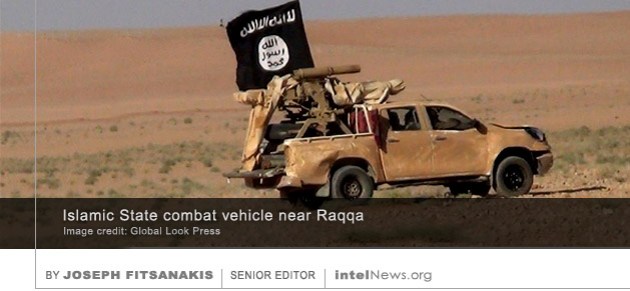
Islamic State ISISThe Islamic State remains committed to its goals and continues to utilize ample funding sources, according to a new report by the United Nations. The report warns that the militant Sunni group, which was previously known as the Islamic State of Iraq and Syria (ISIS), is quickly reasserting itself in the Middle East.

The report (.pdf) was authored by a committee of the UN’s Security Council that monitors the impact of UN-imposed international sanctions designed to weaken the Islamic State, al-Qaeda, and groups aligned with them. It was completed on January 20 and submitted to the UN Security Council last week. Its authors state that the information used to compile it came from intelligence shared with the UN by its member states.

The report recognizes that the Islamic State has suffered significant defeats in the field of battle, which have shattered its once formidable military and logistical power. Despite these setbacks, however, the militant group remains “tenacious and well-funded”, with much of its financial income stemming from sound investing practices in business opportunities throughout the Middle East, says the report. Meanwhile, its armed units in Syria continue to sell protection and carry out extortion, now even during daylight hours, it adds. The group’s steady funding even allows it to continue to provide monthly pensions to close family members of its dead fighters.

Additionally, says the report, the Islamic State has learned to take advantage of the deficiencies of Syrian and Iraqi security forces, and is now carrying out progressively brazen armed attacks against a variety of military and civilian targets. Although it is operationally weak, it continues to aspire to launch attacks in Europe in the future. Additionally, its leaders continue to seek ways of freeing thousands of the group’s supporters from detention camps in Syria and Iraq.

The report concludes that the death of the group’s leader, Abu Bark al-Baghdadi, and his replacement by Amir al-Salbi (also known as Abdullah Qardash) is not expected to signal drastic changes in the Islamic State’s strategic direction. However, Qardash is not an Arab and may not stay at the group’s helm for long, as an Arab Emir would be more likely to be met with acceptance by the group’s wilayats, or provinces, the report adds.

Author: Joseph Fitsanakis | Date: 03 February 2020 | Permalink
Czech intelligence foiled North Korean plan to smuggle arms through Africa

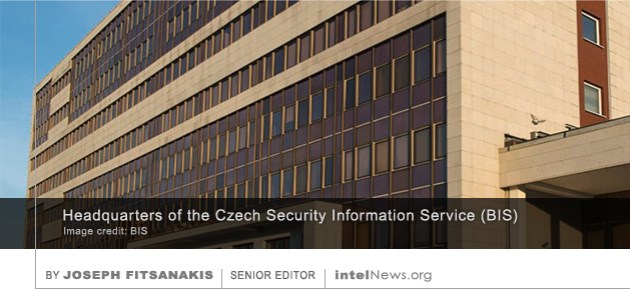
Czech Security Information ServiceThe Czech intelligence services foiled a secret plan by North Korea to smuggle weapons parts and surveillance drones, leading to the expulsion of a North Korean diplomat from the country, according to a report. The report, published this week by the Czech daily Deník N, claims that the alleged plot was foiled by the Czech Security Information Service, known as BIS.
According to Deník N, the alleged plot took place in 2012 and 2013. It was initiated by a North Korean diplomat who was serving at the DPRK’s embassy in Berlin as an economic attaché. However, claims Deník N, the diplomat was in fact operating on behalf of the North Korean intelligence services. The unnamed diplomat allegedly traveled to Prague and contacted a local businessman, seeking to purchase spare parts for use in Soviet-built T-54 and T-55 tanks, as well as spare parts for armored vehicles and jet airplanes. The diplomat also sought to purchase surveillance drones, according to the newspaper.

The buyers reportedly planned to smuggle the acquired weapons parts and drones to North Korea through ports in Africa and China, said Deník N. Such an act would have violated the international embargo that has been in place against the DPRK since 2006. However, the plot was foiled by the BIS, which informed the Czech Ministry of Foreign Affairs. The Czech government eventually detained the diplomat and expelled him from the country, said Deník N.

Following the newspaper article, BIS spokesperson Ladislav Šticha said that he “could not comment on the details” of the case, but could confirm that “in the past BIS has indeed managed to prevent trade in weapons from the Czech Republic to the DPRK”. Hours later, the BIS posted on its Twitter account that it could not comment “on the details of this case”, but added that “its outcome was very successful”.

IntelNews regulars will remember a similar report in the German media in 2018, according to which North Korea used its embassy in Berlin to acquire technologies that were almost certainly used to advance its missile and nuclear weapons programs.

Author: Joseph Fitsanakis | Date: 31 January 2020 | Permalink

United Nations targeted in sophisticated cyber-espionage operation

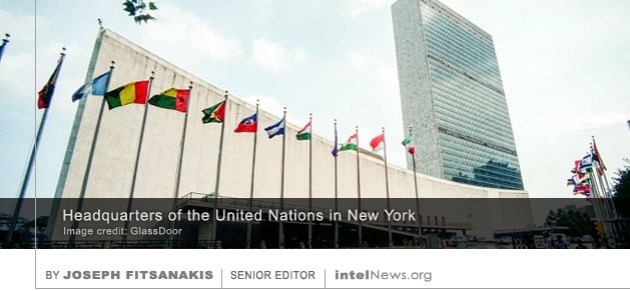
United Nations headquartersOne of the United Nations’ most sensitive computer systems was targeted in a highly sophisticated cyber-espionage operation that appears to have been sponsored by a state, according to a leaked study. The study was leaked to the media earlier this week, and was reported by the Associated Press on Wednesday.
According to the Associated Press report, hackers used IP addresses in Romania to stage a meticulously organized infiltration of dozens of United Nations computer servers. The servers that were compromised included those used by the Office of the United Nations High Commissioner for Human Rights (OHCHR), which collects sensitive personal data regarding human rights abuses by governments around the world. The OHCHR has regularly been the subject of verbal attacks by authoritarian governments around the world in recent years.

The identity of the hackers remains unclear, said the report. However, their degree of technical sophistication was so substantial that forensic investigators suspect that a state actor was behind the espionage operation, according to the Associated Press. The news agency relayed an email message it received from United Nations spokesman Rupert Colville, which claimed that the hackers did penetrate the OHCHR system but “did not get very far, [as] nothing confidential was compromised”.

But the above statement appears to contradict the leaked study, which suggests that the cyber-espionage operation against the United Nations resulted in a compromise of “core infrastructure components” that were “determined to be serious”. Among the accounts that were compromised by the hackers were those of some domain administrators, who have access to large segments of the United Nations’ computer networks. The Associated Press spoke to an anonymous United Nations official, who said that the attack was “sophisticated”, and that the organization’s computer systems were “reinforced” in the months following the incident.

Author: Joseph Fitsanakis | Date: 30 January 2020 | Permalink

Russian spy agency reveals identities of undercover officers in rare move

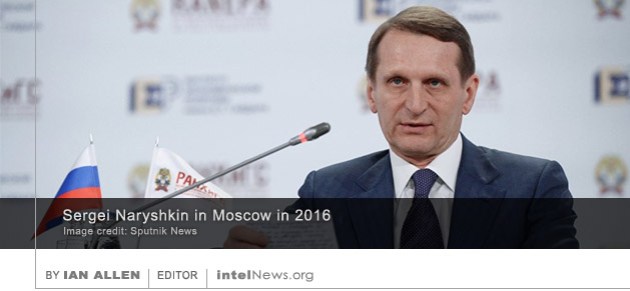
Sergei NaryshkinIn an extremely rare move, the head of Russia’s spy agency has disclosed the identities of several undercover officers during an event marking the centenary of the KGB and its modern-day successor, the Russian Foreign Intelligence Service, or SVR.

The identities of the officers —most of whom are now retired or dead— were disclosed on Tuesday by Sergei Naryshkin, head of the SVR. Speaking at a press conference in Moscow, Naryshkin revealed the names and read the brief biographical notes of seven non-official-cover officers, referred to in Russian as “pазведчики-нелегалы”, or ‘illegals’. The term refers to undercover intelligence officers who are secretly posted abroad without diplomatic cover. Accordingly, they have no official connection to a Russian diplomatic facility, while some even pose as citizens of third countries.

Since 1922, illegals have operated out of the KGB’s and (after 1991) the SVR’s “S” Directorate, whose formal title is First Main Directorate or First Chief Directorate. It is customary to keep the identities of illegals secret following their retirement and even after death. However, in December of last year Naryshkin surprised many by announcing that he would soon disclose the identities of a number of former members of what he described as the “special reserve staff”, at an event to mark the centenary of the KGB and SVR.

He did so on Tuesday, when he disclosed the names of seven individuals and described their work in broad terms. The names disclosed by Naryshkin were: Yury Anatolievich Shevchenko (born 1939), Yevgeny Ivanovich Kim (1932-1998), Mikhail Anatolyevich Vasenkov (born 1942), Vitaly Viacheslavovich Netyksa (1946-2011) and his spouse Tamara Ivanovna Netyksa (born 1949), Vladimir Iosifovich Lokhov (1924-2002) and Vitaly Alekseyevich Nuykin (1939-1998).

The accompanying biographies released by the SVR disclose no specifics about the countries in which these illegals operated, the type of work they carried out, and the specific dates in which they were active. Most of them operated between the late 1960s and the early 1990s.

Author: Ian Allen | Date: 29 January 2020 | Permalink

Russia expelled Japanese reporter accusing him of espionage, say sources

VladivostokRussian authorities detained a Japanese journalist last month, and eventually expelled him after accusing him of espionage, according to sources. Even though it occurred last month, the incident was reported only on Monday by Russia’s RIA Novosty news agency.
According to the news agency the Japanese journalist was detained by the Russian Federal Security Service (FSB) on December 25, 2019. At the time of his detention, the journalist was working in Vladivostok for Kyodo, Japan’s largest news agency. Vladivostok, a city of 600,000, features the largest Russian port on the Pacific coast and hosts the main base of Russia’s Pacific Fleet.

The Russian Ministry of Foreign Affairs told RIA Novosty that the Japanese journalist was detained because he was “trying to acquire secret materials about Russia’s military capabilities in the Far East”. He was eventually released following an interrogation session that lasted for over five hours. Upon his release he was given 72 hours to leave the country. Later that day, the Russian Ministry of Foreign Affairs summoned an official from the embassy of Japan in Moscow to file an “official diplomatic protest” about the incident, according to RIA Novosty.

The Reuters news agency said on Monday that officials from Japan’s Kyodo News confirmed that one of their reporters —which it did not name— had been detained in Russia. The Japanese news agency also confirmed that the reporter had been expelled from Russia, but denied that he had been involved in espionage, saying instead that he was “engaged in standard reporting activities”. Kyodo News officials added that the reporter had left Russia as instructed, “for safety reasons”.

The Japanese Ministry of Foreign Affairs told Reuters that it “could not comment” on the matter.

Author: Joseph Fitsanakis | Date: 28 January 2020 | Permalink

Leader of American far-right paramilitary group is based in Russia

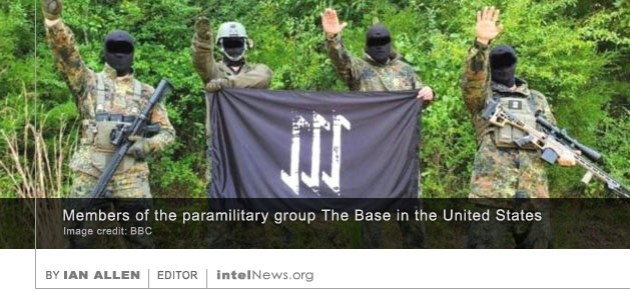
The BaseThe mysterious leader of an American far-right paramilitary group, which authorities say is seeking to overthrow the United States government, runs the organization from Russia, according to a probe conducted by the BBC. The group, which calls itself The Base, is thought to have been formed in the summer of 2018. Since then, it is believed to have recruited dozens of members using encrypted messaging applications.
The Base urges its members to undergo paramilitary training and learn how to evade surveillance by government agencies. It also instructs them to create and use ciphers for communication and trains them to use encrypted applications to exchange messages so that government agencies cannot access their content. The Federal Bureau of Investigation describes The Base as a “racially motivated violent extremist group” that “seeks to accelerate the downfall of the United States government, incite a race war, and establish a white ethno-state”. Earlier this month, authorities arrested three alleged members of the organization, which are accused of engaging in a conspiracy to commit murder.

Despite the attention that The Base has received from American authorities, almost no information is available about the group’s leader and founder. This individual goes by the aliases “Norman Spear” and “Roman Wolf”. But a recent investigation alleged that his name is Rinaldo Nazzaro and that he is a 46-year-old American man from New York. Prior to founding The Base, Nazzaro is believed to have purchased land in a remote area of America’s Pacific Northwest region with the goal of creating a white-only enclave.

Now the BBC has said that Nazzaro is living in Russia, from where he is allegedly running The Base. He is thought to have married a Russian woman in 2012 in the New York borough of Manhattan. The couple probably relocated to the Russian city of St. Petersburg “less than two years ago”, according to the BBC. In an article published on Friday, the BBC said that its researchers had been able to identify Nazzaro from his online activity and from photographs and videos he had posted online in the past year.

Author: Ian Allen | Date: 27 January 2020 | Permalink

Intelligence officer who forged credentials did not betray secrets, says Sweden

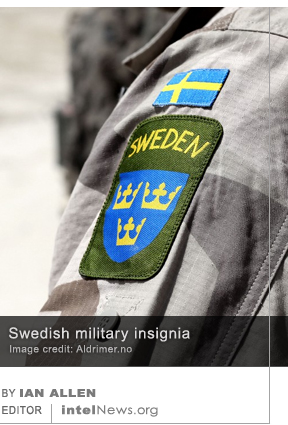
Sweden militaryA man who rose through the ranks of the Swedish Armed Forces by using forged credentials, and worked as an intelligence officer in NATO while liaising with the Russian security services, did not betray national secrets, according to Swedish officials.
The man, who has not been named by the Swedish government, served in the Försvars- makten —the Swedish Armed Forces— for 18 years. He used forged certificates to claim that he had a university degree in political science. He also claimed that he had successfully completed the Swedish Army’s officer training program, a claim that he supported with a forged certificate of completion.

During his military career, he participated in Sweden’s international peacekeeping missions in Kosovo, as well as in Afghanistan, where he served with the rank of major. Between 2007 and 2010, and then again in 2013, the unnamed man was an employee of the Swedish Military Intelligence and Security Service (MUST), where he worked as a liaison between MUST and Russia’s Federal Security Service.

In 2012 he rose to the rank of lieutenant colonel and was dispatched to the Supreme Headquarters Allied Powers Europe, which is the headquarters of the North Atlantic Treaty Organization’s Allied Command Operations. Sweden is not a member of NATO but has close ties with the alliance. While in Belgium, the unnamed man joined the Afghanistan Mission Network, an intelligence-sharing platform for nations that participated in military and peacekeeping missions in Afghanistan. He then joined Sweden’s United Nations peacekeeping mission in Mali as its chief of staff, with the rank of major.

The forgeries that he used to join the military were reportedly detected in 2019, but the case did not become public until earlier this month, when the Stockholm-based newspaper Dagens Nyheter published an claimed about it. On Thursday, the chief of staff of the Försvarsmakten, General Micael Byden, told the Defense Committee of the Swedish Parliament that the unnamed man did not harm Sweden’s national security. General Byden briefed the committee on the results of an internal investigation into the case by the armed forces. He claimed that the investigation had found “nothing that indicates that classified information had been disseminated” to Russia or any other foreign power by the unnamed man. NATO has not commented on the case.

Author: Ian Allen | Date: 24 January 2020 | Permalink

French counterterrorism officer charged with selling forged documents online

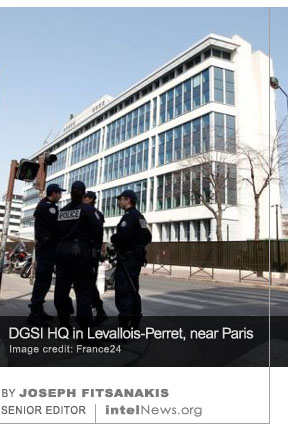
DGSI FranceAn officer in France’s elite counterterrorism agency is to be tried along with four accomplices for selling forged identity documents and private data on the darknet. The case first emerged in 2018, after officers with France’s Central Office for the Prevention of Illegal Immigration (OCRIEST) detected a seller of high quality forged copies of official documents on the darknet.
The seller, who went by the nickname Haurus, offered French identification cards, drivers’ licenses, birth certificates and even bank documents, in exchange for between €100 and €300 ($110 and $330). The quality of the documents on sale was substantially higher than most forgeries sold on the darknet. According to French government investigators, the fake docments qualified as what anti-forgery experts call “the gold standard”. Haurus also sold private phone records and other information to track the whereabouts of individuals.

Government investigators eventually received an anonymous tip that helped identify Haurus. According to prosecutors, Haurus was an officer in the General Directorate for Internal Security (DGSI), which serves as France’s main counterterrorism agency. In accordance with France’s strict privacy laws, he has been identified only as “Cédric D.”, 33. According to Le Parisien newspaper, Cédric D. worked as a counterterrorism investigator specializing on jihadist terrorist networks.

Upon his arrest, Cédric D. led prosecutors to four more people, including a private investigator, all of whom were eventually apprehended. Cédric D. was kept in pre-trial detention for several months. He was released five months ago and remains under judicial supervision. The investigation into his activities has now concluded, and a trial is expected to commence soon in the Paris suburb of Nanterre.

Author: Ian Allen | Date: 23 January 2020 | Permalink

Britain warns its citizens following detention of alleged Russian spies in Switzerland

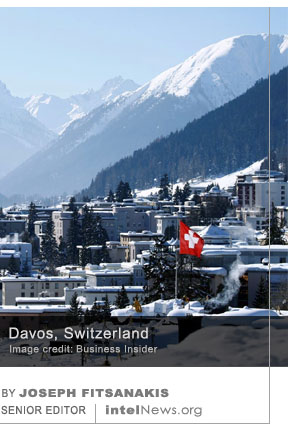
Davos SwitzerlandA Swiss newspaper has revealed a previously unreported detention of two Russian diplomats in the luxury Swiss Alpine resort of Davos, which is currently hosting the annual meeting of the World Economic Forum (WEF). The development prompted British authorities to warn some British citizens participating in the WEF meeting that they may be in physical danger.
The brief detention of the two Russians allegedly occurred in August of last year in Davos, a mountain resort in the canton of Graubünden, which is located in Switzerland’s eastern Alps region. According to the Swiss newspaper Tages-Anzeiger, local police detained two Russians during the period between August 8 and 28 of last year. Citing anonymous sources from the police and security services, the paper said that the authorities were alerted about the two Russians by employees at a local resort. The employees reportedly found it strange that the Russians had booked hotel rooms for over three weeks, which is unusually long for Davos’ ultra-luxury resort setting.

When police officers approached the two men and inquired about their background, one of them said he worked as a plumber. However, when asked to provide identification papers, both men reportedly produced Russian diplomatic passports. However, none had received accreditation by the Swiss government, which means they had not been formally registered as diplomats in the Alpine nation. When Swiss police officials contacted the Russian embassy in Bern to inquire about the two men, Russian officials “threatened diplomatic consequences if the men were arrested” said Tages-Anzeiger.

The two Russians were eventually released, as Swiss police “could not ascertain any reason to detain them”, said the paper. However, Swiss officials said that the two Russians “obviously […] had their sights on the WEF” and were probably planning to install surveillance equipment around the Swiss resort town. Soon after the Tages-Anzeiger report was published, British counterterrorism police reportedly warned a number of British citizens attending the WEF meeting that they might be in physical danger.

But the Russian embassy in Switzerland dismissed the Tages-Anzeiger report as “one more attempt to undermine Swiss-Russian relations”. Russian officials at the embassy accused Western countries of trying to “whip out a scandal out of nothing”, adding that Russian authorities had not been officially notified of the incident and that there was “no evidence of espionage” by the two men.

Author: Joseph Fitsanakis | Date: 22 January 2020 | Permalink

Western intelligence agencies see non-Arab as new head of ISIS

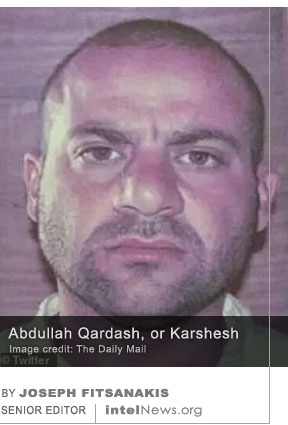
Abdullah QardashWestern intelligence agencies have reportedly confirmed that a non-Arab is now leading the Islamic State for the first time in the organization’s history. Rumors of a new leader of the group began to circulate just hours after American forces killed its self-styled Caliph, Abu Bakr al-Baghdadi. On October 27, 2019, Newsweek magazine reported that the militant group, which is also known as the Islamic State of Iraq and Syria (ISIS), had appointed a man known as Abdullah Qardash (pictured) at its helm. According to the magazine, Qardash’s name was sometimes spelled in English as Karshesh. Additionally, he was sometimes referred to by his ISIS moniker, Hajji Abdullah al-Afari.
However, the names reported by Newsweek were not immediately recognizable to Western intelligence officials and other experts who monitor the Islamic State. But now British newspaper The Guardian reports that Western intelligence services have concluded that the man referred to as “Abdullah Qardash” in October is indeed the new leader of ISIS. The paper said on Monday that the new ISIS leader’s birth name is Amir Mohammed Abdul Rahman al-Mawli al-Salbi. He is allegedly not an Arab, but rather an Iraqi Turkman whose family comes from Tal Afar, a northwestern Iraqi city that is close to the borders of Syria and Turkey. In fact, al-Salbi is reported to have a brother in Turkey, who is a prominent member of an ethic political grouping called the Turkmen Iraqi Front.

Al-Salbi, who was allegedly appointed as leader of ISIS just hours after al-Baghdadi’s demise, is believed to be the first non-Arab to ever lead the militant group. Like most of ISIS’ original founders, al-Salbi is believed to have met Baghdadi in 2004 in Camp Bucca, an American-administered prison in Umm Qasr. Similarly to al-Baghadi, al-Salbi’s background is in Islamic education —something that enabled him to quickly rise in the ranks of ISIS ideologues and command significant influence. By 2018, al-Salbi had become a central decision-maker within the group, and was able to shape its activities and policies within its territory in the Middle East and beyond. The Guardian article concludes that al-Salbi is “a hardened veteran in the same vein as al-Baghdadi”, which implies that no major changes in the Islamic State’s strategy are expected to take place under his leadership.

Author: Joseph Fitsanakis | Date: 21 January 2020 | Permalink

Iran threatens to retaliate against Greece if US uses military bases to launch attack

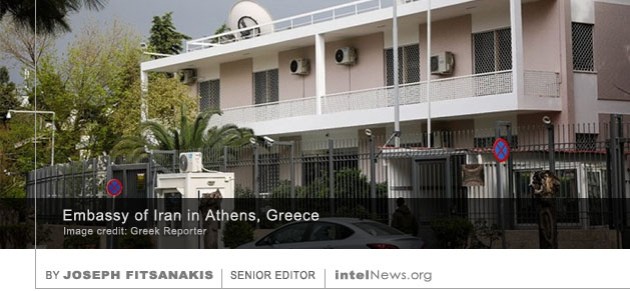
Iran embassy GreeceIran has issued a warning against Greece, saying that it will retaliate if the United States attacks the Islamic Republic using its military bases on Greek soil. It is the first time that Iran has threatened to launch attacks against a member of the European Union in connection with the recent rise in tensions between Tehran and Washington.
Iranian officials issued the warning against Greece in response to comments made by Greek Prime Minister Kyriakos Mitsotakis during his recent visit to the White House, which coincided with the assassination of Iranian General Qasem Soleimani by the US. Speaking about Soleimani’s killing, Mitsotakis said that “we [Greeks] are allies with the US, so we stand by our allies through difficult times”. And he continued: “I understand this particular decision was taken by taking into consideration what is the US national interest, and we stand by that decision”.

Iran’s response to the Greek prime minister’s comments came in a letter that was sent by the Iranian embassy in Athens to one of Greece’s leading broadsheets, Kathimerini. The letter pointed out that Greece and Iran enjoyed “friendly, traditional and historical relations”. Given “the absence of any differences or tension between [the two countries] in recent centuries”, said the letter, “we believe that [Mr. Mitsotakis’] statement cannot be the official position of the Greek government”. It went on to warn that “The Islamic Republic of Iran has made it very clear that in the event of a US-led war against the country, the concession of [military] bases by any country to the American invader will be considered a hostile act and Iran reserves the right to respond in a clear and decisive manner”.

Last weekend, Greece’s Foreign Affairs Minister, Nikos Dendias, revealed that the Iranian government had delivered a statement to his office, protesting Mitsotakis’ comments. But he added that he had not had a chance to read it. He also said that his Iranian counterpart, Mohammad Javad Zarif, had asked to speak with him about Greece’s stance in the US-Iran dispute.

Author: Joseph Fitsanakis | Date: 17 January 2020 | Permalink

Chaos in Sudan as spy agency staff stage armed uprising against government

Sudan civil unrestThere was chaos in the Sudanese capital Khartoum yesterday, as hundreds of members of Sudan’s intelligence agency staged an armed uprising against the country’s new government. At least five people —including two soldiers— are believed to have died in the uprising, while several dozen intelligence officers were reportedly arrested.
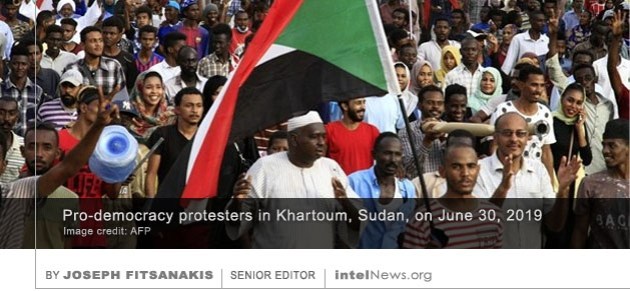
The uprising comes nine months after a student-led revolution toppled Sudan’s long-time dictator, Omar al-Bashir. The Sudanese military eventually stepped in and took power, promising to stabilize the country and hold democratic elections. Since coming to power, the new government has been trying to disarm and disempower Sudan’s feared National Intelligence and Security Service (NISS). Its employees have been offered retirement packages in return for surrendering their weapons. The government’s plan is to replace them with a non-militarized intelligence force.

But NISS officers have rejected the proposed retirement packages and seek higher compensation amounts for themselves and their subordinates. It appears that several hundred NISS officers staged a coordinated uprising in the early hours of Wednesday, in Khartoum and other locations around the country. According to reports, the mutineers took over two oil fields in Sudan’s East Darfur state, and threatened to take over the Khartoum International Airport.

At a press conference held on Wednesday morning, Sudan’s Chief of Staff, Lieutenant General Osman Mohamed al-Hassan, told reporters that the mutineers were confronted by soldiers who “stormed their bases”. The airport and the two oil fields had been secured by Wednesday afternoon, but reports stated that at least five people, including three civilians, died in the process. Late on Wednesday, General Abdel Fattah al-Burhan, who chairs Sudan’s transitional governing council, announced on television that NISS Director General Abu Bakr Mustafa had tendered his resignation. He also said that over 40 NISS officers had been arrested.

Author: Joseph Fitsanakis | Date: 15 January 2020 | Permalink

In surprise move, Turkish and Syrian intelligence chiefs meet in Moscow

Turkey SyriaIn a move that surprised observers, the intelligence chiefs of Turkey and Syria —two bitter rivals in the ongoing Syrian civil war— met in Russia on Monday. The meeting was held in Moscow and was acknowledged by officials from both sides, making it the first explicit contact between Turkish and Syrian intelligence in over a decade.
The Turkish government of President Recep Tayyip Erdoğan has openly called for the toppling of Syrian leader Bashar al-Assad. The Turkish strongman regularly refers to al-Assad as a “terrorist” and blames him for clandestinely supporting Kurdish paramilitaries, who have waged a war of secession against Ankara for several decades.

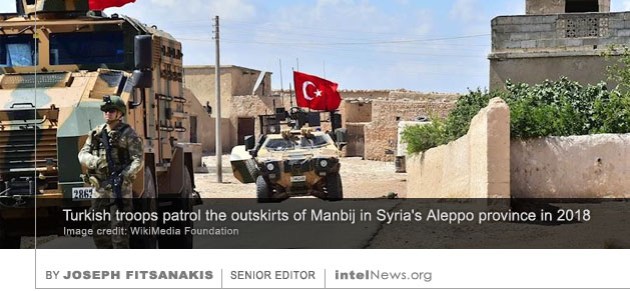
Regional dynamics shifted radically since early 2017, however, when the United States began withdrawing from the conflict. In the following months, Washington lifted its support for a collection of rebels fighting against the Syrian president. Last year, the US military left northern Syria and allowed Turkish troops to invade the region, with the aim of repelling armed Kurdish units from the Syrian-Turkish border.

Throughout this time, there have been rumors of intelligence coordination between Ankara and Damascus, but no official acknowledgement was ever issued. On Monday, however, Syria’s government-owned news agency, SANA, said that a meeting had taken place in Moscow between the heads of intelligence of Syria and Turkey. Shortly afterwards, a number of anonymous Turkish officials confirmed these reports to the Reuters news agency.

Reuters reported that the two sides discussed the state of the ceasefire in Syria’s northwestern Idlib province, and future steps aimed at coordinating against the presence of armed Kurdish separatists in northern Syrian regions. It quoted one Turkish official who said that the two intelligence agencies were exploring “the possibility of working together” against separatist Kurdish groups on both sides of the Turkish-Syrian border.

Author: Joseph Fitsanakis | Date: 14 January 2020 | Permalink

MI5 director plays down US threat to end intelligence sharing over Huawei

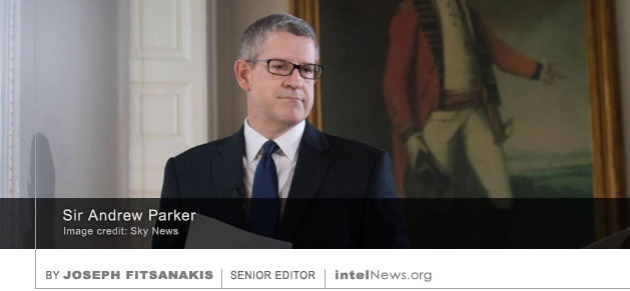
Sir Andrew ParkerThe director of Britain’s domestic intelligence agency has dismissed warnings by the United States that intelligence sharing between the two allies will be impeded if London decides to use Chinese-made telecommunications hardware. The British government has come under relentless pressure by Washington to bar Huawei Technologies, one of the world’s leading telecommunications hardware manufacturers, from competing for contracts to build the United Kingdom’s 5th generation cellular communications infrastructure.


In recent years, Huawei has come under scrutiny by some Western intelligence agencies, who view it as being too close to the Communist Party of China. More recently, Washington has intensified a worldwide campaign to limit Huawei’s ability to build the infrastructure for 5G, the world’s next-generation wireless network. Along with some if its allies, notably Australia and Canada, the US is concerned that the Chinese telecommunications giant may facilitate global wiretapping on behalf of Beijing’s spy agencies. Last year, Washington warned two of its main European allies, Britain and Germany, that it would stop sharing intelligence with them if they allowed Huawei to compete for 5G contracts.

But in an interview with The Financial Times, Sir Andrew Parker, head of the Security Service (MI5), said on Sunday that he didn’t believe Britain’s intelligence-sharing relationship with America would be impacted by the decision. When asked whether Washington would stop sharing intelligence with London if the British government allowed a bid by Huawei, Sir Andrew said he had “no reason today to think that”. He added that Britain’s intelligence relations with the US, and with other close allies, such as Canada and Australia, were “the strongest they’ve ever been”. Britain’s intelligence partnership with America “is, of course, of great importance to us”, said Sir Andrew, and went on: “I dare say, to the US too, though that’s for them to say. It is a two-way street”.

Meanwhile was reported over the weekend that a high-level delegation from the National Security Agency —America’s largest intelligence agency— and the US National Economic Council would be in London today, in what appears to be a final effort to persuade London not to cooperate with Huawei. Prior to her resignation last year, British Prime Minister Theresa May had reportedly decided to allow the Chinese firm to compete for 5G contracts. Her successor, Prime Minister Boris Johnson, is reputed to be in agreement with that decision. Last April, German intelligence official also dismissed American warnings that intelligence sharing with Berlin would end if Huawei built any part of the German 5G network.

Author: Joseph Fitsanakis | Date: 13 January 2020 | Permalink