Chinese cybersecurity firm accuses CIA of 11-year cyberespionage campaign
March 4, 2020 1 Comment
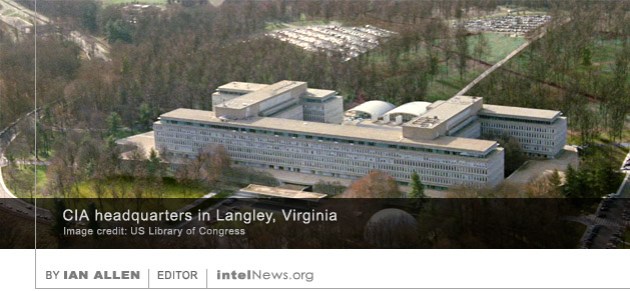 A leading Chinese cybersecurity firm has accused the United States Central Intelligence Agency of using sophisticated malicious software to hack into computers belonging to the Chinese government and private sector for over a decade.
The accusation against the CIA comes from Qihoo 360, a prominent cybersecurity firm headquartered in Beijing. On Monday, company published a report of its investigation on its website, written in both Chinese and English. The report identifies the hackers as “the CIA Hacking Group (APT-C-39)”, and says that the group has carried out activities against “China’s critical industries” for at least 11 years.
The report claims that APT-C-39 targets included China’s energy and civilian aviation sectors, Internet service providers, scientific research universities and organizations, and various government agencies —which it does not name. The majority of the hacker group’s targets were located in Beijing, and also in China’s Zhejiang and Guangdong provinces.
According to Qihoo 360, APT-C-39 must be a “state-level hacking organization”, judging by the hacking tools that it used. These tools, such malware named by forensics experts as Grasshopper and Fluxwire, are believed to have been designed by the CIA. They were leaked in 2017 by the international whistleblower website WikiLeaks. American authorities have charged a former CIA programmer, Joshua Schulte, with leaking the malware. Schulte denies the charges.
The Qihoo 360 report also claims that the hours during which APT-C-39 hackers appear to be active correspond to the working hours of the East Coast of the United States. It also suggests that one goal behind the hacking operations against airline industry targets was to access the travel itineraries of senior figures in China’s political and industrial circles.
► Author: Ian Allen | Date: 04 March 2020 | Permalink
 Switzerland’s Federal Department of Finance has filed a criminal complaint “against persons unknown” over media reports that a leading Swiss-based cryptological equipment manufacturer was secretly owned by the United States Central Intelligence Agency (CIA).
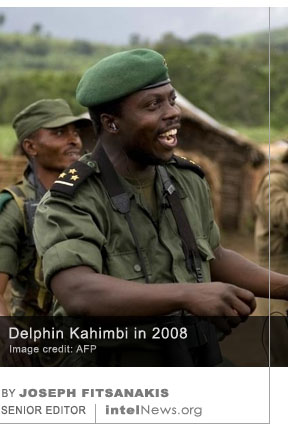 The head of military intelligence of the Democratic Republic of the Congo was found dead on Friday, just hours before he was due to testify before the country’s National Security Council. General Delphin Kahimbi, Deputy Chief of Staff of the DRC Armed Forces, and director of its military intelligence wing, was facing accusations of involvement in an alleged plot to depose the country’s new President, Félix Tshisekedi.
 United States intelligence agencies are using “a wide range” of tools, ranging from open-source collection to communications interception and human intelligence, to collect desperately needed data about the spread of the coronavirus, according to sources. As of late last week, some of the most dependable data on the spread of the virus, known as COVID-19, came from military channels of information,
 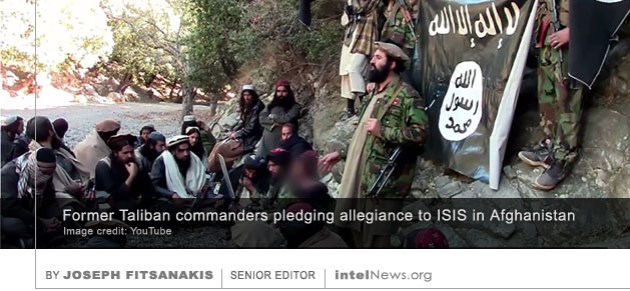 An imminent peace agreement between the United States government and the Taliban will inadvertently empower the Islamic State in Afghanistan, according to a number of insiders, who warn that the soon-to-be-announced deal may have grave unintended consequences for the war-ravaged country.
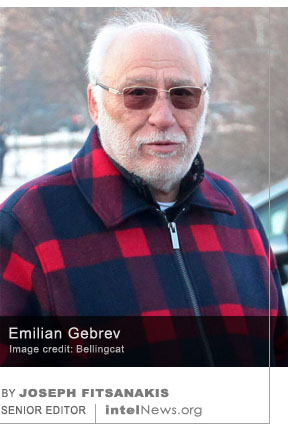 A Russian intelligence officer, who was allegedly involved in an attempt to kill a Bulgarian arms dealer in Sofia in 2015, is now a diplomat, according to report published on Tuesday by the investigative website Bellingcat. The website also claimed that there is a possible connection between the intelligence officer and the
  There are more foreign spies and their proxies operating today in Australia than during the height of the Cold War, according to the director of the Australian Security Intelligence Organisation (ASIO). This claim was made on Monday by Mike Burgess, who in 2019 was appointed director of the ASIO —Australia’s primary domestic security agency. Burgess added that the level of threat Australia faces from foreign espionage and other foreign interference activities is “currently unprecedented”.
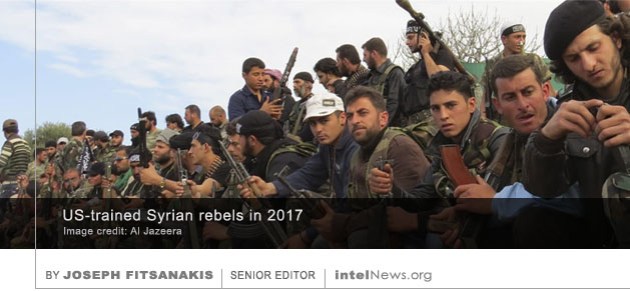 The United States government is unable to account for nearly $716 million in weapons it gave to various Syrian groups during the war against the Islamic State, according to a Department of Defense audit. The weapons were procured under the Counter Islamic State of Iraq and Syria Train and Equip Funds (CTEF) program, which was administered by the US Pentagon in 2017 and 2018. The CTEF program cost the US taxpayer a total of $930 million.
 The United States Federal Bureau of Investigation has arrested a Mexican man, who is accused of spying in the city of Miami on behalf of the Russian government. Local media reports suggest that the target of the man’s spying was a Russian defector who gave American authorities information about Russian espionage activities on US soil.
 The Russian government sent a team of spies to Ireland to monitor undersea fiber-optic cables, which enable communications traffic between North America and Western Europe, according to a new report. The spies were allegedly sent to Ireland by the Main Directorate of the General Staff of the Russian Armed Forces, which is known in Russia as GU, and formerly as GRU.
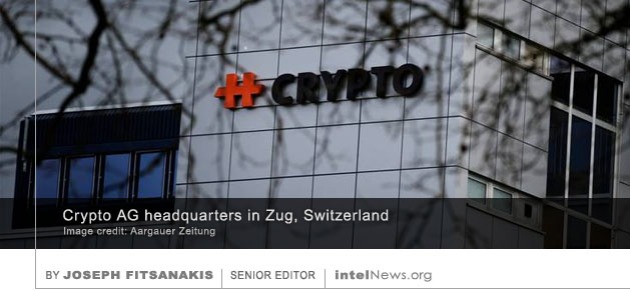 Switzerland is reeling from the shock caused by revelations last week that Crypto AG, the world’s leading manufacturer or cryptologic equipment during the Cold War, whose clients included over 120 governments around the world, was a front company owned by the United States Central Intelligence Agency.
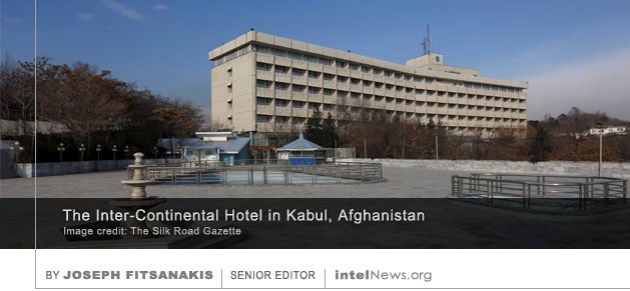 Two senior members of the Pakistani Taliban, who were carrying fake identification documents, were reportedly assassinated earlier this month in the vicinity of a luxury hotel in the Afghan capital Kabul. The culprits remain unknown, although the leadership of the Pakistani Taliban has blamed the United States for their death.
 The United States has threatened to pull its funding for an Africa-wide disease control program if the African Union decides to accept an offer from China to build the program’s new headquarters. The dispute accentuates a growing competition between Washington and Beijing to exert political control in Africa and places the African Union at the center of a difficult dilemma.
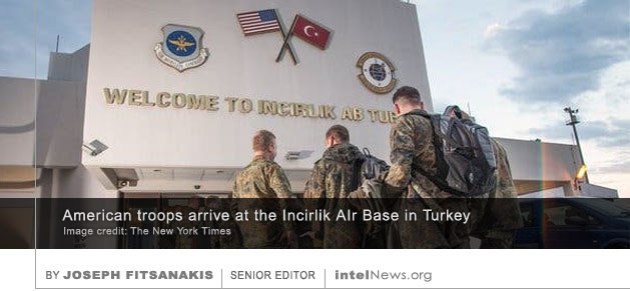 The United States has indefinitely suspended a longstanding military intelligence-sharing program with its North Atlantic Treaty Organization ally Turkey. The program, which targets a Kurdish separatist group, is believed to have been in place since 2007. According to the Reuters news agency, which published the story on Wednesday, it has never before been reported on by news media.







US Pentagon insists it can continue to function despite COVID-19 outbreak
March 5, 2020 by Joseph Fitsanakis Leave a comment
During a press conference on Thursday, US Secretary of Defense Mark Esper said he was “fully confident” that the Pentagon could perform its functions uninterrupted by the spread of the coronavirus. He added that he was expecting to receive a proposal early next week about how the Pentagon —the world’s largest office building, staffed by 20,000 employees— could prevent or mitigate the spread of the virus. Meanwhile, he said, the Pentagon’s National Military Command Center —designed for a nuclear attack— would be able to sustain the Department of Defense’s employees “for weeks at a time, if they have to be locked down inside the building if we have some type of outbreak”.
He did not comment on reports from last week, according to which senior American military commanders expressed concerns about the state of the country’s military readiness by the end of March. Late on Thursday, the US European Command announced the early termination of a joint military exercise that was underway in Israel, as a precautionary measure against COVID-19. A few days earlier, Pentagon officials canceled a joint military exercise in South Korea. Meanwhile, leading US defense contractor Lockheed Martin announced on Thursday that it had halted production at its F-35 plants in Italy and Japan. The company said that production at its factories in Texas continued uninterrupted.
Defense Secretary Esper said yesterday that the US military’s worldwide efforts on COVID-19 were being coordinated by US Norther Command, which was preparing for “short- and long-term scenarios, domestic and international situations”. He did not elaborate on that statement. Also on Thursday, the Pentagon announced that it had started administering coronavirus screenings to all new and potential recruits for all branches of the Armed Forces.
► Author: Joseph Fitsanakis | Date: 05 March 2020 | Permalink
Filed under Expert news and commentary on intelligence, espionage, spies and spying Tagged with biosecurity, biosurveillance, Coronavirus, COVID-19, Mark Esper, News, United States, US DoD