CIA has maintained secret communication with North Korea for 10 years

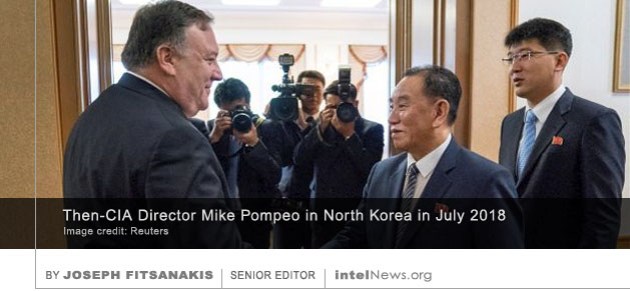
Mike Pompeo North KoreaWith presidential approval, the United States Central Intelligence Agency has maintained a secret channel of communication with North Korea since at least 2009, according to The Wall Street Journal. Many were surprised in 2018, when the then CIA director Mike Pompeo made a sudden visit to Pyongyang to speak with senior North Korean officials. But according to The Wall Street Journal, the CIA channel with the North Koreans had been there since at least 2009 and Pompeo simply “re-energized it” after being instructed to do so by the White House.
The United States and North Korea have never had official diplomatic relations, nor have they ever maintained embassies at each other’s capitals. In rare instances, the North Korean Permanent Mission to the United Nations in New York has been utilized to pass messages from the White House to the communist country’s Ministry of Foreign Affairs. No other systematic diplomatic activity between the two sides has ever been reported.

But an article published in The Wall Street Journal on Monday claims that an intelligence channel between the CIA and unspecified North Korean intelligence officials has been active —with some periods of dormancy— for at least a decade. The previously unreported channel has led to a number of public meetings, such as the 2014 visit to Pyongyang by James Clapper, the then US Director of National Intelligence, as well as an earlier visit to the North Korean capital by former US President Bill Clinton in 2009. But, says the paper citing “current and former US officials”, most of the contacts have been secret. They include several visits to North Korea by CIA official Joseph DeTrani before and after Clinton’s visit, as well as two trips to Pyongyang by CIA Deputy Director Michael Morell, in 2012 and 2013. His successor, Avril Haines, also visited North Korea, says The Journal, but notes that the channel went “dormant late in the Obama administration”.

Upon becoming CIA director following the election of Donald Trump to the presidency, Mike Pompeo was briefed about the secret channel’s existence and decided to resume it, with Trump’s agreement. That led to his eventual visit to North Korea along with Andrew Kim, who at the time headed the CIA’s Korea Mission Center. Eventually, this channel of communication facilitated the high-level summit between President Trump and Supreme leader Kim Jong-un in June 2018 in Singapore. The Wall Street Journal said it reached out to the CIA, the Department of State and the White House about this story, but received no responses. The North Korean mission in the United Nations in New York also declined to comment.

Author: Joseph Fitsanakis | Date: 22 January 2019 | Permalink

‘Illusion of safety’ blamed for deaths of four US service members in Syria

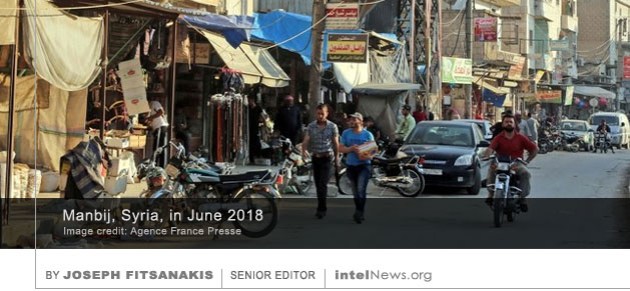
Manbij SyriaThe “illusion of safety” has been blamed for the death of four American service members in northern Syria last week, after a suicide bomber attacked a restaurant, killing at least 19 people and wounding countless others. The deadly attack happened in Manbij, a small Kurdish-majority town near the Syrian-Turkish border, which American forces previously viewed as an oasis of security in the war-torn country. American troops fought alongside a coalition of Kurdish and Arab fighters who in 2016 took control of Manbij from the Islamic State of Iraq and Syria (ISIS). Since then, American forces have remained in the area —mostly to prevent a military invasion by Washington’s ally Turkey, which views the Kurds as terrorists and has threatened to destroy their armed forces.
The relative stability of Manbij was violently disrupted last Wednesday, when a man detonated a suicide vest inside the Palace of the Princes restaurant in downtown Manbij. Until that moment, United States forces had lost just two members during the Syrian Civil War. Four more Americans died in Wednesday’s blast, including two service members, a military contractor and a civilian intelligence officer working for the Pentagon. Three other Americans were wounded and were airlifted out of the country. In an insightful article published last week, The New York Times quoted a US Special Forces member who wondered whether the US troops in northern Syria have “developed a false sense of security” in what remains a dangerous conflict zone. “The illusion of safety”, said the anonymous commentator, had caused the behavior of American service members in Manbij to fall into predictable routines. That became a vulnerability that the Islamic State was able to exploit, he said.

The Sunni militant group targeted the Palace of the Princes, one of the most popular eateries for Americans in Manbij. The Times quoted locals who said that American troops appeared to eat there nearly every time they patrolled the city, “often many times a week”. They would even park their military vehicles outside the restaurant while dining there, they said. The paper commented that many US troops had “grown complacent and should have varied their […] routes or increased their operational security” while on patrol. Unfortunately, however, their presence —and lack of adequate security— was noticed by the Islamic State, which targeted them on Wednesday.

Author: Joseph Fitsanakis | Date: 21 January 2019 | Permalink

Spanish judge broadens probe into 20-year illegal wiretap network

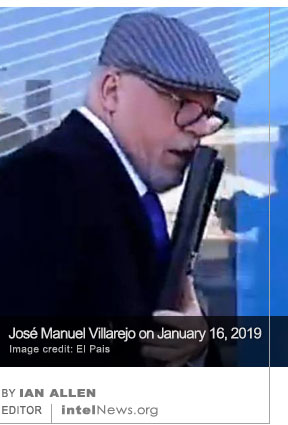
José Manuel VillarejoA judge in Spain has widened an investigation into an illegal network that spied on scores of politicians, business executives, journalists and judges for over 20 years, in return for payments by wealthy clients. At the center of the case is José Manuel Villarejo, a 67-year-old former police chief, who was arrested in November of 2017 for carrying out illegal wiretaps and remains in pre-trial custody. State prosecutors accuse Villarejo of running an illicit information-collection enterprise that violated the privacy of hundreds of unsuspecting citizens. The latter were targeted by corporate competitors and individual wealthy clients. Many of Villarejo’s targets were eventually blackmailed by the recipients of information collected by the former police chief and his network.
The court heard this week that the accused maintained an extensive network of informants with whom he had worked during his time in the police force. These informants worked for telecommunications service providers, the banking sector, and even at Agencia Tributaria, Spain’s tax revenue service. They are accused of providing Villarejo’s network with information that helped him zero in on his targets, such as confidential tax returns, subscriber records of personal telephone calls, bank account numbers, and asset ownership lists. It is believed that several Spanish politicians were among Villarejo’s clients, as was the Banco Bilbao Vizcaya Argentaria, one of Spain’s largest banks.

On Wednesday, the court heard from five active police officers and an employee of the Agencia Tributaria, who testified about having worked for Villarejo’s network. The six men testified about so-called Operation KITCHEN, which targeted Luis Bárcenas, a senator and party treasurer of Spain’s conservative Partido Popular —known as PP, or the People’s Party. The purpose of Operation KITCHEN was to wiretap Bárcenas’ communications without acquiring a court warrant, said the witnesses. In 2018 Bárcenas was jailed for 33 years for his role in the so-called Gürtel case, the largest corruption scandal in modern Spanish history, which brought down the conservative government of Prime Minister Mariano Rajoy in July of last year. The trial continues.

Author: Ian Allen | Date: 18 January 2019 | Permalink

Trial witness claims ‘El Chapo’ gave Mexico’s ex-president $100 million bribe

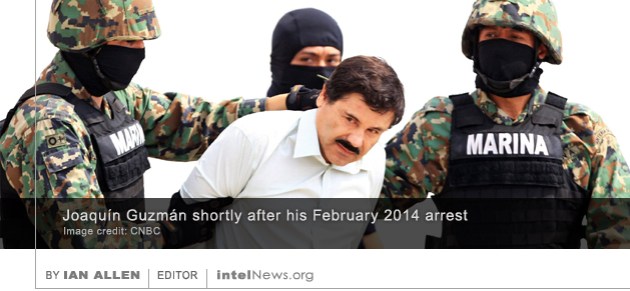
Joaquín ‘El Chapo’ GuzmánA high-profile witness has told the trial of Joaquín ‘El Chapo’ Guzmán in New York that the accused bribed the then President of Mexico, Enrique Peña Nieto, with $100 million in order to stay out of prison. Guzmán, the leader of the powerful Sinaloa drug cartel, was arrested in February 2014 in Mexico. In January 2017, he was extradited to the United States, where he faces a litany charges ranging from conspiracy to import and distribute drugs to money-laundering and homicide. His trial began at the Federal District Court in Brooklyn, New York, last November.
All of last Tuesday was taken up by the testimony of Alex Cifuentes Villa, a Colombian former drug lord from Medellin who, until his arrest in 2012, was one of Guzmán’s closest collaborators. Villa told the court that Peña Nieto employed mediators to reach out to the Sinaloa cartel soon after he was elected president in 2012. He alleged that the mediators offered to strike a bargain with Guzmán, according to which he would stay out of prison in return for a $250 million bribe. The bribe would be shared between Peña Nieto and his closest government aides and advisors, said Villa. In return, the Mexican president would call off a national manhunt to capture the Sinaloa cartel leader. Following prolonged negotiations, Guzmán agreed to pay Peña Nieto $100 million, said Villa, in order to secure his freedom.

This is not the first time that a witness in the trial of Guzmán has alleged that the Sinaloa cartel leader bribed senior Mexican government officials, including police and military leaders. However, it is the most sensational allegation to have emerged the trial so far, and —if true— points out that even the highest echelons of the Mexican state have succumbed to the moneyed power of the drug cartels. Last November, when Guzmán’s trial began, his lawyers hinted that claims of corruption would be aired against the highest levels of the Mexican government, including two of its recent presidents, which they called “completely corrupt”. At the time, Peña Nieto’s office issued a statement condemning the allegations and saying that the former president had never received bribes from anyone.

Author: Joseph Fitsanakis | Date: 17 January 2019 | Permalink

FBI releases new information on alleged Iranian deep-cover spies

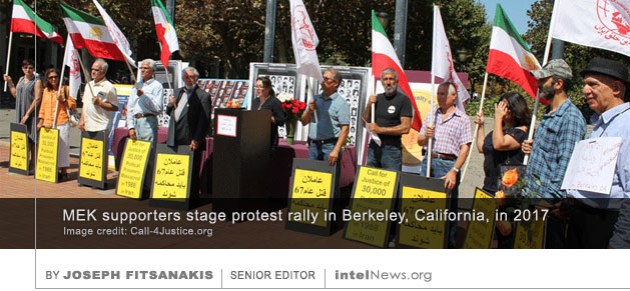
MEK supporters CaliforniaThe United States Federal Bureau of Investigation has charged two men of Iranian descent, who were arrested in California, of operating as deep-cover spies for Iran. Documents filed in a federal court in Washington, DC, name the men as Majid Ghorbani, 59, and Ahmadreza Mohammadi Doostdar, 38. Both have American citizenship and were arrested by the FBI in August, following a year-long counterintelligence investigation. The Los Angeles Times reports that Ghorbani is believed to have immigrated to the US from Iran in 1995. For the past two decades he has worked as a waiter at an upscale Persian restaurant in Santa Ana. Doostdar was born in the southern Californian city of Long Beach, but eventually moved with his family to Canada, and later to Iran, where he grew up. But he kept his US citizenship and made regular trips to America. It is believed that he planned to eventually move with his family to California.

According to the FBI, the two men were tasked by Iranian intelligence with carrying out surveillance on Jewish religious, cultural and political facilities in the US. They were also tasked with conducting surveillance and compiling reports of diplomatic and other facilities connected to the state of Israel. Another part of their mission, said the FBI, was collecting information on the activities and individual members of Mujahideen-e Khalq (MEK), a militant group that has roots in radical Islam and Marxism. The MEK initially supported the Islamic Revolution of 1979, but later withdrew its support, accusing the government of Ayatollah Khomeini of “fascism”. It continued its operations in exile, mainly from Iraq, where its armed members were trained by the Palestine Liberation Organization and other Arab leftist groups. Until 2009, the European Union and the US officially considered the MEK a terrorist organization. But the group’s sworn hatred against the government in Iran brought it close to Washington after the 2003 US invasion of Iraq. By 2006, the US military was openly collaborating with MEK forces in Iraq, and in 2012 the group was dropped from the US Department of State’s list of foreign terrorist organizations. Today the group enjoys open protection from the EU and the US.

Documents filed in court by the FBI state that the two men were secretly recorded during a year-long counterintelligence operation, as they traveled throughout the US to observe MEK rallies and gather intelligence or Israeli diplomatic facilities. Locations visited by the two men allegedly include Chicago, New York and Washington, as well as several cities in the American West Coast. During those visits, they would compile reports that, according to the FBI, were meant to “enable an intelligence or military unit find [and] neutralize a threat”. The men also traveled back to Iran through third countries, bringing back written operational instructions from their Iranian intelligence handlers, according to the FBI documents. IntelNews wrote about the arrest of the two men in August. However, this is the first concrete information released by the FBI about their identities and activities. They are both accused of acting as unregistered agents of a foreign government —a technical term for deep-cover espionage.

Author: Joseph Fitsanakis | Date: 15 January 2019 | Permalink

Huawei fires Chinese employee arrested in Poland for spying

Huawei PolandThe Chinese telecommunications giant Huawei has fired one of its employees who was arrested last week in Poland on charges of spying for China, saying that his actions had “no relation to the company”. The man, identified in media reports as Wang Weijing, was arrested last Tuesday by Polish counterintelligence officers who conducted searches of Huawei’s offices in Warsaw and seized electronic hardware and documents. Wang reportedly learned Polish at the Beijing Foreign Studies University. In 2006, he was posted by the Chinese Ministry of Foreign Affairs at the Chinese consulate in Gdansk, Poland’s largest Baltic Sea port city. In 2011, he left the Foreign Service and joined Huawei, which employed him at its offices in Poland.

Reports from Poland said that Wang was arrested alongside a Polish national, who was identified in media reports only as Piotr D. He is believed to be a mid-level executive of Orange, a French multinational telecommunications carrier who is Huawei’s main domestic partner in Poland. Polish media also reported that, prior to joining Orange, Piotr D. was an upper-level manager in an unnamed Polish intelligence agency. Piotr D.’s house was searched by security officers on Tuesday, along with Wang’s house. The two arrests came six weeks after Meng Wanzhou, Huawei’s chief financial officer, was arrested in Canada. Meng, who is also the daughter of Huawei’s founder, was reportedly detained on December 1 in Vancouver at the request of the United States. Washington says it has evidence that Meng “tried to evade the American embargo against Iran”.

Over the weekend, Poland’s Internal Affairs Minister, Joachim Brudzinski, said that the European Union and the North Atlantic Treaty Organization —of which Poland is a member— should develop a joint position on whether to continue to allow Huawei to operate in Europe. But his call was reportedly met with a lukewarm response from government and private-sector leaders. Meanwhile, China’s Ministry of Foreign Affairs said that it was concerned about Wang’s arrest and urged Warsaw to treat him “with fairness”.

Author: Joseph Fitsanakis | Date: 14 January 2019 | Permalink

Shiite militias ‘acting like mafia gangs’ in Iraq’s former ISIS-held areas

Popular Mobilization ForcesThe Shiite militias that fought in the war against the Islamic State are now “engaged in mafia-like practices” in former Islamic State strongholds, enraging Iraqi Sunnis and sparking fears of another Islamist insurgency, according to a leading article in The Washington Post.  In 2014, the meteoric rise of the Islamic State of Iraq and Syria —ISIS, later renamed Islamic State— was largely aided by Sunni Arabs’ belief that they were second-class citizens in a Shiite-dominated Iraq. Popular support for the Islamic State among Iraq’s Sunni Arab minority took the Iraqi government by surprise and almost enabled the militant group to conquer Baghdad in 2015. Today, after the destruction of the Islamic State’s self-declared caliphate, Iraq’s Shiite-dominated security and intelligence services have returned to Sunni-majority regions that were once ruled by ISIS.

But there signs that about 50 Shiite militias, which were supported by the Iraqi state throughout the war against ISIS, are now becoming highly autonomous armed gangs that are undermining the central government in Baghdad. These militias —many of which are politically aligned with Iran— are essentially armed wings of Shiite political parties that control more than a quarter of the seats in the Iraqi parliament. In 2014, the Shiite-dominated Iraqi government attempted to utilize the power of the militias by uniting them under the umbrella of the Popular Mobilization Forces (PMF). PMF troops participated in every major front of the war against ISIS and today are an officially recognized military force with rank and salary structures that are equivalent to those of the Iraqi military and police. Technically, the PMF operate under the command of the Iraqi prime minister. In reality, however, the militias that make up the PMF are led by their respective Shiite commanders, many of whom are ideologically allied to Tehran.

The PMF militias are today in control of much of Sunni-dominated Western Iraq, which they helped retake from ISIS. According to Washington Post correspondents Tamer el-Ghobashy and Mustafa Salim, the militias are now using their newfound territorial power to make large sums of money. Various PMF militias operate countless checkpoints across Western Iraq, on roads between cities or —increasingly— within cities such as Mosul, imposing toll fees on supply trucks and even on individual motorists. The two Washington Post correspondents warn that these militia members are beginning to exhibit “mafia-like” behavior, establishing protection rackets and kidnapping motorists at night in order to release them for a fee paid by their families.

Additionally, PMF commanders make arbitrary decisions about which of the nearly 2 million Iraqi Sunnis, who were displaced in refugee camps due to the war, are allowed to return to their homes. Many of these homes and land that used to belong to Iraqi Sunnis are now being expropriated by PMF commanders, who claim that their previous owners collaborated with ISIS, often without evidence. This practice, say el-Ghobashy and Salim, is rapidly altering the demographic balance between Sunnis and Shiites throughout Western Iraq. The two authors forewarn that these mafia-like practices by the PMF are “fostering local resentments […] and revive the kind of Sunni grievances that underpinned the Islamic State’s dramatic rise three years ago”.

Author: Joseph Fitsanakis | Date: 11 January 2019 | Permalink

Law advocacy center sues CIA for access to Jamal Khashoggi files

Jamal KhashoggiAn international law center based in New York is suing the United States Central Intelligence Agency for access to classified files relating to the death of the Saudi journalist Jamal Khashoggi. Khashoggi, 59, was a Saudi government adviser who became critical of the Kingdom’s style of governance. He moved to the United States and began to criticize Saudi Arabia from the pages of The Washington Post. He was killed on October 2 by a 15-member Saudi hit-squad while visiting the Saudi consulate in Istanbul, Turkey, in order to be issued a certificate of divorce from his former wife in Saudi Arabia. After several weeks of vehemently denying any role in Khashoggi’s killing, the Saudi government eventually admitted that he was killed inside the Saudi consulate in Istanbul.

A few weeks after the murder, it was reported that British and American intelligence agencies were aware of efforts by the Saudi government to detain or otherwise silence Khashoggi, and that they had even warned Riyadh against such a move. In November, the CIA was reported to have concluded that Mohammed bin Salman’s Saudi Arabia’s powerful crown prince, had personally ordered Khashoggi’s murder. After its intelligence committee was briefed by the CIA on the matter, the US Senate unanimously condemned bin Salman and the government of Saudi Arabia, and called on the White House to impose sanctions on the oil kingdom. However, US President Donald Trump appears to have rejected the CIA’s conclusion and has refused to condemn the Saudi government over Khashoggi’s murder.

Now the Open Society Justice Initiative, a New York-based foundation specializing in national security and human rights, has filed a lawsuit against the CIA over the Khashoggi case. The lawsuit also names the Department of Defense, the National Security Agency and the Office of the Director of National Intelligence as defendants. The 17-page complaint, filed in a New York court on Wednesday, calls for the “immediate release” of all records in possession of these government agencies about Khashoggi’s murder under the US Freedom of Information Act. It calls these records “imperative for the public to properly and timely evaluate Congressional and Executive responses to Mr. Khashoggi’s killing”.

The Justice Initiative is one of the programs of the Open Society Foundations, the international civil-society advocacy group founded by Hungarian-American investor and philanthropist George Soros. Since its establishment in 2003, the Justice Initiative has filed over 100 national and international lawsuits relating to national security, most notably regarding the CIA’s extraordinary rendition program, which the agency launched following the attacks of September 11, 2001.

Author: Joseph Fitsanakis | Date: 10 January 2019 | Permalink

Holland says Iranian spies assassinated two men on Dutch soil

Dutch Police HagueAuthorities in Holland have officially accused Iran of ordering the contract murders of two men on Dutch soil in 2015 and 2017, one of them just a block away from the Dutch foreign ministry’s headquarters. The announcement illuminates the reason behind the expulsion of two Iranian diplomats from Holland last year, which the authorities did not explain at the time.

The first of the two assassinations happened on December 15, 2015, in Almere, a coastal town located 25 miles east of Amsterdam. The victim was Mohammad-Reza Kolahi, a 56-year-old electrician who was wanted in Iran for allegedly planting a bomb in 1981. The bomb targeted the headquarters of the ruling Islamic Republican Party, killing more than 70, and is often referred to as the deadliest domestic terrorist attack in Iran’s history. Kolahi, a member of a Marxist-Islamist group calling itself the People’s Mujahedin Organization of Iran (MEK), fled the country and was sentenced to death in absentia. He eventually married a Dutch national and acquired Dutch citizenship, changing his name to Ali Motamed. He was reportedly shot in the head at point-blank range by two assailants dressed in all black. Nearly two years later, on November 9, 2017, Ahmad Mola Nissi was also shot in the head in broad daylight by two assailants. The murder took place in the middle of the street in downtown Hague, site of Holland’s parliament and a host of international institutions. Nissi, 52, was a co-founder of the Arab Struggle Movement for the Liberation of Ahwaz (ASMLA), a secessionist group that seeks an independent Arab homeland in the oil-rich southwestern regions of Iran. Tehran has claimed for decades that both groups, MEK and ASMLA, have been supported by Iraq, Israel, the United States and the European Union.

On Tuesday, Holland’s Minister of Foreign Affairs, Stef Blok, informed the Dutch parliament that the country’s intelligence services had provided “strong evidence” that the Islamic Republic was involved in the assassinations of Kolahi and Nissi. He added that both men were Dutch citizens and that their murders on Dutch soil were “hostile actions” that directly violated Dutch sovereignty. He also revealed that the expulsions of two Iranian diplomats from Holland in June of last year were in direct response to the evidence unearthed by the Dutch intelligence services about the two murders. IntelNews readers will recall that the Dutch Foreign Ministry did not explain the reason for the expulsions when these were announced last summer. Also on Tuesday, the European Union announced the imposition of financial sanctions against two individuals associated with Iranian military intelligence, reportedly in response to Holland’s announcement.

Author: Joseph Fitsanakis | Date: 09 January 2019 | Research credit: M.K. | Permalink

US sent troops to OPEC member Gabon just days before military coup

Libreville, GabonThe United States deployed troops to the Central African nation of Gabon just days before a group of military officers staged tried to take over power in the oil-rich nation on Monday. Situated on the Atlantic coastline of Central Africa, Gabon is a member of the Organization of Petroleum Exporting Countries (OPEC). However, despite producing of 176,000 barrels of oil per day, making it one of Africa’s most significant oil producers, over a third of its 2 million inhabitants live below the official poverty line. The country has been ruled by the Bongo family for over a century with its current President, Ali Bongo Ondimba, having led the country since his father’s death a decade ago. In October of last year, however, Bongo went to Saudi Arabia for medical treatment after suffering a stroke, and has yet to return. In a televised message aired on New Year’s Day, Bongo told the citizens of Gabon that he was recovering and would soon be returning to his duties.

But in the early hours of Monday gun shots were reported in the vicinity of the studios of Radio Télévision Gabonaise (RTG), the country’s state-owned national broadcaster in the capital city, Libreville. A few hours later, regular broadcasting was suspended. A message was transmitted on the national radio station frequency by troops claiming to be members of a group calling itself the Patriotic Movement of the Defense and Security Forces of Gabon. Its leader, a man identifying himself as Lieutenant Kelly Ondo Obiang, said that the armed forces had “doubts” about President Bongo’s “ability to perform the responsibilities of his office”. He also announced the formation of a “Council of National Restoration” that would “ensure the smooth operation of the state and guarantee a transition to democracy”. However, a few hours later a government spokesman told international media that the coup had been defeated and that Lieutenant Obiang was under arrest. Two of his co-conspirators had been killed, said the spokesman.

Interestingly, the US deployed 80 American soldiers to Gabon on January 2, less than a week before the coup unfolded. In a letter sent to Congress on January 4, US President Donald Trump said that the troops would be stationed in Libreville and would carry with them “appropriate combat equipment”. Their purpose, said President Trump, would be to provide security protection for US “citizens, personnel and diplomatic facilities” in Kinshasa, capital of the neighboring Democratic Republic of the Congo (DRC). Security analysts fear that the pending announcement of the delayed election results in the DRC may spark widespread riots in the country of 81 million people. On Monday, a spokesman for the United States Africa Command (AFRICOM) told reporters that there was “no change in the status of our forces in Gabon” and that they would not be involved in the domestic political situation. The US troops were “not currently tasked with securing [US] diplomatic assets [in Gabon]”, added the AFRICOM spokesman. However, AFRICOM said that additional US troops may deploy to Gabon, the DRC or the Republic of the Congo, should the need arise.

It is not known whether the coup plotters were aware of the presence of the 80 US troops in Libreville when they tried to take over power on Monday.

Author: Ian Allen | Date: 08 January 2019 | Permalink

American held on espionage charges in Russia has three other citizenships

Paul WhelanAn American former Marine, who faces espionage charges in Russia, is a citizen of at least three other countries, namely Canada, Britain and the Republic of Ireland, according to reports. Paul Whelan, 48, was arrested by Russia’s Federal Security Service (FSB) on December 28 at the Metropol, a five-star hotel in downtown Moscow. News of Whelan’s arrest first emerged on January 3 in a report from Rosbalt, a Moscow-based news agency that known to be close to the Russian security services. He was reportedly indicted on Thursday and is now facing between 10 to 20 years in prison for espionage. His trial is not expected to take place until March.

According to Rosbalt, the FSB arrested Whelan in his hotel room while he was meeting with a Russian citizen who allegedly handed him a USB drive containing a list that included “the names of all employees of a [Russian] security agency”. However, Whelan’s family claim that the former Marine arrived in Moscow on December 22 to attend the wedding of an American friend who married a Russian woman. Whelan served two tours in Iraq with the United States Marines and was reportedly discharged for bad conduct. At the time of his arrest last month, he was the director of global security for BorgWarner, a Michigan-based manufacturer of spare parts for cars. He is believed to have visited Russia regularly since 2006, and is thought to have a basic command of the Russian language. He is currently being held in solitary confinement in Moscow’s Lefortovo detention center.

At the time of his arrest, Whelan was identified as an American citizen. On Friday, however, the Associated Press reported that he also has United Kingdom citizenship because he was born to British parents. Additionally, he is now believed to hold Canadian citizenship as well, because he was born in Canada. He then acquired American citizenship after arriving in the US with his parents as a child. It is not known how he acquired Irish citizenship, but the Irish government confirmed it on Friday. Also on Friday, the Washington-based National Public Radio said that embassies of at least four Western countries —the US, Britain, Ireland and Canada— were working to gain consular access to Whelan. On Thursday, the former Marine was visited in prison by Jon Huntsman, America’s ambassador to Russia. Meanwhile, Britain’s Foreign Secretary, Jeremy Hunt, said London was “extremely worried” about Whelan’s fate and warned Moscow “not to try to use [him] as a diplomatic pawn”, possibly by exchanging him with Russians arrested for espionage in the West.

Author: Joseph Fitsanakis | Date: 05 January 2019 | Permalink

North Korean ambassador to Rome missing since November, says Seoul

Jo Song-gilThe acting ambassador of North Korea to Italy has been missing for two months and there are reports that he may be under the protection of a Western country. Jo Song-gil (pictured), 48, a career diplomat who is fluent in Italian, French and English, presented his diplomatic credentials to the Italian government in May of 2015. In October 2017, he became his country’s acting ambassador after Italian authorities expelled Ambassador Mun Jong-nam from the country. The expulsion came in response to North Korea’s nuclear test in September of that year, when Pyongyang announced the detonation of a hydrogen bomb that could be loaded onto an intercontinental ballistic missile.

Jo is believed to be from a high-ranking family of officials and diplomats with a long history in the ruling Workers Party of Korea. His father is a retired diplomat and his wife’s father, Lee Do-seop, spent many years as Pyongyang’s envoy in Hong Kong and Thailand. It is believed that Jo had been permitted to take his wife and children with him to Rome, a privilege that is bestowed only to the most loyal of North Korean government official. Sources in the Italian government were quoted by British media on Thursday saying that Pyongyang had notified Italy’s Ministry of Foreign Affairs in October that Jo would be replaced in December. On Thursday, however, Kim Min-ki, a South Korean member of parliament, told reporters in Seoul that Jo had been missing since November. Kim added that he and a group of other parliamentarians had been briefed on the mater by officials from the National Intelligence Service, South Korean’s primary external intelligence agency. He went on to say that Jo’s wife and children were believed to have vanished with him and that South Korean authorities had not made contact with them since their disappearance.

Meanwhile, South Korean press reports stated on Thursday that Jo and his family “were in a safe place” under the protection of the Italian government, while they negotiated their defection. But Italian officials told the BBC that the Ministry of Foreign Affairs had “no record of an asylum request made by Jo” or other members of his family. Citing an anonymous “diplomatic source”, the Seoul-based JoongAng Ilbo said that the former ambassador and his wife were in the process of negotiating their defection to a Western country, along with an offer of political asylum. The paper did not name the country, but said that the missing family did not intend to remain in Italy. IntelNews regulars will recall the last defection of a senior North Korean diplomat in August 2016, when Thae Yong-ho, second-in-command at the North Korean embassy in London, defected to South Korea with his family.

Author: Joseph Fitsanakis | Date: 04 January 2019 | Permalink

General to head Brazilian spy agency in Bolsonaro’s military-dominated cabinet

Augusto HelenoA retired general, who rose through the military’s ranks during Brazil’s 20-year dictatorship, will head the country’s intelligence agency as one of several military men in the new cabinet of President Jair Bolsonaro. Augusto Heleno, 71, was sworn in on Tuesday as head of the Institutional Security Cabinet (GSI), which advises the president on security policy and oversees Brazil’s intelligence and counterterrorism services. Heleno is one of four retired generals who are included in Bolsonaro’s 22-member cabinet. The latter also includes an admiral, an Army lieutenant, an Army captain, and a former professor at the Brazilian Army Staff College. Bolsonaro himself is a former Army captain, who served 27 years as a member of Congress before winning last October’s elections and becoming Brazil’s 38th president.

The 2014-2016 economic recession, the worst in Brazil’s history, was instrumental in helping propel Bolsonaro to the presidency, as was the so-called “car wash” scandal, known in Portuguese as Lava Jato. The term refers to a money-laundering probe that began in 2014, following allegations of illicit financial practices by a number of private import-export companies in Brazil. The Lava Jato probe led to the exposure of large-scale corruption, nepotism and bribing practices at the core of Brazil’s state-owned oil company Petrobras. As of this year, the ongoing investigation into Lava Jato has implicated nearly 200 people, many of them well-known politicians. Among them is Luiz Inácio Lula da Silva, Brazil’s leftist former president, who is currently serving a 12-year prison sentence for corruption and money laundering.

During his inauguration ceremony on Tuesday, Bolsonaro pledged to “rid Brazil of socialism” and said that the country’s flag “would never turn red”. In previous speeches, some of them in Congress, Bolsonaro has expressed support for the military junta that ruled the country between 1964 and 1985. It is unsurprising, then, that nearly half his newly installed cabinet consists of members of the military with favorable views on the dictatorship. Bolsonaro’s choice for vice president, Hamilton Mourão, sparked controversy in recent weeks by saying that the military could suspend the Brazilian constitution if lawlessness and anarchy became endemic. In addition, several members of Bolsonaro’s cabinet have dismissed the phenomenon of global warming as a conspiracy and a few have called for a “holy Christian alliance” between Brazil, the United States and Russia.

Heleno, the new head of the GSI, served as a military attaché at the embassy of Brazil in Paris, before joining the country’s diplomatic mission in Brussels. His first post following his retirement was as commander of the United Nations Stabilization Mission in Haiti. Like Bolsanaro, Heleno has also expressed support for Brazil’s 20-year military junta. In 2011, he said that the country’s Armed Forces had “defended public order” and “prevented the Cubanization” of Brazil during the Cold War. In his first public address as GSI director on Tuesday, Heleno said that the intelligence functions of the GSI would be “rescued” from the “meltdown” that he claimed they had experienced under the previous government. He also accused Bolsonaro’s immediate predecessor, President Dilma Rousseff, of governing as a leader who “did not believe in the intelligence services”. Rousseff, a member of Loula’s Worker’s Party, was a Marxist militant who was captured, tortured and jailed from 1970 to 1972 by the military government.

Author: Joseph Fitsanakis | Date: 03 January 2019 | Permalink

Colombia says Venezuelans caught with submachine guns planned to kill president

Duque HolmesAuthorities in Colombia said that three Venezuelans, who were arrested in Colombia’s Caribbean coast with submachine guns and explosives, were planning to assassinate President Iván Duque. The claim was aired in a video posted on Twitter by Colombia’s Minister of Foreign Affairs, Carlos Holmes, on December 29. In the brief video, Holmes said that Colombian intelligence services had uncovered evidence of a “credible threat to the life” or President Duque. He went on to suggest that the investigation into the alleged assassination operation had gone on for “several months” with the cooperation of “foreign intelligence agencies”, which he did not name. He also urged Colombians to come forward with any information in their possession that could assist the ongoing investigation.

On December 30, several Colombian newspapers reported that Holmes’ Twitter warning had been triggered by the arrest on December 21 of two Venezuelans in Colombia’s northern city of Valledupar. The two men, identified in media reports as Pedro José Acosta and José Vicente Gómez, both 22, were found to be in possession of rifles. Guillermo Botero, Colombia’s Minister of Defense, said later that the rifles were “high-precision” and were “camouflaged”, though he did not explain what that meant. On December 26, a third Venezuelan, identified in media reports as Geiger Vásquez, 35, was arrested in the city of Barranquilla. He was reportedly carrying a bag containing an Uzi submachine gun, along with ammunition and several grenades.

Government officials said that the attempt to kill President Duque could have been sponsored by leftist rebel groups, such as the National Liberation Army (ELN), that are active in the Colombian-Venezuelan border. There were also accusations in some Colombian media that the government of Venezuela may have helped plan the alleged attempt on Duque’s life. Since assuming the Colombian presidency in August, Duque has spearheaded international efforts to impose sanctions on the leftwing Venezuelan government of President Nicolas Maduro, who is about to begin his second term in office. Relations between the two neighboring countries have thus sunk to new lows in recent months. On Monday, the Venezuelan government said it had requested more information about the alleged assassination plot from Colombian authorities and that it would provide Bogotá with “the necessary police and intelligence cooperation” to help investigate the allegations.

Author: Joseph Fitsanakis | Date: 02 January 2019 | Permalink

Year in review: The biggest spy-related stories of 2018, part III

Year in ReviewSince 2008, when we launched intelNews, it has been our end-of-year tradition to take a look back and highlight what we believe were the most important intelligence-related stories of the past 12 months. In anticipation of what 2019 may bring in this highly unpredictable field, we present you with our selection of the top spy stories of 2018. They are listed below in reverse order of significance. This is part three in a three-part series; part one is available here. Part two is available here.

04. China flexes its HUMINT muscle. Much has been written about China’s cyber-espionage capabilities. These are undoubtedly formidable and growing. But in 2018 Beijing also showed that it is becoming increasingly active in human intelligence —namely the use of human spies to clandestinely collect information. In January, the FBI arrested Jerry Chun Shing Lee, 53, who served in the CIA from 1994 to 2007, accusing him of having received “hundreds of thousands of dollars in cash” by China in exchange for carrying out espionage. In May, France confirmed the arrests of two French intelligence officers who are accused of spying for the Chinese government. The suspects are current and former officers in the General Directorate of External Security (DGSE), France’s primary external intelligence agency. At least one of the two suspects was reportedly stationed at the embassy of France in Beijing when French counterintelligence became aware of his alleged espionage. And in October the DGSE, along with France’s domestic security agency, the DGSI, warned of an “unprecedented threat” to security after nearly 4,000 leading French civil servants, scientists and senior executives were found to have been approached by Chinese spies using the popular social media network LinkedIn.

03. The Islamic State is quickly evolving into a clandestine organization. Earlier this month, US President Donald Trump announced that the Islamic State, also known as the Islamic State of Iraq and Syria (ISIS) had been defeated and that the he would be removing all US forces from Syria. Virtually no Western intelligence agency agrees with the view that ISIS has been defeated. In August, the US Department of Defense reported to Congress that ISIS retains over 30,000 armed fighters in Iraq and Syria. Another report by the United Nations’ Analytical Support and Sanctions Monitoring Team warned that ISIS is morphing into a “covert version” of its former self and that its organizational core remains mostly intact in both Iraq and Syria. Earlier this month, the US Pentagon warned again that ISIS is swiftly returning to its insurgent roots, as observers in Iraq and Syria cautioned that the group is witnessing a revival. What is more, recent analysis by the Pulitzer Center on Crisis Reporting says that a campaign of revenge by Iraq’s Shiite-dominated government against Sunni Arabs in regions once controlled by ISIS is aiding Islamists and fueling another pro-ISIS rebellion in the country. Overall, there are today four times as many Sunni Islamist militants in the world than on September 11, 2001, according to a study published in November by the bipartisan Center for Strategic and International Studies in Washington.

02. Nearly 150 Russian diplomats were expelled by 24 countries over Skripal poisoning. Relations between Russia and much of the West reached a new low this year, with the expulsion of nearly 150 Russian diplomats from two dozen countries around the world. The unprecedented expulsions came in response to Britain’s worldwide diplomatic effort to condemn Russia for the attempted assassination of former Russian spy Sergei Skripal in Salisbury, England, which was allegedly carried out by Russian government agents. They were publicized with a series of coordinated announcements that were issued from nearly every European capital, as well as from Washington, Ottawa and Canberra. By the early hours of March 13, the number of Russian diplomatic expulsions had reached 118 —not counting the 23 Russian “undeclared intelligence officers” that had been expelled from Britain the previous week. As intelNews explained at the time, the expulsions sent a strong political message to Moscow and did disrupt the Kremlin’s intelligence activities in the West. But they are expected to have a limited effect on Russia’s ability to carry out intelligence operations on foreign soil of the kind that allegedly targeted Skripal.

01. CIA suffered ‘catastrophic’ compromise of its spy communication system. That was alleged in a major report published by Yahoo News, which cited “conversations with eleven former US intelligence and government officials directly familiar with the matter”. The report described the compromise of an Internet-based covert platform used by the CIA to facilitate the clandestine communication between CIA case officers and their sources —known as agents or spies— around the world. It reportedly caused a “catastrophic” compromise of the system that the CIA uses to communicate with spies, which caused the death of “dozens of people around the world” according to sources. What is more, the report suggested that the CIA was warned about the potential shortcomings of its online communication system before 2009, when the first penetrations began to occur. In response to the compromise, the CIA has reportedly modified, and at times completely abandoned, its online communication system. However, the implications of the system’s compromise continue to “unwind worldwide” and the CIA is “still dealing with the fallout”, according to Yahoo News. The effects on the agency’s operational work are likely to persist for years, it said.

This is part three in a three-part series; part one is available here. Part two is available here.

Authors: Joseph Fitsanakis and Ian Allen | Date: 31 December 2018 | Permalink