US-backed alliance in Yemen war bribes, recruits al-Qaeda warlords, report finds
August 8, 2018 Leave a comment
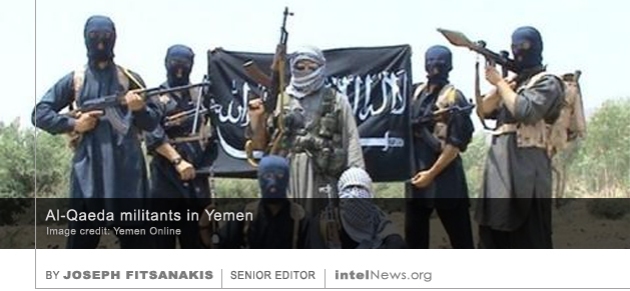 Yemeni militias backed by Saudi Arabia, the United States and the United Arab Emirates are actively paying off al-Qaeda-allied factions to abstain from the fighting, and are recruiting al-Qaeda members to fight against Shiite rebels, according to a new investigative report. Ever since 2015, when the civil war in Yemen broke out, the US, along with its Arab allies UAE and Saudi Arabia, has supported Sunni troops in their war against Shiite Houthi rebels. The latter are believed to be supported by Iran, and the US-backed coalition is engaged in an effort to curtail what it sees as Iranian expansionism in the Middle East.
But Iranian-supported fighters are just one of the many well-armed factions involved in the Yemeni Civil War, which Washington is ostensibly against. Another such faction is Al-Qaeda in the Islamic Peninsula (AQAP), believed to be the strongest surviving branch of the group that carried out the attacks of September 11, 2001. For several years now, the US-led coalition in Yemen has argued that its forces have severely limited AQAP’s strength and ability to fight, and that the group’s territorial control has been shattered. But a new investigative report published on Monday by the Associated Press argues that the reason why AQAP’s activities appear to have decreased in Yemen, is that its commanders are being bribed by US-backed Sunni militias and that its fighters are being recruited to fight against the Houthis. As strict Sunni Salafists, AQAP members view the Shiite Houthis as apostates and enemies of Islam. They are therefore “effectively on the same side as the Saudi-led coalition” in Yemen, note the editors of the Associated Press report. Citing “interviews with two dozen officials, including Yemeni security officers, militia commanders, tribal mediators and […] members of al-Qaeda”, the report’s authors say that US-backed Sunni militias “actively recruit al-Qaeda militants […] because they’re considered exceptional fighters”.
The Associated Press report also claims that the Sunni coalition has struck a series of secret agreements with AQAP, under which it paid off its fighters to abandon several Yemeni towns that were under their control. Upon leaving, these AQAP fighters were allowed to take with them tons of military equipment and valuables, including cash. In one case, AQAP was bribed to abandon the port city of Mukalla, Yemen’s fifth-largest urban center, and its fighters were allowed to keep their weapons and up to $100 million in looted cash deposits, said the Associated Press. In another case, AQAP militants were paid off to leave several towns in Yemen’s Abyan province, and 250 of them were incorporated into the so-called Security Belt, a Sunni militia backed by the government of the UAE. The AQAP fighters reportedly told their Security Belt commanders that they would “unite with the devil [himself] in the face of Houthis”.
The Associated Press notes that there is no evidence that funds supplied to Yemeni Sunni militias by the US have ended up into the hands of AQAP. Additionally, the US government has repeatedly denied accusations by Russia, Syria, and others that it supports various al-Qaeda factions. However, the Associated Press argues that the US Pentagon has been privy to the secret agreements between the Sunni militias and AQAP, which some say may end up strengthening al-Qaeda’s most formidable local branch anywhere in the world.
► Author: Joseph Fitsanakis | Date: 08 August 2018 | Research credit: M.A. | Permalink
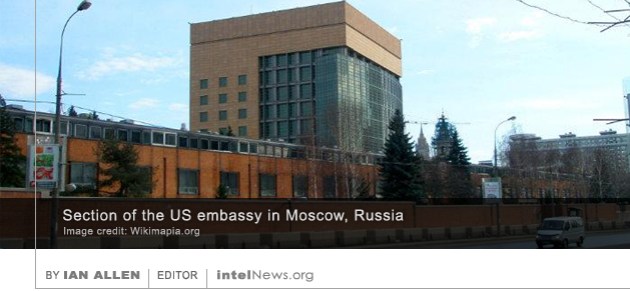 A female Russian national who worked for the United States Secret Service in Moscow was quietly dismissed in 2017, amidst concerns that she was spying for Russia. British newspaper The Guardian, which
 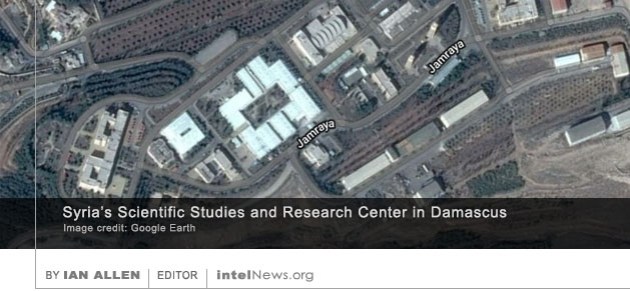 One of Syria’s leading pro-government newspapers has said that Israel was behind a bomb blast in Hama province that killed a senior scientist working for the country’s missile program. Aziz Azbar was reportedly a senior research director at the Syrian Scientific Studies and Research Center, known as CERS. The Damascus-based agency is thought to be at the center of the Syrian government’s formidable chemical weapons program. Last year, the United States Department of the Treasury imposed economic sanctions on nearly 300 CERS employees, after Washington accused them of being directly responsible for the Syrian government’s repeated use of chemical weapons against rebels and civilians. The European Union, as well as the French and British governments, also imposed sanctions on CERS and its staff.
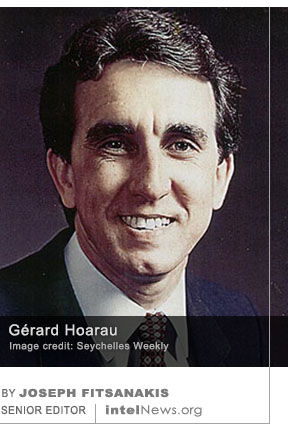 A man has been arrested by British counter-terrorism police in Northern Ireland, reportedly in connection with the assassination of a Seychelles exiled political leader in London in 1985. No-one has ever been charged with the murder of Gérard Hoarau, who was gunned down with a Sterling submachine gun in Edgware, London, on November 29, 1985. At the time of his killing, the 35-year-old Hoarau led the Mouvement Pour La Resistance (MPR), which was outlawed by the Seychelles government but was supported by Western governments and their allies in Africa. The reason was that the MPR challenged the president of the Seychelles, France-Albert René, leader of the leftwing Seychelles People’s United Party —known today as the Seychelles People’s United Party. The British-educated René assumed the presidency via a coup d’etat in 1977, which was supported by neighboring Tanzania, and remained in power in the island-country until 2004.
 Facebook has said it is involved in an “arms race” against “bad actors” as it announced on Tuesday the removal of accounts that allegedly tried to subvert the upcoming mid-term elections in the United States. The social-media giant said its security division had
  In a dramatic change to longstanding policy, senior United States diplomats have reportedly held secret meetings with Taliban leaders without the presence –and presumably knowledge– of the Afghan government. For over a decade, the Taliban have refused to negotiate with the Afghan government, which they view as a puppet regime controlled by Washington. They have instead sought to speak directly with the United States, without Kabul’s mediation. In 2015, the United States sought to initiate peace talks with the Taliban in the Qatari capital Doha, but the effort collapsed after the Afghan government denounced it and demanded a seat at the table. The negotiation process has remained dormant since then.
 The government of Qatar, which won the right to host the 2022 FIFA World Cup, hired a high-profile public relations group and a team of former officers of the United States Central Intelligence Agency (CIA) in order to undermine rival bids to host the tournament, according to a British newspaper. In December 2010, Qatar was named as the host of the lucrative tournament, which is held every four years under the auspices of the International Federation of Association Football. In winning the right to host the tournament, the Middle Eastern oil kingdom beat formidable rival bids from Japan, South Korea, Australia and the United States. FIFA’s decision to award the 2022 World Cup to Qatar has been heavily criticized –not least because it will take place in the winter, so as to avoid Qatar’s scorching summer temperatures. Many countries in Europe, Latin America and elsewhere will therefore have to resort to the highly unusual step of disrupting their domestic football seasons in order to send their national teams to compete in Qatar.
 An American cyber security firm has reported the discovery of a previously undetected, “highly active” Iranian cyber espionage group, whose extensive target list consists mainly of large organizations and companies in the Middle East. The cyber security firm Symantec, makers of Norton antivirus software, which uncovered the cyber espionage group’s existence, has dubbed it “Leafminer”. It said the group has been active since the beginning of 2017, but has “significantly ramped up its activities” in 2018 and is currently involved in dozens of ongoing attacks.
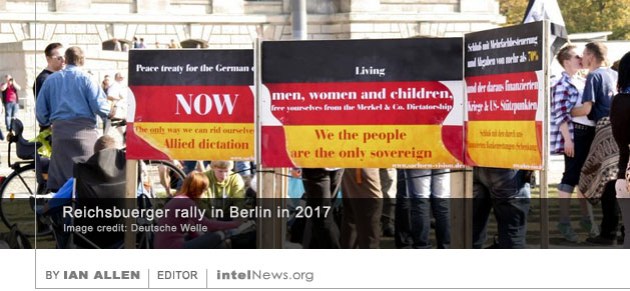 Adherents of a bizarre far-right movement in Germany, who claim to be citizens of Prussia, are arming themselves and pose a growing security threat, says a new report by the country’s domestic spy service. The members of the movement call themselves Reichsbuerger (“citizens of the Reich”) and reject the legitimacy of the Federal Republic of Germany. Instead of the modern-day German state, which emerged in 1990 from the union of East and West Germany, Reichsbuergers swear allegiance to the Deutsches Reich (German Reich), the Nazi German state that existed between 1933 and 1945. They also claim that the Deutsches Reich, which they occasionally refer to as Prussia, continues to exist in its pre-1945 state and is still governed by a provisional government in exile.
 The Prime Minister of Britain, Sir Alec Douglas-Home, was kept in the dark by his own home secretary about the discovery of a fourth member of the infamous Cambridge Spy Ring in 1964, according to newly released files. The Cambridge Spies were a group of British diplomats and intelligence officials who worked secretly for the Soviet Union from their student days in the 1930s until the 1960s. They included Guy Burgess, Donald Maclean and H.A.R. “Kim” Philby, all of whom eventually defected to the Soviet Union. In 1964, Sir Anthony Blunt, an art history professor who in 1945 became Surveyor of the King’s Pictures and was knighted in 1954, admitted under interrogation by the British Security Service (MI5) that he had operated as the fourth member of the spy ring.
 Iranian military officials have warned of extracting “revenge from foreign intelligence services”, as Reuters reported that an aggressive campaign against Tehran has been launched by Washington. On Sunday, the Reuters news agency said that senior officials in the administration of US President Donald Trump had launched a concerted offensive “meant to foment unrest” in the Islamic Republic.
  Israel helped foil an alleged Iranian-sponsored bomb attack in Paris, which involved arrests of several Iranian agents and at least one diplomat in France, Belgium and Germany, according to media reports. As intelNews
 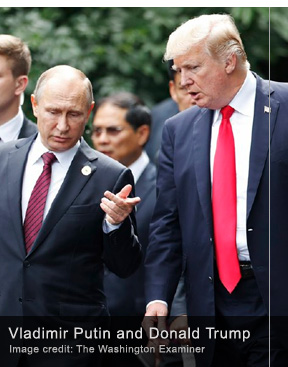 Several American former intelligence officials have called on their active colleagues to resign despite President Donald Trump’s retraction of his remarks about Russia’s alleged meddling in the 2016 presidential elections. On Tuesday, the US president issued an unusual retraction and correction of his public statement on Monday in Helsinki, Finland, in which he appeared to side with the Kremlin over his own Intelligence Community’s views. The Office of the Director of National Intelligence (ODNI), which is the coordinating body of the US Intelligence Community, has said that Russia tried to systematically interfere in the 2016 US presidential elections. According to the ODNI, the Kremlin’s goal was to augment the already heightened discord in American political life and deepen the mistrust between the electorate and state institutions, including Congress and the White House.
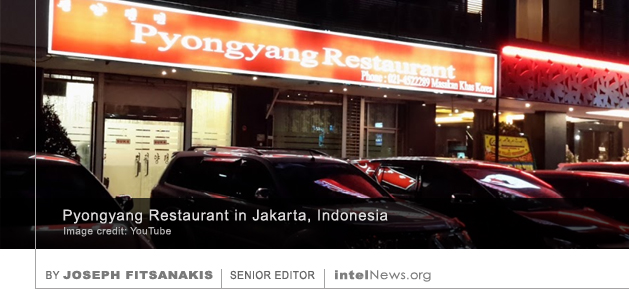 A group of 12 female North Korean restaurant workers and their male manager claim that their widely advertised defections in 2016 were fake, and that they were in fact abducted by South Korea’s spy services. The North Korean government maintains a chain of North Korea-themed restaurants throughout Asia, which operate as popular tourist attractions across Southeast Asia. The state-owned restaurants help provide the cash-strapped regime in Pyongyang with desperately needed foreign funds. The North Korean staff —almost all of them female— who work at these restaurants are carefully vetted and chosen to represent the reclusive regime abroad. Some observers








Germany arrests Jordanian intelligence operative who spied on mosque
August 9, 2018 by Ian Allen 1 Comment
According to the public statement issued by the BfV, the 33-year-old man is believed to have worked for “a Jordanian intelligence agency” —most likely the Jordanian General Intelligence Department, or GID, which is a branch of the Jordanian Armed Forces— since at least 2016. He is accused of having infiltrated a Sunni mosque in the central German city of Hildesheim, located 20 miles southeast of Hanover in Germany’s Lower Saxony region. His mission, according to the BfV, was to keep tabs on mosque goers who expressed support for the ideology of the Islamic State, and might even consider traveling to the Middle East to join the radical group. The alleged Jordanian intelligence operative was also tasked with reporting on news reaching the mosque from those of its members who had already gone to the Middle East and joined the Islamic State.
Last year, German authorities closed down the Hildesheim mosque, known in German as Deutschsprachiger Islamkreis Hildesheim e. V. (DIK), and arrested its imam, Ahmad Abdulaziz Abdullah A., known as Abu Walaa. The Iraqi-born imam was charged with supporting a foreign terrorist organization by actively recruiting young Muslims on behalf of the Islamic State. The mosque has since remained closed, because authorities believe that it had become a beehive of fundamentalist activity. Jordan is one of the Middle East’s most liberal states and has been targeted repeatedly by the Islamic State, which views its leadership as pro-Western. However, it appears that Alexander B. was spying on the Hildesheim mosque —therefore on German soil— without having informed the host country of his activities. The government of Jordan has not commented on his arrest.
► Author: Ian Allen | Date: 09 August 2018 | Permalink
Filed under Expert news and commentary on intelligence, espionage, spies and spying Tagged with Abu Walaa, espionage, Federal Office for the Protection of the Constitution, General Intelligence Department (Jordan), Germany, Hildesheim (Germany), Islamic State, Jordan, News