Emirati royal seeks asylum in rival Qatar in unprecedented move
July 16, 2018 1 Comment
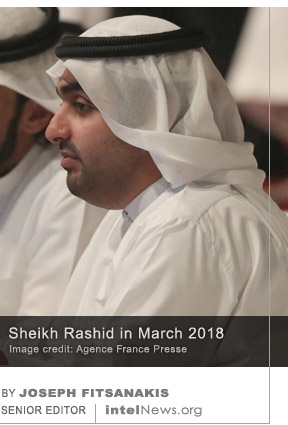 A member of one of the United Arab Emirates’ seven royal families has defected to Qatar and asked for political asylum, in what appears to be the first time that an Emirati royal has publicly turned against the oil-rich kingdom. In May of last year, the UAE joined an Arab coalition led by Saudi Arabia, which broke off all diplomatic relations with Qatar. The coalition accuses the tiny oil kingdom of clandestinely supporting Iran and funding Iranian-backed militant groups in the region. The UAE also participates in an ongoing large-scale commercial embargo against Qatar, which observers say is part of the regional cold war between Saudi Arabia and Iran.
But on the morning of May 16, 2018, security officers in the Qatari capital Doha were stunned when an Emirati royal appeared before them and asked for political asylum and protection from the UAE. The royal was Sheikh Rashid bin Hamad al-Sharqi, the second son of the emir of Fujairah, one of the seven kingdoms that form the UAE. As a son of Fujairah’s emir, Sheikh Hamad bin Mohammed al-Sharqi, Sheikh Rashid, 31, had been placed in charge of the kingdom’s state-owned media arm. But in a stunning development, which appears to be a first in the 47-year history of the UAE, the prince has now defected to the UAE’s rival Qatar, and is publicly airing criticism of the UAE’s secretive rulers. In an interview with The New York Times last weekend, the prince provided what the paper described as “a rare glimpse into tensions among the rulers of the UAE” —especially between the Emirate of Abu Dhabi, which dominates the UAE, and the other six kingdoms.
Sheikh Rashid told The Times that Emirati officials were displeased with the country’s military intervention in Yemen, where a Saudi-led coalition is battling against Iranian-backed rebels. The increasingly bloody war is now in its third year without a clear end in sight. According to the prince, the rulers of Abu Dhabi have repeatedly failed to consult the country’s six remaining kingdoms before making major decisions about the war in Yemen. The sheikh also accused the leadership of the UAE of money laundering, and claimed that it was routine for UAE royals like himself to be asked by the country’s rulers to make secret payments “to people he did not know in other countries”, in direct violation of international money-laundering laws. Prince Rashid also alleged that the UAE government had tried to blackmail him by threatening to reveal audiovisual material that would discredit his reputation.
The Times said it reached out to the government of the Emirate of Fujairah, but its messages were not returned. The paper also contacted the UAE’s embassy in Washington, DC, but officials there declined to comment. For the time being, Sheikh Rashid remains at an unspecified location in Qatar, but the Qatari government will not comment as to his whereabouts.
► Author: Joseph Fitsanakis | Date: 16 July 2018 | Permalink
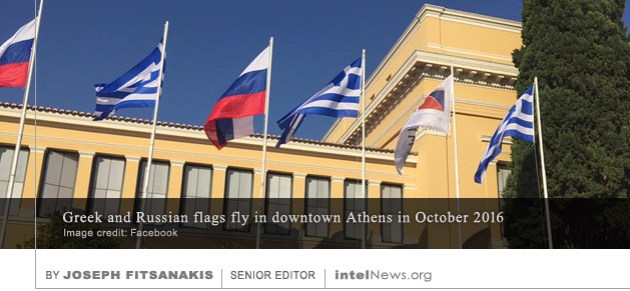 In a rare moment of downturn in relations between Athens and Moscow, Greece has expelled two Russian diplomats and refused to accredit two more, reportedly for “undermining Greek national security”. Greece was not among nearly 30 countries that expelled or refused to accredit over 150 Russian diplomats in March, in an act of solidarity with the United Kingdom. The
 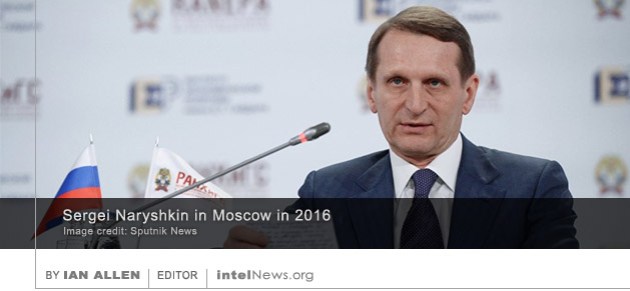 Intelligence directors from Russia, China, Iran and Pakistan met on Tuesday to discuss regional cooperation with particular reference to combating the Islamic State in Afghanistan. Information about the high-level meeting was
 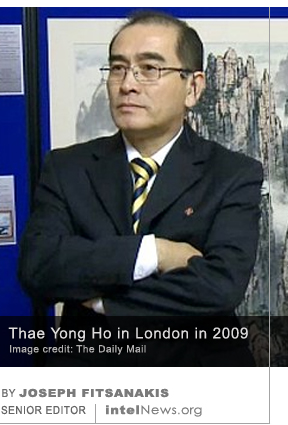 North Korea offered to stop selling missile technology to Iran and other enemies of Israel in exchange for $1 billion in cash from the Jewish state, according to former senior North Korean diplomat who has now defected. The account of the offer can be read in Password from the Third Floor, a book published earlier this year by Thae Yong Ho. Thae, a member of a prominent North Korean family, defected with his wife and children in 2016, while he was serving as a senior member of the diplomatic staff of the North Korean embassy in London.
 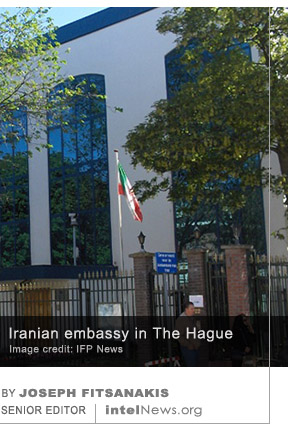 Holland has expelled two Iranian diplomats without saying why, leading to speculation that the expulsions may be related to the arrests of members of an alleged Iranian sleeper cell in Belgium, Germany and France last week. On Friday, a spokesperson from Holland’s General Intelligence and Security Service (AIVD)
  An Iranian diplomat and members of what authorities described as an “Iranian sleeper cell” were arrested this week in Belgium, Germany and France, as they were allegedly planning to a bomb a high-level meeting in Paris. The arrests came after a complex investigation by several European intelligence agencies and were announced by Belgium’s Minister of the Interior, Jan Jambon.
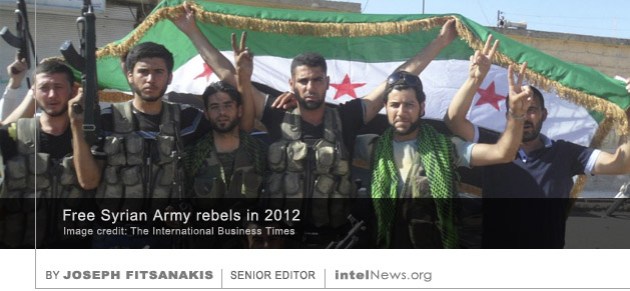 A United States federal judge ruled on Monday that a tweet by President Donald Trump did not inadvertently disclose a top-secret program by the Central Intelligence Agency to aid rebel groups in Syria. The lawsuit, brought by The New York Times, centered on news reports published in 2017 by
 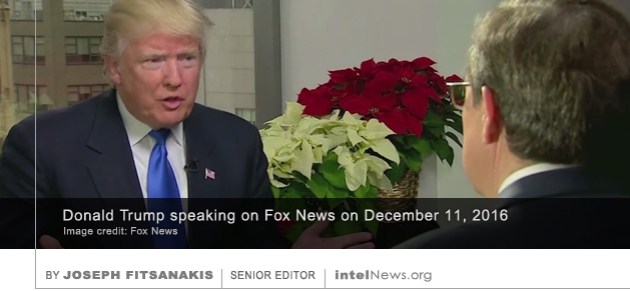 With nearly 53 million Twitter followers, United States President Donald Trump could easily be described as the most social-media-friendly American leader in our century. It is clear that Trump uses Twitter to communicate directly with his followers while circumventing mainstream media, which he views as adversarial to his policies. However, according to former Central Intelligence Agency analyst Nada Bakos, foreign intelligence agencies are among those paying close attention to the president’s tweets. Bakos spent 20 years in the CIA, notably as the Chief Targeter of the unit that tracked down Abu Musab al-Zarqawi, the founder of al-Qaeda in Iraq, which later evolved into the Islamic State of Iraq and Syria. In a June 23
 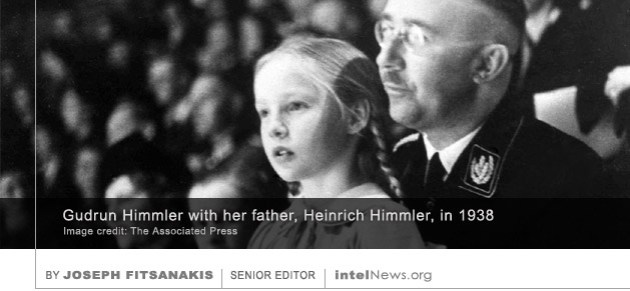 The daughter of Heinrich Himmler, who was second in command in the German Nazi Party until the end of World War II, worked for West German intelligence in the 1960s, it has been confirmed. Gudrun Burwitz was born Gudrun Himmler in 1929. During the reign of Adolf Hitler, her father, Heinrich Himmler, commanded the feared Schutzstaffel, known more commonly as the SS. Under his command, the SS played a central part in administering the Holocaust, and carried out a systematic campaign of extermination of millions of civilians in Nazi-occupied Europe. But the Nazi regime collapsed under the weight of the Allied military advance, and on May 20, 1945, Himmler was captured alive by Soviet troops. Shortly thereafter he was transferred to a British-administered prison, where, just days later, he committed suicide with a cyanide capsule that he had with him. Gudrun, who by that time was nearly 16 years old, managed to escape to Italy with her mother, where she was captured by American forces. She testified in the Nuremberg Trials and was eventually released in 1948. She settled with her mother in northern West Germany and lived away from the limelight of publicity until her death on May 24 of this year, aged 88.
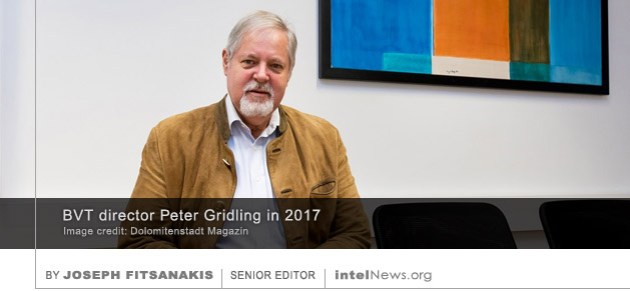 The head of Austria’s counterintelligence agency has said that Brussels has now replaced Vienna as Europe’s spy capital. For nearly a decade, this blog has published expert commentary that points to the Austrian capital being the world’s busiest spy den. In 2009, German broadsheet Die Welt
 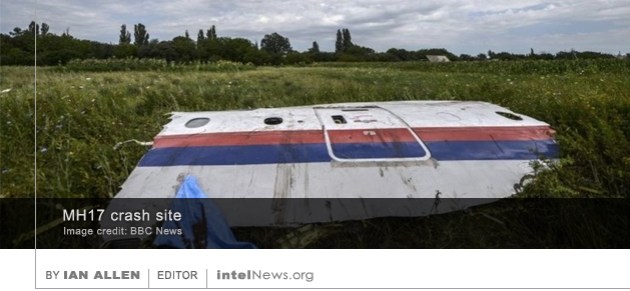 Dozens of Dutch security officers, legal experts, diplomats and other civil servants were systematically spied on by Ukrainian and Russian intelligence services while probing the aftermath of the MH17 disaster, according to a report on Dutch television. Malaysia Airlines Flight 17, a scheduled passenger flight from Amsterdam to Kuala Lumpur, was
  The Norwegian National Security Authority (NSM) has warned the country’s information technology firms to prioritize national security over cutting costs when outsourcing their operations abroad. The warning follows what has come to be known as the “Broadnet affair”, which, according to the Norwegian government, highlighted the dangers of extreme cost-cutting measures by Norway’s heavily privatized IT industry. The incident is named after Broadnet, Norway’s leading supplier of fiber-optic communications to the country’s industry and state sectors. Among Broadnet’s customers is Nødnett, an extensive digital network used by agencies and organizations that engage in rescue and emergency operations, including police and fire departments, as well as medical response agencies. Although 60% of the Nødnett network is owned by the Norwegian government, Broadnet is a member of the Nødnett consortium, and is thus supervised by Norway’s Ministry of Transport and Communications.
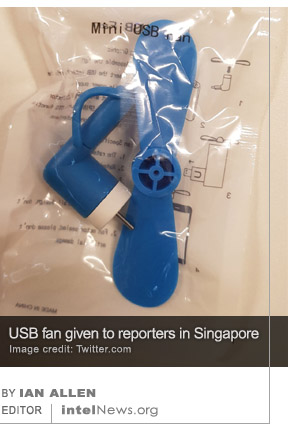 Singaporean officials have dismissed reports that a promotional item given away for free during the June 12 summit between the leaders of the United States and North Korea contained an espionage device. Over 2500 reporters from nearly every country covered the meeting between US President Donald Trump and North Korean Supreme Leader Kim Jong-un. Upon arriving in Singapore’s Sentosa Island, where the summit took place, journalists were given a free promotional packet that included novelty items such as pens, notepads, a water bottle, and a USB fan. The USB fan consisted of blades connected to a miniature electric motor, which was in turn connected to a USB cable. The cable allowed the device to be powered by a computer or other electronic device with a built-in USB port.
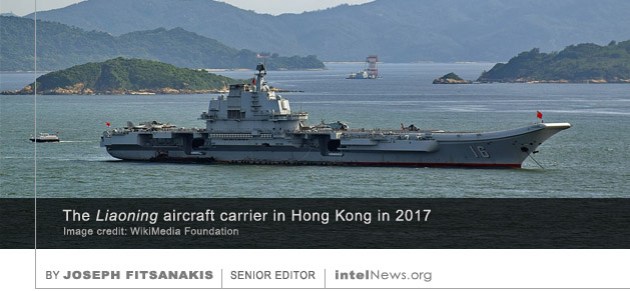 One of China’s most senior shipbuilding executives, who has not been seen in public for nearly two weeks, has been charged with giving secrets about China’s aircraft carriers to the United States. Sun Bo, 57, is general manager of the China Shipbuilding Industry Corporation (CSIC), China’s largest state-owned maritime manufacturer, which leads nearly every major shipbuilding project of the Chinese navy. Most notably, Sun headed the decade-long retrofitting of the Liaoning, a Soviet-built aircraft carrier that was commissioned to the Chinese Navy’s Surface Force after the collapse of the Soviet Union.








Indian intelligence infiltrated Islamic State in ‘unprecedented operation’
July 17, 2018 by Joseph Fitsanakis Leave a comment
The paper said that the operation lasted 18 months and involved the systematic surveillance of numerous suspects in Dubai, New Delhi and several cities in Afghanistan. It also involved substantial intelligence-sharing between Indian and American security agencies, as well as constant intelligence-gathering by as many as 80 Indian physical-surveillance experts. Intelligence gathered from physical surveillance was reportedly combined with information collected through telephone intercepts. Eventually it became clear that the Islamic State had recruited and trained 12 suicide bombers across several secret camps in Pakistan. The recruits were tasked with carrying out suicide bomb attacks throughout Pakistan, Afghanistan and India.
One such recruit, the 25-year-old “son of a wealthy [Afghan] businessman”, had been sent by the Islamic State to New Delhi to carry out his deadly mission. In order to escape the attention of the authorities, he had enrolled in a private engineering college in New Delhi. But he was arrested by Indian intelligence and quickly transported to Afghanistan, where he was interrogated by American officers. According to The Indian Express, intelligence gathered from these interrogations helped the United States-led coalition in Afghanistan achieve “a string of successes” against former Taliban forces aligned with the Islamic State. The Afghan would-be suicide bomber remains in Afghanistan under US custody, according to the paper.
► Author: Joseph Fitsanakis | Date: 17 July 2018 | Permalink
Filed under Expert news and commentary on intelligence, espionage, spies and spying Tagged with counterterrorism, India, Islamic State, New Delhi, News