Israeli armed raid in Syria reportedly led to US banning laptops on some flights
November 27, 2017 2 Comments
 A temporary ban issued by United States authorities on laptop computers onboard some commercial flights earlier this year came from a tip by Israeli intelligence, according to a new report. The report was published last week in the American magazine Vanity Fair. It claimed that Israeli commandos carried out a dangerous night-time operation deep inside Syria, in order to acquire physical proof that the Islamic State had built bombs that were not detectable by X-ray screening systems at airports. But some Israeli intelligence officials became infuriated with Donald Trump after the US President allegedly gave Russia background information about the commando operation, according to the article.
The order to temporarily ban electronic devices larger than cellphones was issued by the US government on March 20, 2017. It applied to direct flights to the US departing from a dozen international airports in the Middle East. In June, the New York Times alleged that the ban was aimed at stopping Islamic State operatives from bringing onboard airplanes bombs disguised as laptop batteries. The paper also said that the information about these bombs had been acquired by Israeli government hackers who had penetrated Islamic State computer systems. But now a new report by Vanity Fair claims that Tel Aviv tipped off the Americans following a commando raid deep inside Syrian territory, which acquired physical evidence of the bombs. The magazine alleges that the raid was carried out by the Sayeret Matkal, an elite unit of the Israel Defense Forces, under the supervision of the Mossad, Israel’s external spy agency. Its target was a highly secretive cell of explosives experts, who were led Ibrahim al-Asiri, a Saudi militant who built bombs for the Yemen-based Al-Qaeda in the Arabian Peninsula. The Mossad shared some of the intelligence from that raid with the Central Intelligence Agency, which in turn told President Trump. That led to the decision to ban laptops from selected flights, until X-ray machines at airports were modified to detect the new type of bomb.
The Vanity Fair article repeats earlier claims that President Trump shared intelligence given to him by the Israelis with Russian Foreign Minister Sergei Lavrov and Russian Ambassador to the United States Sergei Kislyak, when he met them in May of this year. According to Israeli sources, Mr. Trump did not tell the Russian officials that Israel was behind the operation. But he allegedly identified the city in Syria where the raid took place, and in doing so placed the life of an Israeli human asset at risk, according to some. The Israeli government will not comment on these allegations. Additionally, Vanity Fair said that one “former Mossad officer with knowledge of the operation and its aftermath” would not say whether the asset in question had been safely exfiltrated from Syria or even whether he or she was still alive.
► Author: Joseph Fitsanakis | Date: 27 November 2017 | Permalink
 Ukraine fired its deputy-head of foreign intelligence and expelled a Belarussian diplomat a day after the government of Belarus claimed that it busted a Ukrainian spy ring that recruited local agents. The chain of events began on October 25, when the Belarussian Committee for State Security (KGB) arrested a Ukrainian journalist. The journalist, Pavlo Sharoyko, is based in the Belarussian capital Minsk and works as the Belarus correspondent for the National Radio Company of Ukraine —the country’s public broadcaster. Even though Sharoyko was arrested in October, his imprisonment was not publicly announced by Belarus until last Saturday. On Tuesday, November 21, at a press conference held at the KGB headquarters in Minsk, KGB spokesman Dmitry Pobyarzhin
 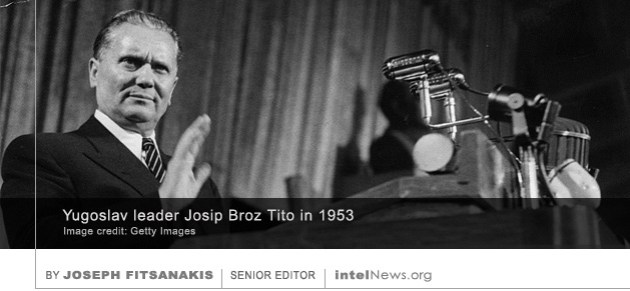 The United States Central Intelligence Agency believed that Yugoslavia was on the brink of becoming a nuclear-armed state in 1975, due partly to assistance from Washington, according to newly declassified documents. The documents, which date from 1957 to 1986, were
 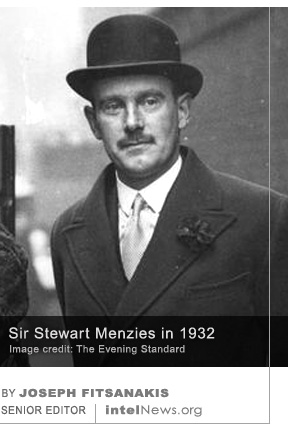 Successive directors of the Secret Intelligence Service used a secret slush fund to finance spy operations without British government oversight after World War II, according to a top-secret document unearthed in London. The document was found in a collection belonging to the personal archive of the secretary of the British cabinet, which was released by the United Kingdom’s National Archives. It was discovered earlier this year by Dr Rory Cormac, Associate Professor of International Relations in the Faculty of Social Sciences of the University of Nottingham in England. It forms the basis of an episode of BBC Radio 4’s investigative history program, Document, which
 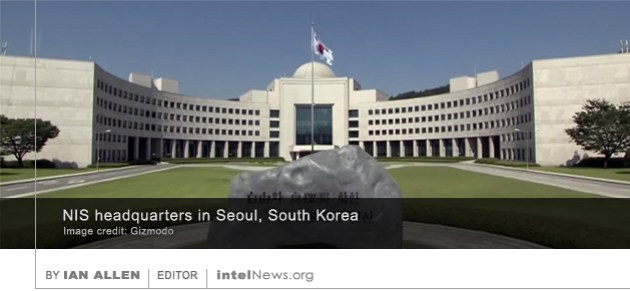 A South Korean prosecutor has charged three former directors of the country’s spy agency of secretly diverting funds from the agency’s clandestine budget to aid the country’s disgraced former President, Park Geun-hye. The three men, Nam Jae-joon, Lee Byung-kee and Lee Byung-ho, headed South Korea’s National Intelligence Service (NIS) between 2013 and 2016, when Mrs. Park was head of state. The conservative politician was impeached late last year, following accusations of corruption, bribing and extortion. In March this year, Mrs. Park’s government was brought down and she is currently in prison, awaiting trial. Her successor in the presidency, leftist politician Moon Jae-in, was elected after pledging to combat corruption in South Korea’s political inner circle.
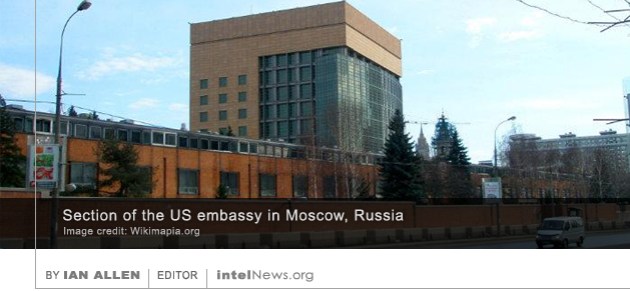 Several American diplomatic facilities in Russia, including the United States embassy in Moscow, as well as consulates in other major Russian cities, will be guarded by a firm with ties to a former senior KGB official. The New York Times
 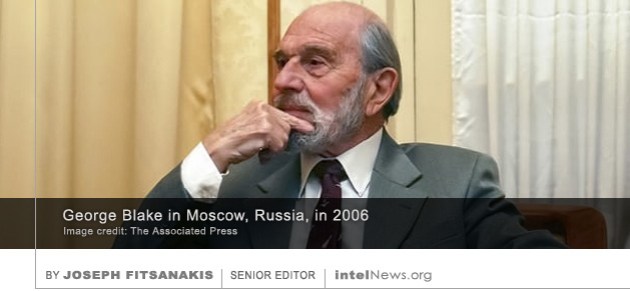 One of the Cold War’s most recognizable spy figures, George Blake, who escaped to the Soviet Union after betraying British intelligence, issued a rare statement last week, praising the successor agency to Soviet-era KGB. Blake was born George Behar in Rotterdam, Holland, to a Dutch mother and a British father. Having fought with the Dutch resistance against the Nazis, he escaped to Britain, where he joined the Secret Intelligence Service, known as MI6, in 1944. He was serving in a British diplomatic post in Korea in 1950, when he was captured by advancing North Korean troops and spent time in a prisoner of war camp. He was eventually freed, but, unbeknownst to MI6, had become a communist and come in contact with the Soviet KGB while in captivity. Blake remained in the service of the KGB as a defector-in-place until 1961, when he was arrested and tried for espionage.
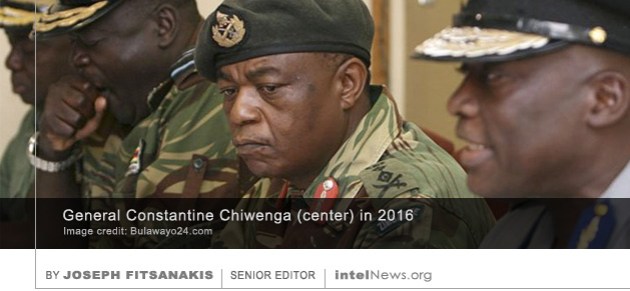 Political affairs in Zimbabwe took an unprecedented turn on Monday, as the chief of the armed forces warned the country’s President, Robert Mugabe, that the military would “not hesitate to step in” to stop infighting within the ruling party. General Constantino Chiwenga, Commander of the Zimbabwe Defence Forces, took the extremely rare step of summoning reporters for a press conference at the military’s headquarters in Harare on Monday. A direct intervention of this kind is unprecedented in the politics of Zimbabwe, a country that is tightly ruled by its authoritarian President, Robert Mugabe. Mugabe is also President and First Secretary of the Zimbabwe African National Union – Patriotic Front (ZANU-PF), the party that has dominated Zimbabwean politics since it assumed power in 1980.
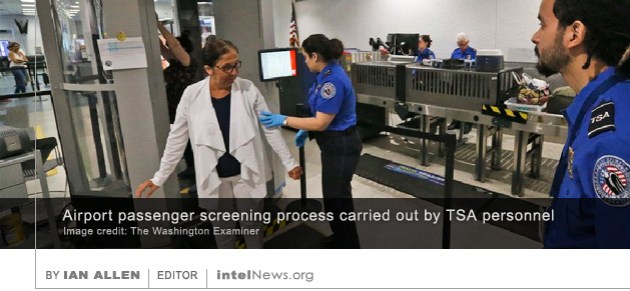 Attempts by undercover investigators to smuggle weapons, explosives and contraband aboard American passenger flights were successful between 70 and 80 percent of the time in the past year, according to reports. The results of the investigations were revealed in Congress behind closed doors on Wednesday of last week, prompting lawmakers to severely criticize the United States Transportation Security Administration (TSA). The TSA was founded in November 2001 in direct response to the tragic events of September 11 of that year. It is primarily concerned with air travel and is responsible for ensuring the safety of the traveling public across the US.
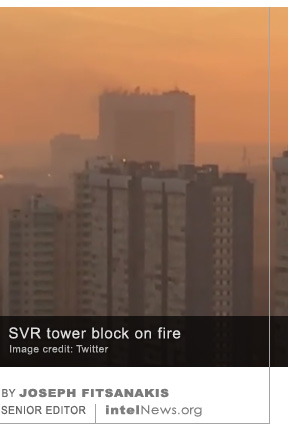 A massive fire that broke out at a top-secret spy facility in Moscow on Wednesday brought to the foreground prior reports about the unprecedented growth of the headquarters of Russia’s foreign spy service. The fire was reported at a government compound in Yasenevo, a leafy district on the southern outskirts of the Russian capital. The compound serves as the headquarters of the Russian Foreign Intelligence Service, known by its initials, SVR. The SVR is one of the successor agencies to the Soviet-era KGB. During Soviet times, the present-day SVR was known as the First Chief Directorate or First Main Directorate of the KGB. Despite its name change, however, its mission remains the same, namely to collect secrets from targets outside the Russian Federation —often through the use of espionage— and to disseminate intelligence to the president.
 Despite its ongoing territorial retreat, the Islamic State of Iraq and Syria is earning over $4 million a month from its involvement in the oil trade, according to a leading expert in the finances of the group. In the past, a sizeable portion of the Islamic State’s income came from oil revenues, as the group controlled several major oilfields in northern Iraq and eastern Syria. But the loss of its territory in the past year has delivered a sharp blow to the Islamic State’s finances. The group has lost virtually every oilfield that it used to control in northern Iraq, while two weeks ago it
 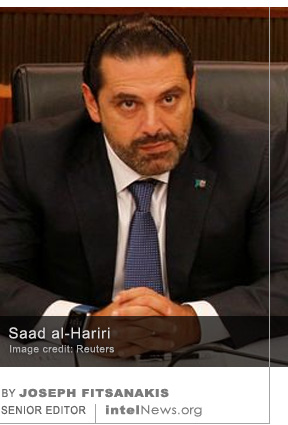 Western intelligence services warned Lebanon’s former Prime Minister Saad al-Hariri of an assassination plot against him, thus prompting him to resign on Sunday, according to Saudi news media. Hariri is a Saudi-born Lebanese politician, reputed to be one of the world’s wealthiest people. He is the second son of the late Rafiq Hariri, who ruled Lebanon for much of the 1990s but was assassinated in 2005. Saad al-Hariri spent most of his life in Saudi Arabia, the United States and France, but returned to Lebanon in 2014 to lead the Future Movement, a center-right political party supported by Sunni Muslims and some Christians. He became prime minister in 2016.
 Dozens of Saudi senior figures, some of them among the world’s wealthiest people, have been fired or arrested, as the king and his son appeared to be removing their last remaining critics from the ranks of the security services. The unprecedented arrests took place without warning less than two hours after state-run media announced the creation of a new “supreme committee to combat corruption”. A
 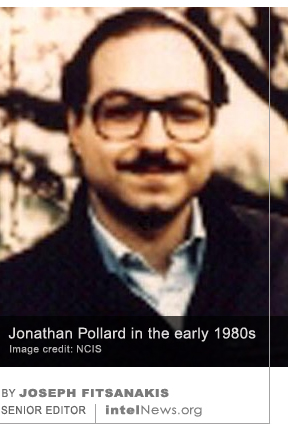 Israeli Prime Minister Benjamin Netanyahu reportedly asked the United States President Donald Trump to allow Jonathan Pollard, an American who spied on his country for Israel in the 1980s, to immigrate to Tel Aviv. Pollard, a former intelligence analyst for the US Navy, was released from an American prison in 2015, after serving 30 years for selling US government secrets to Israel. Throughout Pollard’s time in prison, the government of Israel






 intelNews.org
MI5 releases new information about Soviet ‘Portland Spy Ring’
November 28, 2017 by Joseph Fitsanakis 3 Comments
The existence of the Portland Spy Ring has been known since 1961, when British authorities arrested five people throughout England. Two of them were British citizens, Harry Houghton, a clerk at the Royal Navy’s Underwater Detection Establishment facility in Dorset, England, and his mistress, Ethel Gee. Their Soviet handler was Konon Molody, a Soviet intelligence officer who was posing as a Canadian, under the name Gordon Lonsdale. Also arrested was a married couple from New Zealand, Peter and Helen Kroger. But in reality they were Americans, whose real names were Morris and Lona Cohen, and had worked for Soviet intelligence since the late 1930s. Collectively, the five were referred in media reports as members of the Portland Spy Ring.
The newly declassified files about the spy ring were released by the Security Service, known commonly as MI5, Britain’s primary counterterrorism and counterintelligence agency. They reveal how British authorities managed to bust the Portland Spy Ring. According to the files, the initial tip-off came from the Central Intelligence Agency (CIA). The American agency had managed to recruit Michael Goleniewski, codename SNIPER, a Polish military counterintelligence officer, who led the technical office of Poland’s military intelligence. In the spring of 1960, Goleniewski told the CIA that Polish intelligence were running a British agent who was recruited while serving in the office of the naval attaché at the British embassy in Warsaw. The CIA shared the information with British intelligence, who soon identified the agent as Harry Houghton in Dorset. MI5 agents followed Houghton and his girlfriend, Ethel Gee, as they met with a successful Canadian businessman in London, Gordon Lonsdale (real name Konon Molody). Molody had grown up with a family member in California in the 1930s, and spoke fluent English. He had joined Soviet intelligence during World War II and sent to Britain posing as a Canadian. When he arrived there, in 1954, he established the KGB’s first known illegal residency in the British Isles.
In turn, Molody led MI5 to Peter and Helen Kroger from New Zealand (real names Morris and Lona Cohen), who were posing as antique book dealers. The couple acted as couriers, radio operators and technical support officers for Molody. They were born in the United States and had been recruited by Soviet intelligence in the 1930s. It is now known that they had contacts with several other Soviet illegals in America, including Rudolf Abel (real name William Fisher) who was captured by the Federal Bureau of Investigation in 1957. The couple had left the United States on orders of the KGB in 1952 and reappeared in the United Kingdom using New Zealand passports and new names.
The newly declassified documents show that MI5 decided to move against the five members of the Portland Spy Ring after Goleniewski became an open defector and was exfiltrated to the United States by officers in the CIA’s Berlin station. British authorities feared that Goleniewski’s open defection would prompt the Soviets to pull out Houghton, whose identity was known to Goleniewski. Houghton and Gee were sentenced to 15 years in prison. They were released in 1970, married the following year, and died in the 1980s. Molody was sentenced to 25 years in prison but was released in 1964 and exchanged for Greville Wynne, a British spy captured in the USSR. The Cohens received 20 year sentences, but were released in 1969 and exchanged with Gerald Brooke, a British teacher who was arrested in the USSR for smuggling anti-communist literature and trying to organize dissidents inside the country.
► Author: Joseph Fitsanakis | Date: 28 November 2017 | Permalink
Filed under Expert news and commentary on intelligence, espionage, spies and spying Tagged with CIA, Cold War, counterintelligence, declassification, Ethel Gee, Gordon Lonsdale, Harry Houghton, Helen Kroger, history, Konon Molody, Lona Cohen, MI5, Michael Goleniewski, Morris Cohen, News, Newstex, non-official-cover, Peter Kroger, UK, USSR