CIA agent was among Watergate burglars, documents reveal
August 31, 2016 20 Comments
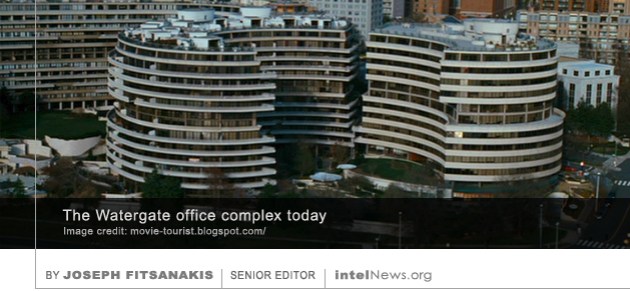 One of the men caught burglarizing the offices of the United States Democratic Party in 1972, a ploy that led to the resignation of President Richard Nixon, was an agent of the Central Intelligence Agency, according to a newly declassified document. The revelation is included in a narrative history of the Watergate scandal, produced over 40 years ago by the CIA to assess its own role in the affair. It recounts the events of the early morning hours of June 17, 1972, when a security guard saw five men dressed in black breaking into the headquarters of the Democratic National Committee at the Watergate office complex in Washington, DC. When the five men were arrested by police, it was discovered that one of them was connected with the Committee for the Re-Election of the President, a fundraising organization set up by US President Richard Nixon. The remaining four burglars had CIA contacts. They included E. Howard Hunt, a retired CIA operations officer who in 1961 had played a leading role in the failed Bay of Pigs invasion. It was eventually discovered that the burglary had been authorized by President Nixon himself, as part of a broader program to sabotage his political opponents.
Soon after the Watergate scandal erupted, the CIA produced an internal report entitled “CIA Watergate History – Working Draft”. Much of the 150-page document was authored by CIA officer John C. Richards, who had firsthand knowledge of the Watergate scandal. When Richards died unexpectedly in 1974, the report was completed by a team of officers based on his files. A few years ago, a Freedom of Information Act request was filed by Judicial Watch, a conservative legal watchdog, which petitioned to have the document released. The release was approved by a judge in early 2016 and was completed in July.
Despite numerous reductions throughout, the document gives the fullest public account of the CIA’s role in the Watergate scandal. Its pages contain the revelation that one of the men arrested in the early hours of June 17, 1972, was an active CIA agent. The man, Eugenio R. Martinez, has been previously identified as an “informant” of the CIA —a term referring to an occasional source. But the newly released document refers to Martinez as an agent —an individual who is actively recruited and trained by a CIA officer acting as a handler. It also states that Martinez was on the payroll of the agency at the time of his arrest, making approximately $600 per month in today’s dollars working for the CIA. Additionally, Martinez, a Cuban who had participated in the Bay of Pigs invasion, retained his contacts with the CIA and kept the agency updated about the burglary, his arrest and the ensuing criminal investigation.
Interestingly, the internal document reveals that the CIA was contacted about Martinez by the Watergate Special Prosecution Force, which was set up by the Department of Justice to investigate the scandal. But the CIA’s General Counsel, John S. Warner, told the prosecutors that it was against the CIA’s code of practice to turn over an agent, and that “under no circumstances” would the CIA agree to do so. Senior CIA officials, including its then Director, Richard Helms, continued to refuse to cooperate with investigators, including agents of the Federal Bureau of Investigation, even after President Nixon’s resignation.
Martinez, who is reportedly in his mid-90s and lives in Miami, Florida, has never spoken publicly about this role in the Watergate scandal or his alleged contacts with the CIA.
► Author: Joseph Fitsanakis | Date: 31 August 2016 | Permalink
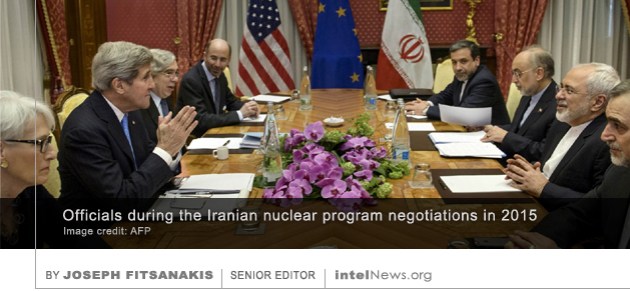 Iranian officials have confirmed reports from earlier this month that a member of the country’s team of nuclear negotiators has been arrested for engaging in espionage for a foreign country. But there are conflicting details about the case in Iranian media reports. Rumors about the identity of the individual began to circulate on August 16, after the office of the Iranian prosecutor announced that a dual national with Iranian citizenship had been arrested for spying on Tehran for a foreign intelligence service. The individual was not named, but some reports connected him with Britain’s Secret Intelligence Service, known as MI6.
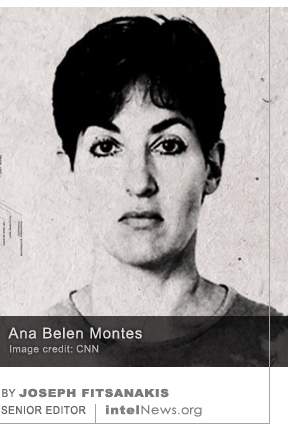 The White House has no plans to release an American former military analyst who spied for the government of Cuba, according to an official letter sent to a member of the United States Congress. The denial came weeks after some media reports in Miami and Cuba suggested that Washington was examining a request by Havana to release
 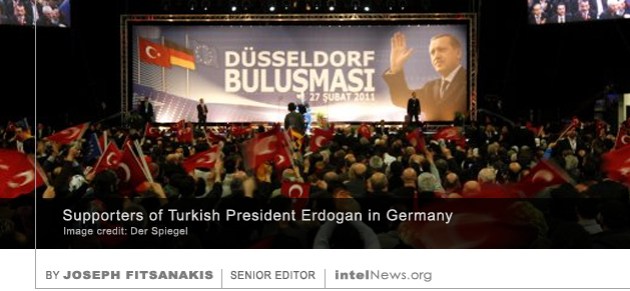 The Turkish intelligence service currently employs more operatives in Germany than the East German spy agency did at the height of the Cold War, according to a German expert on espionage. The comment was made following the disclosure that Turkey maintains close to 6,000 informants and other intelligence operatives in Germany. An unnamed German security official told German newspaper Die Welt on Monday that the informants are operational throughout Germany and are handled by Turkey’s National Intelligence Organization, known as MİT.
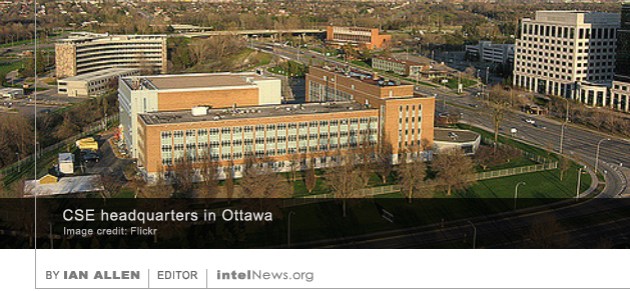 The volume of domestic communications that were intercepted by Canada’s spy agency increased 26 times between 2014 and 2015, according to a recently released report by a government watchdog. The same report states that intercepted information about Canadian citizens, which is given to Canada’s spy agency by the intelligence organizations of other Western countries, has increased so much that it now requires an elaborate mechanism to analyze it. When asked to explain the reasons for these increases, Canadian government officials said they could not do so without divulging secrets of national importance.
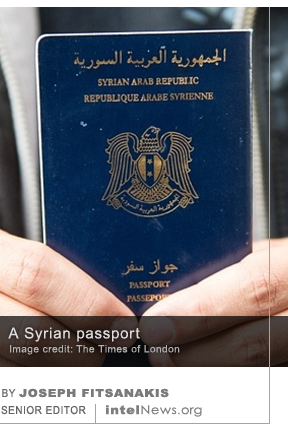 Fake Syrian passports designed for use by members of the Islamic State trying to enter Europe have been found in refugee camps in Greece during an investigation by the law enforcement agency of the European Union (EU). Officials from Europol, the EU agency that coordinates intelligence operations against organized crime across EU-member-states, said that the fake travel documents were found during a fact-finding mission in Greek refugee camps. The mission was part of a larger investigation into the production and use of forged passports by the Islamic State, the Sunni militant group that is also known as the Islamic State of Iraq and Syria (ISIS).
 Saturday’s suicide bombing, which killed over 50 and injured dozens at a wedding in Gaziantep, Turkey, was without doubt the work of the Islamic State. It was yet another attempt by the militant Sunni group to discourage the Kurds from confronting it in battle, by pointing to the deadly consequences. It was also fueled by the desire for vengeance against a population that has consistently resisted the Islamic State’s ideology. Additionally, if confirmed, the use of a child as a suicide bomber by the Islamic State may form a pattern of operational activity that can lead to broader conclusions about the current state of the organization.
 The Turkish government has sent an official request to German intelligence for assistance in cracking down on the members of the so-called Gülen movement, which Ankara claims is behind July’s failed coup plot. The movement consists of supporters of Muslim cleric Fethullah Gülen, who runs a global network of schools, charities and businesses from his home in the United States. The government of Turkey has designated Gülen’s group a terrorist organization and claims it has stealthily infiltrated state institutions since the 1980s. The administration of Turkish President Recep Tayyip Erdoğan accuses Gülen’s supporters of orchestrating the July 15 coup that included an armed attack on the country’s parliament and the murder of over 200 people across Turkey.
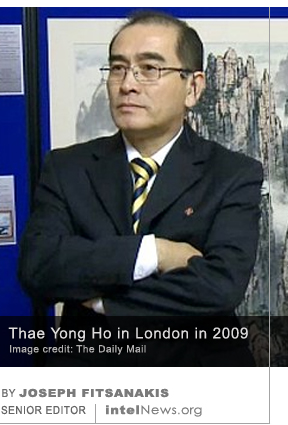 A high-ranking North Korean diplomat, who defected with his wife and children in London, and is now in South Korea, is from a privileged family with a long revolutionary pedigree in North Korean politics. South Korea’s Ministry of Unification confirmed on Wednesday that Thae Yong-Ho, the second-in-command at the North Korean embassy in the United Kingdom, had defected with his wife and children and had been given political asylum in South Korea. As intelNews
 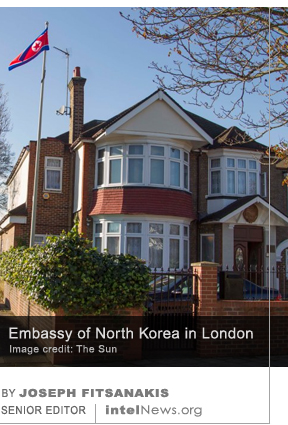 A senior member of North Korea’s diplomatic representation in the United Kingdom, who is considered one of his country’s leading specialists in Western European affairs, has reportedly defected “to a third country” with his family. The alleged defection was first
 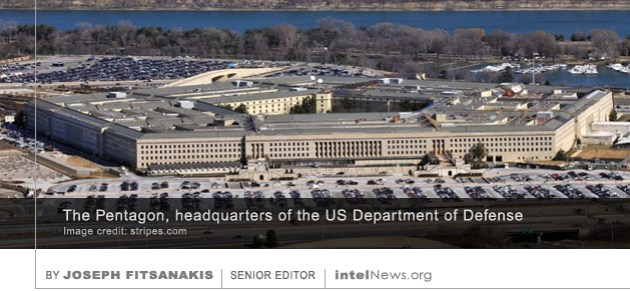 The United States Department of Defense has released details of an agreement with a private intelligence contractor, which experts believe involves the provision of services to American Special Forces working clandestinely inside Syria. The
 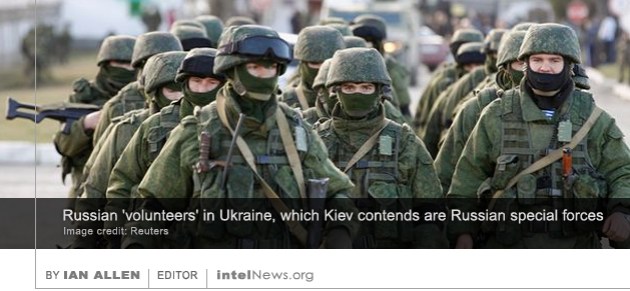 Ukrainian intelligence and defense officials are sharing intelligence with Britain about cutting-edge Russian military tactics in the Crimea and parts of eastern Ukraine. Since the 2014 Russian military intervention in Ukraine, observers have noted the sophisticated tactics used by Moscow. The Russian forces seem to be combining their advanced conventional arsenal with electronic warfare and information operations. The latter include the use of deception, spreading propaganda through social media, and computer hacking. Some experts have described Russia’s tactics in the Crimean Peninsula and the Donbass region of Ukraine as a form of “
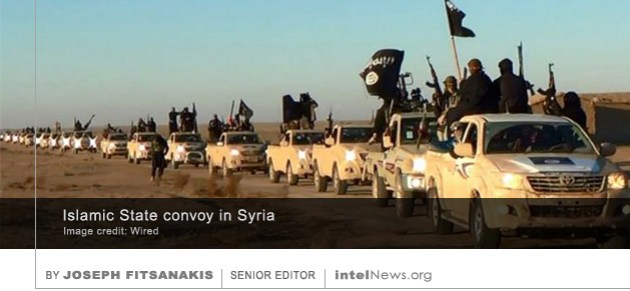 An investigation by Republican lawmakers in the United States House of Representatives has reportedly found that military intelligence analysts were pressured into changing reports on the Islamic State by their superiors. The investigation follows
 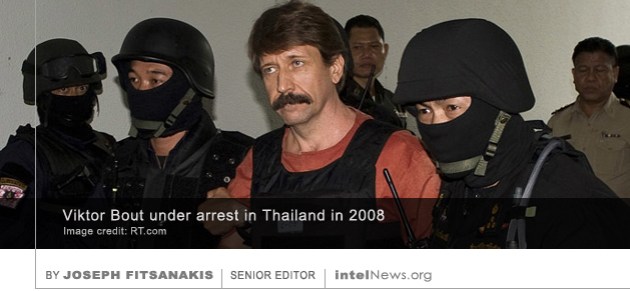 The wife of Viktor Bout, the imprisoned Russian arms dealer dubbed ‘the merchant of death’, said he rejected an offer by his American captors who asked him to testify against a senior Russian government official. Born in Soviet Tajikistan, Bout was a former translator for the Soviet military. After the end of the Cold War, he set up several low-profile international air transport companies and used them to transfer large shipments of weapons that fueled wars in Africa, Asia, Latin America and Europe. He made millions in the process and acquired international notoriety, which inspired the Hollywood blockbuster Lord of War. But his business ventures ceased in 2008, when he was






 intelNews.org
Monitoring continues as Libya’s chemical weapons are shipped to Germany
September 1, 2016 by intelNews Leave a comment
Islamic State forces acquiring CBRN from Africa or producing it while in the region has been a continuous concern. Islamic State and other militant organizations are expanding throughout Africa’s 11.67 million mi². These groups can be very innovative and resourceful. As the Egyptian delegation highlighted in a UN Security Council debate on the proliferation of weapons of mass destruction last week, the Islamic State and other groups have already caused destruction in Iraq, and possibly also in Syria by using chemical weapons. The Egyptians and other African countries see a real possibility of these weapons spreading further in Libya and from there to the Horn of Africa or elsewhere on the continent. The final departure of Gaddafi’s stockpile is welcome news, but Islamist militants know how to acquire such weapons, are trying to produce them and know how to cross borders.
African intelligence and law enforcement agencies are alert to these and other new threats. Intelligence reports have indicated groups such as al-Qaeda in the Maghreb (AQIM) have made multiple attempts to manufacture poison, gas, biological and radioactive agents. Training camps, particularly in the Sahel area, specialized in biological and chemical weapons are known to exist. Many African nations have put their national interests aside to counter cross border Islamist or criminal threats. In late September 2010, Algeria set up a regional intelligence center in Algiers, bringing together the countries of the region to fight against militant groups, including CBRN trafficking. Similar centers around the continent exist like Kenya’s common intelligence centre in Nairobi used for joint training on investigation skills and on ways to protect borders. The center also is used to monitor and address threats posed by militant groups in Kenya, Uganda, Rwanda and South Sudan. A more recent regional intelligence center, similar to Kenya’s, was established in Kampla, Uganda, which is supported by the African Union and seeks to prevent possible attacks by militant groups.
Another concern the Centers and domestic African intelligence agencies are investigating is the recruitment of African youth by Islamist groups. “[The Islamic State] has attracted about 5,000 Africans to join them in Iraq and Syria. Some of them are from the East Africa Community and IGAD regions”, proclaimed the African Union Commissioner for Peace Security Smail Chergui in July 2015.
► Author: Scott Firsing is an adjunct professor at the University of North Carolina Wilmington
Filed under Expert news and commentary on intelligence, espionage, spies and spying Tagged with Africa, chemical weapons, Islamic State, Libya, Scott Firsing