Analysis: The West should not trust Ukrainian spy agencies. Neither should Ukrainians
July 28, 2022 2 Comments
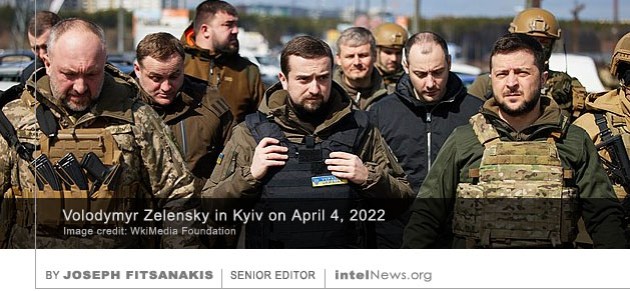 ON SUNDAY, JULY 17, the Ukrainian administration of President Volodymyr Zelenskiy announced the most extensive shake-up of the nation’s security leadership since the Russian military invasion. Two key members of Zelenskiy’s inner circle, Ukraine’s Prosecutor General Iryna Venediktova and domestic security chief Ivan Bakanov, were summarily fired. Venediktova was the public face of Kyiv’s war crimes campaign, which was launched in March in response to the Russian invasion. Bakanov, a childhood friend of Zelenskiy, had headed the Ukrainian Security Service (SBU) since 2019.
In a subsequent video statement, Zelenskiy said he fired the two officials after he was informed that at least 60 employees of the SBU and the Prosecutor General’s office had defected to the Russians in eastern Ukraine. Last week, in an article for SpyTalk, Kremlin watcher Olga Lautman said Bakanov’s dismissal had been expected for a few days. Regardless, the move has shaken Western observers, and has given rise to legitimate questions about the susceptibility of Ukraine’s security and intelligence services to Russian meddling. Should the Western alliance, and Western intelligence agencies in particular, trust their Ukrainian counterparts? The answer is,  invariably, no. In fact, even the Ukrainians themselves are not in a position to trust their own intelligence services.
From the KGB to the SBU
On September 20, 1991, just one week after Ukraine secured its independence from the Soviet Union, the SBU was founded in place of the Soviet KGB. Initially, the new agency handled both internal security and external intelligence functions. But in 2005, the SBU’s Department of Intelligence became a stand-alone agency under the title Foreign Intelligence Service (SZR). Since then, the SZR has functioned as the institutional equivalent of the United States’ Central Intelligence Agency (CIA), while the SBU has performed domestic security functions that resemble those of the Federal Bureau of Investigation (FBI).
As is the case with the entirety of Ukraine’s state sector, the two agencies are endemically bloated. Intelligence observers report that the SBU’s 30,000 employees make it far larger in size than its British counterpart, the Security Service (MI5). Meanwhile, according to the latest information, the SZR has “double the number of personnel than the Canadian Security Intelligence Service (CSIS) and is larger than Britain’s [Secret Intelligence Service, or] MI6”. By all accounts, even today, more than 30 years after the dissolution of the USSR, the two agencies continue to resemble Soviet-style bureaucracies in terms of size, sluggishness, and corruption. Read more of this post
 IN THE OPENING STAGES of the Russian invasion of Ukraine, there was a widespread
  related legislation” with Western standards, as well as aligning them with NATO standards, so that Ukrainian cyber-warfare units can make use of advanced technologies and systems. Could it be, therefore, that Ukraine has improved its cyber-security posture enough to be able to defend itself against relentless Russian cyber-attacks?
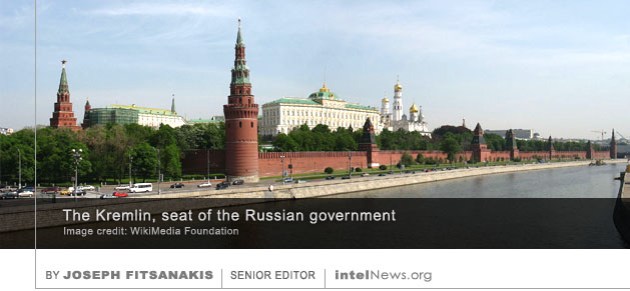 A SERIES OF LARGE-scale incidents of destruction, which have been occurring across Russia in recent days, are prompting speculation that the county may be experiencing a wave of attacks against its strategic infrastructure. The incidents include enormous fires at power plants, munition depots and state-owned storage facilities. The collapse of at least one railway bridge has also been reported. There are additional reports of massive wildfires raging across Siberia, which are imposing heavy demands on Russia’s emergency response infrastructure.
 RUSSIAN STATE COMPANIES, BUSINESSES and individuals are being targeted in an unprecedented wave of attacks by digital assailants, according to observers, who say they are surprised by its ferocity. Since February of this year, hackers have accessed the personal financial data of pro-Kremlin oligarchs, stolen millions of internal emails stored on Russian government severs, and defaced high-profile websites across the nation. The Washington Post, which
 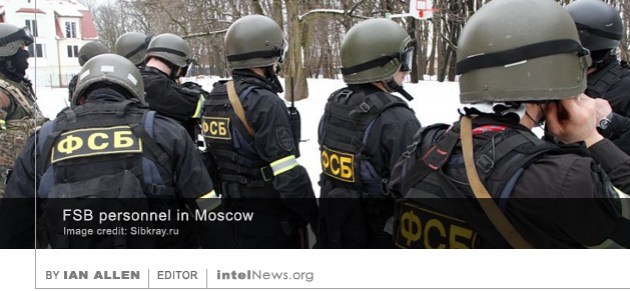 More than 150 officers have been purged form the ranks of Russia’s Federal Security Service (FSB), as President Vladimir Putin is placing blame on his intelligence agencies for the setbacks experienced during the invasion of Ukraine. This assessment was communicated to the London-based Times newspaper by British intelligence sources, who added that many of those purged have been dismissed from the service, while others remain under house arrest. A few —among them senior FSB officials— are in prison. The FSB is tasked with domestic security and counterintelligence operations, which were carried out by the KGB during the Cold War.
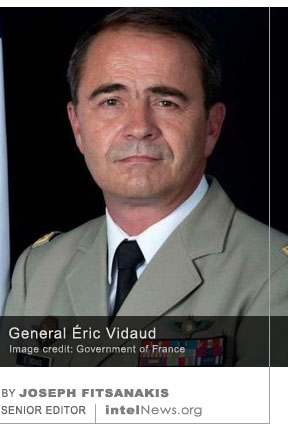 THE DIRECTOR OF FRANCE’S military intelligence agency has been asked to resign, allegedly because of his agency’s failure to anticipate the Russian invasion of Ukraine. General Éric Vidaud is a career military officer, who rose through the ranks to command the 1st Marine Infantry Parachute Regiment, one of the three units in the French Army Special Forces Command. In 2018, he was placed at the helm of the Special Operations Command, which oversees the joint activities of special forces units from all of France’s military branches. In August of last year, Vidaud assumed command of the Directorate of Military Intelligence (DRM), which operates under France’s Armed Forces Ministry.
 AMERICAN INTELLIGENCE AGENCIES ASSESSED Russia’s intentions in Ukraine with remarkable precision. Moreover, Washington’s picture of the Russian military’s material power has proven highly accurate. On the other hand, American intelligence agencies appear to have over-estimated Russia’s conceptual military power —that is, Moscow’s ability to utilize its material military strength efficiently. This, combined with a tendency to underrate the willingness of the Ukrainian population to resist the Russian invasion, appears to have led Washington to over-estimate Russia’s chances of a swift military victory in Ukraine.
 intelligence interpreted Russian intentions on Ukraine with remarkable accuracy. It should be noted that, with the help of its intelligence advisors, the White House was able to
 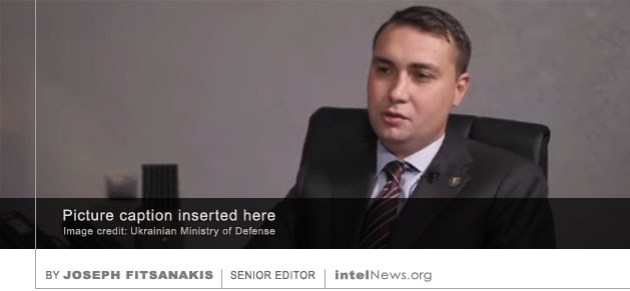 UKRAINE’S MILITARY INTELLIGENCE AGENCY has published a list that contains the names, addresses and passport numbers of 600 Russians, who it alleges are employees of the Russian Federal Security Service (FSB). The FSB is Russia’s domestic security and counterintelligence agency, but its personnel also operate in former Soviet republics, including Ukraine. It has been
 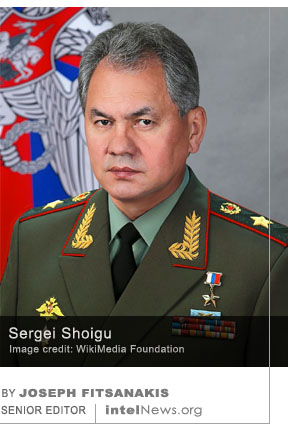 RUSSIA’S MINISTER OF DEFENSE, Sergei Shoigu, who has been one of President Vladimir Putin’s closest confidantes for nearly two decades, has not been seen in public for nearly two weeks, prompting speculation that he may be under arrest. Shoigu, 66, was appointed Minister of Defense in 2012. Since then, he has been arguably the most media-friendly member of the Putin administration, and has formed a close alliance between the Russian military and pro-government media outlets.
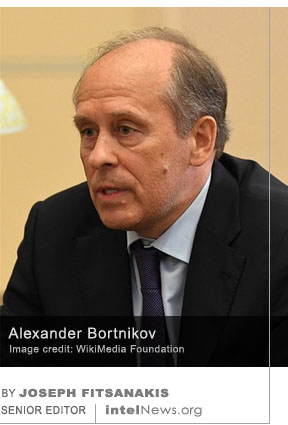 UKRAINE’S MILITARY INTELLIGENCE AGENCY said on Sunday that a plot was underway by senior Russian government officials, with the goal of ousting President Vladimir Putin and entering into a negotiated settlement with the West. However, Western intelligence sources
  “THERE ARE DECADES WHERE nothing happens; and there are weeks where decades happen”. These words by the Russian revolutionary Vladimir Lenin offer a fitting description of the cataclysmic events witnessed since February 24. In the early hours of that day, the largest country in the world launched a strategic ground offensive against the largest country in Europe. What began as a “special military operation” has now escalated into the most extensive military conflict in Europe since World War II. It is clear that Russia’s original plan for this war collapsed within hours of the initial attack. But the correlation of forces continues to overwhelmingly favor the Russian side. Moreover, the bulk of the Russian forces are heading for Kyiv. This could result in the largest and most deadly urban battle since World War II.
 flee to Lviv. At the same time, elite formations from the Main Directorate of the Armed Forces’ General Staff (GRU) and Spetsnaz (special operations forces) were sent to the Ukrainian capital to assassinate leading government figures.
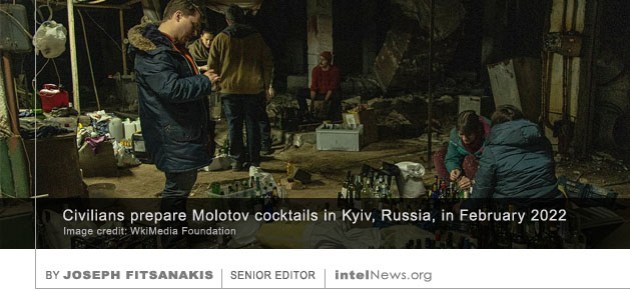 A SECRET TRAINING PROGRAM run by the United States Central Intelligence Agency (CIA), which began shortly after Russia invaded eastern Ukraine in 2014, is now helping the Ukrainians beat back Russian military advances. According to Yahoo News, which
 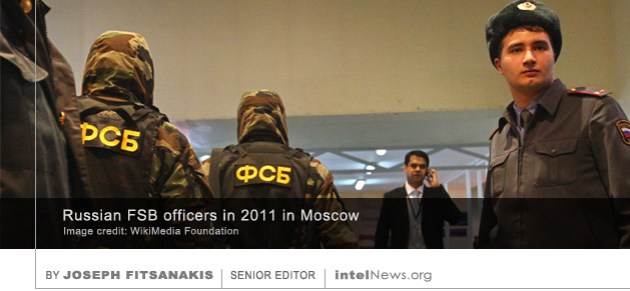 THERE ARE GROWING INDICATIONS that a number of senior Russian intelligence officials have been placed under arrest, reportedly because the Kremlin is blaming them for its stalled military campaign in Ukraine. Some intelligence officials are believed to have been detained and interrogated, while others are said to have been placed under house arrest in Moscow and St. Petersburg.
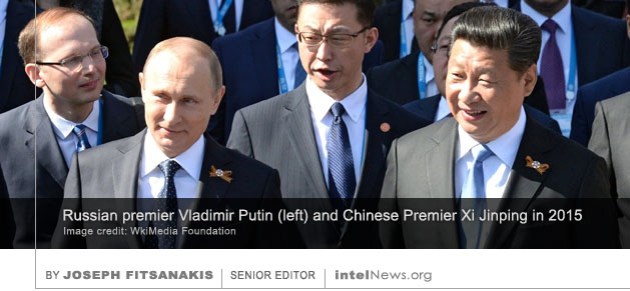 THE RUSSIAN GOVERNMENT HAS asked China to supply it with military hardware, as well as diplomatic and financial support, which would allow it to weather Western-imposed sanctions against it, according to Western officials. In what bears the marks of a controlled leak by the White House, several American and British news outlets reported late last night that Moscow had approached Beijing with a request for support across many levels, as the war in Ukraine continues to escalate.








Israel beefs up protection of its senior spies, as proxy war with Iran intensifies
November 28, 2022 by Joseph Fitsanakis 2 Comments
On Thursday, Israel’s state-owned broadcaster and news agency, Kan, reported that the government of Israel had implemented additional security measures to protect current and former members of its security and intelligence agencies. The report added that the measures are focused largely on current and former members of Israel’s foreign intelligence agency, the Mossad, as well as those associated with Israel’s intelligence and security apparatus that are living abroad.
The report comes amidst concerns among security observers that a clandestine war between Israel and Iran is growing in intensity. To a notable extent, this growth is being fueled by the ongoing Russo-Ukrainian conflict. Iran’s supply of cheap and reliable attack drones appears to be enabling Moscow to subvert and outright destroy Ukraine’s national infrastructure. In what seems like a direct response to Iran’s actions, Israel war materiel is now flowing into Ukraine, reportedly through a NATO country.
There are indications that this proxy conflict between Israel and Iran is spreading in Europe and the Middle East. Seeing the success of the use of Iranian drones, some European countries with limited airstrike capabilities, like Serbia and Armenia, are reportedly considering purchasing drone attack systems from Tehran. Meanwhile, Israeli weapons exports to Arab states have skyrocketed since the normalization of Israel’s relations with a number Arab countries in recent years. According to a recent report, last year marked a historic record for the volume of Israeli military and security exports, which increased by 30 percent from 2020. Much of that increase is due to Israeli weapons exports to Arab states, such as Morocco, Bahrain and the United Arab Emirates.
► Author: Joseph Fitsanakis | Date: 28 November 2022 | Permalink
Filed under Expert news and commentary on intelligence, espionage, spies and spying Tagged with 2022 Russian invasion of Ukraine, attack drones, Iran, Israel, News