Iran secretly sold ‘untold quantities’ of ammo to African warring groups

Two of the 'mystery cartridges'By JOSEPH FITSANAKIS | intelNews.org |
An independent report has concluded that some of Africa’s most brutal conflicts are currently being fuelled by “untold quantities” of Iranian-manufactured small-arms ammunition. The ire of weapons-trafficking researchers is usually directed at the ‘heavyweights’ of the global arms-trade, including Russia, China, the United States, and France, among other countries. It appears, however, that Iran’s state-owned weapons manufacturer has been selling ammunition throughout Africa since at least 2006 via a secret network of distributors. According to The New York Times, a group of arms-trafficking experts from the United Nations, Amnesty International, the Federation of American Scientists, and other bodies, has found that Iran began selling ammunition to African clients in 2006 or earlier. On that year, a new brand of ammunition rounds for Kalashnikov assault rifles started appearing in armed clashes in Kenya, Uganda, and Darfur (now South Sudan). By 2010, the same type of cartridges had been found in Guinea, Ivory Coast and the Democratic Republic of Congo. More recently, says The Times, similar cartridges were discovered in the hands of groups in Niger connected with Al-Qaeda in the Islamic Maghreb. Suspiciously, the cartridges bore no factory code and their packaging had been deliberately constructed to obscure the identity of the manufacturer. However, according to the expert study, it is now considered “beyond dispute” that the Ammunition and Metallurgy Industries Group, a subsidiary of Iran’s state-owned and operated Defense Industries Organization, is the source of the mysterious cartridges. It is worth pointing out that many of the governments or militias that have been found to use Iranian ammunition are officially subject to UN resolutions that bar arms transfers to the countries or territories in which they operate. Read more of this post

Sudan arrests senior intelligence officials linked to foiled coup plot

Salah GoshBy JOSEPH FITSANAKIS | intelNews.org |
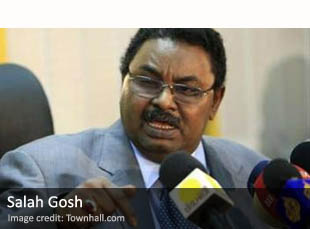
Authorities in Sudan have announced the arrest of senior current and former intelligence officials over an alleged coup plot, which has reportedly been foiled. Spokesmen for the government of longtime Sudanese President Omar Hassan al-Bashir said on Thursday that thirteen senior “military and civilian figures” had been arrested for “inciting chaos […], targeting leaders [and] spreading [false] rumors” about the President’s health. Among them is Lieutenant General Salah Gosh, who directed Sudan’s National Security and Intelligence Services for a decade before stepping down in 2009 to become President al-Bashir’s Senior Security Adviser. Gosh was widely considered a key member of al-Bashir’s inner circle in Khartoum until April of 2011, when he was unexpectedly fired, allegedly for having raised criticisms of the President’s policies. Those arrested in the early hours of Thursday reportedly include Brigadier General Mohammed Ibrahim, a Field Commander in the Sudanese Army, and Major General Adil al-Tayeb, a senior military intelligence official. Reuters reports that witnesses in Khartoum saw several army tanks and dozens of armored vehicles speeding down a central street that links the capital with the Khartoum International Airport, shortly before midnight on Wednesday. However, reports from Khartoum this morning suggest that the city appears calm and traffic patterns are normal. The country’s Minster of Information, Ahmed Belal Osman, told local media that “the situation is now totally stable”. Read more of this post
News you may have missed #807

Noor Inayat KhanBy IAN ALLEN | intelNews.org |
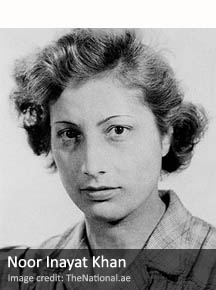
►►Britain to unveil statue of female SOE spy of Indian origin. Born in Moscow to an Indian father and an American mother, Noor Inayat Khan was in Paris when it fell to Nazi occupation. She immediately returned to London to volunteer for the war effort, joined the Women’s Auxiliary Air Force and was recruited by the Special Operations Executive (SOE). She was sent into France on a secret mission in June 1943, but was betrayed and captured a few months later. She was shot by the Nazis in Dachau in September 1944, aged 30, and was posthumously awarded the George Cross as well as the Croix de Guerre by France. She was one of only three women in the SOE to be awarded the George Cross.
►►US intelligence spending falls or second year in a row. The US government’s total spending on intelligence activities fell in 2012, the second year in a row of declining numbers after years of soaring security spending since the September 11 attacks in 2001. The Office of Director of National Intelligence, the top US intelligence authority, announced on Tuesday that total funding appropriated for the National Intelligence Program, covering activities of the CIA and high-tech spy agencies such as the National Reconnaissance Office, was $53.9 billion in Fiscal Year 2012, which ended on September 30. That was down from the $54.6 billion appropriated during Fiscal Year 2011, according to government officials and figures published by the private Federation of American Scientists.
►►Russia wants to park spy planes on French base. France has been asked by Moscow to allow two Russian spy planes to be deployed at a French base in Djibouti to help track down pirates. Russian Defense Minister Anatoly Serdyukov said last week that the Ilyushin Il-38 naval reconnaissance planes would improve Russia’s ability to spot pirates plaguing waters off the coast of Somalia. Djibouti is at the juncture of the Red Sea and the Gulf of Aden. The French base is home to several thousand French service members and a number of military aircraft.

Analysis: Iranian-Israeli proxy war flares up in Sudan

Sudan and South SudanBy JOSEPH FITSANAKIS | intelNews.org |
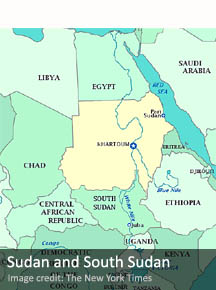
While much of the world focuses on the effects of hurricane Sandy in the eastern United States, the proxy war between Israel and Iran continues to flare up, this time in Africa. Last week, the government of Sudan accused Israeli of being behind a surprise bombing of a weapons factory in the Sudanese capital Khartoum. According to Sudan’s Minister of Information, Ahmed Belal Osman, four Israeli Air Force jets invaded Sudanese airspace and struck the Yarmouk military complex in Khartoum, inflicting heavy damages. There are unconfirmed claims that the factory was operated by the Iranian government and produced weapons that were smuggled through the Sinai Peninsula into the Gaza Strip, which is controlled by Palestinian group Hamas. On Tuesday, almost exactly a week after the alleged Israeli bombing took place, two Iranian warships arrived in Port Sudan, the country’s most important harbor, located on the Red Sea. The arrival of the vessels was confirmed by Iranian news agency IRNA, which said a helicopter carrier and a destroyer had docked at Port Sudan. The news agency, which is owned by the Iranian government, said the arrival of the ships was meant to contribute to anti-piracy efforts in the Red Sea. But non-Iranian news media, including British newspaper The Independent, quote observers who view the ships’ arrival in Sudan as an Iranian “show of support” for the Sudanese government. According to this explanation, Tehran’s decision to send the ships to the East African country is part of an ongoing proxy war between Iran and Israel taking place throughout the region. Read more of this post

France pressing for Western military intervention in Mali, claim sources

Mali and the Independent State of AzawadBy JOSEPH FITSANAKIS | intelNews.org |
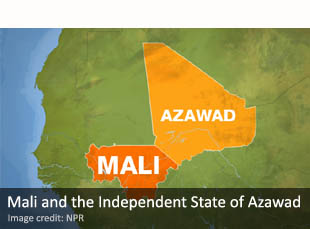
The government of France is holding secret talks with American and other Western officials to explore options for a concerted military intervention in Mali, according to diplomatic sources. A Tuareg rebellion in the northern part of Mali, which began earlier this year, culminated in the unilateral declaration of the Independent State of Azawad. The new state, which borders Algeria, Mauritania, Niger and Burkina Faso, is controlled by the National Movement for the Liberation of Azawad (NMLA). The NMLA is partially staffed by former members of the Libyan Army during the rule of Colonel Muammar al-Gaddafi. But it is also said to incorporate armed members of Ansar Dine, the Movement for Unity and Jihad in West Africa (MUJAO) and Al-Qaeda in the Islamic Maghreb (AQIM), all of which claim to have links with al-Qaeda. Many French observers view the Independent State of Azawad as the African version of mid-1990s Afghanistan, which eventually served as the base for Osama bin Laden’s al-Qaeda. But even though the French government has come out in favor of armed intervention in northern Mali, it has denied persistent rumors that it is contemplating sending French troops in the West African country. Instead, Paris officially favors intervention by the Malian Army backed by African Union troops and using logistical support provided by the Economic Community of West African States (ECOWAS). However, in an article published yesterday, The Associated Press claimed that, behind the scenes, the French government is trying to convince the US and other Western countries to participate in a military intervention in Mali. Read more of this post

News you may have missed #770

Horn of Africa mapBy TIMOTHY W. COLEMAN | intelNews.org |
►►Kaspersky Lab is ‘thwarting US cyber spies’. According to an article in Wired magazine, Eugene Kaspersky, the CEO of Russia-based Kaspersky Labs has been working to support Russian allies in the Kremlin and the FSB. Kasperksy’s firm first discovered the cyber attack weapon known as Stuxnet. As the profile piece notes, “Kaspersky’s rise is particularly notable —and to some, downright troubling— given his KGB-sponsored training, his tenure as a Soviet intelligence officer, his alliance with Vladimir Putin’s regime, and his deep and ongoing relationship with Russia’s Federal Security Service, or FSB”.
►►Al-Shabaab executes alleged CIA and MI6 assets. Somalia’s largest and most deadly armed Islamist group, al-Shabaab, announced that it had captured and executed at least three informants who were allegedly passing intelligence to the CIA and to MI6. The Associated Press stated that Al-Shabaab’s official Twitter feed stated that the individuals, who were summarily interrogated and then executed by firing squad, “were part of a wide network of spies deployed by the British and American intelligence agencies”.
►►Australian intelligence briefed on Canadian spy. The espionage case against accused Canadian spy, former Sub-Lieutenant Jeffrey Paul Delisle, continues to garner intrigue. As was previously reported on this blog, Delisle, a former navy intelligence officer is accused of spying for Russia. But a report in The National Post states that representatives of Canada’s intelligence service briefed members of Australia’s intelligence services on the Delisle’s case and that information exchanges appear ongoing. The particulars of Australia’s involvement in the case are explained here.

News you may have missed #759 (analysis edition)

Carter HamBy IAN ALLEN | intelNews.org |
►►What goes on in the mind of a spy? An interesting article on the psychology of espionage operatives and those who handle them. It includes several insightful observations, including this one: “Just as they face outward physical dangers, agents face many inner psychological adversities. These pressures in the psyche are as taxing as physical hardships. Furthermore, while physical hazards and hardships disappear once the active espionage is over, the psychological toll can linger”. IntelNews has covered psychological and psychiatric issues around espionage before.
►►Researchers propose using decoys to detect leaks. A group or researchers working for the US Pentagon’s research wing have come up with a new plan for busting leakers: spot them by how they search, and then entice the secret-spillers with decoy documents that will give them away. Computer scientists call it it “fog computing”, and it is seen as part of a broader assault on so-called “insider threats”, launched by the Pentagon in 2010, after the WikiLeaks imbroglio. In a related development, the US federal government announced recently that it spent over $11 billion to protect its secrets last year, double the cost of classification a decade ago. The total does not include the costs incurred by the US Intelligence Community, which remains classified.
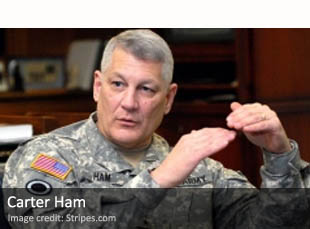
►►US General says US military spies ‘across Africa’. America’s top commander in Africa, General Carter Ham, has revealed that the US military has conducted spy operations all over the continent as part of the fight against international adversaries from al Qaeda-allied terror groups that target the homeland to suspected war criminals like Joseph Kony. “Do we collect information across Africa? Yes, we do”, the commander of US Africa Command said in a leadership conference at the Africa Center for Strategic Studies. Ham noted that US troops do at times go on “short-term deployments of capabilities” in various African nations, but always with the permission of the host country.

South African intel officials faked threats to increase spy budget

ANC centenary celebrationsBy JOSEPH FITSANAKIS | intelNews.org |
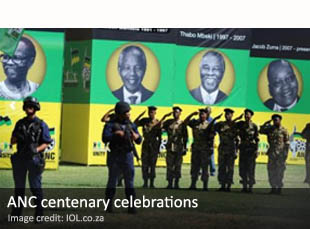
The tendency of some spy agencies to overstate security threats in order to secure governmental funds is hardly novel. But officials in the South African Secret Service appear to have gone a step further: they allegedly paid some of their informants to make bogus threats against the government, in order to prompt an increase in counterterrorist funding. According to Pretoria News, which is owned by The Independent, South Africa’s largest newspaper consortium, the bogus threats were aimed at creating “a false impression of imminent, unprecedented attacks on black people and African National Congress (ANC) members”. The ultimate goal of the perpetrators, says the paper, was to benefit personally from an increase in counterterrorist funding, which is said to run at around R600 million (US$72 million) per year. The plan was carefully designed to coincide with the run-up to the ANC’s centennial celebrations, which took place in January of this year. In one case, an informant was paid by Secret Service officials to record a video message threatening an uprising by whites against the country’s black-majority government, unless the latter put an end to the occupation of white-owned farmland by landless peasants. One video, which made “chilling threats” against black Africans and members of the ANC, was made publicly available on YouTube, causing widespread concern and prompting the government to beef up security measures around ANC facilities in several areas of the country. The threats also led to an extensive government investigation. Read more of this post

‘Massive expansion’ in US covert operations in Africa

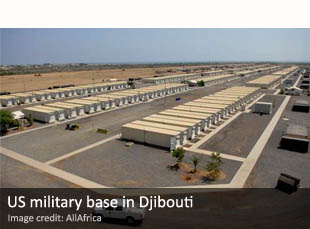
US military base in DjiboutiBy JOSEPH FITSANAKIS | intelNews.org |
The United States administration of President Barack Obama is implementing a near-unprecedented expansion of covert operations by American military forces throughout Africa, aimed at a host of armed groups deemed extremist by Washington. A lead article published yesterday in The Washington Post quotes over a dozen unnamed American and African officials, as well as military contractors, who refer to the US military-led effort as Project CREEKSAND. It allegedly involves secret operations in several African countries, conducted out of a large network of small air bases located in strategic locations around the continent. According to The Post, most of the airplanes used in Project CREEKSAND are small, unarmed, disguised to look like private aircraft, and bear no military markings or government insignia. In reality, however, they carry sophisticated electronic equipment designed to collect signals intelligence, while some are used to transport US Special Forces troops during capture or kill missions. The paper quotes an unnamed “former senior US commander […] involved in setting up the [air bases] network”, who alleges that the US government has built about a dozen such bases throughout Africa since 2007. These secret air bases are located in countries such as Mauritania, Burkina Faso, Ethiopia, Djibouti, Uganda, South Sudan, Kenya, and Seychelles. Most of the US personnel involved in Project CREEKSAND consists of Special Operations forces tasked with “training foreign security forces [and] performing aid missions”. However, The Post alleges that there are also small teams of US operatives who are “dedicated to tracking and killing suspected terrorists”. Read more of this post

Australian special forces secretly operating in Africa, says newspaper

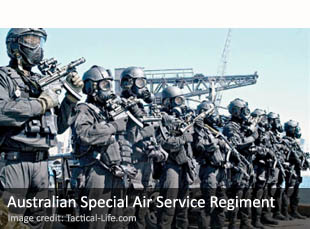
Special Air Service RegimentBy JOSEPH FITSANAKIS| intelNews.org |
One of Australia’s most prominent newspapers suggested in a leading article yesterday that a secret Australian special forces squadron has been illegally conducting espionage operations in several African countries during the past year. According to Melbourne-based The Age, the 4 Squadron of Australia’s Special Air Service Regiment (SASR) has been deployed in “dozens of secret operations” during the past 12 months, in countries such as Kenya, Nigeria and Zimbabwe. Members of 4 Squadron have been operating dressed in civilian clothing, carrying forged identity papers, and with strict instructions to deny any connection with SASR if captured, said The Age. Although the existence of 4 Squadron has never been officially acknowledged, the unit is believed to have been established in 2004 or 2005, and is currently thought to be based at Swan Island in Victoria, north of the town of Queenscliff. Its initial mission was to provide armed protection to officers of the Australian Secret Intelligence Service (ASIS) whenever the latter are deployed in warzones or other exceptionally dangerous overseas environments. But 4 Squadron’s missions in Africa, which The Age says were authorized in 2010 by then Prime Minster Kevin Rudd, do not include ASIS officers, and instead require SASR members to act both in a military and civilian capacity in espionage assignments. According to the paper’s allegations, 4 Squadron missions have involved regular assessment and evaluation of inter-African border control standards, developing scenarios for evacuating Australians, mapping out landing sites for possible military interventions, and gathering first-hand intelligence on local politics and the activities of insurgents. The paper claims that the scope and breadth of 4 Squardon’s African assignments have raised concerns within the SASR, with some senior officials viewing the unit’s actions as “a possibly dangerous expansion of Australia’s foreign military engagement”. Read more of this post

CIA joins hunt for white British woman who joined Somali militants

Samantha LewthwaiteBy JOSEPH FITSANAKIS| intelNews.org |
American intelligence officials are said to be actively cooperating with Kenyan authorities in the hunt for a white British woman believed to have joined a Somali group that is part of al-Qaeda in East Africa. The woman, Samantha Lewthwaite, 28, was married to Jermaine Lindsay, a British suicide bomber who blew up a train at London’s King’s Cross station on July 7, 2005. Lewthwaite, who by that time had two children by Lindsay, disappeared soon after the so-called 7/7 bombings, and allegedly reappeared in England in 2009, to give birth to her third child, which she reportedly had with a Moroccan man. Today she is considered an important organizer of al-Shabaab, (The Party of Youth), which used to be the youth wing of Somalia’s Islamic Courts Union (ICU). The Sunni-Muslim ICU ruled most of Somalia until the 2006 US-supported invasion of the country by Ethiopia. Ever since that time, al-Shabaab has become one of Africa’s most highly organized militant groups, relying on hundreds of Westerners who have flocked to Kenya, Somalia, Tanzania, and elsewhere, to join a peculiar form of jihad (holy war) inspired largely by al-Qaeda. According to reports from the UK, Lewthwaite is one of at least three British planners involved in setting up al-Shabaab’s operations in Kenya, Somalia, and elsewhere. She first entered Kenya several years ago, using a forged passport belonging to a South African identity theft victim called Natalie Faye Webb. In February of 2011, she is believed to have entered Kenya again, on foot, via Tanzania. Her travels are thought to be connected with her fundraising and other organizing activities on behalf of al-Shabaab, which appear to include —aside from financing— procuring weapons and training recruits. Not long ago, Kenyan police said a white woman matching Lewthwaite’s description managed to escape during a raid at the house of a suspected Islamist militant in Kenyan capital Nairobi. Read more of this post

US Special Forces now fighting the LRA in four African countries

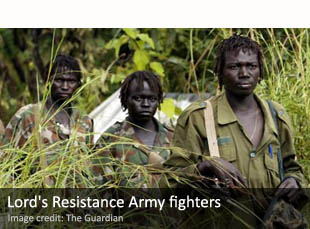
Lord's Resistance ArmyBy JOSEPH FITSANAKIS | intelNews.org |
American troops fighting one of Africa’s most notorious rebel groups are now officially stationed across four African countries, a move that highlights the expansion of Washington’s military presence in the continent. Last October, the administration of US President Barack Obama announced the deployment of 100 US Special Forces members to Uganda, to fight an insurgency group known as the Lord’s Resistance Army (LRA). Founded in the 1980s, the LRA is widely considered the world’s most brutal Christian terrorist group. Its leader, Joseph Kony, who is wanted along with four of his commanders by the International Criminal Court for crimes against humanity, is seen as a prophet by his followers. Washington had initially said that the Special Forces members would act as “advisors” to the Ugandan government, which has sustained the majority of the LRA’s attacks over the years. But Rear Admiral Brian L. Losey, the US Special Operations’ senior commander for Africa, said on Wednesday that, in addition to Uganda, American forces are currently stationed in military bases in Nzara, South Sudan, Obo, Central African Republic, and Dungu, Democratic Republic of the Congo (DRC). Speaking to Western reporters on the telephone, Rear Admiral Losey said that counterinsurgency activity directed at the LRA “will increase in frequency” during the spring and summer, and hinted that the Christian rebel group would soon be forced to go on the defensive. It is important to note that this official acknowledgement does not mark the beginning of Washington’s military involvement in activities against the LRA. In 2009, The New York Times revealed that the US Department of Defense assisted in the planning of a major offensive against the LRA. Read more of this post

News you may have missed #674

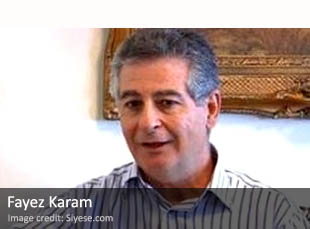
Fayez KaramBy IAN ALLEN | intelNews.org |
►►Lebanese ex-general gets prison sentence for spying for Israel. Last Tuesday’s sentence of former Brigadeer General Fayez Karam (pictured) means he will spend six more months in jail. He has been in prison since mid-2009, said the officials on condition of anonymity in line with regulations. Karam, who in the late 1980s led Lebanon’s counterespionage unit, ran for a parliament seat in 2009 as a senior member of the Free Patriotic Movement of Christian leader and Hezbollah ally Michel Aoun.
►►US may share intelligence with Nigeria. Nigeria and the United States plan to “explore the development of intelligence fusion capability”. This statement was contained in a joint communiqué issued at the end of a two day inauguration of a regional security cooperation working group held at the Ministry of Foreign Affairs in Abuja, Nigeria. The two countries will be collaborating “on training, logistics intelligence sharing, modernization of the security services and other requirements”.
►►Afghan jailed for 16 years for spying for Iran. An Afghan man, named only as Mahmmood, has been jailed for 16 years for spying for neighboring Iran. He was allegedly found in possession of photographs of foreign and Afghan military installations in western Herat province, and had Iranian intelligence officials’ phone numbers in his notebook.

US admits African war crimes suspect Charles Taylor was CIA agent

Charles TaylorBy JOSEPH FITSANAKIS | intelNews.org |

Editor’s note: Since publishing this story, The Boston Globe issued a correction, which includes the following: “This story drew unsupported conclusions and significantly overstepped available evidence when it described former Liberian President Charles Taylor as having worked with US spy agencies as a “sought-after source’’ […]. The Globe had no adequate basis for asserting otherwise and the story should not have run in this form”.

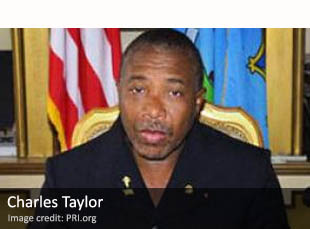
Ever since his 2006 arrest for war crimes, Liberia’s former President, Charles Taylor, has consistently claimed that he was an agent of the United States Central Intelligence Agency. Now declassified US government documents have officially confirmed that Taylor was indeed an agent of the CIA and the US Defense Intelligence Agency for several decades. The 63-year-old, who ruled his West African homeland from 1997 to 2003, is currently being tried at the United Nations Court in The Hague on multiple counts of civilian murders, rapes, and deploying underage soldiers during a brutal civil war in neighboring Sierra Leone. Rumors that Taylor was being protected by Washington started surfacing in 2003, after he left Liberia and was given protection in US-allied Nigeria, despite his indictment by the UN Special Court for Sierra Leone. In July 2009, intelNews reported Taylor’s claim that his 1985 “escape” from the Plymouth County maximum security Correctional Facility in Massachusetts, which allowed him to return to Liberia and take over the country through a military coup, took place with US government assistance. His persistent claims led The Boston Globe newspaper to file a Freedom of Information Act (FOIA) request, which has resulted in the declassification of nearly 50 separate documents covering “several decades” of Taylor’s work for the CIA and the DIA. The documents confirm that both agencies employed Taylor as an agent beginning in the early 1980s, long before he became Liberia’s ruler. But the FOIA release does not contain details of Taylor’s work for US intelligence, in an alleged effort to “protect intelligence sources and methods” and so as not to “harm national security”, according to The Boston Globe. Read more of this post

News you may have missed #637

Dmitri Bystrolyotov

D.A. Bystrolyotov

►►South African spy boss to quit. Director General of the State Security Agency Jeff Maqetuka, who has been entangled in a never-ending war with Minister Siyabonga Cwele, is expected to step down this week, according to South Africa’s Sunday Independent. The paper claims that that plans are afoot to expedite Maqetuka’s departure from the country’s intelligence infrastructure by placing him on summer leave and then making sure he would not return to work in 2012.
►►Slovakian defense minister resigns over wiretap scandal. The interception of journalists’ telephone calls by the Slovakian Defense Ministry’s counterintelligence arm has cost the country’s Defense Minister, Lubomír Galko, his job. The scandal involved Slovakia’s Military Defense Intelligence (VOS). It has also emerged that the VOS operation involved wiretapping of the head of TV news channel TA3 and two senior Defense Ministry employees, according to leaked documents obtained by Slovak media outlets.
►►Book on Soviet spy Dmitri Bystrolyotov. Excerpt from Emil Draitser’s book Stalin’s Romeo Spy: The Remarkable Rise and Fall of the KGB Most Daring Operative (Northwestern University Press, 2010), about one of the 20th century’s most outstanding undercover operatives. Bystrolyotov acted in Western Europe in the interwar period, recruiting and running several important agents in Great Britain, France, Germany, and Italy.