Opinion: Paris attackers bring Mideast urban warfare to Europe
January 8, 2015 4 Comments
 By JOSEPH FITSANAKIS* | intelNews.org
Until Wednesday morning, the last time the offices of Charlie Hebdo, France’s best known satirical weekly, were attacked was on November 2, 2011. On that day, unknown assailants had thrown Molotov cocktails into the premises, setting them on fire. Since that attack, France has seen its share of Islamist-inspired terrorist incidents. In March of 2012, French citizen Mohammed Merah shot dead three French soldiers before attacking a Jewish school in Toulouse, where he killed three students and a teacher. Last May, authorities in Marseille arrested another Frenchman, Mehdi Nemmouche, for opening fire at a Jewish museum in Belgian capital Brussels earlier that month, killing a French national and two Israeli citizens. And the French public has been shocked in recent months by a number of seemingly random attacks on pedestrians by vehicles driven by Muslim Frenchmen, who appear to be politically motivated.
The common thread running through these incidents is that they were all haphazardly planned and executed by ‘lone-wolf’ attackers, who were markedly limited in both resources and skill. But the men implicated in Wednesday’s attack on Charlie Hebdo, which left 12 people dead, were different. The two brothers, Cherif and Said Kouachi, who are said to be the main perpetrators of the assault, are believed to have “returned to France from Syria in the last year”, according to MSNBC. Undoubtedly, the two siblings saw action in the Syrian armed conflict, which is primarily fought in urban settings, and were systematically trained in urban warfare by men with considerable experience in it.
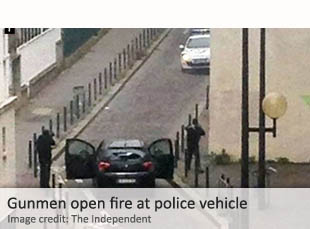
This explains their proficient delivery on Wednesday, as shown in the footage of the bloody attack, which has emerged since. The assailants arrived at their target carrying Kalashnikov rifles and magazines, neither of which can be easily acquired in France. Once inside the building, they remained there for a good 12 minutes, carefully executing their victims, some of whom they methodically sought out by name. They exited just as they entered, calm and collected. Even when they encountered a police vehicle, they stopped, aimed and shot at its passengers with considerable discipline, firing single or —in a handful of cases— double shots, instead of opting for bursts of rapid fire, which is the hallmark of inexperienced users of automatic rifles in moments of panic. After executing the police officers, they calmly walked back into their getaway vehicle and slowly drove away. It has been reported that at no point did they break the speed limit during their escape. Read more of this post
 By J. FITSANAKIS and I. ALLEN | intelNews.org

 By JOSEPH FITSANAKIS | intelNews.org








 intelNews.org
News you may have missed #891
April 2, 2015 by Ian Allen Leave a comment
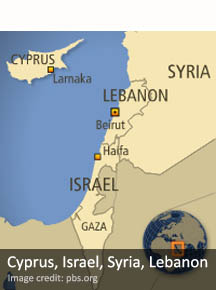
►►Sophisticated malware found in 10 countries ‘came from Lebanon’. An Israeli-based computer security firm has discovered a computer spying campaign that it said “likely” originated with a government agency or political group in Lebanon, underscoring how far the capability for sophisticated computer espionage is spreading beyond the world’s top powers. Researchers ruled out any financial motive for the effort that targeted telecommunications and networking companies, military contractors, media organizations and other institutions in Lebanon, Israel, Turkey and seven other countries. The campaign dates back at least three years and allegedly deploys hand-crafted software with some of the hallmarks of state-sponsored computer espionage.
►►Canada’s spy watchdog struggles to keep tabs on agencies. The Security Intelligence Review Committee (SIRC), which monitors Canada’s intelligence agencies, said continued vacancies on its board, the inability to investigate spy operations with other agencies, and delays in intelligence agencies providing required information are “key risks” to its mandate. As a result, SIRC said it can review only a “small number” of intelligence operations each year.
►►Analysis: After Snowden NSA faces recruitment challenge. This year, the NSA needs to find 1,600 recruits. Hundreds of them must come from highly specialized fields like computer science and mathematics. So far the agency has been successful. But with its popularity down, and pay from wealthy Silicon Valley companies way up, Agency officials concede that recruitment is a worry.
Filed under Expert news and commentary on intelligence, espionage, spies and spying Tagged with 0 After Snowden NSA faces recruitment challenge, 0 Canada’s spy watchdog struggles to keep tabs on agencies, 0 Sophisticated malware found in 10 countries ‘came from Lebanon’, Analysis, Canada, computer hacking, cyberespionage, Edward Snowden, intelligence oversight, intelligence recruitment, Lebanon, News, news you may have missed, NSA, Security Intelligence Review Committee (Canada), United States