Analysis: French are upset, but not surprised, by news of US spying
June 25, 2015 4 Comments
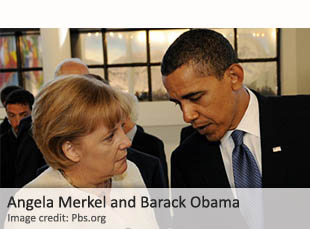
Before Edward Snowden, the revelation that the United States National Security Agency spied on three successive French presidents would have shocked many. But in the post-Snowden era, the news came and went without much tumult. The French President, Francois Hollande, called two emergency meetings of senior government officials at the Élysée Palace; the American ambassador to France was summoned for an official protest; but nothing more came of it. It was reported that US President Barack Obama spoke directly with his French counterpart on Wednesday, and assured him in no uncertain terms “that the US is no longer spying on France”.
The French leader, who is one of three French presidents mentioned in the WikiLeaks documents as a target of the NSA, is genuinely upset. And there will be some in his government who will push for a harder response than simply summoning the American envoy in Paris to file an official protest. But nobody in Paris or Washington thinks that Mr. Hollande, or indeed any other senior French official, was shocked or even surprised by the revelations of American espionage against France. Nor will the revelation cause any drastic disruption in the intelligence cooperation between France and the US. The two countries depend on each other to address a number of international issues that affect both, such the worrying situatio n in Syria and Iraq, the continuing crises in Ukraine and in Libya, as well as the financial meltdown in Greece. So there is a recognition that their intelligence agencies must continue to work together on several pressing issues.
However, the French response may become a lot more direct if WikiLeaks publish further revelations about US espionage against French officials. The whistleblower website noted on Tuesday that “French readers can expect more timely and important revelations in the near future”. Unlike Edward Snowden, who is known to release progressively more damning documents in stages, WikiLeaks does not have a history of aiming for a crescendo through progressive releases of classified information. But there is speculation that Edward Snowden may in fact be the source of this latest WikiLeaks disclosure. If that is the case, we should not exclude further releases of relevant documents, and thus a more robust French response.
And what about America’s retort? Washington has suffered considerable diplomatic blowback from revelations in 2013 and 2014 that it spied on the leaders of Germany, Brazil and Argentina. Is the NSA still spying on America’s allied leaders? I am of the opinion that the NSA is not currently targeting the personal communications of allied government leaders as a matter of  routine practice. However, I do believe that this regimen can easily be changed to address particular needs, through what is called a “presidential finding”, basically a direct order issued by the president of the United States to target an individual foreign leader.
In the past two years, we have witnessed the diplomatic fallout that can result from publicly revealing these practices. However, for an intelligence agency like the NSA, having access to the personal communications of a foreign head of state is a temptation that is simply too difficult to resist. Moreover, it should not be assumed that political leaders are always completely in the know about the practices of their country’s intelligence agencies. American intelligence history amply demonstrates this truism. Finally, I would point to the well known maxim that intelligence agencies do not typically distinguish between adversaries and allies. All targets are considered fair game. This will admittedly do little to appease the French, but it will at least give them an accurate impression of what to expect in the brave new world of wholesale communications interception.
* This editorial is based on an interview given by the author to the Spanish newspaper La Razón.
► Author: Ian Allen | Date: 25 June 2015 | Permalink: https://intelnews.org/2015/06/25/01-1722/
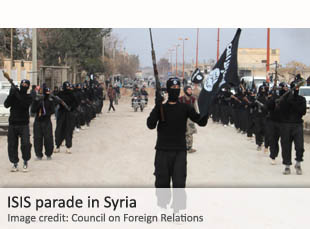
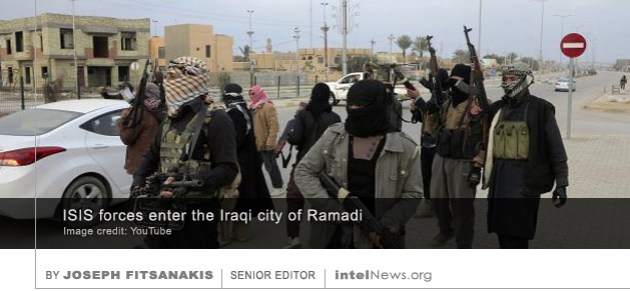 The capture by Islamic State forces of the Iraqi city of Ramadi, on May 17, has given the organization a fortified urban base less than an hour’s drive from Baghdad. Its near-simultaneous takeover of the central Syrian city of Palmyra, points to the organization’s permanence and demonstrates its widening operational span, which now ranges from Western Libya to the Iranian border. Without an all-out war effort by outside forces, such as Iran, or the United States, it is difficult to see how the Islamic State could be stopped from permanently establishing itself as a major actor in the region, especially since no outside force appears willing to confront it directly.
 pacified. Iraqi government forces will almost certainly face a protracted armed campaign by a mixture of heavily armed groups in the city. Some of these groups are led by ISIS, some are inspired by al-Qaeda, while others are motivated by a broader anti-Shiite sentiment, which is currently the predominant political ideology in Anbar Province.
 are aligned to it. Iraqi Sunnis believe that if they lose the fight against the Iraqi military they will be extinct as a people, which explains why they are fighting with more zeal and determination than their Shiite compatriots.
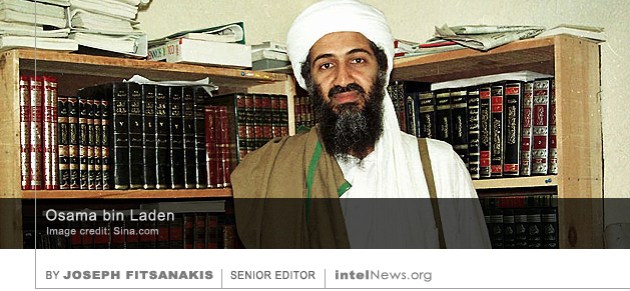 The release this week of material from Osama bin Laden’s personal stack of books and documents, which were confiscated from his Abbottabad compound, is timely as it is important. The decision by the United States Office of the Director of National Intelligence (ODNI) to declassify the documents was almost certainly in response to recent claims that bin Laden was being kept under house arrest by the Pakistani intelligence services at the time of his assassination. American journalist Seymour Hersh, who made the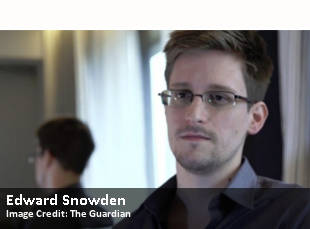
 By J. FITSANAKIS and I. ALLEN | intelNews.org

 By JOSEPH FITSANAKIS | intelNews.org










Ex-NATO supreme commander warns of ‘Grexit security nightmare’
July 2, 2015 by Joseph Fitsanakis 4 Comments
The retired admiral said that if the Greek economy continues its downward spiral, the country may not be able to fulfil its defense obligations to NATO, in which Greece has held full membership since 1952. As a result, the country may leave not only the EU, but also NATO. Neither organization has ever lost a member-state, said Stavridis, adding that such a development would constitute terra incognita and would “shake both organizations in fundamental ways” by weakening their broader ideological cohesion.
However, said Stavridis, chances are that Greece will remain a member of EU and NATO despite possibly exiting the Eurozone. But it would be “an angry disaffected and battered nation”, he said, and could thus wreak havoc in both organizations. The latter are consensus-driven, meaning that their actions depend on the unanimous agreement of all member-states. If Greece adopted an “uncooperative” attitude, it would easily bring both organizations to a halt when it comes to pressing issues, such the refugee crisis in the Mediterranean, sanctions against Russia over the war in Ukraine, the Iranian nuclear program, or even negotiations about transatlantic trade. Currently, Greece’s important geographic position means that its naval bases constitute the maritime flank of NATO during a critical time of tension in the eastern Mediterranean, said Stavridis.
And what if Greece, shunned by the West, started to look elsewhere for support? Russia, which shares strong historical and religious links with Greece, could be a “prospective partner” for Athens, argued Stavridis. If Moscow offered even marginal economic assistance to Athens, Greece could be tempted to further distance itself from its Western partners, both diplomatically and militarily.
Admiral Stavridis’ warning came a day after NATO Secretary-General Jens Stoltenberg said Greece had played “an important role in southern Europe as a NATO member” and urged Athens not to make cuts in its defense spending due to the ongoing economic crisis.
Filed under Expert news and commentary on intelligence, espionage, spies and spying Tagged with Analysis, economic intelligence, European Union, financial warfare, Greece, James Stavridis, NATO