Interview: Israel’s ‘Prisoner X’ linked to 2010 al-Mabhouh killing

Ben ZygierThis morning I spoke to SBS Radio Australia’s Greg Dyett about the mysterious case of Ben Zygier, an Australian-born naturalized citizen of Israel, who is said to have killed himself in 2010 while being held at a maximum-security prison near Tel Aviv. As intelNews reported on Wednesday, Zygier, who is believed to have been recruited by Israel’s covert-action agency Mossad, had been imprisoned incommunicado for several months and was known only as ‘Prisoner X’, even to his prison guards. Is there any connection between Zygier’s incarceration and the January 2010 assassination of Palestinian arms merchant Mahmoud al-Mabhouh, in Dubai? And what could Zygier have done to prompt Israel to incarcerate him? You can listen to me discuss this mysterious case in an eight-minute interview here, or read the transcript, below.

Q: You say that, after conferring with your contacts in Israel, Europe and the United States, you believe that Ben Zygier had some sort of involvement in the assassination of Mahmoud al-Mabhouh in Dubai in January 2010.

A: Mahmoud al-Mabhouh was a weapons procurer for the Palestinian militant group Hamas. At this point, there is little doubt that the Mossad was behind this operation. Several members of the team that killed al-Mabhouh were using third-country passports —Irish, British, Australian, and others— to travel to and from Dubai. In the aftermath of the assassination, there were questions about how the Mossad operatives managed to get those passports; and, if you’ll remember, that led to the expulsion of several Israeli diplomats from around the world, including Australia. Read more of this post

Comment: Are Somalia’s militant Islamist ‘defectors’ genuine?

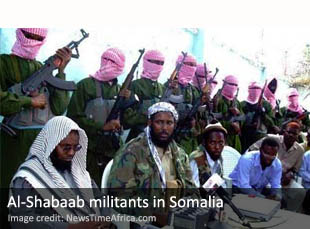
Al-Shabaab militants in SomaliaBy IAN ALLEN| intelNews.org |
During the past two years, the once powerful influence of Islamic militancy in Somalia appears to be steadily declining. Not long ago, much of the country was firmly controlled by al-Shabaab (The Party of Youth), formerly the youth wing of the Islamic Courts Union, which ruled Somalia until 2006. The group, which is thought to have approximately 5,000 armed members at its disposal, emerged as a powerful force in Somalia in 2009. Three years later, in 2012, it formally announced its operational alignment with al-Qaeda. Its power began to wane, however, once the Western-backed Somali government decided to confront it militarily, with the support of the United States Central Intelligence Agency and several European-funded private security companies. A major indicator of this optimistic trend seems to center on the unprecedented numbers of al-Shabaab members who are defecting –apparently en masse– and joining the ranks of the Somali armed forces. Many of these defectors are trained by private security companies employed by the European Union before being sent to the front to fight against their former comrades. Read more of this post

News you may have missed #822 (Israeli airstrikes on Syria)

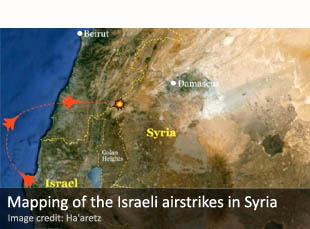
Mapping of the Israeli airstrikes in SyriaBy IAN ALLEN | intelNews.org |
►►Should we be preparing for another Mideast war? Assad may not want a war with Israel, but Tehran could have other calculations. Over the weekend, Iran warned that it would consider any attack on Syria to be an attack on Iran. Claims by Syrian television that Israel hit a research facility near Damascus might be a pretext for an Iranian escalation with Israel. The Israeli army also deployed some of its Iron Dome batteries to northern Israel for the first time. It would not have done so if the chances of a war on Israel’s northern border weren’t increasing.
►►Why did Israel attack Syria now and why did the Syrians admit it? Two days before the Israeli attack on Syria, Iran said it would view any attack on Syrian territory as an attack against Iran itself. But the combination of strategic circumstances in the region at the moment makes the chance of a direct Iranian response unlikely. A Syrian military response seems even less likely, though neither possibility can be ruled out. The most worrying unknown since Tuesday night concerns Hezbollah’s reaction. It seems we are at the beginning of the story —and not the end.
►►Ex-Mossad head says Syria and Hezbollah will not respond. The former Director of Israel’s Mossad spy agency, Danny Yatom, has ruled out any response by the Syrian army or Hezbollah in Southern Lebanon to the Israeli attack on Syria. He told newspaper Yedioth Ahronoth on Wednesday he did not think there would be “any response, since there is no benefit for Hezbollah and Syria to do so”. He added: “Al-Assad is experiencing deep problems in his country and Hezbollah is doing its best to help him, so I don’t think that they will consider any response”.

German intelligence report sees US leading global energy contest

The Tengiz oil refinery in KazakhstanBy JOSEPH FITSANAKIS | intelNews.org |
A leaked geopolitical study authored by German intelligence sees the United States as the primary beneficiary of the world’s drastically changing energy balance. The report, which was produced by the German Federal Intelligence Service (Bundesnach- richtendienst, or BND) was leaked to the Reuters news agency and accessed by Germany’s Frankfurter Allgemeine Zeitung. It sides with other recent estimates, notably by the International Energy Agency, which suggest that the domestic oil production of the United States might exceed that of Russia and Saudi Arabia by the year 2020. The BND estimates that, through the technique popularly known as fracking (using pressurized fluid to cause horizontal fractures on underground rock layers), the US will be able to exploit oil and natural gas reserves on its territory that were previously considered inaccessible. This could transform the US from the world’s largest energy importer of energy to a net exporter of both oil and natural gas. According to the report, such a massive transformation of the global energy import-export balance could have “particularly dramatic consequences” in the realm of international relations. Most crucially, it could transform the existing balance of power between the US and China. Specifically, German intelligence analysts forecast that, as the US becomes increasingly self-sufficient in energy, it will limit its import of oil and natural gas to its neighboring countries, namely Canada and Mexico. This could potentially lead the US to gradually disengage from the Middle East, allowing Washington’s foreign policy “increased freedom of action” vis-à-vis energy-rich Arab nations and Israel. At the same time, more Middle Eastern oil will find its way to China, as the Far-Eastern country will emerge as the world’s largest importer of energy. Read more of this post

How did the US know that Syria was about to use chemical weapons?

Regional map of SyriaBy IAN ALLEN | intelNews.org |
Early last December, United States President Barack Obama issued a surprise warning to the government of Syria, saying that if it made “the tragic mistake” of using chemical weapons against rebel forces, there would be “immediate consequences”. Most observers took this as a clear indication that the US was prepared to intervene militarily in the ongoing Syrian civil war. Today, a month after Obama’s December ultimatum, one question is still in need of an official answer: namely, how did the United States come to suspect that the Syrians were contemplating using chemical weapons? An article by The New York Times‘ Eric Schmitt and Dave Sanger suggests that Washington was alarmed in late November by a tip-off from Israeli intelligence. According to The Times, the Israelis shared with officials at the US Department of Defense a series of satellite images showing Syrian government troops transporting tank-loads of chemicals to at least two storage sites along the country’s border with Jordan. The paper, which says it confirmed this information by speaking to “half a dozen military, intelligence and diplomatic officials”, claims that Syrian troops were ordered to load sarin nerve gas onto dozens of 500-pound bombs. The plan was for the bombs to be secretly transported by land to military air bases and from there onto planes, pending final approval by Syrian President Bashar al-Assad. According to the Israelis, the bombs could be airborne less than two hours after Assad’s order. By the time the information from the Israelis reached President Obama, American military commanders realized they had been caught by surprise, as there was no time to act in the two hours that it would take the Syrians to deploy the bombs. Read more of this post

Obama’s National Security Nominations: Nothing to See Here

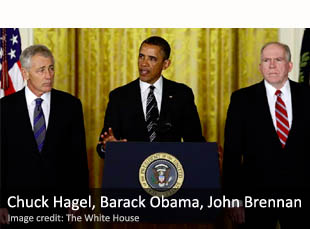
Chuck Hagel, Barack Obama, John BrennanBy I. ALLEN and J. FITSANAKIS | intelNews.org |
The deluge of reports that are flooding the news media about the national security nominations of United States President Barack Obama is both natural and understandable. The Departments of State and Defense, as well as the Central Intelligence Agency, are among the critical components of the American government, especially in matters of foreign policy. Yet much of the commentary on the nominations of John Kerry for State, Chuck Hagel for the Pentagon, and John Brennan for the CIA, is unduly over-dramatizing what is essentially a routine story. To begin with, it is clear that, in selecting Kerry, Hagel and Brennan for the nominations, the President’s priority was to surround himself with people he knows and trusts. Knowledgeable observers point out that all three nominees come from Obama’s most trusted circle of friends and —if appointed— will allow the President to stay well “within his comfort zone” as he begins his second term in office. In this sense, Obama selected the three candidates, not with some major policy shift in mind, but in order to ensure continuity and permanence in his foreign policy.

Take John Brennan, for instance: an Arabic-speaking career officer in the CIA, who has served the Agency in various positions for over 25 years. It is undeniable that, since 2008, Brennan has been instrumental in shaping the thinking behind the Obama administration’s targeted killings program using unmanned drones. According to some analysts, he has been the White House’s “most important adviser for shaping the campaign of drone strikes”. As intelNews explained recently, Washington’s unmanned drone program will continue and most likely expand, but this has little to do with Brennan. As an excellent analysis of Brennan’s nomination (by the Council on Foreign Relations’ Micah Zenko) points out, the CIA’s targeted killing program “has become institutionalized” with a momentum of its own, which ensures its sustainability, “making it far bigger than any one person —even John Brennan”.

Read more of this post

Analysis: Will 2013 Be the Year of the Unmanned Drone?

Predator droneBy JOSEPH FITSANAKIS | intelNews.org |
As United States President Barack Obama prepares to enter his fifth year in office, one may be excused for thinking that his administration’s response to insurgency warfare essentially boils down to one thing: the joystick. This is the means by which Washington’s unmanned aerial vehicle (UAV) fleet is remotely guided, usually from the safety of ground control stations located thousands of miles away from selected targets. Even prior to last November’s Presidential election, Obama administration officials declared in every possible way that the drone campaign would remain a permanent feature of the White House’s counterinsurgency campaign. Not only that, but it seems increasingly apparent that when, on November 19, 2012, Defense Secretary Leon Panetta announced that America’s UAV fleet would expand, he meant it both in terms of raw numbers and geographical reach. Africa appears now to be high on the list of UAV targets. The US is currently busy establishing a large network of small air bases located in strategic locations throughout the continent, in what US observers have termed a “massive expansion” of US covert operations in Africa. Read more of this post

Year in Review: The 10 Biggest Spy-Related Stories of 2012

Happy New YearBy J. FITSANAKIS and I. ALLEN | intelNews.org |
Ever since we launched this website in 2008, we have been monitoring daily developments in the highly secretive world of intelligence and espionage, striving to provide an expert viewpoint removed from sensationalism and conspiratorial undertones. In the past year, we witnessed our fair share of significant intelligence-related stories, some of which made mainstream headlines, while others failed inexplicably to attract the attention of the news media industry. In anticipation of what 2013 may bring, we decided to take a look back to the year that just ended by compiling a list of what we think are the ten most important security- and intelligence-related developments of the past 12 months. The stories below are listed in reverse order of importance. Do you agree with our choices? Have we missed something important? Share your thoughts.

10. South African spy officials faked threats to increase budget. The historical tendency of spy agencies to overstate security threats in order to secure governmental funds is hardly novel. But officials in the South African Secret Service appear to have gone a step further: they allegedly paid some of their informants to make bogus threats against the government, in order to prompt an increase in counterterrorist funding. The bogus threats were allegedly aimed at creating “a false impression of imminent, unprecedented attacks on black people and African National Congress (ANC) members”. Incredibly, or perhaps predictably, nobody from the Secret Service has been fired in connection with this scandal.

Read more of this post

Are Kremlin’s spies targeting Russian scientists with foreign links?

Igor SutyaginBy JOSEPH FITSANAKIS | intelNews.org |
Back in November, we reported on the case of Valentin Danilov, a Russian physicist who spent nearly a decade in prison, allegedly for spying on his country on behalf of China. What is interesting about Danilov is that, even after his release from prison, following a pardon issued by the administration of Russian President Vladimir Putin, he fervently maintains his innocence. He is not alone; many Russian scientists and human rights campaigners have argued for years that Danilov should never have been convicted. In some cases, activists accuse the Kremlin of persecuting Danilov for political reasons, namely to reinforce Russian President Vladimir Putin’s “attempts to intimidate academics with ties to other countries”. A well-written analysis by Time magazine’s Simon Shuster argues that Danilov’s story is not unique in Russia. There have been at least a handful of similar cases in the last decade, all involving Russian scientists with links to foreign countries or organizations. Shuster mentions the example of nuclear expert Igor Sutyagin, former division head in the Russian Academy of Sciences’ USA and Canada Institute, who served 11 years of a 15-year sentence for allegedly passing state secrets to a CIA front company. Sutyagin, who now lives in London, United Kingdom, was one of four jailed Russians expelled to the West in exchange for the repatriation of ten Russian illegals captured by the FBI in the summer of 2010. But he maintains he was never a spy, and claims that all of the information he gave to the two Americans who employed him, in return for money, came from open sources. Undoubtedly, observers are free to draw different conclusions about either Danilov or Sutyagin. But the question that Shuster poses is, at a time when virtually no field of scientific research can develop without international collaboration, is Moscow being overly suspicious of its academics, and is this hampering Russian science as a whole? Read more of this post

News you may have missed #815 (analysis edition)

Polygraph testBy IAN ALLEN | intelNews.org |
►►Should polygraph tests be trusted?  US federal polygraph programs have flourished, targeting a growing number of private contractors with more intensely personal questions than ever before. More than 70,000 people are now screened yearly in the US. Yet thousands of people a year could be identified as lying in polygraph screenings when they are not, according to statistical models by the National Academies, which advises the federal government on scientific matters. Under the current system, many of them would have no way to legally challenge polygraphists’ conclusions, especially in the intelligence world.
►►Why the US does not need another law against intelligence leaks. Leonard Downie Jr., vice president at large of The Washington Post, warns that the 2013 Intelligence Authorization Act “would make it a crime for career intelligence officers to provide almost any type of information to the news media, whether the information is classified or not”. He argues that the proposed legislation would “end contacts that often benefit both the government and the public by allowing the exchange of accurate information about vital national security issues and intelligence activities, including abuses requiring attention”.
►►The preventable decline of British defense intelligence. Defense intelligence refers to something rather different from ‘military intelligence’. It takes place at the topmost levels of defense coordination and decision-making and draws together participation from all of the armed services with civilian subject-matter and technical experts and produce consolidated assessments for senior civil servants, ministers and the service chiefs of staff. Philip Davies, director of the Brunel Centre for Intelligence and Security Studies in the United Kingdom, argues that, in Britain, defense and military intelligence remains “something of a poor cousin in the intelligence community, the eternal Peter robbed to pay the Paul of other, seemingly more urgent, defense expenditure and policy priorities”.

Ex-intelligence official: cyber espionage more dangerous than terrorism

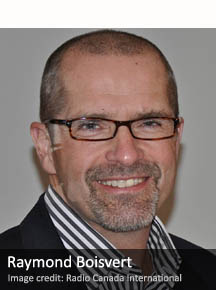
Raymond BoisvertBy JOSEPH FITSANAKIS | intelNews.org |
A former senior member of Canada’s intelligence community has said that the threat of cyber espionage requires more resources that are currently being diverted to counterterrorism. Ray Boisvert, who retired last year from the post of Assistant Director of Intelligence for the Canadian Security Intelligence Service (CSIS), said in an assertive speech last week that cyber espionage is “fundamentally undermining [Canada’s] future prosperity as a nation”. Speaking on Friday in Ottawa, Boisvert compared cyber espionage to the climate-change debate, which has been marked by a series of ignored warnings, due to “some willful blindness on behalf of individuals”. As a result, he said, the need to establish essential security measures to protect worldwide electronic infrastructure is being neglected, while desperately needed resources are being diverted to counterterrorism. He explained the lack of action on three levels: first, the resistance emanating from technologically challenged decision-makers in the government and private sector, who simply do not understand the technical complexities of digital telecommunications security. Second, it is rooted in the government’s reluctance to invest the funds required to shield the nation’s communications infrastructure from espionage attacks. Finally, he placed the blame on the fragmentation and shortsightedness of the private sector, which owns and operates nearly 90 percent of Canada’s critical communications infrastructure and yet is too consumed by competition to sit around the same table on matters of security. In giving examples of the seriousness of the threat of cyber espionage, Boisvert cited the attacks last year on the computer systems of Canada’s Treasury Board and Finance Department, which compromised trade secrets of several national industries. He also mentioned the attacks on Nortel Networks Inc., which he said lasted for over a decade and may have contributed to the company’s 2009 demise. Read more of this post

Analysis: Should the CIA kill less and spy more?

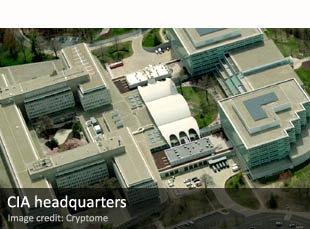
CIA headquartersBy JOSEPH FITSANAKIS | intelNews.org |
The Central Intelligence Agency’s awkward silence about the recent resignation of its Director, General David Petraeus, is indicative of an organization that remains distinctly uncomfortable with publicity. The added layer of the sexual nature of Petraeus’ impropriety has increased exponentially the degree of unease at Langley. Yet sooner or later the news media will move on to something else and General Petraeus will fade into the distance. For seasoned intelligence observers, however, the question of the CIA’s future will remain firmly in the foreground. In an interview earlier this week with Wired magazine, former CIA Director General Michael Hayden (ret.) opined that Petraeus’ resignation presents the Agency with the opportunity to return to its operational roots. Hayden, who led the CIA from 2006 to 2009, said that the Agency has been “laser-focused on terrorism” for many years. Consequently, much of its operational output “looks more like targeting than it does classical intelligence”, he said. His views were echoed by the CIA’s former Acting Director, John McLaughlin, who told Wired that the most significant challenge for the post-Petraeus CIA “may be the sheer volume of problems that require [good old-fashioned] intelligence input”. Yesterday, meanwhile, saw the publication of two opinion pieces by two of America’s most experienced intelligence watchers. In the first one, The Washington Post’s Walter Pincus urges United States President Barack Obama to pause and think about the role of America’s foremost external intelligence organization before appointing a successor to General Petraeus. For over a decade, argues Pincus, the CIA’s focus has been to fulfill covert-action tasks in the context of Washington’s so-called “war on terrorism”. But through this process, the Agency “has become too much of a paramilitary organization” and has neglected its primary institutional role, which is to be “the premier producer and analyst of intelligence for policymakers, using both open and clandestine sources”. Read more of this post

Opinion: When Did Obama Know About CIA Director’s Affair?

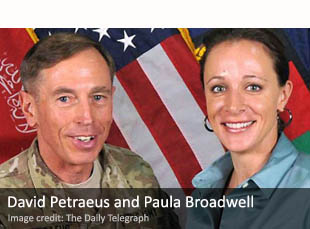
David Petraeus and Paula BroadwellBy JOSEPH FITSANAKIS | intelNews.org |
The standard reaction to last week’s resignation of Central Intelligence Agency Director David Petraeus, following the revelation of his extramarital affair, has been stunned silence. Not so much because of the affair itself —what is one more affair in the slippery world of Washington politics?— but because it involved the eminent figure of Petraeus. Former aides to the retired General have been confiding to journalists that “never in a million years” would they have thought that the high-achieving CIA Director would have risked his career and reputation in such a reckless fashion. Many thought that the relationship between him and his biographer, Paula Broadwell, had grown suspiciously close in recent years; but Petraeus had a general way of seeming beyond reproach.

It is worth pointing out that much of this unfolding story is so far based on hearsay, as opposed to concrete, verifiable information. It is suggested that Petraeus’ extramarital tryst was accidentally discovered by agents of the Federal Bureau of Investigation, who were looking into a seemingly unrelated case. Some news outlets, mostly in the UK, suggest that a female employee of the US military’s Joint Special Operations Command contacted the FBI after receiving threatening messages from Broadwell, warning her to “stay away from [her] man” —allegedly Petraeus. While investigating the Gmail account from which the threatening messages were allegedly sent, the FBI allegedly discovered “thousands” of messages exchanged between the CIA Director and Broadwell, some of which were sexually explicit. Read more of this post

News you may have missed #809 (Obama-Iran edition)

Iran and its regionBy IAN ALLEN | intelNews.org |
►►Will re-elected Obama take a new line on Iran? Barack Obama returns to office after an election campaign in which Iran’s nuclear program often dominated foreign-policy debates. Mitt Romney frequently accused him of taking too soft a line toward Tehran. Now, as Obama begins a second term, the question is how much he has been stung by such criticism. Will Obama retain confidence in his dual strategy of squeezing Iran with economic sanctions while also extending offers of rapprochement? Or will the fact that Iran keeps building centrifuges and enriching uranium despite Obama’s efforts persuade the White House it needs to try something new?
►►Obama’s victory vindicates his Iran policy. President Barack Obama’s re-election victory represents an important vindication of his approach to Iran and its potential nuclear ambitions —and, for the world, a new face of American policy in the Middle East that will relegate the aggressive policies of George W. Bush into the distant past. The election confirmed what polls have clearly shown, that while Americans are deeply concerned about the prospect of an Iranian nuclear weapon, they also view addressing the problem through vigorous diplomatic engagement and sanctions as the most appropriate exercise of American power and leadership.
►►Iranians see reduced risk of war in Obama’s reelection. In Iran, there is a sense of relief these days, as concerns of a military attack by US and Israeli forces over Iran’s nuclear energy program if Mitt Romney were elected, had become widespread. While there continues to be no official response from Iran’s leadership about US election results, Iranian media is still heavily focused on covering American polls. Commenting on one of Iran’s most popular political Web sites, Asriran, one reader wrote, “At least we know we won’t be going to war during the next four years”. And Iran’s state-run English language television channel, Press TV, carried a live and uninterrupted broadcast of President Barack Obama’s acceptance speech.

News you may have missed #808 (Obama-Netanyahu edition)

Benjamin Netanyahu and Barack ObamaBy IAN ALLEN | intelNews.org |
►►The other concession speech: Netanyahu congratulates Obama. At least there was no pretending. In the language of diplomacy, the greeting Israeli Prime Minister Benjamin Netanyahu extended to Barack Obama on the occasion of his re-election was “correct” and nothing more. “Prime Minister Netanyahu congratulates US President Barack Obama on his election victory,” read the public statement issued early Wednesday in Jerusalem. The next word out of Balfour Street, where Netanyahu mulled the returns, was a warning to members of his Likud party to shut up about how they figure the premier might really feel. By then, the deputy speaker of the Knesset had already called Obama “naïve” and vowed Israel would not “surrender” to him.
►►Netanyahu rushes to repair damage with US President. Over the past several years, Prime Minister Benjamin Netanyahu has on several occasions confronted or even undercut US President Barack Obama, taking his message directly to the Israel-friendly United States Congress, challenging Mr. Obama’s appeal to the Arab world, and seeming this fall to support his opponent, Mitt Romney. Mr. Netanyahu woke up Wednesday to find not only that his Republican friend had lost, but also that many Israelis were questioning whether he had risked their collective relationship with Washington.
►►Barack Obama victory spells trouble for Israel’s Netanyahu. Israeli Prime Minister Benjamin Netanyahu faces an even more awkward time with Washington and re-energized critics at home who accused him on Wednesday of backing the loser in the US presidential election. With Iran topping his conservative agenda, Netanyahu will have to contend with a strengthened second-term Democratic president after four years of frosty dealings with Barack Obama and a rift over how to curb Tehran’s nuclear program.