US Justice Department and CIA may intervene in Saudi lawsuit to protect secrets
May 24, 2021 1 Comment
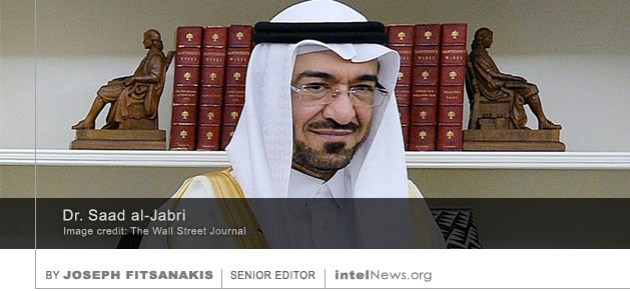
THE UNITED STATES DEPARTMENT of Justice and the Central Intelligence Agency may intervene in a civil lawsuit filed by an exiled Saudi spy against the oil kingdom’s de facto ruler, in order to protect state secrets. In a 106-page lawsuit, filed last year with the US District Court in Washington, DC, Dr. Saad al-Jabri claims that Saudi Arabia’s de facto ruler, Crown Prince Mohammed bin Salman, dispatched members of his “personal mercenary group”, known as the Tiger Squad, to North America, in order to assassinate him.
Al-Jabri was a courtier of Crown Prince Muhammad bin Nayef, grandson of Saudi Arabia’s founding monarch, King Abdulaziz. Bin Nayef, who was widely expected to be Saudi Arabia’s next king, eventually appointed al-Jabri Minister of State and made him his senior adviser on matters of security and intelligence —in essence his spy chief. But al-Jabri’s standing changed suddenly in 2015, when King Abdullah died and was succeeded by King Salman. Salman then named his son, Mohammed bin Salman, as his successor, effectively usurping al-Jabri’s mentor and protector, Prince bin Nayef. Within weeks, al-Jabri had been fired, while his patron, bin Nayef had gone under house arrest. Fearing for his life, al-Jabri took his eldest son, Khalid, and escaped to Canada in the middle of the night. They remain there to this day.
Bin Salman’s lawyers have dismissed al-Jabri’s lawsuit as baseless, and accuse the former spy chief of embezzling $3.4 billion from Saudi state coffers under the pretense of funding security programs. Al-Jabri’s lawyers have told the court that an “examination of the counterterrorism and national security activities of the United States government” may be necessary in order to demonstrate that their client has not embezzled state funds.
This development has US government officials worried, according to The Washington Post’s well-sourced David Ignatius. He reports that, in April of this year, the US Department of Justice filed a document in a federal court in Massachusetts, in which it outlines its plans to intervene in al-Jabri’s lawsuit against bin Salman. According to the Department of Justice, al-Jabri’s legal team may intend “to describe information concerning alleged national security activities”, which is something the US government would like to prevent.
According to Ignatius, the Department of Justice could invoke the rarely used “state secrets privilege”, which allows the US government to refuse to disclose information when ordered to do so by a court of law, if there is a “reasonable danger” that doing so could threaten US national security. Ignatius added that the Central Intelligence Agency is also looking into whether it could resist a judge’s orders to disclose information pertaining to the case of al-Jabri.
► Author: Joseph Fitsanakis | Date: 24 May 2021 | Permalink
 AUSTRIAN AUTHORITIES HAVE REPORTEDLY expelled from the country an Italian citizen of Turkish origin, who was allegedly hired by the Turkish government as an assassin. The man, Feyyaz Öztürk, 53, reportedly turned himself in to Austrian intelligence last year.
  REPORTS IN BRITAIN AND Israel claim that Iranian authorities have visually identified the assassins who were allegedly involved in the killing of Mohsen Fakhrizadeh, a nuclear scientist believed to have led Iran’s nuclear program. Fakhrizadeh was a brigadier general in the Islamic Revolutionary Guard Corps (IRGC), Iran’s elite paramilitary force. He was accused by the United States and Israel of leading the Islamic Republic’s nuclear weapons program, whose existence Tehran strongly denies.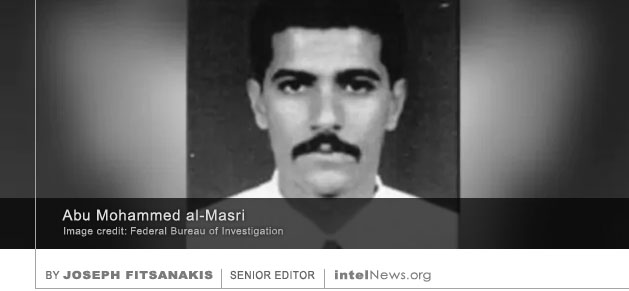
 An Iranian plot to kill the United States’ ambassador to South Africa was reportedly uncovered by American intelligence agencies, which believe Tehran is still seeking to avenge the assassination of General Qassem Soleimani in January of this year. The head of the Islamic Revolutionary Guard Corps, Iran’s elite paramilitary force, was killed by a US drone strike during a visit to the Iraqi capital Baghdad, sparking major tension between Washington and Tehran.
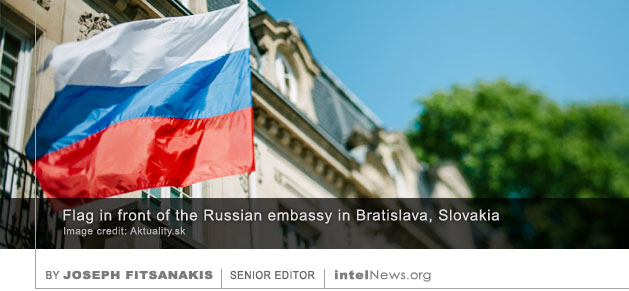 Three Russian diplomats have been ordered to leave Slovakia, reportedly in connection with the killing in Germany of a Chechen former separatist, which many believed was ordered by Moscow. On Monday, the Foreign Ministry of Slovakia confirmed media reports that three Russian diplomats had been declared ‘unwanted persons’ and ordered to leave the country.
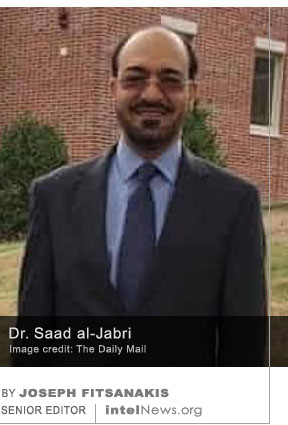 Canadian border guards thwarted a sophisticated plot to kill a Saudi former senior intelligence official, who has been targeted by the oil kingdom’s crown prince because he served a rival member of the royal family, according to a lawsuit filed in an American court.
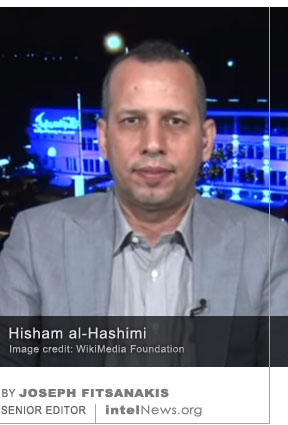 A leading Iraqi expert on paramilitary groups has been shot dead outside his home in Baghdad, raising concerns that the Iraqi government is unable to curtail the activities of militias in the country. Hisham al-Hashimi, 47, was a Baghdad University-educated historian, who rose to prominence in post-Ba’athist Iraq as an expert on paramilitary groups in the country. He was seen as a leading local authority on the Islamic State and advised the United States-led coalition on the group’s inner workings.
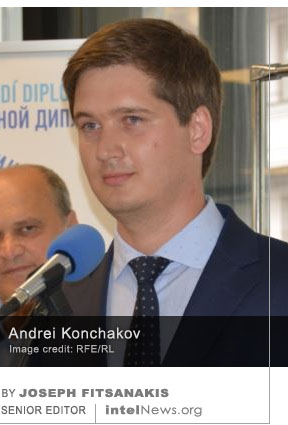 Moscow has reacted angrily to the Czech government’s decision to expel two Russian diplomats from the country, in response to allegations that the Kremlin plotted to assassinate three outspoken Czech politicians using a deadly poison. Russian officials pledged to respond in kind to Prague’s “indecent and unworthy deed”.
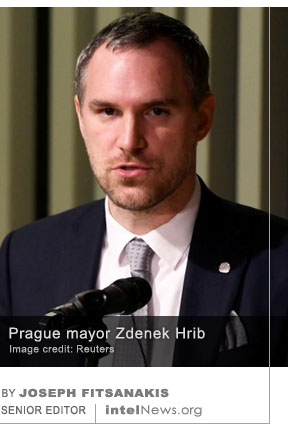 The Russian government has strongly denied accusations in the Czech media that it dispatched an assassin to Prague to kill two leading Czech politicians. The denial was issued by the Kremlin a day after Prague mayor Zdeněk Hřib said he had been placed under 24/7 police protection because of fears his life could be in danger.
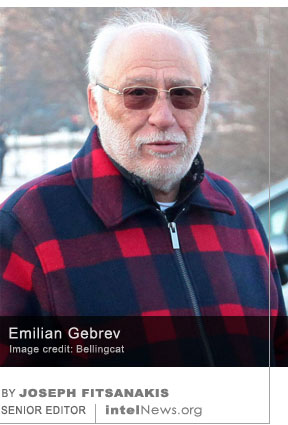 A Russian intelligence officer, who was allegedly involved in an attempt to kill a Bulgarian arms dealer in Sofia in 2015, is now a diplomat, according to report published on Tuesday by the investigative website Bellingcat. The website also claimed that there is a possible connection between the intelligence officer and the






 intelNews.org
Most of the commandos who killed Haiti’s president were Colombians, police says
July 9, 2021 by Joseph Fitsanakis 1 Comment
The men, described as “highly trained and heavily armed”, quickly exited the vehicles and opened fire on the security detail of President Jovenel Moïse. Many witnesses described the assailants as foreign in appearance and speaking either English or Spanish —languages that are not widely spoken in Haiti, where the local languages are Creole and French. These reports were eventually confirmed when the Haitian National Police identified two of the assailants as Joseph Vincent, 55, and James Solages, 35, both American citizens and residents of Miami’s Little Haiti community. Interestingly, Solages describes himself as a “certified diplomatic [security] agent” and is believed to have served as head of bodyguards at the Embassy of Canada in the Haitian capital.
Late on Thursday, Léon Charles, chief of Haiti’s National Police, announced that 17 suspected assailants had been captured alive, seven killed during the raid, while at least eight others remained on the run. He added that all of captured assailants are foreign and all but two are Colombian citizens. Of those, several are retired members of the Military Forces of Colombia. Overall, 26 members of the commando team were Colombian citizens, said Charles. He did not provide further information. Later that same evening, the Associated Press reported that Colombian President Ivan Duque instructed his country’s military leadership to “cooperate in the investigation” by the Haitian authorities.
Importantly, the precise motive of the assailants remains unclear. The attack was almost certainly planned well in advance, and was part of a broader plan to eliminate Moïse, who is championed and reviled by Haitians in equal measure. But the attack also appears to have been combined with an effort to justify the killing, possibly by exposing negative information about the late president following the attack. This would explain why the assailants did not leave Moïse’s residency immediately after assassinating him, but instead ransacked nearly every room of the premises, apparently looking for documents and computer drives.
It is also puzzling how such a heavily armed team, whose members were described by Haitian authorities as “well-trained professionals” did not appear to have an exit plan following the raid on the president’s residence. Their attack was sophisticated enough to penetrate Moïse’s heavy security detail, and even reach its target in a safe room inside the building, reportedly without suffering any losses. However, several assailants were shot dead or injured in firefights that erupted long after the attack. Eventually all but eight members of a 28-member commando team were either killed or captured.
In the hours after the president’s assassination, Haiti was placed under martial law by the Prime Minister, Claude Joseph, a Moïse ally who appears to have the backing of the military. This means little, however, in a country where rival armed gangs control numerous neighborhoods in Port-au-Prince and other major cities and towns. Some of these gangs are affiliated with the country’s two main political parties, the Haitian Tèt Kale Party (which supported Moïse) and the Alternative League for Haitian Progress and Emancipation, which refused to acknowledge Moïse as the legitimate head of state following the national election of 2016.
► Author: Joseph Fitsanakis | Date: 09 July 2021 | Permalink
Filed under Expert news and commentary on intelligence, espionage, spies and spying Tagged with assassinations, Colombia, Haiti, Jovenel Moïse, News