Analysis: Middle East on verge of new regional war as US kills top Iran general
January 3, 2020 7 Comments
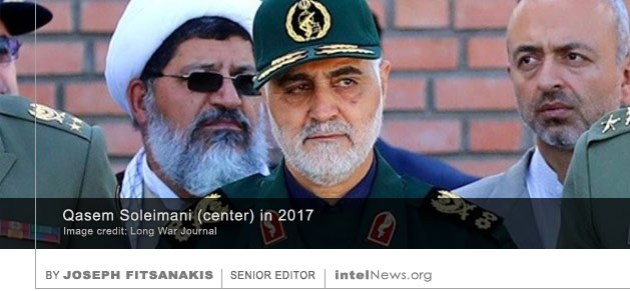 In an act whose implications are impossible to overstate, the United States has assassinated General Qasem Soleimani, arguably Iran’s second most powerful official. In the early hours of this morning, the entire Middle East stood on the verge of a regional war as the US Department of Defense announced it killed Soleimani in a “defensive action […] aimed at deterring future Iranian attack plans”. But Soleimani’s killing will be seen by the Iranian government as nothing short of an official declaration of war. Tehran’s next move will determine the precise form this new war will take.
The United States, Israel and Saudi Arabia have targeted Soleimani for assassination for over a decade. In 2019 alone, Iran reported over half a dozen alleged plots to kill the general, the most recent of which was in early October. Soleimani’s killing is therefore not surprising. Moreover, Washington’s move rests on a number of crucial calculations by the White House, which help explain  why US President Donald Trump made the decision to kill Soleimani, and why he did so now.
In the not-too-distant past, some of America’s tactical security goals aligned with Soleimani and his Quds Force —an elite unit inside the Islamic Revolutionary Guard Corps, which is tasked with exporting the Iranian Revolution abroad. The Iranian paramilitary unit helped Washington deal with the Afghan Taliban in the days after the 9/11 attacks, and its proxies in Iraq and Syria helped the US and its allies deliver fatal blows to the Islamic State. But in doing so, Tehran solidified its power within Iraq, turning its government into a satellite of Iran. The rise of the Popular Mobilization Forces (PMF), the Iranian-supported militias in Iraq, is largely a replay of the rise of Hezbollah, Iran’s paramilitary proxy in Lebanon, in the 1980s. Having painted themselves into a corner, America’s political leadership had to act. It chose to do so by essentially ‘decapitating’ the Quds Force, which is the main conduit between Iran and the PMF. It is worth noting that Abu Mahdi al-Muhandis, the deputy head of the PMF, was also killed in the same strike. Washington’s hope is that these killings can somehow prevent —or at least curtail— the Lebanization of Iraq. Read more of this post
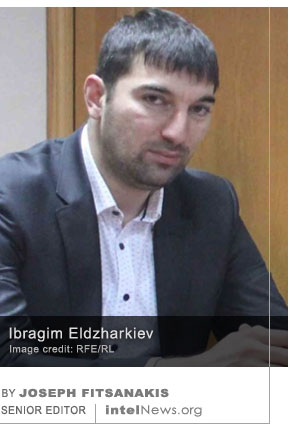 A senior counter-terrorism officer in the Russian police has been gunned down along with his brother in a downtown Moscow street, in what authorities describe as a contract killing. One of the two victims has been named as Ibragim Eldzharkiev (pictured), who headed the Russian Interior Ministry’s Anti-Extremism Center in the Republic of Ingushetia in the Russian Caucasus. His younger brother was reportedly also killed in the attack.
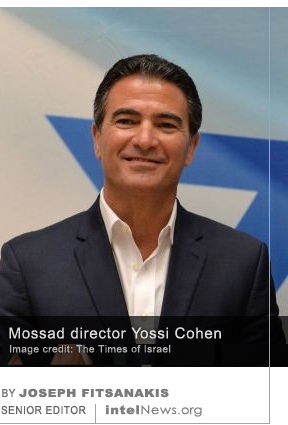 Yossi Cohen, the chief of the Mossad —Israel’s main external intelligence agency— said he has authorized “more than a few” assassinations during his tenure and warned that more may be on the way. Cohen, 57, who took command of the Mossad in 2016, spoke last week to Mishpacha, a magazine aimed at ultra-orthodox Jews. His comments were
 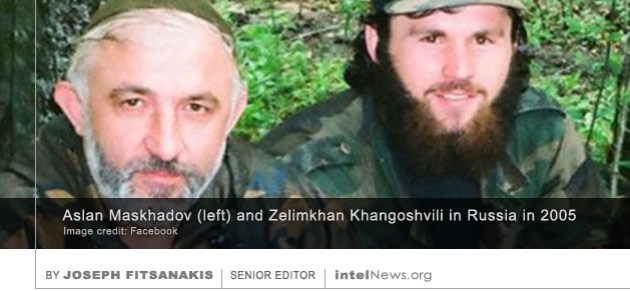 Authorities in Germany suspect that Moscow may have been behind the assassination of a Chechen separatist who was shot in broad daylight in Berlin by a man wearing a wig and carrying a pistol fitted with a silencer. The victim of the attack was Zelimkhan Khangoshvili, 40, who was a leading figure in the so-called Second Chechen War. The conflict pitted the Russian military against groups of Muslim fighters in the North Caucasus between 1999 and 2009.
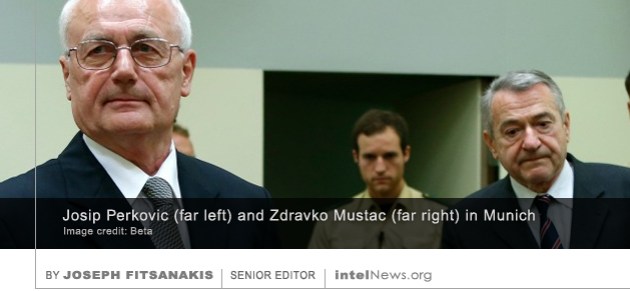 Germany has extradited a former senior official of the Yugoslav intelligence service to Croatia, where he is expected to serve a 30-year prison sentence for organizing the assassination of a dissident in Munich in 1983. Josip Perković is a former senior official in the Yugoslav State Security Service, known as UDBA. In 2014, he was extradited to Germany from Croatia alongside another former UDBA officer Zdravko Mustać. The two men were tried in a German court in the Bavarian capital Munich for organizing the assassination of Stjepan Đureković on July 28, 1983. Đureković’s killing was carried out by UDBA operatives in Wolfratshausen, Bavaria as part of a UDBA operation codenamed DUNAV. Đureković, who was of Croatian nationality, was director of Yugoslavia’s state-owned INA oil company until 1982, when he suddenly defected to West Germany. Upon his arrival in Germany, he was granted political asylum and began associating with Croatian nationalist émigré groups that were active in the country. It was the reason why he was killed by the government of Yugoslavia.
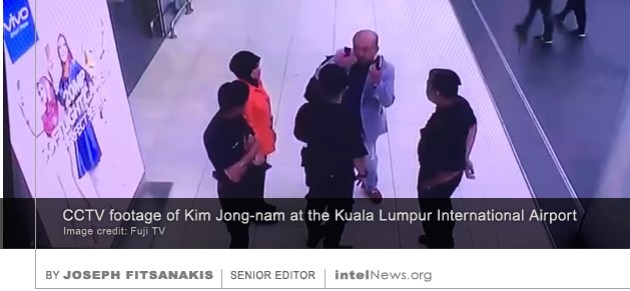 Kim Jong-nam, the half-brother of North Korean leader Kim Jong-un, held regular meetings with American intelligence officers before he was assassinated with VX nerve gas at a busy airport terminal in Malaysia. Two women
  The second of two female assassins who killed the half-brother of North Korean leader Kim Jong-un in 2017 in Kuala Lumpur has been released from prison by the Malaysian state, after a mostly secret trial. The two women, Doan Thi Huong of Vietnam and Siti Aisyah of Indonesia (pictured),
  A former paramilitary officer in the French intelligence service, who was under investigation for allegedly plotting to kill a senior Congolese opposition figure, has been shot dead near a village in the French Alps. Daniel Forestier, 57, served for nearly 15 years in a paramilitary unit of the Directorate-General for External Security (DGSE) —France’s equivalent of the United States Central Intelligence Agency. After his retirement from the DGSE, he moved with this wife and two children to the alpine village of Lucinges, near Geneva, in the Auvergne-Rhône-Alpes region in southeastern France. He reportedly operated a tobacconist shop, served in the village council, and wrote spy novels in his spare time.
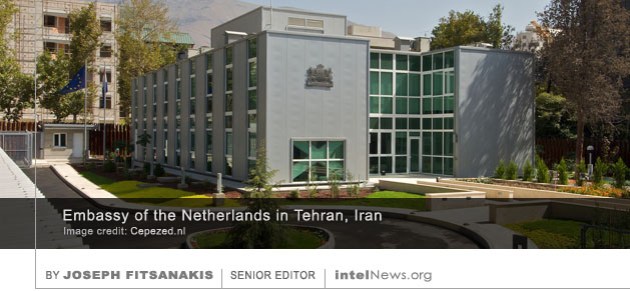 Holland said on Monday that it had recalled its ambassador from Tehran after Iran expelled two Dutch diplomats, in a deepening dispute involving the assassination of two Dutch citizens by alleged Iranian agents. In July of last year, Holland
 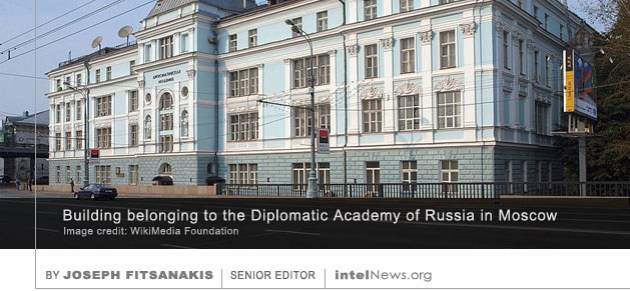 An investigative website has linked a graduate of an elite intelligence academy in Moscow with the attempted assassination of a Russian former double spy in Britain last year. Reports last year identified Dr. Alexander Yevgenyevich Mishkin (cover name ‘Alexander Petrov’) and Colonel Anatoliy Chepiga (cover name ‘Ruslan Boshirov’) as the two men that tried to kill Sergei Skripal in the English town of Salisbury in March 2018. Skripal, a former officer in Russia’s military intelligence service, the GRU, was resettled in Salisbury in 2010, after spending several years in a Russian prison for spying on behalf of Britain. But he and his daughter Yulia almost died last March, after they were
 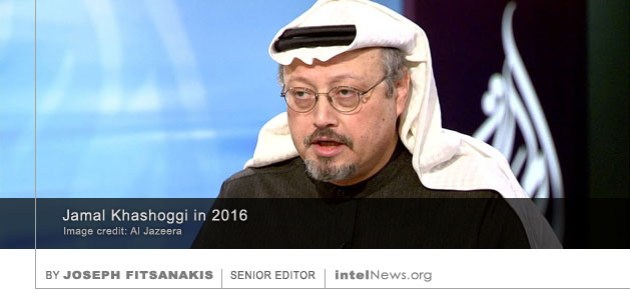 An international law center based in New York is suing the United States Central Intelligence Agency for access to classified files relating to the death of the Saudi journalist Jamal Khashoggi. Khashoggi, 59, was a Saudi government adviser who became critical of the Kingdom’s style of governance. He moved to the United States and began to criticize Saudi Arabia from the pages of The Washington Post. He was
  Authorities in Holland have officially accused Iran of ordering the contract murders of two men on Dutch soil in 2015 and 2017, one of them just a block away from the Dutch foreign ministry’s headquarters. The announcement illuminates the reason behind the expulsion of two Iranian diplomats from Holland last year, which the authorities did not explain at the time.
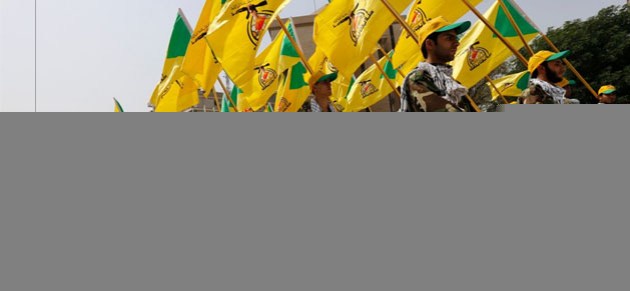 Authorities in Colombia said that three Venezuelans, who were arrested in Colombia’s Caribbean coast with submachine guns and explosives, were planning to assassinate President Iván Duque. The claim was aired in a
 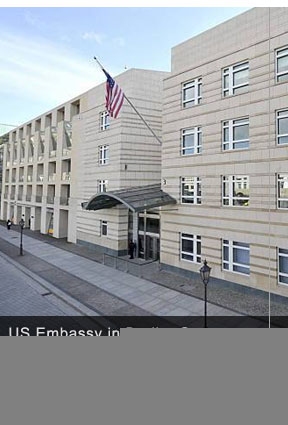 Saudi Crown Prince Mohammed bin Salman sent at least eleven text messages to the man in charge of the 15-member hit team that killed journalist Jamal Khashoggi last month, according to a classified report produced by the United States Central Intelligence Agency. The CIA report was leaked to The Wall Street Journal, which said in a






 intelNews.org
Pakistani Taliban leaders found dead in Kabul hotel, culprits unknown
February 10, 2020 by Joseph Fitsanakis Leave a comment
According to the BBC, which reported on the incident on Friday, the bodies of the two men were found in or near the Inter-Continental, a five-star hotel located in western Kabul. According to Afghan government sources, the two men were carrying forged identification papers. In a statement issued on Thursday, the Pakistani Taliban identified the dead men as Sheikh Khalid Haqqani and Qari Saif Younis. Sheikh Haqqani had served as the group’s deputy leader, and was a member of its leadership council. Younis was among the group’s most powerful military commanders.
The Pakistani Taliban said that the two men had secretly traveled to Kabul from Paktika, a Taliban stronghold in the east-central region of Afghanistan, in order to attend a high-level meeting. The group did not say who the two men were meeting and why. But it is rare for leading figures of the Pakistani Taliban to leave the areas that the group controls, and even rarer for them to travel to Kabul or any other big city in the region.
The statement from the Pakistani Taliban claimed that the two men were killed “in a clash with American forces”. But the BBC quoted an unnamed “source within the group” who said that they could also have been targeted by militant groups linked to the Pakistani government, which is a sworn enemy of the Pakistani Taliban. United States officials have yet to comment on this developing story.
► Author: Joseph Fitsanakis | Date: 10 February 2020 | Permalink
Filed under Expert news and commentary on intelligence, espionage, spies and spying Tagged with Afghanistan, assassinations, Inter-Continental Hotel (Kabul), Kabul (Afghanistan), News, Pakistani Taliban, Qari Saif Younis, Sheikh Khalid Haqqani, suspicious deaths