Russia possibly tried to kill Montenegro PM, says British foreign secretary
March 13, 2017 1 Comment
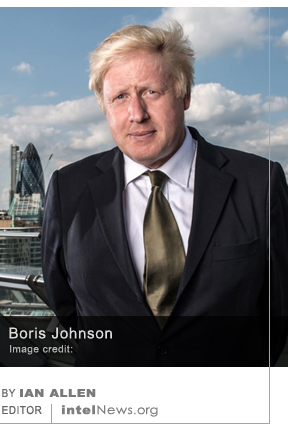 Boris Johnson, the British foreign secretary has said in an interview that Russian spies may have orchestrated last year’s failed attempt to kill the then-prime minister of Montenegro, Milo Dukanović. Mr. Johnson, a senior figure in the Conservative Party of the United Kingdom, was a major contender for the prime minister’s position in 2016, after the administration of David Cameron collapsed under the weight of the Brexit vote result. Speaking on Sunday morning to reporter Robert Peston, of Britain’s ITV television network, Mr. Johnson said that the West should “engage” with Russia, but warned that it should also “beware” of Moscow’s “dirty tricks” in Europe and the United States.
The British foreign secretary spoke following reports that British intelligence services called an emergency meeting with representatives of the country’s major political parties, in order to warn them that Russia planned to use cyber-attacks to disrupt regional and national elections in the country. Mr. Johnson said that the government had “no evidence the Russians are actually involved in trying to undermine our democratic processes at the moment”. But he added that there was “plenty of evidence that the Russians are capable of doing that. And there is no doubt”, he went on, “that they’ve been up to all sorts of dirty tricks”. Some of those “dirty tricks”, said Mr. Johnson, targeted the former Yugoslav Republic of Montenegro, where last year there was “an attempted coup and possibly an attempted assassination”.
The British politician was referring to allegations made last October by authorities in Montenegro that “nationalists from Russia” and Serbia were behind a failed plot to kill the country’s then-Prime Minister Milo Dukanović and spark a pro-Russian coup in the country. The allegations surfaced after 20 Serbians and Montenegrins were arrested by police in Montenegro for allegedly planning a military coup against the government. The arrests took place on election day, October 16, as Montenegrins were voting across the Balkan country of 650,000 people. The plotters had allegedly hired a “long-distance sharpshooter” who was “a professional killer” for the task of killing Đukanović. After killing the Prime Minister, the plotters planned to storm the parliament and prompt a pro-Russian coup in Montenegro, according to authorities. In response to allegations that the coup had been hatched in neighboring Serbia, Serbian Prime Minister Vučić said that he would not allow Serbia to “act as the puppet of world powers”, a comment that was clearly directed at Moscow. Russia vehemently denied the allegations.
Meanwhile, Mr. Johnson is preparing to visit Moscow in a few days to meet with his Russian counterpart, Minister of Foreign Affairs Sergey Lavrov. He told ITV that he planned to deliver his “personal feeling” to Mr. Lavrov, which “is one of deep, deep sadness” about Russia’s foreign policy under President Vladimir Putin.
► Author: Ian Allen | Date: 13 March 2017 | Permalink
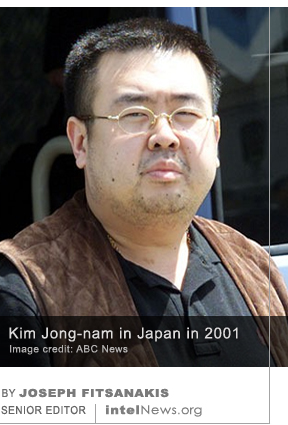 Two women have been arrested in the past 48 hours in connection with the assassination of Kim Jong-nam, half-brother of North Korea’s supreme leader, who died in Malaysia on Monday. Kim, the grandson of North Korea’s founder Kim Il-Sung, died after two women approached him at the Kuala Lumpur International Airport and splashed his face with liquid poison. Some reports suggest that he was injected with a poisoned needle.
  The half-brother of North Korean Supreme Leader Kim Jong-un has been killed in an audacious attack in Malaysia, reportedly by two female assassins who used a poisonous substance to murder him. Kim Jong-nam, was the eldest son of Kim Jong-il, and grandson of Kim Il-Sung, who founded the Democratic People’s Republic of Korea in 1948. However, he left the country in 2007, reportedly after it became clear that his younger half-brother, Kim Jong-un, was the regime’s preferred successor to his father, Kim Jong-il.
 Authorities in Germany have pressed espionage charges against a Pakistani man who allegedly spied for Iran and even compiled lists of potential targets for assassination. The man, who has been identified in media reports only as “Syed Mustafa H.”, is a 31-year-old worker at the German Aerospace Center in the northern German city of Bremen. He is also reportedly a graduate of the Materials Science and Production Engineering department of the Universität Bremen. According to court documents, he is believed to have been spying for Iranian intelligence since the summer of 2015. It appears that the Federal Office for the Protection of the Constitution (BfV), Germany’s domestic intelligence agency, had been aware of the man’s espionage activities for at least a year prior to his arrest.
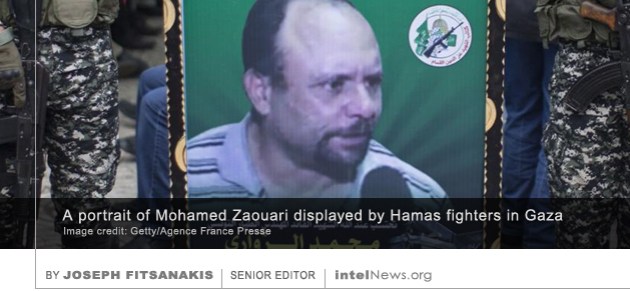 Despite persistent silence from Tel Aviv, commentators there seem increasingly convinced that Israeli spies were behind last week’s killing of an aviation engineer who worked for the Palestinian militant group Hamas. The man, Mohamed Zaouari, 49, was a Tunisian national who had spent over a decade creating an innovative aerial drone program for the Palestinian group that controls the Gaza Strip. He was
  A senior aviation engineer who headed the unmanned aerial vehicle program of the Palestinian militant group Hamas, has been shot dead outside his home in Tunisia by a group of assailants using gun silencers. Mohamed Zaouari, 49, was a Tunisian national who had spent over a decade creating an innovative aerial drone program for Hamas, the Palestinian group that today controls the Gaza Strip. He had lived outside of Tunisia for much of his life, most recently in Syria, where he is believed to have worked as an engineer in a private firm, while also consulting with the Palestinian group. He had returned to Tunisia in 2011, following the upheaval in the country that sparked the so-called Arab Spring.
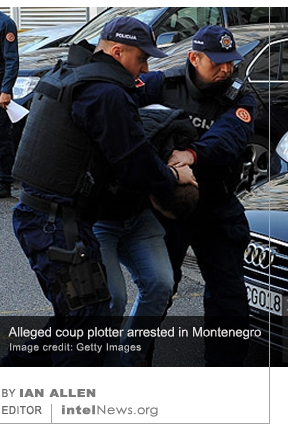 Authorities in the former Yugoslav Republic of Montenegro say that “nationalists from Russia” and Serbia were behind a failed plot to kill the country’s prime minister and spark a pro-Russian coup in the country. As intelNews
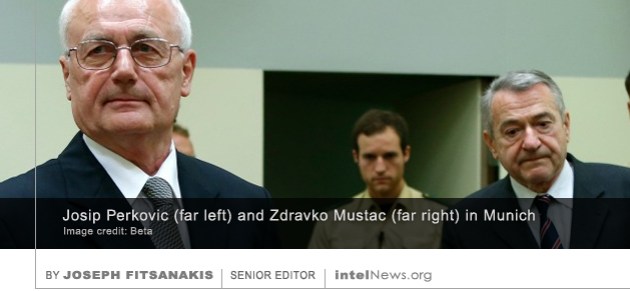
 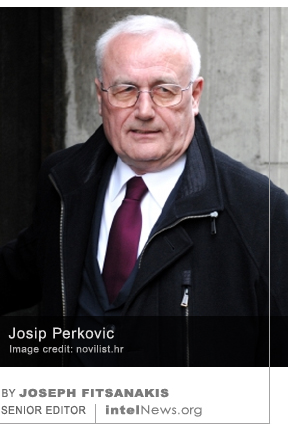 A German court has given life sentences to two senior intelligence officers in Cold-War-era Yugoslavia, who masterminded the murder of a Croat dissident in 1983. Josip Perković and Zdravko Mustać, both former senior officials in the Yugoslav State Security Service, known as UDBA, were
  A former officer in the Cold-War-era Yugoslav intelligence service has begun testifying at a trial concerning the 1983 murder in Germany of a Yugoslav dissident by assassins sent by authorities in Belgrade. Stjepan Đureković, who was of Croatian nationality, defected from Yugoslavia to Germany in 1982, while he was director of Yugoslavia’s state-owned INA oil company. Upon his arrival in Germany, he was granted political asylum and began associating with Croatian nationalist émigré groups that were active in the country. He was killed on July 28, 1983, in Wolfratshausen, Bavaria. His killing was part of an operation codenamed DUNAV, which was conducted by the Yugoslav State Security Service, known by its Serbo-Croatian acronym, UDBA.
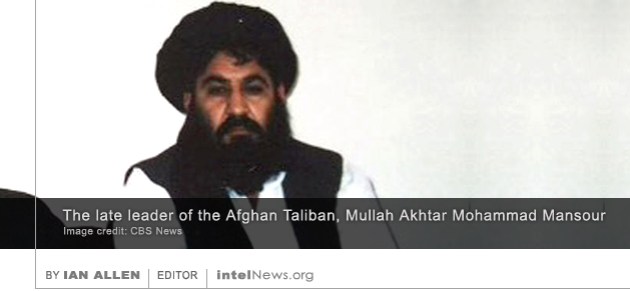 Frequent trips to Iran caused the demise of the late leader of the Afghan Taliban, Mullah Akhtar Mohammad Mansour, who was
 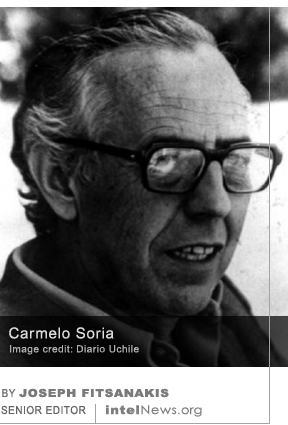 The Supreme Court of Chile will request that the United States extradites three individuals, including an American former professional assassin, who are implicated in the kidnapping, torture and murder of a United Nations diplomat. Carmelo Soria was a Spanish diplomat with dual Chilean nationality, who in the early 1970s was employed in the United Nations Economic Commission for Latin America and the Caribbean. In 1971, when the leftist Popular Unity party won Chile’s elections and became the nation’s governing coalition, Soria became an advisor to the country’s Marxist President, Salvador Allende. After the 1973 violent military coup, which killed Allende and overthrew his government, Soria used his diplomatic status to extend political asylum to a number of pro-Allende activists who were being hunted down by the new rightwing government of General August Pinochet.
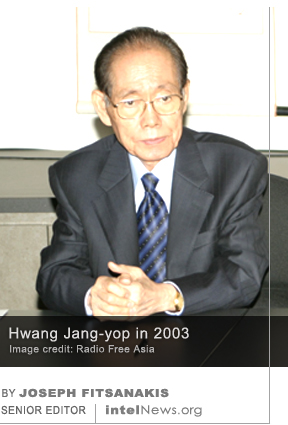 An appeals court in Seoul has upheld the conviction of a South Korean member of a spy cell that planned to assassinate the most senior North Korean defector to the South. The man, identified in media reports only by his last name, Park, is a South Korean citizen who allegedly helped a North Korean spy cell “based in China” plan the assassination of Hwang Jang-yop. In 1997, Hwang caused a sensation on both sides of the border when he defected to the South. A former secretary of the Korean Workers’ Party, Hwang was Pyongyang’s primary theorist and the ideological architect of juche, the philosophy of self-reliance, which is North Korea’s officially sanctioned state dogma. He was also believed to have ideologically mentored North Korean Supreme Leader Kim Jong-il, the father of the country’s current Supreme Leader, Kim Jong-un. Until his
 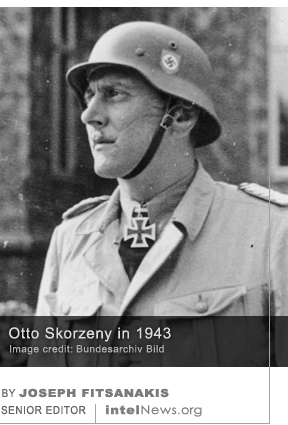 A notorious lieutenant colonel in the Waffen SS, who served in Adolf Hitler’s personal bodyguard unit, worked as a hitman for the Israeli intelligence agency Mossad after World War II, it has been revealed. Austrian-born Otto Skorzeny became known as the most ruthless special-forces commander in the Third Reich. Having joined the Austrian branch of the National Socialist German Workers’ Party at 19, at age 23 Skorzeny began serving in the Waffen SS, Nazi Germany’s conscript army that consisted largely of foreign-born fighters. In 1943, Hitler himself decorated Skorzeny with the Knight’s Cross of the Iron Cross, in recognition of his leadership in Operation EICHE, the rescue by German commandos of Italian fascist dictator Benito Mussolini, who had been imprisoned at a ski resort in the Apennine Mountains following a coup against his government.
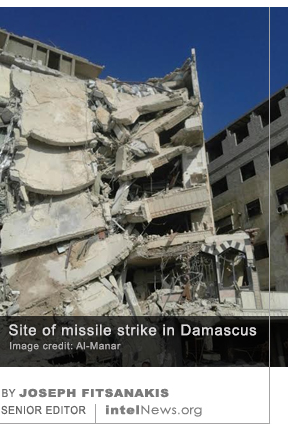 Israel has refused comment following the death of a senior official of Lebanese militant group Hezbollah, who was killed on Saturday in a missile strike in Syria. Samir Kuntar (also spelled Qantar) was a Druze who joined the Syrian-backed, Lebanese-based, Palestine Liberation Front (later Popular Front for the Liberation of Palestine – General Command) at a young age. In 1979, Kuntar was jailed for an attack on an apartment block in Israel’s northern coastal town of Nahariya, which resulted in the death of four Israeli civilians and two of the attackers. However, he was freed after nearly three decades in prison in exchange for the bodies of two Israel Defense Force soldiers, who had been captured and executed by Hezbollah in 2006.






 intelNews.org
Sophistication of Hamas official’s killing points to Mossad, say sources
March 28, 2017 by Joseph Fitsanakis 4 Comments
Last Friday, March 24, Faqha was found dead inside the garage of his apartment block in Tel el-Hawa, a densely populated neighborhood in southwestern Gaza City. Initial reports stated that the Hamas official had been shot dead by a team of assailants outside his home. But subsequent accounts revealed that several gunmen were waiting for Faqha inside the car garage located on the bottom floor of the building that houses his apartment. It now appears that the assailants had been hiding in the garage for several hours before Faqha entered it with his car. Minutes earlier, his wife and young daughter had exited the car and made their way to the front door of their apartment. As soon as Faqha drove his car to the garage and closed the garage’s electric door, the gunmen shot him four times in the head from point-blank range and vanished. There was hardly a sound, because the assailants used weapons equipped with silencers. Faqha’s body was not discovered until 7:30 in the evening, a full 90 minutes after he was shot dead. His wife apparently thought that he was talking to their neighbors.
Investigators who are looking into Faqha’s murder say that his killers were intimately familiar with the architectural details of the apartment building where he lived, and had studied his daily routine. They also made sure to leave no traces behind. Consequently, their identity remains a mystery despite the presence of security cameras around the building. Hamas security officials say they believe that Faqha’s killers entered and exited the Gaza Strip by boat. The Palestinian militant group lost little time in blaming the murder on the Mossad, Israel’s primary external intelligence agency, which has targeted several Hamas officials for assassination in the past. Khalil al-Haya, Hamas’ second-in-command in the Gaza Strip said that Israel was the only beneficiary of Faqha’s demise. Khaled Mashal, who chairs Hamas’ Political Bureau, said Israel had “changed the rules of the game” by killing Faqha, adding that Hamas would “accept the challenge”. There has been no official comment from Israel in regards to Faqha’s killing.
► Author: Joseph Fitsanakis | Date: 28 March 2017 | Permalink | Research credit: SF
Filed under Expert news and commentary on intelligence, espionage, spies and spying Tagged with assassinations, Gaza City, Gaza Strip, Hamas, Israel, Mazen Faqha, Mossad, News, Palestine