Israel has long list of assassination targets, says analyst
December 6, 2013 Leave a comment
 By JOSEPH FITSANAKIS | intelNews.org
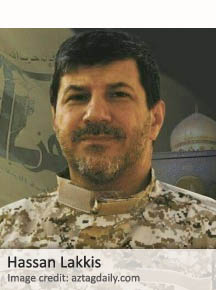
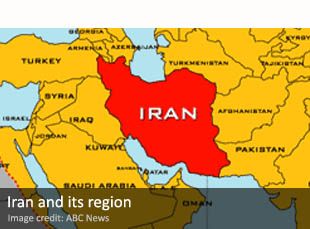
The assassination of Hezbollah commander Hassan Lakkis in Beirut, on December 3, sent shockwaves across the Middle East. Lakkis was in charge of advanced weapons planning for the militant Shiite group that controls large swaths of Lebanon. He was killed around midnight local time outside his house in the Lebanese capital, when at least two gunmen opened fire at close range, shooting him several times in the head. Shortly afterwards, Hezbollah openly accused Israel for the murder, while the Jewish state strongly rejected the allegations. But veteran Israeli intelligence commentator Ronen Bergman, who is senior analyst for Israel’s highest-selling newspaper, Yedioth Ahronoth, has little doubt that Israel was behind the attack. In an article published on Thursday in Foreign Policy, Bergman suggests that Lakkis was one of many individuals on an extensive assassination list maintained by Israel’s intelligence agencies. The list is believed to include “leading figures” in what Israeli military and intelligence planners call “the Radical Front”. This term comprises two national governments, namely those of Syria and Iran, as well as leading officials in three militant organizations, Hamas, Hezbollah and Palestinian Islamic Jihad. The longtime Israeli commentator says that the “Radical Front” assassination list was initially compiled in 2004 by Israeli covert-action agency Mossad. Interestingly, its authors did not focus on the political or ideological leadership of targeted organizations. Rather they concentrated upon “the people who handled the details and the translation of strategy into actual practice”. Many of those placed on the list were individuals with “advanced operational, organizational and technological capabilities”, says Bergman. He goes on to list several victims of Israel’s assassination campaigns, including Hezbollah commander Imad Mughniyah, who died in a massive car explosion in Syrian capital Damascus on February 12, 2008. At the time of his assassination, Mughniyah headed Hezbollah’s security apparatus and was among the organization’s most senior intelligence officials. Another victim mentioned by Bergman is Syrian General Muhammad Suleiman, who had been appointed by Syrian president Bashar Al-Assad as Special Presidential Advisor for Arms Procurement and Strategic Weapons. Read more of this post

 By JOSEPH FITSANAKIS | intelNews.org |










 intelNews.org
Croatian court authorizes extradition of ex-spy official to Germany
January 13, 2014 by Joseph Fitsanakis Leave a comment
A court in the Croatian capital Zagreb has ruled in favor of the extradition of the country’s former spy chief to Germany, where he is wanted for the communist-era murder of a Yugoslav dissident. Josip Perković was a senior official in the Yugoslav State Security Service (known by its Serbo-Croatian acronym, UDBA) during the closing stages of the Cold War. He is a prime suspect in the murder of Stjepan Đureković, a Yugoslav defector who was killed by UDBA agents in 1983. Đureković, who was of Croatian nationality, defected from Yugoslavia to Germany in 1982, while he was director of the state-owned INA oil company. Upon his arrival in Germany, he was granted political asylum and began associating with Croatian nationalist émigré groups that were active in the country. He was killed on July 28, 1983, in Wolfratshausen, Bavaria, in a UDBA operation codenamed DUNAV. In 2009, following testimonies by several former UDBA agents, who were arrested in connection with the crime, the Office of the German Federal Prosecutor issued a European Arrest Warrant for Perković, who is believed to have authorized Đureković’s assassination. However, Croatia consistently refused to honor the warrant and allowed Perković to live in Zagreb. The reason, according to observers, was that the former spy official was instrumental in helping set up Croatia’s first post-independence intelligence agency, which he directed for the first few years of its existence. His contribution to the establishment of Croatia’s intelligence apparatus has contributed to his political legacy in the country, which effectively shielded him from extradition to Germany. Read more of this post
Filed under Expert news and commentary on intelligence, espionage, spies and spying Tagged with assassinations, Cold War, Croatia, extraditions, Germany, history, Josip Perković, News, Operation DUNAV, Stjepan Durekovic, Wolfratshausen (Germany), Yugoslav State Security Service, Yugoslavia, Zagreb (Croatia)