New law to give Australian intelligence officers more rights to use firearms
November 29, 2018 2 Comments
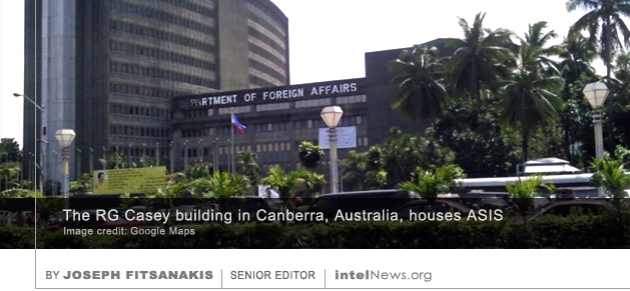 The Australian government has proposed a new law that would give intelligence officers broader powers to use firearms during undercover operations abroad. If it is approved by parliament, the new law would apply to the Australian Secret Intelligence Service (ASIS), a civilian intelligence agency that carries out covert and clandestine operations abroad. Modeled after Britain’s Secret Intelligence Service (MI6), ASIS was established in 1952, but its existence was not officially acknowledged by the Australian government until 25 years later, in 1977.
In 2004, ASIS was given legal permission for the first time to use firearms during undercover operations abroad. However, under current Australian law, this is allowed only as a last resort. ASIS personnel engaged in overseas operations are allowed to employ firearms in self-defense or to protect their agents —foreigners that have been recruited by ASIS to spy for Australia. However, the current government of Prime Minister Scott Morrison argues that ASIS personnel must be given broader powers to exercise “reasonable force” via the use of firearms during overseas operations. In a speech on Wednesday, Australia’s Minister for Foreign Affairs Marise Payne said that the overseas environment in which ASIS operates today is more complex than that of 2004, when the current laws of engagement were enacted. She added that nowadays ASIS personnel work in more hazardous locations, including warzones, and carry out “more dangerous missions in new places and circumstances”.
The government argues that the proposed changes will allow ASIS personnel to “protect a broader range of people and use reasonable force if someone poses a risk to an operation”. The new law will give ASIS officers permission to open fire against adversaries in order to protect parties other than themselves —such as hostages— or to avoid getting captured. This, says the government, will allow them to efficiently “protect Australia and its interests”. The last time that the Australian government flirted with the idea of giving ASIS broader powers to use firearms during undercover operations was in 2010. That year, the government of Prime Minister Kevin Rudd commissioned a multimillion dollar independent review of the Australian intelligence community’s mission and operations. The review proposed that ASIS personnel be allowed more powers to carry and handle weapons while engaging in “paramilitary activities” outside Australia. But the proposal was never enacted into law.
The latest proposal by the Morrison administration is scheduled to be discussed in the Australian Parliament today.
► Author: Joseph Fitsanakis | Date: 29 November 2018 | Permalink













 intelNews.org
In rare speech, Australian intelligence chief stresses urgent need to recruit more spies
May 10, 2022 by Joseph Fitsanakis 1 Comment
Symon’s talk was hosted in Sydney by the Lowy Institute, an independent Australian think-tank that focuses on international affairs. During his talk, which was made available afterwards on the Lowy Institute’s website, Symon spoke about a range of issues relating to Australia’s geopolitical priorities and their connection to intelligence operations. He told the audience that the primary task of ASIS, which is to recruit foreign subjects to spy on behalf of Australia, remained as crucial as ever.
He added, however, that a growing number of pressing concerns made “the need to recruit new spies” more essential than ever before. According to Symon, ASIS needs to “recruit and work with even more vigor and urgency than at any other point in our 70-year history”. In this task, China remains a strategic focus for ASIS, given its role in the region. Symon claimed there were signs that increasing numbers of Chinese state “officials [and] individuals” were “interested in a relationship” with ASIS. This was because many Chinese are becoming concerned about what he described as the rise of “an enforced monoculture” in China, and wish to stop it, said Symon.
Later in his speech, the ASIS director touched in broad terms on the challenge posed by technology on human intelligence (HUMINT) operations, in which ASIS specializes. He described these challenges as “extraordinary”, and said they resulted from an interaction between “a complex strategic environment [and] intensified counter-intelligence efforts” by Australia’s adversaries, as well as a host of “emergent and emerging technologies”. These technologies are in many ways posing “a near-existential” risk to the types of HUMINT operations carried out by ASIS, as the organization’s collection activities run the risk of becoming “increasingly discoverable”, said Symon.
► Author: Joseph Fitsanakis | Date: 10 May 2022 | Permalink
Filed under Expert news and commentary on intelligence, espionage, spies and spying Tagged with Australia, Australian Secret Intelligence Service, China, espionage, HUMINT, Paul Symon