Revealed: German neo-Nazi who helped Palestinians was CIA agent
January 4, 2013 6 Comments
 By JOSEPH FITSANAKIS | intelNews.org |
A German far-right militant, whose animosity against Jews led him to aid Palestinians kill Israeli athletes in the 1972 Munich massacre, says he was later recruited by the United States Central Intelligence Agency. Willi Pohl, also known as Willi Voss, 68, was arrested by German authorities a few weeks after Palestinian terrorist group Black September stormed the Olympic village in Munich and took hostage 11 Israeli athletes. All of them were eventually killed by their captors during a botched escape attempt at the nearby Fürstenfeldbruck airport. Voss, who was a known neo-Nazi activist at the time, was charged with possession of weapons and providing logistical support to the Black September militants. However, after his sentence was suspended, Voss managed to secretly emigrate to Beirut, Lebanon, where he was recruited as an agent of Jihaz el-Razd, the intelligence service of the Fatah, the main group in the Palestine Liberation Organization. But in 1975, while on a PLO mission in Belgrade, Yugoslavia, he decided to switch sides. He made the decision after discovering that the car he and his girlfriend were transporting on behalf of the PLO from Beirut to Belgrade contained weapons and highly unstable explosives. He says that the PLO had apparently failed to mention the existence of the hidden items when they asked him to transport the car to Europe. According to Voss’ new book, which has just been published in Germany under the title UnterGrund (Underground), the guns and explosives were discovered by customs officers in Romania (then Rumania); but because at that time the communist country was an ally of the PLO, Voss and his girlfriend were allowed to travel to Belgrade, minus the car and the weapons. Read more of this post
 By JOSEPH FITSANAKIS | intelNews.org |









 intelNews.org
ISIS bombing of Beirut is more important than Paris attacks
November 17, 2015 by Joseph Fitsanakis 2 Comments
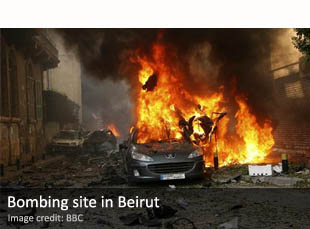
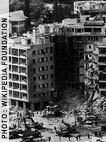
The contrast between the media’s treatment of the attacks in Paris and Beirut could not have been starker. The news of the double suicide blasts in Beirut hardly penetrated global headlines, with the exception of outlets like Al Jazeera and Al Arabiya. Even the BBC, which typically pays more attention to non-Western news, relegated the incident to third place, behind a story about corruption in the international football association and the news of the killing of “Jihadi John”. There was no “safety check” app on Facebook, and no Lebanese flags were superimposed on users’ profile photos. Yet the blasts in Beirut are more significant than the attacks in Paris, for two reasons.
First, because attacking “soft targets” in Paris is far easier than attacking Beirut. Paris is a city of 2.2 million people, who are used to a life of relative security and hardly pay attention to their surroundings. The “city of light” features a café in nearly every corner, 13,000 restaurants and over 2,000 hotels; it is easy to enter and exit, and is hardly policed, even by Western standards. Beirut, on the other hand, is a tense Middle Eastern city with heavy police and military presence. The southern Beirut neighborhood of Bourj al-Barajneh, which was targeted by ISIS on November 12, is a Hezbollah stronghold, and probably one of the most tightly policed urban areas in the Eastern Mediterranean. There is little government presence there; but this does not mean that there is no security. On the contrary, Hezbollah militias and volunteers provide protection and conduct careful monitoring of nearly every street. Like its neighboring Dahieh, Bourj al-Barajneh is a world far removed from the fashionable streets of downtown Beirut, where Starbucks cafés and McDonald’s restaurants are frequented by fashionable Lebanese Christians and Western diplomats. Western intelligence has almost no presence there, and even the Mossad, Israel’s feared spy service, rarely ventures in the Hezbollah-controlled neighborhoods.
The fact that ISIS was able to penetrate and bomb Bourj al-Barajneh is a monumental development in the ever-widening Syrian Civil War. It demonstrates the advanced planning and operational sophistication of ISIS and places the ball squarely in Hezbollah’s court. What is more, it was the second time in less than two years that ISIS bombed southern Beirut. The Shiite group has been humiliated, having been shown to lack the resources to protect its heartland from Sunni attacks. Moreover, the Lebanese group, which is almost exclusively funded by Iran, will have to respond to that provocation. For several months, the Middle East has been buzzing with rumors that Iran and Hezbollah are preparing a two-front, large-scale ground assault against ISIS forces. Do last week’s twin suicide attacks bring that possibility closer? The answer to that question may change the entire course of the Syrian Civil War. Read more of this post
Filed under Expert news and commentary on intelligence, espionage, spies and spying Tagged with Beirut, Bourj al-Barajneh (Beirut), France, Hezbollah, Islamic State, Paris (France), Syrian Civil War