Book claims CIA framed Bulgaria over assassination attempt on Pope

John Paul II

John Paul II

By IAN ALLEN | intelNews.org |
A new book claims that the United States Central Intelligence Agency concocted a link between the Bulgarian intelligence services and the 1981 failed assassination attempt against Pope John Paul II. Entitled Kill the Pope: The Truth About the Assassination Attempt on Pope John Paul II, the book is authored by Italian investigative journalist Marco Insaldo and Turkish researcher Yasemin Taksin. Both say that Kill the Pope is the result of a twenty-year study into the incident. Pope John Paul II was shot four times by a 9mm handgun fired by Turkish citizen Mehmet Ali Ağca, while riding in the back of an open-roof car at the Vatican’s St Peter’s Square. Although Ağca’s motives are shrouded in mystery, many intelligence historians believe that he was operating as an agent for the Bulgarian secret services. It has been speculated that the Soviet KGB instructed Bulgarian intelligence to use Ağca and another Turk, Oral Çelik, to kill the Polish-born Pope, because he had strong ties with Poland’s dissident Solidarność (Solidarity) movement. But Insaldo and Taksin insist that there is no evidence to connect the Bulgarian government to the assassination operation, and that Ağca operated under the command of Turkey’s Grey Wolves, a nationalist, anti-Western paramilitary group, which consists of both secular and Islamist factions. Read more of this post

News you may have missed #474

  • Israel jails Arab activist for spying. A court in Haifa has sentenced prominent Israeli Arab activist Ameer Makhoul to nine years in prison and another year suspended sentence for charges of spying and contacting a foreign agent from Lebanon-based Hezbollah.
  • Assange used disguise to evade surveillance new book reveals. WikiLeaks editor Julian Assange disguised himself as an old woman in a wig for fear he was being followed by US intelligence, according to a book published this week by British quality broadsheet The Guardian. According to another book, to be published by journalists at German weekly newsmagazine Der Spiegel, Assange expressed private fears that the content of the US embassy cables was too explosive for his organization to withstand.
  • US Congressman wants to know who wants to know. Republican Representative Darrell Issa wants to know the names of hundreds of thousands of ordinary American citizens who have requested copies of federal government documents in recent years. Issa, the new chairman of the House Committee on Oversight and Government Reform, saying he simply wants to “make sure agencies respond in a timely fashion to Freedom of Information Act requests”. Hmmm…
News you may have missed #472

  • French spies become embroiled in Renault’s espionage saga (corrected). The Renault spying saga has taken a new turn with the carmaker accusing France’s domestic intelligence agency DGSE DCRI of sabotaging its reputation. Jean Reinhart, Renault’s lawyer, said that the DGSE DCRI had leaked details of the inquiry into accusations of industrial espionage.
  • Palestinian Authority documents leaked by ex-MI6 agent. Chief Palestinian negotiator Saeb Erekat said Wednesday in an interview that a US citizen, who worked in the US State Department, and a British former MI6 official, are responsible for leaking the so-called ‘Palestine papers‘.
  • NY Times editor calls Assange ‘spy-like’. WikiLeaks founder Julian Assange resembles a character from a detective novel and is “elusive, manipulative and volatile”, the executive editor of The New York Times says in an upcoming book. Open Secrets: WikiLeaks, War and American Diplomacy, a digital book featuring an introduction by Times executive editor Bill Keller and contributions from other Times reporters, goes on sale Monday.

News you may have missed #471 (ex-spy edition)

  • Interview with ex-CIA analyst David Kanin. Interesting extended discussion with Dr. Kanin, who was a CIA analyst for 31 years, who suggests the US is currently on the retreat, both politically and economically.
  • New book by ex-CIA agent Everett. Watergate uncovered many high-level secrets, including the identity of CIA agent James A. Everett, whose cover was blown in Congressional hearings during the White House scandal and its fallout. Now Everett shares his story of recruitment and training by the CIA in his book The Making and Breaking of an American Spy.
  • Ex-MI5 officer questions UK spying priorities. The cascade of revelations in the UK about undercover police officers spying on environmental groups, suggest Britain needs a sense of perspective on threats to the nation, argues former MI5 intelligence officer Annie Machon.

News you may have missed #456 (Israel edition)

  • US Senate intel committee ex-chief wants Israel spy free. Former Democratic Senator Dennis DeConcini, who used to chair the US Senate Select Committee on Intelligence, has called for the release of Jonathan Pollard, a US Navy Intelligence Analyst who was found guilty in 1987 of spying on the US on behalf of Israel. Pollard “is guilty, but it’s time for this to be resolved in a better way”, said DeConcini.
  • Israel about to announce next Mossad chief. On Thursday, or at the latest, early next week, the Israeli Prime Minister will announce his pick for the top post at the Mossad. Despite widespread speculation, nobody really knows who will replace Meir Dagan, the current Mossad chief.
  • Mossad book authors accused of plagiarism. The Mossad, a new book on the major exploits of Israel’s storied spy agency, has been on the Israeli best-seller list for months. But if much of the text sounds familiar, it’s because the authors, Nissim Mishal and Michael Bar-Zohar, apparently relied on previously published material –without crediting the original sources.

News you may have missed #451 (history edition)

CIA sues former officer for publishing unauthorized book

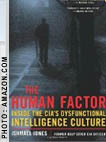
The Human Factor book cover

The Human Factor

By IAN ALLEN | intelNews.org |
The US Central Intelligence Agency has announced a lawsuit against a former officer who authored a book without the Agency’s prior approval. The book, The Human Factor: Inside the CIA’s Dysfunctional Intelligence Culture (published in 2008), was written by a former CIA deep cover operative going by the pseudonym Ishmael Jones. Jones first submitted the book’s manuscript, which offers a highly unsympathetic account of the CIA, to the Agency’s review board. However, when it became clear that the board’s decision would have been unfavorable, he published the book without approval, thus breaking what the CIA claims is his legal obligation to abide by the review board’s decisions. The CIA filed a lawsuit against Jones in July, but only announced it this week. It seeks access to the financial proceeds of The Human Factor, as well as to prohibit further exposés from Jones. Read more of this post

News you may have missed #439

  • Book critical of Russian FSB published. In a new book entitled The New Nobility, Russian journalists Andrei Soldatov and Irina Borogan claim that the Russian Federal Security Service (FSB) is less repressive but ultimately more dangerous than its predecessor, the Soviet KGB.
  • Senior-most North Korean defector dies. Hwang Jang-yop, the theoretician behind North Korea’s Songun and Juche state doctrines, who defected to South Korea in 1997, has died at his home in Seoul, aged 87. Last April, South Korea charged two North Korean government agents with attempting to assassinate Hwang.
  • ‘Low morale’ leads MI6 spies to apply for Australian jobs. More than 50 spies at Britain’s MI6 have allegedly responded to a recruitment drive by the Australian Secret Intelligence Service (ASIS). According to insiders, there has been growing uncertainty among MI6’s 2,600 staff over looming budget cuts and inquiries into alleged complicity in the torture of terrorism suspects.

News you may have missed #434 (book news edition)

News you may have missed #433

  • White House quiet on Pollard release speculation. The Barack Obama administration is staying silent on a reported offer from Israeli Prime Minister Benjamin Netanyahu to extend a settlements freeze in the occupied areas, in exchange for the release of Jonathan Pollard, currently held in a US prison for spying on America for Israel.
  • ‘The Secret History of MI6’ published. An authorized history of the first forty years of Britain’s Secret Intelligence Service, MI6, has been published by Bloomsbury. The book is written by Professor Keith Jeffery, of Queen’s University, Belfast, based on his unrestricted access to SIS archives of the period.
  • Pakistan accuses Briton of spying. Authorities in Pakistan are holding a 70-year-old Briton on suspicion of spying for almost a month in the country’s lawless tribal areas. Nicholas Bain, who claims he is an author researching a book, is suspected of “working for a British intelligence agency”, according to a Pakistani official.

US Pentagon to ban book by DIA intelligence officer

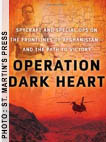
Operation Dark Heart

Op. Dark Heart

By IAN ALLEN | intelNews.org |
American military officials are in negotiations with a major publishing firm to prevent the distribution of a new book on the Afghanistan War by a US intelligence officer, even though thousands of copies of the book have already been printed. Written by US Army Reserve Lieutenant Colonel Anthony Shaffer, the book, Operation Dark Heart, is a personal memoir of the author’s five-month tour in Afghanistan in 2003, as an officer with the Defense Intelligence Agency (DIA). The Pentagon has admitted that its censors did send Shaffer an official clearance letter, authorizing him to forward the manuscript to a publisher –which he did. But it was only after the book had gone into print, that the Defense Department realized that it had neglected to forward a copy of the manuscript to the DIA, as required by regulations, which stipulate that all US government agencies mentioned in the manuscript must approve it prior to publication. Read more of this post

News you may have missed #411

  • Third Lebanese telecom worker charged with spying for Israel. A Lebanese prosecutor has charged a third state telecommunications employee with spying for Israel. Milad Eid, who worked at the state-owned fixed-line operator Ogero, is accused of “dealing with the Israeli enemy [and] giving them technical information in his position as head of international communications at the Telecommunications Ministry”.
  • Author Roald Dahl was British spy, new book claims. A new book by Donald Sturrock, entitled Storyteller: The Life of Roald Dahl, claims that children’s author worked for British Security Coordination (BSC), a 1940s secret service network based in the United States, and was ‘run’ from New York by Canadian industrialist William Stephenson.
  • Israeli nuclear whistleblower wants to leave country. Nuclear whistle-blower Mordechai Vanunu has been released from prison after serving a 10-week sentence for violating the terms of his parole by speaking to a foreign journalist. Upon his release, he asked that he be allowed to leave the country.

Bookmark and Share

News you may have missed #375 (analysis edition)

  • Analysis: Israel worried by new Turkey spy chief’s defense of Iran. Israel’s defense establishment, which maintains ties with Turkey’s national intelligence organization (MİT), is concerned over the recent appointment of Hakan Fidan as head of that organization, and the implications of that appointment vis-a-vis Turkish relations with Israel and Iran.
  • Analysis: How the CIA bolstered radical Islam during Cold War. The CIA’s battle with communism during the Cold War allowed radical Islamists to gain a foothold in Europe, according to a new book by Pulitzer Prize-winning author Ian Johnson, entitled A Mosque in Munich: Nazis, the CIA and the Rise of the Muslim Brotherhood in the West.

Bookmark and Share

News you may have missed #359

  • Another alleged North Korean spy captured in South. A month after two alleged North Korean assassins, posing as defectors, were arrested in the South, Seoul has announced that another defector, an unnamed 36-year-old female, was captured for receiving “Seoul subway information from a former high-ranking subway official”, with whom she had a romantic relationship.
  • New book on GCHQ out in July. A new book on the history of Britain’s secretive General Communications Headquarters, authored by Warwick University Professor Richard J. Aldrich, is to be published in a few weeks. The book, entitled GCHQ: The Uncensored Story of Britain’s Most Secret Intelligence Agency, will be published by Harper Collins.
  • Ex-DIA officials skeptical about rumored new DNI. Two former top US Defense Intelligence Agency officials, Jeffrey White and W. Patrick Lang, say retired Air Force Gen. James R. Clapper, Jr., a leading candidate to be the next Director of National Intelligence, nearly wrecked the agency’s analysis wing when he ran the organization in the mid-1990s.

Bookmark and Share

Author gets subpoenaed to reveal CIA sources

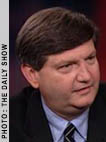
James Risen

James Risen

By JOSEPH FITSANAKIS | intelNews.org |
The US government has issued a subpoena against a journalist who authored a book on the CIA’s operations during the years of the Bush administration. The move has surprised many, because the book in question, State of War: The Secret History of the CIA and the Bush Administration, by New York Times journalist James Risen, has been out since 2006. The subpoena, which Risen received last Monday, requests him to testify before a grand jury about his confidential sources for chapter 9 of his book (pages 193-218), entitled “A Rogue Operation”, in which he describes in relative detail an attempt by the CIA to sabotage the Iranian nuclear weapons program. In the chapter, Risen writes of a thwarted CIA operation to pass to the Iranians a series of faulty nuclear bomb design documents. To do this, the Agency apparently recruited a Russian former nuclear scientist, who had defected to the United States. The unnamed scientist was told to travel to Vienna, Austria, in early 2000, and offer to sell the documents to the Iranians. Read more of this post