Cyber spies accessed thousands of European Union diplomatic cables

European Commission buildingA group of hackers, allegedly working for the Chinese military, accessed thousands of classified diplomatic cables from the European Union during a protracted cyber-espionage operation, a report has revealed. Over 100 organizations are believed to have been targeted in the multi-year cyber-espionage campaign, including the United Nations, international labor groups, as well as government ministries from dozens of countries. The operation was revealed on Tuesday by Area 1, a cyber-security company founded by former officials of the United States National Security Agency, and reported by The New York Times.

The compromised cables come primarily from the European Union’s COREU communication network, a Telex-based network that uses teleprinters to exchange text-based messages. The European Union uses the COREU network to transmit information that is classified “limited” or “restricted” between officials representing the executive governments of the European Union’s member states, members of the European Commission, foreign-ministry officials, and other approved parties. Top-secret information (“tres secret” in European Union parlance) is typically not shared on the COREU network. Consequently, the hacked cables contain mostly low-level information. That does not mean, however, that their access by at least one adversary power does not represent a serious security breach. Area 1 said that its forensic examination of the method used by the hackers reveals a set of cyber-espionage techniques that are closely associated with the Chinese People’s Liberation Army (PLA). These clues, in association with the PLA’s long history of attacking Western diplomatic targets, point to Beijing as a very likely culprit behind the attacks, according to Area 1.

The American cyber-security firm said it was able to access the compromised European Union cables and made over 1,100 of them available to The New York Times. The paper reported on Tuesday that the cables reflect increasing tension between Brussels and Washington, as European Union diplomats attempt to get a handle on the unpredictability of United States President Donald Trump. A series of diplomatic cables discusses the whether the European Union should bypass the White House and work directly with the Republican-controlled US Congress, which is viewed as more reliable and responsible. Another set of diplomatic exchanges describes the frustration of the Beijing’s leadership with Trump, which Chinese President Xi Jinping is said to have described to European Union officials as “a bully [engaged in a] no-rules freestyle boxing match”.

The Times said that it notified the European Union of the breach of its diplomatic cables and was told that officials were “aware of allegations regarding a potential leak of sensitive information and [were] actively investigating the issue”. The paper also contacted the White House National Security Council but did not get a response.

Author: Ian Allen | Date: 20 December 2018 | Permalink

Canada arrests daughter of Chinese telecom giant’s founder at US request

Meng WanzhouThe daughter of the founder of Huawei Technologies, one of the world’s leading telecommunications hardware manufacturers, has been arrested in Canada, reportedly at the request of the United States. Meng Wanzhou (pictured, also known as Sabrina Meng) serves as Huawei’s deputy chair and chief financial officer. She is the daughter of Ren Zhengfei a former officer in the Chinese People’s Liberation Army, who established the company in 1988 and has since amassed a personal fortune estimated at $3.5 billion. By virtue of her family background and position in Huawei, Meng is often referred to as “a member of China’s corporate royalty”.

Few details of Meng’s arrest have been publicized. On Wednesday, Canada’s Department of Justice confirmed that the Huawei CFO was detained on December 1 in Vancouver as she was transferring between flights. The Justice Department also confirmed that the arrest occurred at the request of American law enforcement officials. In a carefully worded statement, the Canadian government said Meng is “sought for extradition by the United States” and that her bail hearing will be taking place this coming Friday. On Wednesday, the Canadian newspaper The Globe and Mail cited an unnamed “Canadian law enforcement source with knowledge of the arrest”, who said that US authorities had evidence that Meng “tried to evade the American embargo against Iran”. This statement appears to refer to reports in Western media in April of this year, according to which the US Departments of Commerce and Treasury were probing suspected violations of Washington’s sanctions against Iran and North Korea by Huawei.

The embassy of China in Canada immediately protested news of Meng’s arrest, saying that the Huawei CFO had been detained despite “not violating any American or Canadian law”. In a statement issued on Wednesday, the embassy added that it had “lodged stern representations” to the Canadian government and “urged them to immediately […] restore the personal freedom of Ms. Meng Wanzhou”. Meanwhile, a representative at Huawei’s corporate headquarters in the southern Chinese city of Shenzhen told the BBC that the company is certain “the Canadian and US legal systems will ultimately reach a just conclusion” in the case.

Several officials in the United States, United Kingdom, Australia and other Western countries, have repeatedly flagged Huawei as a company that is uncomfortably close to the Chinese government and its intelligence agencies. In 2011, the US Open Source Center, which acts as the open-source intelligence arm of the Office of the Director of National Intelligence, became the first US government agency to openly link Huawei with the Chinese intelligence establishment. In 2013, the British government launched an official review of Huawei’s involvement in the UK Cyber Security Evaluations Centre in Oxfordshire, England, following a British Parliament report that raised strong concerns about the Chinese company’s links with the government in Beijing. And in 2017 the Australian government expressed concern about Huawei’s plan to provide high-speed Internet to the Solomon Islands, a small Pacific island nation with which Australia shares Internet resources.

Author: Joseph Fitsanakis | Date: 06 December 2018 | Permalink

US government plans background checks on Chinese students over espionage fears

Chinese students in USAThe United States government plan to impose tighter visa restrictions and wider background checks on Chinese nationals studying at American universities, over espionage concerns. The news follows reports earlier this year that the administration of US President Donald Trump considered banning all Chinese nationals from studying at American universities. In October of this year, The Financial Times reported that the White House came close to imposing the ban, after it was allegedly proposed by Stephen Miller, speechwriter and senior advisor to Trump. Miller became known as the main architect of Executive Order 13769 —the travel ban imposed on citizens of several countries, most of them predominantly Muslim. According to The Financial Times, Trump was eventually dissuaded from imposing the Chinese student ban by Terry Branstad, US ambassador to China.
Now, however, the Trump administration is reportedly considering the possibility of imposing deeper background checks and additional vetting on all Chinese nationals wishing to study in the US. Citing “a US official and three congressional and university sources”, Reuters said on Thursday that the measures would apply to all Chinese students wishing to register in undergraduate and graduate academic programs in the US. The news agency quoted a “senior US official” as saying that “no Chinese student who’s coming [to the US] is untethered from the state […. They all have] to go through a party and government approval process”. Reuters reported that the proposed plan includes a comprehensive examination of the applicants’ phone records and their presence on social media platforms. The goal would be to verify that the applicants are not connected with Chinese government agencies. As part of the proposed plan, US law enforcement and intelligence agencies would provide counterintelligence training to university officials.

However, the plan has many American universities —including elite Ivy League schools— worried that they may be losing up to $14 billion in tuition and other fees spent annually by more than 350,000 Chinese nationals studying in the US. The fear is that the latter may be looking to study elsewhere, in countries such as Canada, Australia and the United Kingdom. Reuters said that many of America’s top universities are “regularly sharing strategies to thwart” plans by the Trump administration to make it more difficult for Chinese nationals to study in the US. The news agency said it contacted the Chinese ambassador to Washington, who called the White House’s fears of espionage by Chinese students “groundless” and “very indecent”.

Author: Joseph Fitsanakis | Date: 30 November 2018 | Permalink

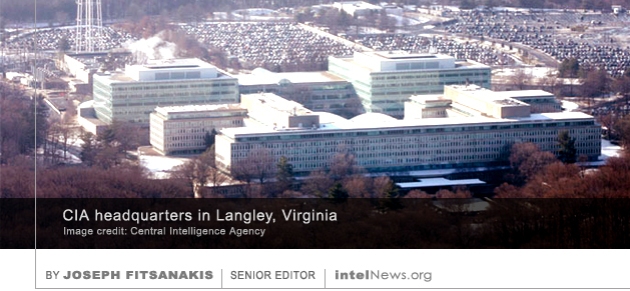
CIA suffered ‘catastrophic’ compromise of its spy communication system

CIAThe United States Central Intelligence Agency suffered a “catastrophic” compromise of the system it uses to communicate with spies, which caused the death of “dozens of people around the world” according to sources. This is alleged in a major report published on Friday by Yahoo News, which cites “conversations with eleven former US intelligence and government officials directly familiar with the matter”. The report by the online news service describes the compromise of an Internet-based covert platform used by the CIA to facilitate the clandestine communication between CIA officers and their sources —known as agents or spies— around the world.

According to Yahoo News, the online communication system had been developed in the years after 9/11 by the US Intelligence Community for use in warzones in the Middle East and Central Asia. It was eventually adopted for extensive use by the CIA, which saw it as a practical method for exchanging sensitive information between CIA case officers and their assets in so-called ‘denied areas’. The term refers to regions of the world where face-to-face communication between CIA case officers and their assets is difficult and dangerous due to the presence of ultra-hostile intelligence services or non-state adversaries like the Taliban or al-Qaeda. However, it appears that the system was flawed: it was too elementary to withstand sustained scrutiny by Internet-savvy counterintelligence experts working for state actors like Iran, China or Russia.

In September of 2009, Washington made a series of impressively detailed revelations about the advanced status of Iran’s nuclear program. These angered Tehran, which redoubled its efforts to stop the US and others from acquiring intelligence information about the status of its nuclear program. Some sources told Yahoo News that one of the CIA assets inside Iran’s nuclear program was convinced by the Iranians to become a double spy. He proceeded to give Tehran crucial information about the CIA’s online communication system. Based on these initial clues, the Iranians allegedly used Google-based techniques “that one official described as rudimentary” to identify an entire network of CIA-maintained websites that were used to communicate with assets in Iran and elsewhere. The Iranians then kept tabs on these websites and located their users in order to gradually unravel an entire network of CIA agents inside their country. Around that time, Iranian media announced that the Islamic Republic’s counterintelligence agencies had broken up an extensive CIA spy ring consisting of more than 30 informants.

The Yahoo News report says that the CIA was able to successfully exfiltrate some of its assets from Iran before the authorities were able to apprehend them. The agency also had to recall a number of undercover officers, after they were identified by the Iranians. The effects of the compromise, however, persisted on a global scale, according to former US intelligence officials. In 2011 and 2012, another network of CIA spies was busted in China, leading to the arrest and execution of as many as three dozen assets working for the US. Many, says Yahoo News, believe that the Iranians coached the Chinese on how to use the CIA’s online communication system to identify clandestine methods and sources used by the agency.

Along with other specialist websites, IntelNews monitored these developments as they took place separately in Iran and China. However, the Yahoo News report is the first to piece together these seemingly disparate developments and suggest that they were likely triggered by the same root cause. What is more, the report suggests that the CIA had been warned about the potential shortcomings of its online communication system before 2009, when the first penetrations began to occur. In response to the compromise, the CIA has reportedly modified, and at times completely abandoned, its online communication system. However, the implications of the system’s compromise continue to “unwind worldwide” and the CIA is “still dealing with the fallout”, according to sources. The effects on the agency’s operational work are likely to persist for years, said Yahoo News.

Author: Joseph Fitsanakis | Date: 05 November 2018 | Permalink

French government report says thousands approached by Chinese spies on LinkedIn

LinkedInA French government report warns of an “unprecedented threat” to security after nearly 4,000 leading French civil servants, scientists and senior executives were found to have been accosted by Chinese spies using the popular social media network LinkedIn. The report was authored by France’s main intelligence agencies, the General Directorate for Internal Security (DGSI) and the General Directorate for External Security (DGSE). According to the Paris-based Le Figaro newspaper, which published a summary of the classified report, the two intelligence agencies presented it to the French government on October 19.
The report describes Chinese efforts to approach senior French scientists, business executives, academics and others, as “widespread and elaborate”, and warns that it poses an “unprecedented threat against the national interests” of the French state. It goes on to state that nearly 4,000 carefully selected French citizens have been approached by Chinese intelligence operatives via the LinkedIn social media platform. Of those nearly half, or 1,700, have leading posts in French industry, while the remaining 2,300 work in the public sector. In their totality, those targeted are involved nearly every area of industry and government administration, including those of nuclear energy, telecommunications, computing and transportation, said the report. According to Le Figaro, those targeted were approached online by Chinese spies who employed fake identities and identified themselves as headhunters for Chinese corporations, think-tank researchers or consultants for major companies. They then invited targeted individuals to all-expenses-paid trips to China for conferences or research symposia, or offered to pay them as consultants.

The DGSI-DGSE report concludes that most of those targeted displayed shocking levels of “culpable naivety” and a “completely insufficient” awareness of online espionage methods. To address this, French intelligence agencies have produced guidelines on detecting and evading attempts at recruitment or luring from intelligence operatives using social media, said Le Figaro. French civil servants are now being informed of these guidelines through a concerted campaign by the French intelligence community, said the paper. The report, however, did not say whether similar efforts were taking place in the French private sector.

Author: Joseph Fitsanakis | Date: 24 October 2018 | Permalink

Group of 13 North Korean defectors say they were ‘forcibly kidnapped’ by South

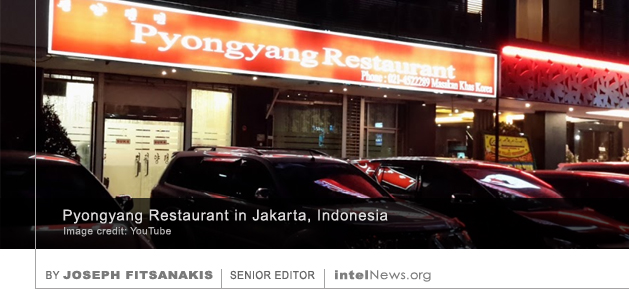
Pyongyang Restaurant in Jakarta, IndonesiaA group of 12 female North Korean restaurant workers and their male manager claim that their widely advertised defections in 2016 were fake, and that they were in fact abducted by South Korea’s spy services. The North Korean government maintains a chain of North Korea-themed restaurants throughout Asia, which operate as popular tourist attractions across Southeast Asia. The state-owned restaurants help provide the cash-strapped regime in Pyongyang with desperately needed foreign funds. The North Korean staff —almost all of them female— who work at these restaurants are carefully vetted and chosen to represent the reclusive regime abroad. Some observers claim that these restaurants serve “as a main front to conduct intelligence gathering and surveillance [against foreign] politicians, diplomats, top corporate figures and businessmen”.
In April of 2016, the entire staff of a North Korean restaurant in the Chinese city of Ningbo defected. They disappeared all of a sudden, and reappeared a few days later in South Korean capital Seoul, where South Korean authorities held a press conference. The South Koreans told reporters that the 13 North Koreans had decided to defect after watching South Korean television dramas, which allegedly caused them to lose faith in the North Korean system of rule. But Pyongyang dismissed the defections as propaganda and claimed that its citizens had been abducted by South Korean intelligence.

Now in a shocking interview published by South Korea’s Yonhap news agency, Ho Kang-il, the male manager of the North Korean restaurant in Ningbo said that he and his staff had been forcibly taken to South Korea. Ho told Yonhap that he had been approached by officers of South Korea’s National Intelligence Service (NIS) who tried to entice him to defect to South Korea. They told him that he could open a restaurant if he chose to lead a new life in the south. Initially Ho said he was interested in the offer. But when he appeared to change his mind, the NIS officers threatened to inform the North Korean embassy in China that he had been speaking with them. Ho also said that the NIS officers blackmailed his staff at the restaurant using similar methods. Consequently, all 13 of them decided to cooperate with the NIS, as they “had no choice but to do what they told [us] to do”, said Ho.

On Sunday, the United Nations’ Special Rapporteur on Human Rights in North Korea, Ojea Quintana, said during a press conference that the UN was concerned about the allegations made by Ho. He also said that some of the North Korean defectors had told UN personnel that they left China without knowledge of where they were being taken by South Korean intelligence. Quintana concluded his remarks by calling for a “thorough investigation” into the alleged abductions of the North Koreans.

Author: Joseph Fitsanakis | Date: 18 July 2018 | Permalink

Spy chiefs from Russia, China, Iran and Pakistan hold high-level meeting

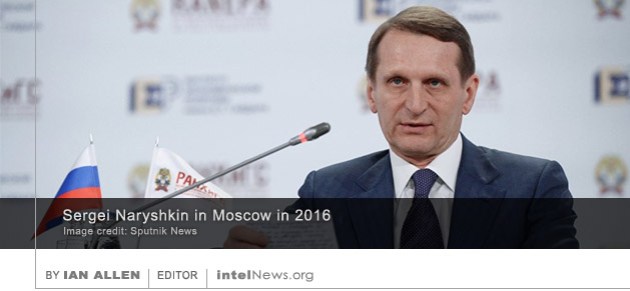
Sergei NaryshkinIntelligence directors from Russia, China, Iran and Pakistan met on Tuesday to discuss regional cooperation with particular reference to combating the Islamic State in Afghanistan. Information about the high-level meeting was revealed yesterday by Sergei Ivanov, media spokesman for the Russian Foreign Intelligence Service (SVR). Ivanov told Russia’s state-owned TASS news agency that the meeting was held in Pakistan and included the participation of SVR director Sergei Naryshkin. TASS reported that the meeting was held under the auspices of Pakistan’s powerful Inter-Services Intelligence (ISI) Directorate and was attended by “senior intelligence officials” from Pakistan, Russia, Iran and China.
Ivanov said that discussions during the meeting “focused on the dangers arising from a buildup of the Islamic State on the Afghan territory”. The Islamic State announced the formation of its Afghan province (wilayah in Arabic) in January 2015, using the term “Khorasan Province”. By July 2016, two of its most prominent leaders had been killed in coordinated drone strikes by the United States, but the group continues to launch operations to this day. Its core is thought to be made up of nearly 100 fighters from the Islamic State’s former strongholds in Syria and Iraq. According to Russian reports, security officials in China, Russia, Pakistan and Iran are concerned that the Islamic State’s Afghan command is becoming stronger as fighters from the group are leaving the Middle East and moving to Afghanistan.

Tuesday’s high-level meeting in Islamabad follows an announcement last month by the Beijing-led Shanghai Cooperation Organization (SCO) that it would adopt a more active stance on security issues in Afghanistan. Early in June, Afghan President Mohammad Ashraf Ghani described the SCO as “an important platform for anti-terrorist cooperation and enhancing regional connectivity” in Central and South Asia. President Ghani made these comments shortly before traveling to China to attend the annual summit of the SCO, of which Afghanistan is an observer country.

Author: Ian Allen | Date: 11 July 2018 | Permalink

Chinese shipbuilding boss gave CIA aircraft carrier secrets, reports claim

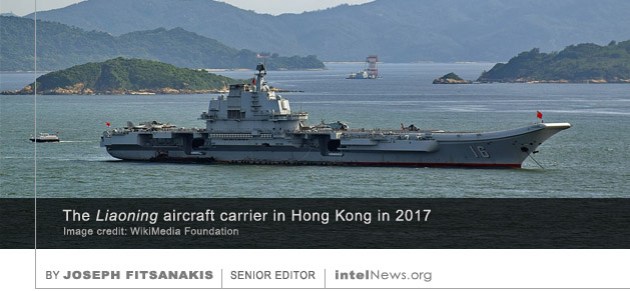
Liaoning aircraft carrier ChinaOne of China’s most senior shipbuilding executives, who has not been seen in public for nearly two weeks, has been charged with giving secrets about China’s aircraft carriers to the United States. Sun Bo, 57, is general manager of the China Shipbuilding Industry Corporation (CSIC), China’s largest state-owned maritime manufacturer, which leads nearly every major shipbuilding project of the Chinese navy. Most notably, Sun headed the decade-long retrofitting of the Liaoning, a Soviet-built aircraft carrier that was commissioned to the Chinese Navy’s Surface Force after the collapse of the Soviet Union.
The ship arrived at the CSIC’s Dalian shipyard in northeastern China in 2002. Work on the vessel was completed in 2012. Today CSIC heads the construction of so-called Type 001A, China’s first home-built aircraft carrier, which is said to be modeled largely on the Liaoning. The company is also spearheading the construction of numerous Chinese Navy frigates, latest-generation destroyers, and numerous other vessels. Earlier this year, it was announced the CSIC would build the Chinese Navy’s first nuclear-powered aircraft carrier.

As the second most senior official of China’s largest and most important shipbuilder, Sun has supervised all of the company’s projects during the past two decades. But Sun effectively disappeared after June 11, when he made his last known public appearance at a CSIC event. On June 17, a brief notice posted on the company’s website stated that Sun had been placed under investigation for “gross violation of laws and [Communist] Party [of China] discipline”. The brief notice said that the probe of Sun’s activities was led by China’s National Supervision Commission and the Communist Party of China’s Central Commissariat for Discipline Inspection, but provided no further details.

It has now been reported by multiple Chinese news websites that Sun is under investigation not simply for graft, but for far more serious activities involving espionage. Specifically, it is claimed that Sun was recruited by the United States Central Intelligence Agency because of his supervisory role in China’s aircraft carrier building programs. He is believed to have provided the CIA with information about the decade-long retrofitting of the Liaoning. More importantly, there are reports that Sun gave the CIA blueprints and other technical specifications of the Type 001A, which is currently under construction at a top-secret facility. The Hong Kong-based English-language news website Asia Times said on Thursday that, given the sensitive nature of the charges against Sun, it is unlikely that the Chinese government would reveal the outcome of the investigation of the CSIC executive.

Author: Joseph Fitsanakis | Date: 22 June 2018 | Permalink

US evacuates more diplomats from China over ‘abnormal sounds and symptoms’

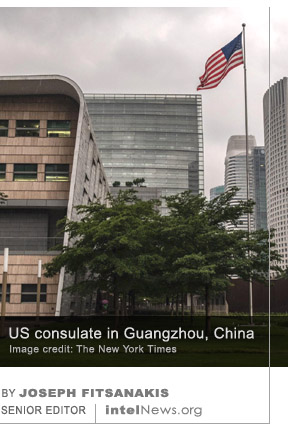
US consulate in GuangzhouThe United States has evacuated at least two more diplomatic personnel from its consulate in the Chinese city of Guangzhou, after they experienced “unusual acute auditory or sensory phenomena” and “unusual sounds or piercing noises”. The latest evacuations come two weeks after the US Department of State disclosed that a consulate worker in Guangzhou had been flown home for medical testing, in response to having experienced “subtle and vague, but abnormal, sensations of sound and pressure”.
The evacuations from China have prompted comparisons to similar phenomena that were reported by US diplomatic personnel in Cuba in 2016. Last September, Washington recalled the majority of its personnel from its embassy in Havana and issued a travel warning advising its citizens to stay away from the island. These actions were taken in response to allegations by the US Department of State that at least 21 of its diplomatic and support staff stationed in Cuba suffered from sudden and unexplained loss of hearing, causing them to be diagnosed with brain injuries. In April, the Canadian embassy evacuated all family members of its personnel stationed in Havana over similar health concerns.

US State Department sources told The New York Times on Wednesday that the two latest evacuees were among approximately 179 American diplomats and consular personnel stationed in Guangzhou, one of China’s largest commercial hubs. The city of 14 million, located 70 miles north of Hong Kong, hosts one of Washington’s six consulates in China. The building that houses the US consulate was presented to the public in 2013 as a state-of-the-art construction, which, as The Times reports, is “designed to withstand electronic eavesdropping and other security and intelligence threats”. The paper said that one Guangzhou consular employee that was evacuated this week is Mark A. Lenzi, who works as a security engineering officer. He is reported to have left China along with his wife and two children. An unnamed senior US official told The Times that a State Department medical team arrived in Guangzhou on May 31, and is currently examining all diplomatic personnel and their families.

Author: Joseph Fitsanakis | Date: 07 June 2018 | Permalink

Facebook shared user data with Chinese firm despite warnings by US intelligence

HuaweiThe online social media company Facebook shares data about its users with a Chinese telecommunications company that has been flagged in United States government reports as a threat to security. The New York Times revealed on Tuesday that Facebook has been routinely giving access to the private data of its users to four Chinese companies since at least 2010. The paper said that the data-sharing agreement with Lenovo, Oppo, TCL, and Huawei Technologies, has its roots in 2007. That was the year when Facebook began an effort to entice cell phone hardware and software manufacturers to include Facebook-friendly apps and features in their products. As part of the agreement, Facebook gave cell phone manufacturers access to its users’ private data, including “religious and political leanings, work and education history and relationship status”, said the Times.
However, several sources in the United States, United Kingdom, Australia and other governments, have repeatedly flagged Huawei as a company that is uncomfortably close to the Chinese government and its intelligence agencies. In 2011, the US Open Source Center, which acts as the open-source intelligence arm of the Office of the Director of National Intelligence, became the first US government agency to openly link Huawei with the Chinese intelligence establishment. It said that Huawei relied on a series of formal and informal contacts with the Chinese People’s Liberation Army and the Ministry of State Security, which oversee and administer China’s military and civilian intelligence apparatus. In 2013, the British government launched an official review of Huawei’s involvement in the UK Cyber Security Evaluations Centre in Oxfordshire, England, following a British Parliament report that raised strong concerns about the Chinese company’s links with the government in Beijing. And last year the Australian government expressed concern about Huawei’s plan to provide high-speed Internet to the Solomon Islands, a small Pacific island nation with which Australia shares Internet resources.

In a statement, Facebook said that all data shared with Huawei remained stored on users’ phones and was not downloaded on the Chinese’ company’s private servers. It also said that it would “phase out” the data-sharing agreement with Huawei by the middle of June. The Times noted on Tuesday that Facebook has been officially banned in China since 2009. However, the social media company has been trying to make a comeback in the Chinese market, by cultivating close links with Chinese Communist Party officials. Facebook founder Mark Zuckerberg visited China in October of last year, and met with Chinese Premier Xi Jinping and other senior officials.

Author: Joseph Fitsanakis | Date: 06 June 2018 | Permalink

Chinese influence in New Zealand threatens intelligence-sharing, says Canadian report

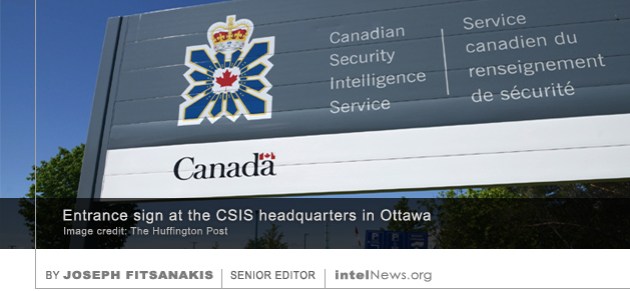
CSIS canadaChina’s influence in New Zealand is so extensive that it threatens the traditionally close intelligence contacts between New Zealand and its Western allies, according to a report written by the Canadian spy agency. Since World War II, New Zealand has been a member of what is sometimes referred to as the UK-USA Security Agreement. Known also as the UKUSA Agreement or the Five Eyes alliance, the pact, which was strengthened in 1955, provides a multilateral framework for intelligence cooperation between the United Kingdom, the United States, Canada, Australia, and New Zealand. But a new report produced by Canadian intelligence warns that Chinese political and economic influence in New Zealand is making it difficult for the Pacific Ocean island country to continue to operate within the framework of the agreement.

The report, entitled China and the Age of Strategic Rivalry, was authored by experts at the Canadian Security Intelligence Service (CSIS). It contains a summary of views expressed by participants at an academic outreach workshop that was organized in Canada by the CSIS. In a section focusing on Chinese “interference in democratic systems”, the report suggests that, despite its small size, New Zealand is “valuable to China […] as a soft underbelly through which to access Five Eyes intelligence”. In recent years, claims the report, Beijing has adopted “an aggressive strategy” that has sought to co-opt political and economic elites in New Zealand as a means of influencing political decision making in the country. As part of that process, China seeks to gain advantages in trade and business negotiations, suppress negative views of China, facilitate espionage and control the views of the Chinese expatriate community in New Zealand, according to the report. Ultimately, Beijing seeks to “extricate New Zealand from […] its traditional [military and intelligence] partners]” as a means of asserting its regional and —eventually— global influence, the report concludes.

In a separate but connected development, it emerged this week that China expert Peter Mattis told an American Congressional committee last month that New Zealand’s position in the Five Eyes alliance was tenuous due to China’s influence. Mattis, a former China analyst for the United States Central Intelligence Agency, was speaking before the US-China Economic and Security Review Commission, a group of experts that advise the US Congress. He told the Commission that the influence of the Chinese Communist Party in New Zealand is so deep that it raises questions about whether the Pacific Ocean country can continue to share intelligence with the other members of the Five Eyes alliance.

On Wednesday, New Zealand’s Prime Minister Jacinda Ardern emphatically dismissed questions about her country’s role in the Five Eyes alliance. She told reporters in Wellington that the issue of New Zealand’s Five Eyes membership had “never been raised” with her “or anyone else” by Five Eyes partners. Ardern added that her government received its information “from official channels, not opinions expressed at a workshop”.

Author: Joseph Fitsanakis | Date: 31 May 2018 | Permalink

France arrests two intelligence officers on charges of spying for China

dgse franceFrance has confirmed the arrest of two French intelligence officers who are accused of spying for the Chinese government. It appears that the two officers were captured and charged in December. However, their arrests were not publicized at the time, because French counterintelligence officials wanted to avoid alerting more members of a possible spy ring, which some say may include up to five French citizens. It was only last Friday, a day after French media published leaked reports of the arrests, that the French government spoke publicly about the case.
France’s Minister of the Armed Forces, Florence Parly, told France’s CNews television on Friday that two French intelligence officers were “accused of extremely serious acts of treason” against the French state. The two officers had been charged with delivering classified information to a foreign power”, she said. Parly added that the spouse of one of the officers was also being investigated for participating in acts of espionage on behalf of a foreign country. When asked to identify the country that the two officers are accused of spying for, the minister refused to respond. But the Agence France Presse news agency cited an anonymous “security source”, who said that the two intelligence officers were being suspected of spying for China and that they had been captured following a sting operation by French counterintelligence officers.

French television station TFI1 said on Friday that both spy suspects are officers in the General Directorate of External Security (DGSE), France’s primary external intelligence agency. The station added that at least one of the two suspects was stationed at the embassy of France in Beijing when French counterintelligence became aware of the alleged espionage. According to some reports, the two suspects had retired from the DGSE by the time they were arrested, but committed their alleged espionage while still in the service of the spy agency. French government officials have refused to provide information about the length of the alleged espionage or the nature of the classified information believed to have been compromised. Additionally, no information is available about whether the two alleged spies were working in cooperation with each other. The BBC asked China last week about the arrests in France, but the Chinese Ministry of Foreign Affairs said it was not aware of the incident.

Author: Joseph Fitsanakis | Date: 28 May 2018 | Research credit: E.W. and P.C.  | Permalink

US alerts its diplomatic staff in China over ‘abnormal sounds and symptoms’

US Department of StateThe United States Department of State has warned its personnel stationed in China of the danger of experiencing “unusual acute auditory or sensory phenomena accompanied by unusual sounds or piercing noises”. The warning, issued on May 23, has prompted comparisons to similar phenomena that were reported by US diplomatic personnel in Cuba in 2016. Last September, Washington recalled the majority of its personnel from its embassy in Havana and issued a travel warning advising its citizens to stay away from the island. These actions were taken in response to allegations made by the United States that at least 21 of its diplomatic and support staff stationed in Cuba suffered from sudden and unexplained loss of hearings, causing them to be diagnosed with brain injuries. In April, the Canadian embassy evacuated all family members of its personnel stationed in Havana, over similar health concerns.
Now a similar warning has been issued by the US Department of State for its staff stationed in China. In a statement, the Department said that a member of staff at its consulate in the Chinese city of Guangzhou reported experiencing “subtle and vague, but abnormal, sensations of sound and pressure”. The unnamed individual reportedly suffered these physical symptoms between late 2017 and April 2018, said the statement. At that time, the individual was flown back to the US where they eventually were diagnosed with “mild traumatic brain injury”. The statement went on to state that the cause of these symptoms remains unknown, and that the US government has no information about other such incidents affecting Americans in China.

Late on Wednesday, however, speaking before the Committee on Foreign Affairs of the US House of Representatives, US Secretary of State Mike Pompeo said that the incident in China was “medically similar” to the 2016 incidents in Cuba. Some US government sources have blamed these medical symptoms on unspecified “sonic weapon attacks” from a foreign country, aimed at US diplomatic facilities.  But Washington has so far refrained from accusing China of having a role in such attacks, either in Cuba or in China itself. Pompeo said on Wednesday that Washington had dispatched a medical team to Guangzhou to inspect American diplomats stationed there. The Chinese government said yesterday that it was probing the incident “in a very responsible manner” and “would protect the lawful rights and interest of foreigners in China”. However, China’s Minister of Foreign Affairs, Wang Yi, warned that the case in Guangzhou should not be “magnified, complicated or even politicized” by Washington.

Author: Joseph Fitsanakis | Date: 23 May 2018 | Research credit: Nikki P. | Permalink

China gave ex-CIA officer “hundreds of thousands of dollars in cash” to spy on US

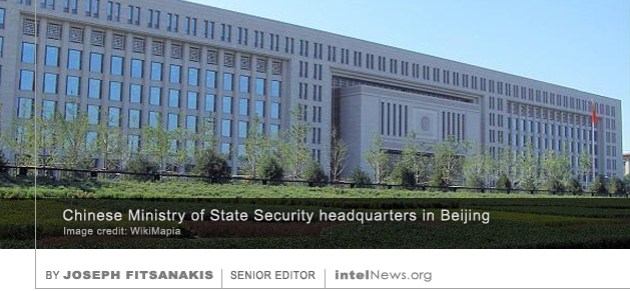
 Chinese Ministry of State SecurityChinese intelligence operatives gave a former officer of the United States Central Intelligence Agency “hundreds of thousands of dollars in cash” in exchange for carrying out espionage, according to court papers. The Federal Bureau of Investigation arrested Jerry Chun Shing Lee, 53, on January 15, accusing him of possessing classified information that included lists of real names of foreign assets and addresses of CIA safe houses. Lee, 53, was reportedly arrested after a lengthy FBI sting operation, which included creating a fictional job in the US in order to entice Lee to travel to New York from Hong Kong, where he had been living after leaving the CIA in 2007.

Lee is now scheduled to appear before a US circuit court judge on Friday morning, in order to be officially charged with one count of conspiracy to deliver national defense information to aid a foreign government and two counts of unlawfully retaining information pertaining to national defense. According to the indictment, in April of 2010 Lee met two officers of China’s Ministry of State Security. The meeting allegedly took place in Shenzhen, a city in southern China that borders Hong Kong. During that encounter, the indictment claims that Lee was offered “a gift of $100,000 in cash” in exchange of providing the Ministry of State Security with information about his career in the CIA. He was also told by the two Chinese intelligence officers that China would “take care of him for life” if he continued to cooperate with them.

In May of 2010, Lee deposited about $17,000 into one of his HSBC accounts in Hong Kong. Court documents allege that the deposit was the first of many that followed, and that they amounted to “hundreds of thousands of dollars”. These deposits continued to occurr until the end of 2013, when Lee made his last substantial cash deposit in Hong Kong. Throughout that time, Lee received regular written instructions from the Ministry of State Security, asking him to provide information about CIA operations. Lee did so at least 21 times, says the indictment. In one instance, he drew the floorplan of a CIA facility abroad and gave it to the Chinese, according to the indictment. Lee is expected to plead not guilty on Friday.

Author: Joseph Fitsanakis | Date: 16 May 2018 | Permalink

US government prosecutors confirm CIA officer passed information to China

CIAA case officer in the United States Central Intelligence Agency, who was arrested in January of this year for violating the Espionage Act, shared classified information with China, according to an official indictment. The Federal Bureau of Investigation arrested Jerry Chun Shing Lee, 53, on January 15, accusing him of possessing classified information that included lists of real names of foreign assets and addresses of CIA safe houses. Lee, 53, was reportedly arrested after a lengthy FBI sting operation, which included creating a fictional job in the US in order to entice Lee to travel to New York from Hong Kong, where he had been living after leaving the CIA in 2007. However, the initial FBI complaint did not indict Lee for passing the top-secret information to anyone. There was speculation at the time that this was because the FBI had not been able to conclusively prove that Lee carried out espionage.

On Tuesday, however, Lee was formally indicted on conspiracy to gather and deliver national defense information to aid a foreign government. That charge came in addition to a previously stated charge of unlawfully retaining material related to American national defense. The indictment repeats earlier allegations that Lee was found to be in possession of classified documents that included the real names of CIA assets (foreign citizens who are recruited by CIA case officers to spy for the United States abroad) and the locations of “covert facilities” –safe houses that are typically used by CIA personnel to meet with assets in privacy. In what can be described as the most descriptive allegations that have surfaced against Lee, the indictment proceeds to claim that he was approached by two Chinese intelligence officers in 2010, three years after he left the CIA. The officers allegedly offered to give Lee a substantial amount of money in exchange for access to classified information. Additionally, according to the court documents, Lee was provided by his Chinese handlers with email addresses that he could use to communicate with them covertly, and did as instructed “until at least 2011”.

The documents further state that Lee made “numerous […] cash deposits”, which he struggled to explain when questioned by American counterintelligence officials. On several instances, Lee lied during questioning in order to cover up his financial activities, according to the indictment. Lee’s defense lawyer, Edward MacMahon, told the court on Tuesday that his client was “not a Chinese spy”, but “a loyal American who loves his country”. He also pointed out that Lee served in the US military and the CIA. The Chinese government has made no comment about the case.

Author: Joseph Fitsanakis | Date: 10 May 2018 | Permalink