Senior US Republicans split on whether CIA director Gina Haspel should be fired
November 12, 2020 1 Comment
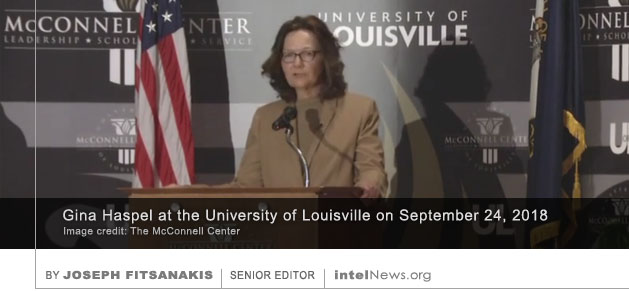
SENIOR FIGURES IN THE United States Republican Party appear to be split on whether President Donald Trump should fire Gina Haspel, the first female director of the Central Intelligence Agency, who has been serving in that capacity since 2018. According to The New York Times, Haspel is on a list of senior intelligence and national security officials that the embattled American president plans to fire in the coming days. He already fired key defense officials this week, including the Secretary of Defense Mark Esper, as well as the Pentagon’s head of policy and director of intelligence.
Trump administration insiders, who want to see Haspel gone, are aware that Trump will not be president for much longer, and are thus pushing for her immediate termination, said The Times. They blame Haspel for not stopping the CIA whistleblower who filed a complaint about the president’s July 2019 telephone call with his Ukrainian counterpart, Volodymyr Zelensky. The complaint led to Trump’s impeachment in the House of Representatives. Haspel had no role in that incident, but senior Trump loyalists believe she could have stopped the complaint before it reached the office of the US Intelligence Community’s Inspector General.
Haspel is also accused by Trump loyalists of not following the directives of the Office of the Director of National Intelligence, under John Ratcliffe, a Trump appointee who serves as the most senior intelligence officer in the US government. The CIA and the ODNI have not seen eye-to-eye since the latter’s founding in 2005. Additionally, unlike Haspel, who rose through the ranks of the Intelligence Community, Ratcliffe had no intelligence experience before this year, when he was appointed by Trump to lead the ODNI. It is believed that his status as an outsider has made it difficult for him to exercise leadership in the close-knit Intelligence Community.
But other senior Republicans have rallied around Haspel. They are said to include the powerful Senator Mitch McConnell, who on Tuesday met with Haspel in his office on Capitol Hill. The closed-door meeting between McConnell and Haspel alarmed the Trump inner circle, with Donald Trump, Jr., calling the CIA director a “trained liar” and accusing those Republicans who support her of undermining his father. The CIA declined to comment on the story.
► Author: Joseph Fitsanakis | Date: 13 October 2020 | Permalink
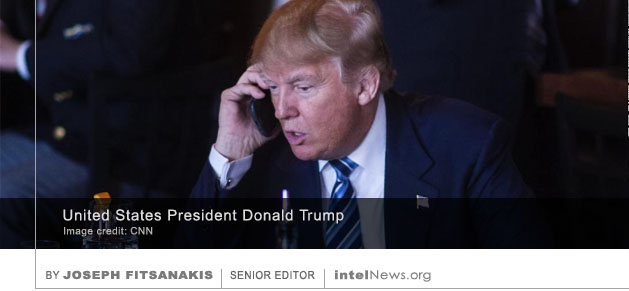 IF RE-ELECTED IN NOVEMBER, United States President Donald Trump has laid out plans to replace the secretary of defense, as well as the directors of the Federal Bureau of Investigation (FBI) and the Central Intelligence Agency (CIA), according to a new report. The website Axios, which
  Four highly trained paramilitary officers of the United States Central Intelligence Agency (CIA) died during a secret maritime operation off the coast of the Philippines in 2008, according to a new report. Yahoo News, which
  The United States Central Intelligence Agency has announced the creation of a new advanced research laboratory system that it hopes will allow it to compete with Silicon Valley for attracting top technical talent. The initiative, announced on Monday, is called CIA Labs, and it aims to attract scientists and engineers with an interest in advanced research projects that have applied potential in the area of national security.
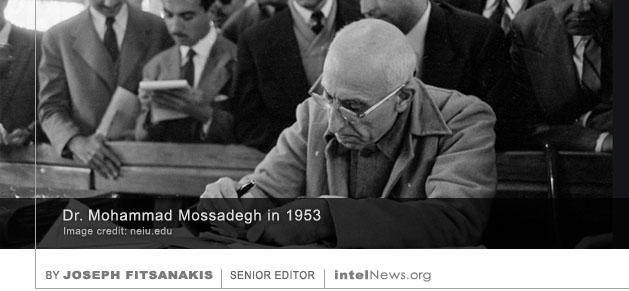 British researchers have found a lost interview by a senior British intelligence officer who led the joint Anglo-American coup in Iran in 1953. The coup overthrew the democratically elected government of Prime Minister Dr. Mohammad Mossadegh and reinstalled the shah (king) of Iran, Mohammad Reza Pahlavi, a close Western ally. London was alarmed by Dr. Mossadegh’s decision to nationalize the Anglo-Iranian Oil Company (later renamed to British Petroleum, or BP), which would deny Britain its lucrative stake in the Middle Eastern energy market. The British also viewed Dr. Mossadegh as being too close to the Soviet Union.
 Turkey’s spy agency systematically downplayed the Islamist views of men seeking to join a Syrian rebel group, which was supported by the United States Central Intelligence Agency on account of its moderate leanings. The United States
 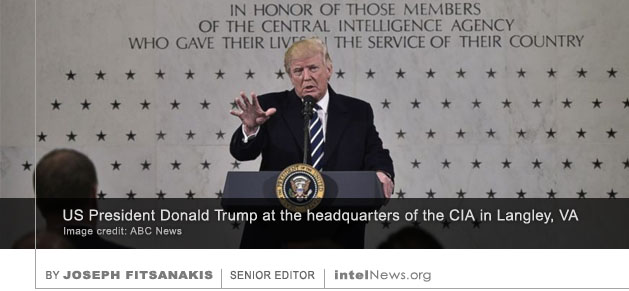 The United States Central Intelligence Agency was secretly authorized by the White House in 2018 to drastically expand its offensive cyber operation program —a development that some experts describe as a significant development for the secretive spy agency. However, the move has reportedly not pleased the Department of Defense, which sees itself as the primary conduit of American offensive operations in cyberspace.
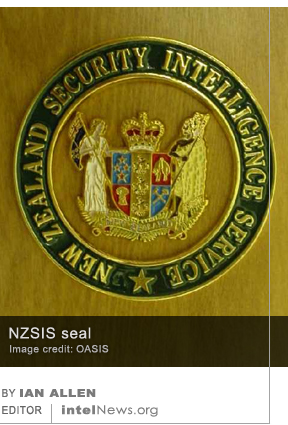 The spy agency of New Zealand broke into at least three foreign embassies in Wellington at the request of the United States and Britain, according to an investigative report by the country’s public radio broadcaster. Radio New Zealand reported on Tuesday that the highly controversial break-ins targeted the Indian High Commission and the Iranian Embassy in the late 1980s and early 1990s. A few years earlier, the New Zealand spy agency had allegedly broken into the Czechoslovakian embassy in Wellington.
 The general
  Complacency and substandard security by the United States Central Intelligence Agency were behind the Vault 7 leak of 2017, which ranks as the greatest data loss in the agency’s history, according to an internal report. The Vault 7 data loss was particularly shocking, given that the CIA should have taken precautions following numerous leaks of classified government information in years prior to 2017, according to the report.
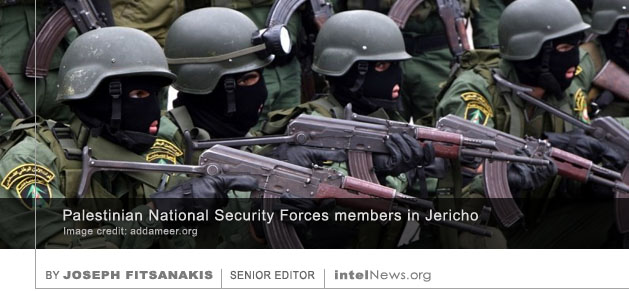 The Palestinian Authority has announced an immediate cessation to all intelligence and security ties with Israel and the United States. The announcement, made on Thursday by Palestinian Authority President Mahmoud Abbas, marks the strongest response so far by the Fatah-dominated administration to the Israeli government’s plan to annex large parts of the occupied West Bank.
 The White House is considering a plan to pull back Central Intelligence Agency officers from stations across Afghanistan, in a last-ditch effort to boost prospects for a peace deal with the Taliban. Plans for the peace deal were announced in February by representatives of the US and the Pashtun-based Sunni group, which has waged an Islamist insurgency against the US-supported government in Kabul since 2001.
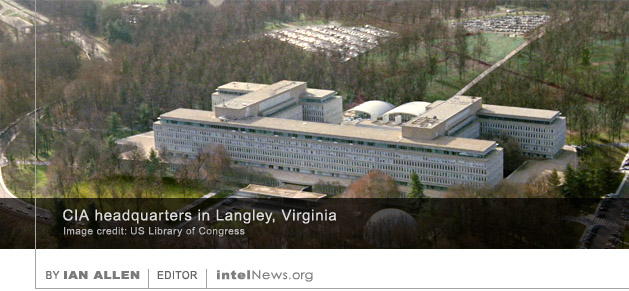 A leading Chinese cybersecurity firm has accused the United States Central Intelligence Agency of using sophisticated malicious software to hack into computers belonging to the Chinese government and private sector for over a decade.
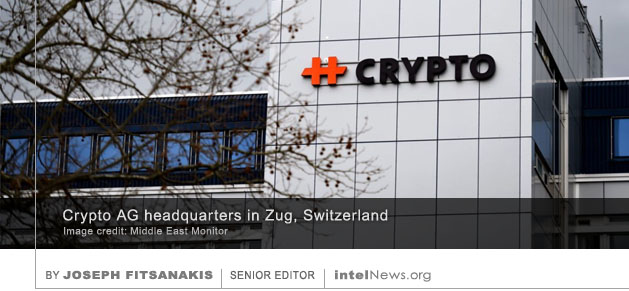 Switzerland’s Federal Department of Finance has filed a criminal complaint “against persons unknown” over media reports that a leading Swiss-based cryptological equipment manufacturer was secretly owned by the United States Central Intelligence Agency (CIA).







North Korean leader Kim Jong-un’s half-nephew is in CIA custody, report claims
November 18, 2020 by Joseph Fitsanakis Leave a comment
In February of 2017, Kim Jong-nam was assassinated in audacious attack at a busy airport in Malaysia by two women who used a poisonous substance to murder him in broad daylight. Suspicions fell immediately on the North Korean government, and many assumed that his two children and wife would be next. The family, who lived in Macau at the time, frantically made plans to leave for the West and seek political asylum there. To make it more difficult for potential assassins to find them, Kim Jong-nam’s family members made the decision to separate and take different routes to Europe.
As intelNews has reported before, Kim Jong-nam’s eldest son, Kim Han-sol, sought and received protection from an obscure North Korean dissident group, which calls itself Cheollima Civil Defense and is also known as Free Joseon. Cheollima Civil Defense, whose members support on principle anyone who challenges the regime in Pyongyang, helped Kim’s family relocate to the West, allegedly with assistance from China, the United States and Holland.
However, unlike Kim Jong-nam’s wife and youngest son, Kim Han-sol never made it to Europe, and his whereabouts remain unknown. Now a new report in The New Yorker magazine claims that Kim Han-sol flew from Macau to Taiwan, escorted by Cheollima Civil Defense members. From there, he was scheduled to take a flight to Amsterdam’s Schiphol Airport, where Cheollima Civil Defense members and Dutch activists were waiting for him. But he never emerged from the arrivals gate. According to The New Yorker, that was because a team of CIA officers intercepted Kim Han-sol in Taiwan and took him under US custody.
The magazine claims Kim Han-sol remains under US custody to this day, but does not clarify whether that is a voluntary arrangement on the part of the North Korean exile. It is also not clear if Kim Han-sol’s mother and brother are with him, or if they are aware of his whereabouts. It is believed that Kim Jong-nam’s income came from a North Korean government slush fund that he was managing in Macau, and that much of the fund came from illicit sources. It is possible that Kim Han-sol was also involved in running that fund, which would explain the CIA’s interest in him.
► Author: Joseph Fitsanakis | Date: 18 November 2020 | Permalink
Filed under Expert news and commentary on intelligence, espionage, spies and spying Tagged with CIA, Kim Han-sol, Kim Jong-nam, News, North Korea, United States