Saudi king hosts CIA director a day after US charges two Saudis with espionage
November 8, 2019 2 Comments
 A day after the United States Department of Justice charged two Saudi citizens with engaging in espionage on American soil, Saudi officials hosted the director of the Central Intelligence Agency in Riyadh, reportedly to discuss “the longstanding Saudi-US partnership”.
According to the Federal Bureau of Investigation, two Saudi men, both employees of the US-based company Twitter, were instructed by a member of the Saudi royal family to surrender the personal information of at least 6,000 Twitter users who posted criticism of the Saudi government on social media. As intelNews reported on Thursday, one of the men is under arrest, while the other managed to evade US authorities and is thought to be sheltered by the Saudi government.
It is believed that the member of the Saudi royal family who instructed the two men to carry out espionage was no other than Mohammed bin Salman, the oil kingdom’s crown prince. Wednesday’s developments marked the first time that US authorities have publicly filed espionage charges against Saudi nationals in America.
A day after the charges were filed in the US state of California, Gina Haspel, the director of the Central Intelligence Agency, was reportedly hosted by Saudi Arabia’s king Salman in Riyadh. In addition to Salman and Haspel, the meeting was attended by several senior Saudi officials, including Khalid al-Humaidan, who directs the kingdom’s General Intelligence Directorate. Saudi Arabia’s foreign minister, Prince Faisal bin Farhan, was also present at the meeting.
A tweet by the Saudi Arabian embassy in Washington said that the meeting between Haspel and the Saudi officials revolved around “the longstanding Saudi-US partnership”. It also said that participants discussed “a number of regional and international developments”, but gave no further information. The state-owned Saudi Press Agency said simply that the meeting focused on “a number of topics of mutual interest”, but did not elaborate.
► Author: Joseph Fitsanakis | Date: 08 November 2019 | Permalink
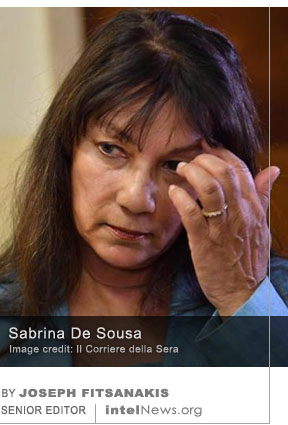 A former officer in the United States Central Intelligence Agency, who was convicted of involvement in the 2003 abduction of a Muslim cleric in Italy, says she fled Europe for the United States in fear of her safety. Sabrina De Sousa, 63, was a diplomat at the US consulate in Milan, Italy, when a CIA team abducted Hassan Mustafa Osama Nasr from a Milan street in broad daylight. Nasr, who goes by the nickname Abu Omar, is a former member of Egyptian militant group al-Gama’a al-Islamiyya, and was believed by the CIA to have links to al-Qaeda. Soon after his abduction, Nasr was renditioned to Egypt, where he says he was brutally tortured and raped, and held illegally for years before being released without charge.
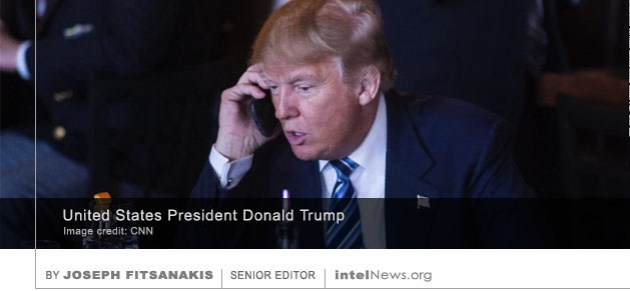 The individual who filed a report claiming that United States President Donald Trump sought help from a foreign country to win the 2020 election is believed to be a male employee of the Central Intelligence Agency. The man, who is legally classified as a whistleblower, filed the report on August 12. It was released for publication on Thursday and is now
 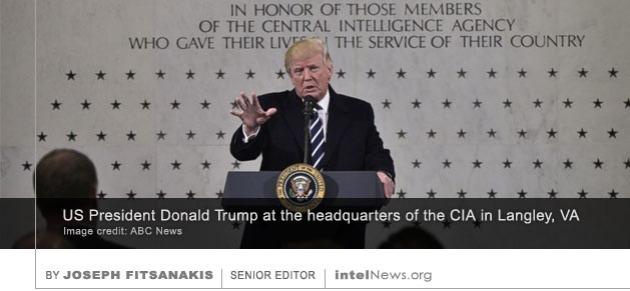 The United States Central Intelligence Agency has questioned the accuracy of a media report, which claimed that “repeated mishandling” of intelligence by President Donald Trump resulted in the exfiltration of a high-level source from Russia. According to the American news network CNN, the CIA carried out the exfiltration operation in 2017. Despite the success of the operation, the removal of the asset has left the US without this high-level source at a time when it is most needed, said CNN. The network
 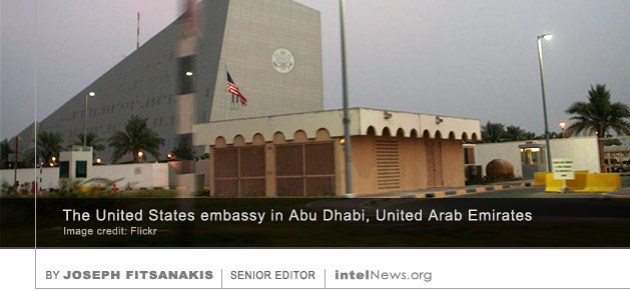 The United States Central Intelligence Agency will not collect human intelligence on the United Arab Emirates, even though the oil kingdom’s actions often run directly counter to American interests, according to sources. The CIA’s policy, which some sources described as “highly unusual”, fails to recognize the growing distance between American interests and the UAE’s foreign policies, according to Reuters. The news agency cited “three former CIA officials familiar with the matter” who claimed that the CIA’s policy is out of touch and may be endangering US national security.
 The United States Central Intelligence Agency plans to retain a strong presence on the ground in Afghanistan, despite reports that American troops may soon be leaving the country following a deal with the Taliban. Several news outlets
 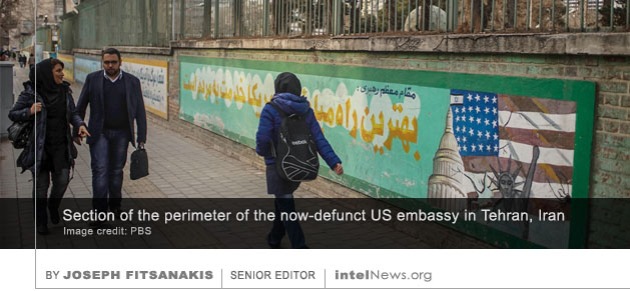 If the announcements from Tehran are to be believed, the United States Central Intelligence Agency lost at least 17 spies in Iran in the months leading up to March 2019. According to Iran’s Ministry of Intelligence, the Islamic Republic busted an alleged “CIA network” operating in sensitive private sector companies and government agencies that relate to defense, aerospace and energy. At least some of the 17 alleged spies have reportedly been sentenced to death, though their exact number remains unknown.
 made to look like rocks, which were located “in parks and other mountainous areas” in Iran and elsewhere in the Middle East, according to Iranian officials. Some of the assets communicated with their handlers while attending science conferences through- out Europe, Africa and Asia.
 Iranian state media announced on Sunday the arrest of 16 officials in the country’s Ministry of Petroleum, allegedly for sabotaging Iranian energy policy. It is not known whether these arrests are in any way connected with Tehran’s announcement last week that it had dismantled “one of the most complicated” espionage operations by the United States Central Intelligence Agency in several countries. According to the state-owned Fars News Agency, the 16 officials were arrested over the weekend in synchronized pre-dawn raids. All of them had managerial positions in Iran’s oil industry —including in the areas of exploration, production and distribution of Iran’s oil and petrochemical products inside the country as well as abroad.
 A senior Iranian security official said on Monday that Tehran had dismantled “one of the most complicated” espionage operations by the United States Central Intelligence Agency, leading to “arrests and confessions” of suspects in several countries. The announcement was made by Ali Shamkhani (pictured), secretary of the Supreme National Security Council of Iran, the Islamic Republic’s highest security decision-making body, which is chaired by the country’s president.
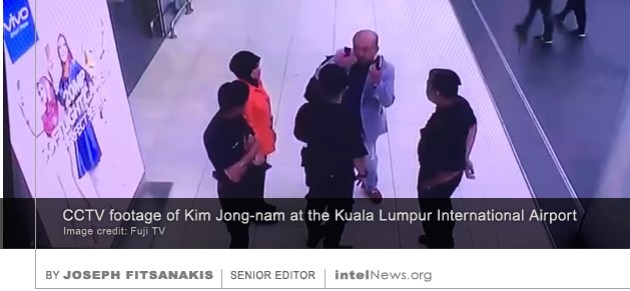 Kim Jong-nam, the half-brother of North Korean leader Kim Jong-un, held regular meetings with American intelligence officers before he was assassinated with VX nerve gas at a busy airport terminal in Malaysia. Two women
  A new star that was recently added to the United States Central Intelligence Agency’s memorial wall is seen by some as a way to draw attention to the mental pressures that come with the job, while others view it as disrespectful to the Agency’s mission. The specially designated wall is located at the main entrance lobby of the CIA’s headquarters in Langley, Virginia. It was created in 1974 and displays a star for each of the CIA’s personnel who have perished in the line of duty while working for the Agency. Today it displays nearly 130 stars, which span the CIA’s 72-year history.
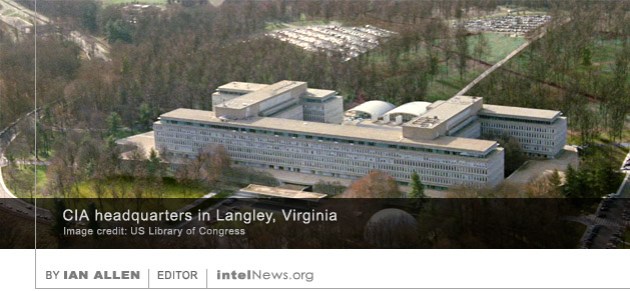 An untypical high-level meeting was convened at the headquarters of the United States Central Intelligence Agency last week to discuss Iran, according to NBC News. The meeting, which NBC
 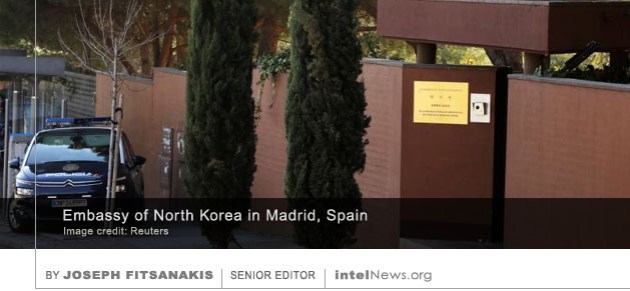 An obscure North Korean dissident group was most likely behind a violent raid on North Korea’s embassy in Madrid on February 22, which some reports have pinned on Western spy agencies, including the Central Intelligence Agency. The group, known as the Cheollima Civil Defense, is believed to be the first North Korean resistance organization to declare war on the government of Supreme Leader Kim Jong-un.
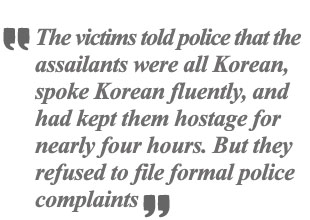 said in English that all was fine inside the embassy. But a few minutes later, two luxury cars belonging to the North Korean embassy sped away from the building with the ten assailants inside, including the man who had earlier appeared at the front door.








Swiss neutrality ‘shattered’ as leading cryptologic firm revealed to be CIA front
February 17, 2020 by Joseph Fitsanakis 2 Comments
The revelation, published last Tuesday by The Washington Post and the German public broadcaster ZDF, confirmed rumors that had been circulating since the early 1980s, that Crypto AG had made a secret deal with the US government. It was believed that the Swiss-based company had allowed the US National Security Agency to read the classified messages of dozens of nations that purchased Crypto AG’s encoding equipment. These rumors were further-substantiated in 2015, when a BBC investigation unearthed evidence of a “gentleman’s agreement”, dating to 1955, between a leading NSA official and Boris Hagelin, the Norwegian-born founder and owner of Crypto AG.
But the reality of this alleged secret pact appears to have been even more controversial. According to last week’s revelations, the CIA and West Germany’s Federal Intelligence Service (BND) secretly purchased the Swiss company and paid off most of its senior executives in order to buy their silence. The secret deal allegedly allowed the US and West Germany to spy on the classified government communications of several of their adversaries —and even allies, including Italy, Spain and Greece, as well as Austria, Jordan, Saudi Arabia and the United Arab Emirates.
What is more, the secret CIA/BND partnership with Crypto AG was known to senior British and Israeli officials, and information derived from it was routinely shared with them. Government officials in Switzerland and even Sweden were aware that Crypto AG had been compromised, but remained silent.
American and German authorities have not commented on the revelations. But the story has monopolized Swiss media headlines for several days. Some news outlets have opined that the traditional Swiss concept of political neutrality has been “shattered”. Meanwhile, a Swiss federal judge has opened an investigation into the revelations, as the Swiss parliament is preparing to launch an official inquiry. Switzerland’s Prime Minister, Simonetta Sommaruga, said on Sunday that the government would discuss the issue “when we have the facts”.
► Author: Joseph Fitsanakis | Date: 17 February 2020 | Permalink
Filed under Expert news and commentary on intelligence, espionage, spies and spying Tagged with BND, Boris Hagelin, CIA, Cold War, Crypto AG, cryptology, Federal Republic of Germany, front companies, history, News, NSA, Operation RUBICON, Switzerland, United States