News you may have missed #0151

Bookmark and Share

News you may have missed #0150

  • Israel’s inside intelligence. If only Israeli security services were as open as the CIA and other US spy agencies, lament Israelis.
  • Nozette and nuclear rocketry. Here are some of the reasons why the case of scientist Stewart D. Nozette, who was arrested and charged earlier this week under the US Espionage Act, is distressing on several levels.
  • Perle calls DoD spying whistleblower “a nutcase”. Richard Perle, chairperson of the US Defense Advisory Board under the Bush administration, has called Sibel Edmonds “a nutcase; certifiable”. Last August, Edmonds, a former FBI translator, alleged that Turkish spies had bugged, blackmailed and bribed US politicians, her FBI unit, the State Department, the Pentagon and Congress.

Bookmark and Share

News you may have missed #0149

  • Why is CIA fighting to keep JFK documents sealed? For years, the CIA has fought in US federal courts to keep secret hundreds of documents detailing the relationship between Lee Harvey Oswald and a CIA anti-Castro front group. The Agency says it is only protecting legitimate secrets. But some researchers are questioning this.
  • Up to 320 Pakistani civilians killed in US drone war. As many as 320 innocent civilians may have been killed in the CIA-led US drone war in Pakistan, according to an analysis by the New America Foundation. That’s about a third of the 1,000 or so people slain in the robotic aircraft attacks since 2006. Previous research has shown that approximately 80% of the airstrikes have failed to kill what the US Pentagon calls “high value targets”.
  • Analysis: What are the risks of the CIA’s covert drone program? “It’s easy to understand the appeal of a ‘push-button’ approach to fighting al-Qaeda, but the embrace of the Predator program has occurred with remarkably little public discussion, given that it represents a radically new and geographically unbounded use of state-sanctioned lethal force. And, because of the CIA program’s secrecy, there is no visible system of accountability in place, despite the fact that the agency has killed many civilians inside a politically fragile, nuclear-armed country with which the US is not at war”.

Bookmark and Share

US spy agencies invest in Internet-monitoring company

In-Q-Tel logo

In-Q-Tel logo

By JOSEPH FITSANAKIS | intelNews.org |
In-Q-Tel, the CIA’s venture-capital investment arm, is funding a private software company specializing in monitoring online social media, such as YouTube, Twitter and Flickr. The company, Visible Technologies, unleashes web crawlers that scan and sift through over half a million Internet sites a day, looking for open-source intelligence (OSINT) of interest to its customers. The latter receive real-time updates of Internet activity, based on specific sets of keywords they provide. Noah Shachtman, of Wired’s Danger Room blog, correctly notes that In-Q-Tel’s latest investment is indicative of a wider trend within US intelligence agencies to enhance their foreign OSINT collection and analysis. Incidentally, the US Pentagon has shown similar interests since 2006. Read more of this post

News you may have missed #0142

  • Egypt assisting Yemen in alleged Iranian spy infiltration. Egypt has allegedly provided Yemen with information on Iran’s intelligence activities targeting it and other Arab and African states in the region, according to Egyptian daily Akhbar Al-Youm. Meanwhile, the appeals of two Yemeni nationals convicted last October of spying for Iran are to be heard Monday in Yemeni capital Sana’a. Yemen, a major intelligence center in the Arab world, is probably the most underreported front in Washington’s so-called “war on terrorism”.
  • New book examines Operation GREENUP. A new book, They Dared Return, by Patrick K. O’Donnell, examines the operations of five German Jews, who returned to WWII Germany for Operation GREENUP, an espionage project funded by the German Operational Group of the US Office of Strategic Services –forerunner of the CIA.

Bookmark and Share

US wont’ share al-Qaeda intelligence, say Pakistani spies

Quetta, Pakistan

Quetta, Pakistan

By IAN ALLEN | intelNews.org |
A number of senior Pakistani security officials have accused US spy agencies of systematically withholding from their Pakistani counterparts actionable intelligence on al-Qaeda and Taliban activities in Pakistan. Speaking on condition of anonymity, the officials complained to The Washington Times that the last time the CIA shared actionable intelligence on al-Qaeda with the government of Pakistan was in 2007. They also said that recent public assertions by US officials that senior al-Qaeda leaders are hiding in Quetta, Pakistan, have not been followed with corresponding actionable intelligence by US spy agencies. The allegations shed further light on the increasingly severed intelligence relationship between Washington and Islamabad, which began shortly before the 2008 ousting of American-supported Pakistani dictator General Pervez Musharraf. Read more of this post

News you may have missed #0140

  • CIA Intellipedia gurus get Homeland Security Medal. Don Burke and Sean Dennehy, the CIA agents behind Intellipedia, have been awarded a medal for “promoting and expanding information-sharing in the Intelligence Community”. As intelNews noted last August, Intellipedia, the intelligence community’s version of Wikipedia, has grown markedly since its formal launch in 2006. It now averages more than 15,000 edits per day and is home to 900,000 pages and 100,000 user accounts.
  • Cuban Five resentencing delayed. A US federal judge has accepted requests from the lawyers of Antonio Guerrero, a member of the Cuban Five spy ring, to delay their resentencing, after the US government refused to turn over any national security damage assessments in the case. Washington accuses the Five of spying on the US for Cuba. But an appeals court ruled earlier this year that the sentences they received (ranging from 19 years to life) were too long. It appears that Guerrero’s sentence will be reduced from life to 20 years behind bars.
  • Was Christopher Columbus a spy? An independent researcher is raising eyebrows by suggesting that Columbus was a Portuguese spy who knew exactly what he was doing when he supposedly “got lost” in the Atlantic in 1492.

Bookmark and Share

News you may have missed #0138

  • US intelligence turf wars plague email system. US intelligence officials have decided to shut down a Web-based, unclassified e-mail system, which had been heralded as an important step in the US intelligence community’s drive for better information sharing after 9/11. A Directorate of National Intelligence representative said “security concerns” led to the decision to shut down the e-mail system.
  • CIA Climate Change Center survives funding opposition. Republican lawmakers criticized the CIA’s plan to open the Center on Climate Change and National Security as a “misguided defense funding priority” and even tried to prevent appropriate funding last week. But they failed and so it appears that the Center will be established after all.
  • Colombia to rename spy agency to “CIA”. The restructuring of Colombia’s scandal-prone domestic spy agency, Administrative Department of Security (DAS), continues, as the government has announced that DAS will now be known as the Central Intelligence Agency (CIA), a new entity which will take over state and immigration intelligence and counterintelligence duties.

Bookmark and Share

Congress briefing on CIA activities halted after officials refuse to take oath

Gloria Luttig

Gloria Luttig

By IAN ALLEN | intelNews.org |
A US Congressional briefing on the CIA was unexpectedly halted on Wednesday, after Justice Department officials refused to take the oath. The briefing, by the House of Representatives Subcommittee on Oversight and Investigations, concerned the April 20, 2001 shooting down by the CIA of a Cessna 185 floatplane, which was suspected of transporting drugs from Colombia to Peru. The plane was actually carrying an American Christian missionary family, including two children, who were on their way to Lima, Peru. The attack on the plane resulted in the death of the mother and one of the children. As intelNews reported in November of 2008, a still-classified report by the Office of the US Inspector General concluded that the murder of the two Americans resulted from routine violation of intercept procedures by CIA operatives. Read more of this post

Was woman convicted of hi-tech exports to Iraq victim of CIA plot?

Dawn Hanna

Dawn Hanna

By IAN ALLEN | intelNews.org |
The case of a Detroit woman convicted of exporting mobile communications equipment to the Saddam Hussein regime took an unexpected turn this week, after the man who mediated in the equipment transfer said he was acting on behalf of the CIA. A Detroit jury convicted Dawn Hanna last March for exporting the hi-tech equipment to Iraq, in violation of a US and UN-imposed embargo against the Saddam Hussein regime. The jury was apparently not convinced by Hanna’s claim that the purchaser of the equipment, who mediated in the transfer, had told her that the intended user of the hardware was the government of Turkey. But the case turned more complex this week, after Emad al-Yawer, a Jordanian businessman who mediated in the transfer, gave an interview to a Detroit TV station, in which he claimed he was working for the CIA when he facilitated the mobile equipment transfer. He told the station that the CIA intended to use the hi-tech equipment to track Saddam Hussein’s movements, in order to “send a smart bomb and blow him into smithereens”. Hanna’s parents point to this new, unexpected turn of events, and are requesting that the case be reopened. But the judge has so far refused to grant a new trial.

Bookmark and Share

News you may have missed #0135

  • More revelations in “unprecedented” book on MI5 history. More revelations in Christopher Andrew’s In Defense of the Realm include the disclosure that Margaret Thatcher tried to get MI5 to spy on British trade union activists when she was Prime Minister (MI5 refused). Meanwhile, Professor Andrew has begun serializing selected chapters of the book in The London Times, here and here.
  • Court lets Canadian spies snoop on targets overseas. A court ruling has permitted the Canadian Security Intelligence Service and the Communications Security Establishment to eavesdrop on Canadian nationals traveling overseas. Until now, the two agencies could spy on Canadians so long as they were within the country’s borders.
  • CIA endorses cloud computing. The CIA is emerging as one of the US government’s strongest advocates of cloud computing, even though “cloud computing as a term really didn’t hit our vocabulary until a year ago”, according to Jill Tummler Singer, the CIA’s deputy Chief Intelligence Officer. This article, however, fails to mention that the NSA is also moving to cloud computing in a big way.

Bookmark and Share

News you may have missed #0134

  • S. Korean government tries to silence anti-surveillance activist. Park Won-sun, the executive director of the Hope Institute, a civic think tank, says he will continue to criticize the country’s National Intelligence Service (NIS) for spying on civilians, despite charges filed against him by the government.
  • Cleric in CIA kidnap trial seeks millions. Hassan Moustafa Osama Nasr, an Egyptian cleric kidnapped by the CIA from a Milan street in 2003, has asked for €10 million ($15 million) in damages from the American and Italian defendants charged in his abduction.
  • Three US-based Chinese nationals accused of selling arms to China. Chinese nationals Zhen Zhou Wu, Yufeng Wei, Bo Li and Chitron Electronics and Shenzhen Chitron Electronics Co. Ltd., face a 38-count indictment for conspiring to violate the US Arms Export Control Act for allegedly exporting defense weapons and electronics, money laundering and filing false documents with the US Department of Commerce.

Bookmark and Share

News you may have missed #0133

  • Book examines Central Asian espionage in WWI. On Secret Service East of Constantinople, by Peter Hopkirk (John Murray Publishers), examines the role of German intelligence services in Kaiser Wilhelm’s attempt to gain influence in the Ottoman Empire, the Caucasus, Persia, Afghanistan and India. A very interesting, under-researched aspect of World War I.
  • CIA intercepted communication between Zazi and al-Qaeda. A local TV station in Denver, Colorado, quotes “intelligence officials familiar with the investigation” of Najibullah Zazi, as saying that the CIA alerted US federal agencies after intercepting a conversation between Zazi and a senior al-Qaida operative. No word yet about this from the FBI, which is supposed to handle domestic terrorism cases.
  • US defense secretary hints at more secret nuke sites in Iran. Speaking alongside Secretary of State Hillary Clinton last night at a CNN/George Washington University forum, Robert Gates dropped what seemed to be a big hint that the United States knows much more about the Iranian nuclear program than the Iranians might think.

Bookmark and Share

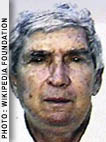
Anti-Castro terrorist was CIA informant, declassified documents show

Luis Posada Carriles

Posada Carriles

By JOSEPH FITSANAKIS | intelNews.org |
An anti-Castro operative, who has admitted planting bombs against civilian targets in Cuba, and currently faces immigration fraud charges in the US, was a CIA informant, newly declassified documents show. Five CIA memoranda from 1965 and 1966 reveal that Luis Posada Carriles, code name “A15”, acted as an information link between Langley and violent anti-Castro groups in Miami, Florida, in which he was active. The five documents were declassified by the CIA between 1998 and 2003 and were made public on Tuesday by Peter Kornbluh, who heads the National Security Archive’s Cuba Documentation Project at George Washington University. Remarkably, the documents show that Posada’ handler at the CIA, Grover T. Lythcott, believed that the Cuban exile was a “moderate force” who could be counted on not to embarrass the US government or the CIA with his actions. Read more of this post

News you may have missed #0132

  • Emirates to deport Syrian ex-spy and witness in Hariri assassination probe. A Syrian former spy was on Monday sentenced to six months in jail and deportation for entering the United Arab Emirates on a forged Czech passport. Interestingly, Mohammed Zuhair Siddiq, was a prosecution witness in the inquiry into the assassination of Lebanon’s ex-premier Rafiq Hariri. In 2005, Siddiq claimed that Lebanon’s former pro-Syrian president, Emile Lahoud, and Syrian President Bashar al-Assad, gave the order to kill anti-Syrian Hariri. It is not clear to which country Siddiq will be deported.
  • US national security advisor insists Iran cannot currently build the bomb. US National Security Advisor General James Jones has rejected claims by The New York Times that Iraq has enough information to design and build a functional nuclear bomb. Jones also stood by the conclusions of the 2007 US National Intelligence Estimate, which said Iran’s nuclear arms program is inactive.
  • Book claims CIA-linked network killed anti-drugs campaigner. A new book by Australian researcher John Jiggens claims that a CIA-linked drug smuggling network was responsible for the 1977 murder of Australian anti-drugs campaigner Donald Mackay.

Bookmark and Share