CIA report says Saudi crown prince sent text messages to Khashoggi killer

Saud al-QahtaniSaudi Crown Prince Mohammed bin Salman sent at least eleven text messages to the man in charge of the 15-member hit team that killed journalist Jamal Khashoggi last month, according to a classified report produced by the United States Central Intelligence Agency. The CIA report was leaked to The Wall Street Journal, which said in a leading article on Saturday that the Saudi royal had sent the messages in the hours before and after Khashoggi’s brutal murder at the Saudi consulate in Istanbul, Turkey, on October 2, 2018. Khashoggi, 59, was a Saudi government adviser who moved to the US and became a vocal critic of the kingdom’s style of governance. He was killed and later dismembered by a hit team inside the Saudi consulate in Istanbul, where he had gone for a scheduled visit in order to be issued written proof of his divorce from his former wife in Saudi Arabia.

Late last month, the CIA and its British equivalent, the Secret Intelligence Service (MI6), were reported to have concluded that Khashoggi’s murder was directly ordered by Prince Salman. But US President Donald Trump and leading members of his cabinet, including Secretaries of State Mike Pompeo and Defense James Mattis, have disputed these claims, saying there is “no smoking gun” that proves Prince Salman’s involvement. The US president said that Saudi Arabia was “a great ally” of Washington and that Prince Salman’s role in Khashoggi’s murder was unclear. “Maybe he did and maybe he didn’t”, he told reporters in Washington on November 20, referring to the prince, whom he considers a personal friend. Instead, the White House has placed blame for the journalist’s murder on Saud al-Qahtani (pictured), a former advisor to Saudi Arabia’s late King Abdullah, who is believed to have coordinated Khashoggi’s killing.

But new a new CIA assessment of Khashoggi’s murder that was leaked to The Wall Street Journal claims that the US spy agency has concluded with “medium-to-high” confidence that Prince Salman “personally targeted” the journalist and “probably ordered his death”. The leaked report, said The Journal, rests on several findings, including the fact that the prince sent at least 11 messages to al-Qahtani in the hours right before and right after the latter’s hit-team killed Khashoggi in Istanbul. The CIA report states that the Agency does not have access to the contents of the texts. But it states that this pattern of communication, along with other pieces of evidence “seems to foreshadow the Saudi operation launched against Khashoggi”.

Author: Joseph Fitsanakis | Date: 03 December 2018 | Permalink
Head of CIA’s Korean mission center to resign, say sources

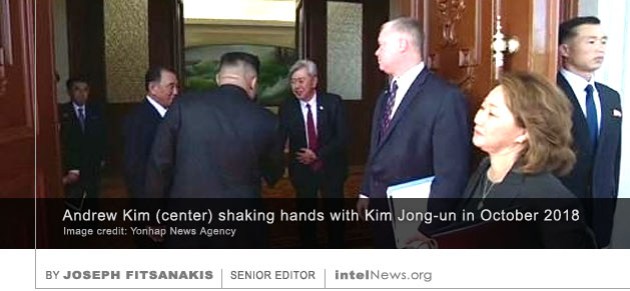
Andrew KimA senior North Korea expert in the United States Central Intelligence Agency, who has been instrumental in the ongoing negotiations between Washington and Pyongyang, has tendered his resignation, according to sources. The official was identified last may by US media as Andrew Kim, a former South Korean citizen who moved to the US with his parents when he was 13 years old. According to sources, Kim joined the CIA after graduating from college and rose through the Agency’s ranks to serve its stations in Moscow, Beijing and Bangkok. His most recent overseas post was reportedly in Seoul, where he served as the CIA’s station chief —the most senior American intelligence official in the country.
Following his return to the US from Seoul, Kim reportedly retired, but returned last year to head the CIA’s new Korea Mission Center (KMC). The purpose of the specialized unit is to analyze Pyongyang’s ballistic missile and nuclear weapons programs, which the administration of US President Donald Trump considers as matters of priority for the White House. It was as head of the KMC that Kim reportedly met Mike Pompeo once he became Director of the CIA in January 2017. The two men worked closely together and it is believed that Kim’s role was instrumental in organizing the negotiations between Washington and Pyongyang that led to last summer’s historic high-level meeting between President Trump and Supreme Leader Kim Jong-un. According to American and South Korean media, Kim accompanied the then-CIA director on his secret trip to North Korea. He also accompanied Pompeo on his trips to North Korea once the Kansas Republican became Secretary of State.

The Yonhap News Agency said on Tuesday that Kim initially intended to leave his CIA post in the summer, but was persuaded by Secretary Pompeo to continue. However, he has now tendered his resignation, which will take effect on December 20. Citing “multiple sources”, including “a senior official at South Korea’s National Intelligence Service”, the Seoul-based news agency said that Kim plans to take up an academic post at Stanford University, adding that he intends to continue serving as an adviser to the secretary of state. Prior media reports have stated that “Kim is widely viewed as a hawk on North Korea”, so there are suspicions that his departure from the CIA stems from his disagreement with the policy of negotiation signaled by President Trump. However, the CIA has not commented on the Yonhap report. The South Korean agency said that the CIA is already reviewing candidates to succeed Kim.

Author: Joseph Fitsanakis | Date: 28 November 2018 | Permalink

CIA suffered ‘catastrophic’ compromise of its spy communication system

CIAThe United States Central Intelligence Agency suffered a “catastrophic” compromise of the system it uses to communicate with spies, which caused the death of “dozens of people around the world” according to sources. This is alleged in a major report published on Friday by Yahoo News, which cites “conversations with eleven former US intelligence and government officials directly familiar with the matter”. The report by the online news service describes the compromise of an Internet-based covert platform used by the CIA to facilitate the clandestine communication between CIA officers and their sources —known as agents or spies— around the world.
According to Yahoo News, the online communication system had been developed in the years after 9/11 by the US Intelligence Community for use in warzones in the Middle East and Central Asia. It was eventually adopted for extensive use by the CIA, which saw it as a practical method for exchanging sensitive information between CIA case officers and their assets in so-called ‘denied areas’. The term refers to regions of the world where face-to-face communication between CIA case officers and their assets is difficult and dangerous due to the presence of ultra-hostile intelligence services or non-state adversaries like the Taliban or al-Qaeda. However, it appears that the system was flawed: it was too elementary to withstand sustained scrutiny by Internet-savvy counterintelligence experts working for state actors like Iran, China or Russia.

In September of 2009, Washington made a series of impressively detailed revelations about the advanced status of Iran’s nuclear program. These angered Tehran, which redoubled its efforts to stop the US and others from acquiring intelligence information about the status of its nuclear program. Some sources told Yahoo News that one of the CIA assets inside Iran’s nuclear program was convinced by the Iranians to become a double spy. He proceeded to give Tehran crucial information about the CIA’s online communication system. Based on these initial clues, the Iranians allegedly used Google-based techniques “that one official described as rudimentary” to identify an entire network of CIA-maintained websites that were used to communicate with assets in Iran and elsewhere. The Iranians then kept tabs on these websites and located their users in order to gradually unravel an entire network of CIA agents inside their country. Around that time, Iranian media announced that the Islamic Republic’s counterintelligence agencies had broken up an extensive CIA spy ring consisting of more than 30 informants.

The Yahoo News report says that the CIA was able to successfully exfiltrate some of its assets from Iran before the authorities were able to apprehend them. The agency also had to recall a number of undercover officers, after they were identified by the Iranians. The effects of the compromise, however, persisted on a global scale, according to former US intelligence officials. In 2011 and 2012, another network of CIA spies was busted in China, leading to the arrest and execution of as many as three dozen assets working for the US. Many, says Yahoo News, believe that the Iranians coached the Chinese on how to use the CIA’s online communication system to identify clandestine methods and sources used by the agency.

Along with other specialist websites, IntelNews monitored these developments as they took place separately in Iran and China. However, the Yahoo News report is the first to piece together these seemingly disparate developments and suggest that they were likely triggered by the same root cause. What is more, the report suggests that the CIA had been warned about the potential shortcomings of its online communication system before 2009, when the first penetrations began to occur. In response to the compromise, the CIA has reportedly modified, and at times completely abandoned, its online communication system. However, the implications of the system’s compromise continue to “unwind worldwide” and the CIA is “still dealing with the fallout”, according to sources. The effects on the agency’s operational work are likely to persist for years, said Yahoo News.

Author: Joseph Fitsanakis | Date: 05 November 2018 | Permalink

CIA to return to traditional espionage against state actors, says new director

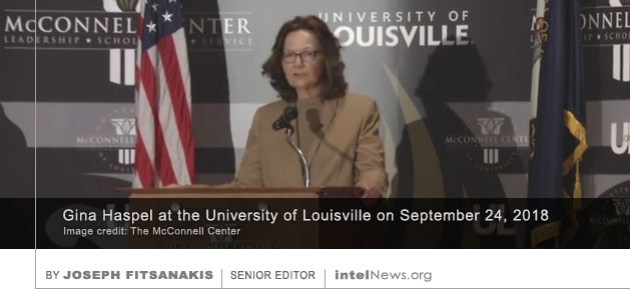
Gina HaspelThe United States Central Intelligence Agency will return to traditional espionage against foreign states and focus less on counterterrorism against non-state actors, said its new director in her first public appearance. Gina Haspel joined the CIA in 1985 as a reports officer and completed several undercover tours overseas before serving as chief of station. She rose through the ranks to become deputy director of the National Clandestine Service and was appointed deputy director of the CIA in 2017. In May of this year, she became the Agency’s first female director, despite some controversy that arose from her role as chief of a CIA undercover facility (so-called “black site”) in Thailand. Critics alleged that Agency personnel under her command practiced enhanced interrogation, including waterboarding, on terrorism detainees.
On Monday, Haspel gave a talk at the University of Louisville, from where she graduated in 1978 with a degree in languages and journalism, having transferred there from the University of Kentucky. It was her first public appearance after being sworn in as CIA director. She told the audience that she intends to steer the Agency back to traditional intelligence collection against “current and potential […] nation-state adversaries” and away from counterterrorism operations against non-state actors. The latter took center stage after the events of September 11, 2001. Filling current “intelligence gaps” on countries like Russia and China will be “a strategic priority” for the CIA, said Haspel, adding that the Agency will seek to “sharpen its focus on nation-state adversaries”. She spoke at length about China, stating that Beijing was “working to diminish US influence” and expand its own authority “beyond their own region, in places like Africa, Latin America, the Pacific islands [and] South Asia”.

The CIA’s hiring priorities will reflect the Agency’s strategic shift, said Haspel. The Agency will seek to expand its foreign footprint by “increasing the number of [its] officers stationed overseas”. Priority for these assignments will be given to foreign-language speakers with skills in Chinese, Arabic and Farsi, among other target languages. Interestingly, the CIA director added Turkish, French and Spanish to the list. She also said that the Agency will “invest more heavily on […] counternarcotics efforts abroad”. Last but not least, Haspel spoke about the need for increased transparency, diversity and inclusion at the CIA, which last year marked its 70th anniversary.

Author: Joseph Fitsanakis | Date: 26 September 2018 | Permalink

CIA informants inside Russia are going silent, say US sources

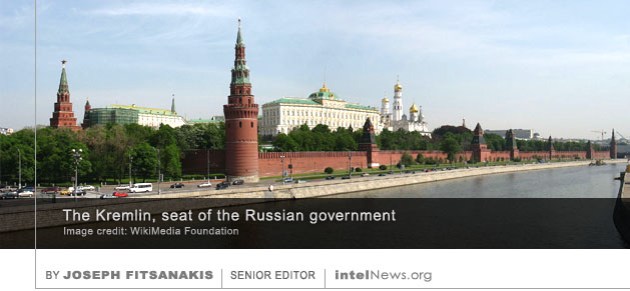
Kremlin, RussiaSecret informants inside the Russian government, which the United States has relied on in recent years for tips about Moscow’s strategy and tactics, have gone silent in recent months, according to sources. Over many years, US intelligence agencies have built networks of Russian informants. These consist of officials placed in senior positions inside the Kremlin and other Russian government institutions, who can help shed light on Russia’s political maneuvers. These informants were crucial in enabling the US Intelligence Community to issue warnings of possible Russian meddling in the American presidential elections of November 2016. Since then, US spy agencies have largely relied on these informants to produce detailed assessments of Russian intelligence activities targeting the US, and propose measures against those involved.
But on Friday, The New York Times said in an article that these vital sources of information in Moscow have been going silent in recent months. Citing “current and former officials”, the paper said that US officials did not believe that the informants have been captured or killed. Instead, they have voluntarily “gone underground” because of “more aggressive counterintelligence” practiced by Russian security agencies. Moscow has stepped up attempts to detect spies operating inside Russia since the Sergei Skripal incident, when relations between it and most Western countries sank to their lowest point since the Cold War. In turn, Western informants operating in Russia have “decided it is too dangerous to pass information” and have gone “silent for their own protection”, said The Times.

This situation, however, has left the Central Intelligence Agency and other US spy agencies “in the dark” about the intentions of Russian President Vladimir Putin, just as America is nearing its mid-term elections. The lack of information has been exacerbated by the expulsion of dozens of American diplomats from Russia in March of this year. Moscow announced the expulsions in response to Washington’s decision to expel 60 Russian diplomats in protest against the attempt —allegedly by Russia— to kill Sergei Skripal in England. Many of the diplomats who were expelled from Russia were in fact intelligence officers operating under diplomatic cover. Few of those are now left on Russian soil and, according to The Times, “are under incredible surveillance” by Russian counterintelligence agencies. Washington is still collecting information from Russia through other channels, including communication intercepts, which, according to The Times, “remain strong”. But the paper cited anonymous American officials who “acknowledged the degradation in the [overall flow of] information collected from Russia.

Author: Joseph Fitsanakis | Date: 27 August 2018 | Permalink

Crowdfunding campaign seeks release of CIA’s mind control program files

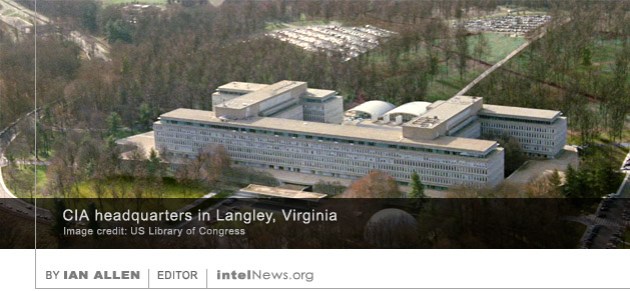
CIA headquartersAn online fundraising campaign is seeking to secure the release of over 4,000 pages of documents relating to a controversial mind control program developed by the United States Central Intelligence Agency. The project, referred to as MKNAOMI/MKULTRA in US government files, was a joint effort by the CIA and the US Department of Defense to study the effects of substances such as heroin and LSD on the human brain. It began in 1953 and over the years involved the work of hundreds of scientists, many of whom were not aware they were working on a CIA project. But it was hurriedly shut down in 1976, once post-Watergate investigations by the US Congress revealed that it led to the death of at least one person and involved the application of drugs on hundreds of nonconsenting subjects. Several lawsuits relating to MKULTRA have been filed in US courts in recent years.
In 2004, the Black Vault, a volunteer website specializing in publishing declassified government documents, released tens of thousands of pages that were released by the CIA following a lengthy Freedom of Information Act (FOIA) application. The agency released the file along with an 85-page index that listed the file’s contents. But in 2016, a Black Vault reader noticed that some of the listings contained in the file were missing from the documents. Working through the news aggregation and discussion website Reddit, a group of readers identified all the irregularities in the released documents and notified Black Vault’s owner, John Greenwald. Greenwald then contacted the CIA and, following a two-year exchange with the agency’s FOIA desk, he was told that the missing pages would require a separate FOIA request. The reason, according to the CIA, is that the original FOIA request had requested documents pertaining to “mind control”, whereas the missing pages related to “behavioral modification”, which is a separate topic.

The CIA told Greenwald that releasing the pages pertaining to “behavioral modification” would require a payment of $425.80, at 10 cents per page. After failing to convince the CIA that it should release the pages for free, because they should have been included in the original 2004 FOIA petition, Greenwald decided to launch a crowdfunding campaign. He used the popular crowdfunding website GoFundMe to request $500 toward a new FOIA and related expenses. By Wednesday night, the campaign had exceeded the amount requested by Greenwald. The owner of the Black Vault website now says that he is preparing to file a FOIA for 4,358 pages about MKULTRA that are missing from the original 2004 document release.

Author: Ian Allen | Date: 16 August 2018 | Permalink

Montenegro seeks arrest of ex-CIA officer accused of role in pro-Russian coup

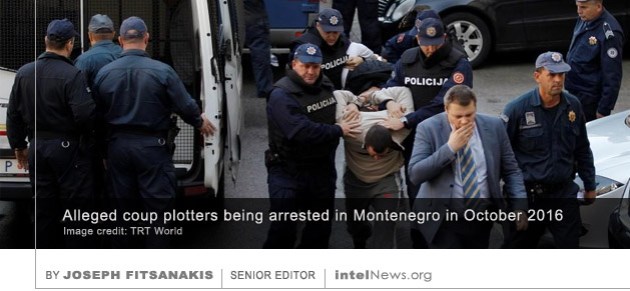
Montenegro coupGovernment prosecutors in Montenegro, the youngest member of the North Atlantic Treaty Organization, claim that a former officer of the United States Central Intelligence Agency helped pro-Russian plotters organize a coup in 2016. In October of that year, authorities in Montenegro accused “nationalists from Russia and Serbia” of staging a failed plot. Their goal was allegedly to kill the country’s then-Prime Minister Milo Dukanović, spark a pro-Russian coup in the country, and prevent its entry into NATO. The allegations surfaced after 20 Serbians and Montenegrins were arrested in Montenegro for allegedly planning an armed coup. The arrests took place on election day, October 16, 2016, as Montenegrins were voting across the Balkan country of 650,000 people. The plotters had even hired a “long-distance sharpshooter” who was “a professional killer” for the task of killing Đukanović, according to Montenegrin police. After killing the prime minister, the plotters allegedly planned to storm the parliament and prompt a pro-Russian coup.
Russia has vehemently denied the allegations. But in March of last year, the then British foreign secretary Boris Johnson appeared to validate the Montenegrin government’s allegations. Since then, a sensational trial has been taking place in the Montenegrin capital Podgorica of the 20 men who were arrested in October 2016, in addition to two Russians who are being tried in absentia. During the trial, prosecutors fingered Joseph Assad, a former CIA officer, as a co-conspirator in the coup plot. The Egyptian-born Assad served as a counter-terrorism expert in the CIA after arriving in the US in 1990, but eventually left the agency to launch his own security firm. It is believed that at the time of the alleged coup plot, Assad’s firm was employed by Aron Shaviv, a political strategist connected with the Democratic Front, a vocal pro-Russian opposition party in Montenegro. Shaviv, who has joint British and Israeli citizenship, said he hired Assad’s firm to provide counter-surveillance against Montenegro’s security services. According to Shaviv, the Montenegrin authorities spied on him and harassed him because of his connections to a domestic political party that is seen as pro-Russian.

But prosecutors in the trial of the alleged coup plotters claim that Assad’s role was to organize and provide escape routes and methods for the coup plotters. In light of these allegations, a warrant has been issued for Assad, accusing him of “operating a criminal enterprise”, according to Britain’s Guardian newspaper. Assad has rejected the charges as a “deception campaign”. In a statement issued on Saturday, he said he was “a loyal American who had no role in any crimes or coup in Montenegro”. Meanwhile, the Democratic Front and a number of other opposition parties in Montenegro denounced the government’s claims of a failed coup as “publicity stunts” aimed at distracting the country’s citizens from the state of the economy and other domestic concerns.

Author: Joseph Fitsanakis | Date: 13 August 2018 | Permalink

Judge rules that Trump’s tweet did not disclose top-secret CIA operation in Syria

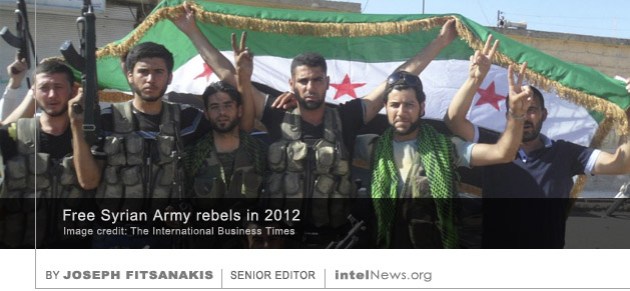
Free Syrian ArmyA United States federal judge ruled on Monday that a tweet by President Donald Trump did not inadvertently disclose a top-secret program by the Central Intelligence Agency to aid rebel groups in Syria. The lawsuit, brought by The New York Times, centered on news reports published in 2017 by Reuters, The Washington Post, and others, claiming that the US president had terminated an extensive CIA program that provided assistance to rebel forces engaged in the Syrian Civil War. The program was reportedly initiated by US President Barack Obama, who in 2015 instructed the CIA to assist armed groups operating under the umbrella of the Free Syrian Army. Aside from training, the CIA assistance reportedly included the provision of light and heavy ammunition, such as antitank missiles, mines and grenades.
But President Trump allegedly terminated $1 billion program soon after he took office. Last July, the president openly disputed an account by The Washington Post’s Greg Jaffe and Adam Entous, which claimed that Trump had ended the program as a concession to Russia. In a tweet, Trump said: “The Amazon Washington Post fabricated the facts on my ending massive, dangerous, and wasteful payments to Syrian rebels fighting Assad”. Shortly afterwards, another newspaper, The New York Times, filed a Freedom of Information Act (FOIA) request, arguing that the president’s tweet had effectively disclosed the existence of the covert CIA program and seeking full details from the government. But the CIA rejected the The New York Times’ rationale, at which point the paper took the case to court.

But on Monday, US District Court Judge Andrew Carter Jr. dismissed the paper’s argument. In a 20-page decision, posted online by the US-based news website Politico, Judge Carter said that President Trump’s tweet had been too vague and ambiguous to be considered as effectively declassifying the secret CIA program. At no point did the US president “make an unequivocal statement, or any statement for that matter, indicating that he was declassifying information”, said the judge. Additionally, Trump’s tweet and other public statements on the matter did not undermine the legal authority of the US government to continue to keep details about the CIA program under wraps. According to Politico, which reported on Judge Carter’s decision, this development will make it difficult for other FOIA filers to use Trump’s tweets as justification for seeking information about secret government programs. Meanwhile, The New York Times said on Monday that it would seek to appeal Judge Carter’s decision.

Author: Joseph Fitsanakis | Date: 04 July 2018 | Permalink

Chinese shipbuilding boss gave CIA aircraft carrier secrets, reports claim

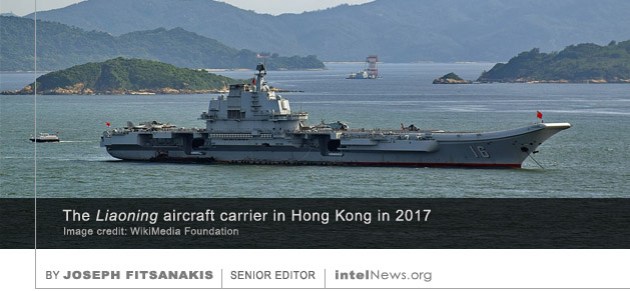
Liaoning aircraft carrier ChinaOne of China’s most senior shipbuilding executives, who has not been seen in public for nearly two weeks, has been charged with giving secrets about China’s aircraft carriers to the United States. Sun Bo, 57, is general manager of the China Shipbuilding Industry Corporation (CSIC), China’s largest state-owned maritime manufacturer, which leads nearly every major shipbuilding project of the Chinese navy. Most notably, Sun headed the decade-long retrofitting of the Liaoning, a Soviet-built aircraft carrier that was commissioned to the Chinese Navy’s Surface Force after the collapse of the Soviet Union.
The ship arrived at the CSIC’s Dalian shipyard in northeastern China in 2002. Work on the vessel was completed in 2012. Today CSIC heads the construction of so-called Type 001A, China’s first home-built aircraft carrier, which is said to be modeled largely on the Liaoning. The company is also spearheading the construction of numerous Chinese Navy frigates, latest-generation destroyers, and numerous other vessels. Earlier this year, it was announced the CSIC would build the Chinese Navy’s first nuclear-powered aircraft carrier.

As the second most senior official of China’s largest and most important shipbuilder, Sun has supervised all of the company’s projects during the past two decades. But Sun effectively disappeared after June 11, when he made his last known public appearance at a CSIC event. On June 17, a brief notice posted on the company’s website stated that Sun had been placed under investigation for “gross violation of laws and [Communist] Party [of China] discipline”. The brief notice said that the probe of Sun’s activities was led by China’s National Supervision Commission and the Communist Party of China’s Central Commissariat for Discipline Inspection, but provided no further details.

It has now been reported by multiple Chinese news websites that Sun is under investigation not simply for graft, but for far more serious activities involving espionage. Specifically, it is claimed that Sun was recruited by the United States Central Intelligence Agency because of his supervisory role in China’s aircraft carrier building programs. He is believed to have provided the CIA with information about the decade-long retrofitting of the Liaoning. More importantly, there are reports that Sun gave the CIA blueprints and other technical specifications of the Type 001A, which is currently under construction at a top-secret facility. The Hong Kong-based English-language news website Asia Times said on Thursday that, given the sensitive nature of the charges against Sun, it is unlikely that the Chinese government would reveal the outcome of the investigation of the CSIC executive.

Author: Joseph Fitsanakis | Date: 22 June 2018 | Permalink

China gave ex-CIA officer “hundreds of thousands of dollars in cash” to spy on US

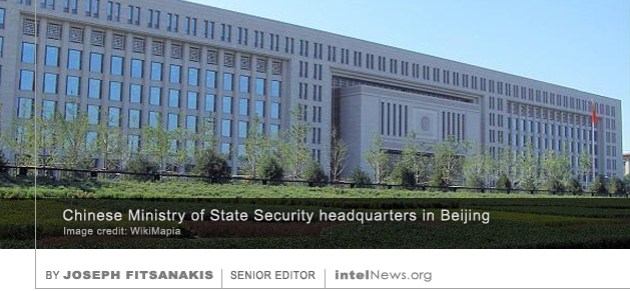
 Chinese Ministry of State SecurityChinese intelligence operatives gave a former officer of the United States Central Intelligence Agency “hundreds of thousands of dollars in cash” in exchange for carrying out espionage, according to court papers. The Federal Bureau of Investigation arrested Jerry Chun Shing Lee, 53, on January 15, accusing him of possessing classified information that included lists of real names of foreign assets and addresses of CIA safe houses. Lee, 53, was reportedly arrested after a lengthy FBI sting operation, which included creating a fictional job in the US in order to entice Lee to travel to New York from Hong Kong, where he had been living after leaving the CIA in 2007.

Lee is now scheduled to appear before a US circuit court judge on Friday morning, in order to be officially charged with one count of conspiracy to deliver national defense information to aid a foreign government and two counts of unlawfully retaining information pertaining to national defense. According to the indictment, in April of 2010 Lee met two officers of China’s Ministry of State Security. The meeting allegedly took place in Shenzhen, a city in southern China that borders Hong Kong. During that encounter, the indictment claims that Lee was offered “a gift of $100,000 in cash” in exchange of providing the Ministry of State Security with information about his career in the CIA. He was also told by the two Chinese intelligence officers that China would “take care of him for life” if he continued to cooperate with them.

In May of 2010, Lee deposited about $17,000 into one of his HSBC accounts in Hong Kong. Court documents allege that the deposit was the first of many that followed, and that they amounted to “hundreds of thousands of dollars”. These deposits continued to occurr until the end of 2013, when Lee made his last substantial cash deposit in Hong Kong. Throughout that time, Lee received regular written instructions from the Ministry of State Security, asking him to provide information about CIA operations. Lee did so at least 21 times, says the indictment. In one instance, he drew the floorplan of a CIA facility abroad and gave it to the Chinese, according to the indictment. Lee is expected to plead not guilty on Friday.

Author: Joseph Fitsanakis | Date: 16 May 2018 | Permalink

US government prosecutors confirm CIA officer passed information to China

CIAA case officer in the United States Central Intelligence Agency, who was arrested in January of this year for violating the Espionage Act, shared classified information with China, according to an official indictment. The Federal Bureau of Investigation arrested Jerry Chun Shing Lee, 53, on January 15, accusing him of possessing classified information that included lists of real names of foreign assets and addresses of CIA safe houses. Lee, 53, was reportedly arrested after a lengthy FBI sting operation, which included creating a fictional job in the US in order to entice Lee to travel to New York from Hong Kong, where he had been living after leaving the CIA in 2007. However, the initial FBI complaint did not indict Lee for passing the top-secret information to anyone. There was speculation at the time that this was because the FBI had not been able to conclusively prove that Lee carried out espionage.
On Tuesday, however, Lee was formally indicted on conspiracy to gather and deliver national defense information to aid a foreign government. That charge came in addition to a previously stated charge of unlawfully retaining material related to American national defense. The indictment repeats earlier allegations that Lee was found to be in possession of classified documents that included the real names of CIA assets (foreign citizens who are recruited by CIA case officers to spy for the United States abroad) and the locations of “covert facilities” –safe houses that are typically used by CIA personnel to meet with assets in privacy. In what can be described as the most descriptive allegations that have surfaced against Lee, the indictment proceeds to claim that he was approached by two Chinese intelligence officers in 2010, three years after he left the CIA. The officers allegedly offered to give Lee a substantial amount of money in exchange for access to classified information. Additionally, according to the court documents, Lee was provided by his Chinese handlers with email addresses that he could use to communicate with them covertly, and did as instructed “until at least 2011”.

The documents further state that Lee made “numerous […] cash deposits”, which he struggled to explain when questioned by American counterintelligence officials. On several instances, Lee lied during questioning in order to cover up his financial activities, according to the indictment. Lee’s defense lawyer, Edward MacMahon, told the court on Tuesday that his client was “not a Chinese spy”, but “a loyal American who loves his country”. He also pointed out that Lee served in the US military and the CIA. The Chinese government has made no comment about the case.

Author: Joseph Fitsanakis | Date: 10 May 2018 | Permalink

Pakistan denies it plans to release doctor who helped CIA find bin Laden

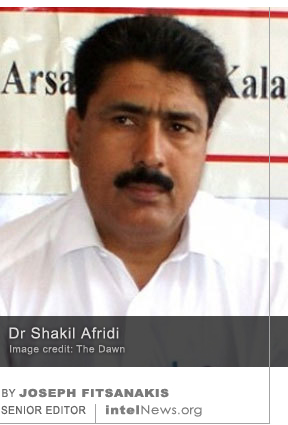
Dr Shakil AfridiAuthorities in Pakistan have dismissed rumors that a medical doctor who helped the United States Central Intelligence Agency find and kill al-Qaeda founder Osama bin Laden in 2011 is to be released from prison. Dr. Shakil Afridi was arrested in 2011, soon after bin Laden was killed in a CIA operation in the Pakistani city of Abbottabad. In the weeks following the CIA raid, it emerged that a team of local doctors and nurses had helped the American spy agency confirm bin Laden’s presence in the compound. The team of nearly 20 healthcare workers participated in a fake vaccination scheme carried out in Abbottabad, whose true purpose was to collect DNA samples from the residents of the compound where the CIA believed bin Laden was hiding.
Pakistani authorities fired 17 healthcare workers who participated in the CIA scheme and arrested its head, Dr. Afridi. Bizarrely, Dr. Afridi was arrested for having alleged links with an Islamist group that operates in the region, known as Lashkar-e-Islam. He then faced charges for alleged medical malpractice, which, according to the prosecution, resulted in the death of one of his patients. He is currently serving a 33-year prison sentence in Pakistan’s northwestern border city of Peshawar. Ever since his arrest, the US has pressured Pakistan to release Dr. Afridi, and Pakistani media often publish sensational reports about alleged covert attempts by the CIA to free the imprisoned medical doctor. Last week, Dr. Afridi was transported by helicopter from Peshawar to a jail near the village of Adiala, located near Pakistan’s border with the Indian region of Kashmir. Dr. Afridi’s move, which took place amid heavy security, sparked rumors in the media that the alleged CIA agent was about to be released and transported to America.

But on Thursday, Muhammad Faisal, a spokesman for Pakistan’s Ministry of Foreign Affairs, dismissed intense media speculation that Dr. Afridi was about to be released. He also denied that Islamabad was attempting to swap Afridi with Pakistani nationals living in the US, including Aafia Siddiqui, who is serving an 86-year prison term in the US for killing an American soldier in Afghanistan. Additionally, Faisal described as “nonsense” media reports of an alleged failed CIA attempt to organize a jailbreak in Peshawar, in order to free Dr. Afridi.

Author: Joseph Fitsanakis | Date: 4 May 2018 | Permalink

Report reveals deeper CIA role in 1963 Vietnam coup and Diem’s assassination

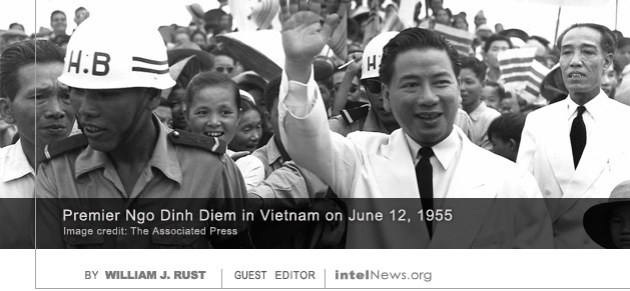
Ngo Dinh DiemA newly declassified report by the Inspector General of the United States Central Intelligence Agency reveals that the South Vietnamese generals who overthrew President Ngo Dinh Diem in 1963 used CIA money “to reward opposition military who joined the coup”. Acknowledging that “the passing of these funds is obviously a very sensitive matter”, the CIA Inspector General’s report contradicts the sworn testimony of Lucien E. Conein, the CIA liaison with the South Vietnamese generals. In 1975, Conein told a United States Senate committee that the agency funds, approximately $70,000 or 3 million piasters, were used for food, medical supplies, and “death benefits” for the families of South Vietnamese soldiers killed in the coup.
The report (.pdf), one of the 19,000 JFK assassination documents released by the US National Archives on Thursday, also contains new details about the South Vietnamese generals’ decision to assassinate Diem that contradict a conclusion of the coup’s history written by the CIA station in Saigon. The majority of the generals, said the CIA at the time, “desired President Diem to have honorable retirement from the political scene in South Vietnam and exile”. According to a newly declassified portion of the 49-page document written by the CIA’s Inspector General, an unidentified field-grade South Vietnamese officer who provided the CIA station with pictures of the bloodied bodies of Diem and his brother and advisor, Ngo Dinh Nhu, said that “most of the generals” favored their immediate execution: “The ultimate decision was to kill them. A Captain Nhung was designated as executioner”.

A redacted version of the Inspector General’s report, dated May 31, 1967, was released by the National Archives in November 2017. In that version of the report, the paragraphs related to the use of CIA funds and the generals’ decision to murder Diem were excised.

* William J. Rust is the author of four books about US relations with Southeast Asia countries during the cold war, including Kennedy in Vietnam. He is currently completing a book about US relations with Indonesia.


CIA seeking new ways to protect officers’ secret identities online, says official

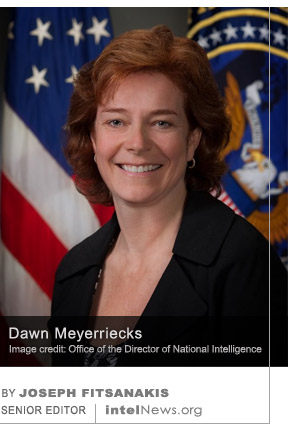
Dawn MeyerriecksIn a rare public appearance on Sunday, a senior member of the United States Central Intelligence Agency discussed ways in which ongoing technological changes pose challenges to concealing the identities of undercover operatives. Dawn Meyerriecks worked in industry for years before joining the CIA in 2013 as deputy director of the agency’s Directorate of Science and Technology. On April 22, she delivered one of the keynote speeches at the 2018 GEOINT Symposium. The meeting was held in Tampa, Florida, under the auspices of the Virginia-based United States Geospatial Intelligence Foundation, which brings together government agencies and private contractors.

In her speech, Meyerriecks discussed what she described as “identity intelligence”, namely the detailed piecing of a person’s identity from data acquired from his or her online activity and digital footprint left on wireless devices of all kinds. This data, combined with footage from closed-circuit television (CCTV) systems and other forms of audiovisual surveillance, poses tremendous barriers to clandestine operations, said Meyerriecks. Today, around 30 countries employ CCTV systems with features so advanced that they render physical tracking of human operatives unnecessary, she added. She went on to warn that the combination of these advanced systems with all-encompassing digital networks in so-called smart cities, as well as with the Internet of things, pose serious threats to the CIA’s ability to operate in secret. Abandoning the online grid is not a solution, said Meyerriecks, because doing so draws attention to the absentee. “If you have […] a six figure or low seven figure income, and you own no real estate, you don’t have any health [or] life insurance policies to speak of, you turn your cell phone off every day from 8:00 to 5:00, who do you work for?”, she said.

These technological challenges will not put an end human intelligence, but they are forcing “a sea of change” in the so-called “patterns of life” of clandestine operatives, said Meyerriecks. These operatives “are going to have to live their cover in a whole different way”, she said without elaborating. Ironically, technology may provide solutions to these challenges, for instance through phone apps that fake the geospatial coordinates of the device —“a growing area of research”, she remarked. Another example of a technological solution to the problem is the use of artificial intelligence algorithms to map CCTV camera networks in urban centers. These maps can help clandestine personnel avoid areas where camera networks are present, noted Meyerriecks.

Author: Joseph Fitsanakis | Date: 25 April 2018 | Permalink

Outgoing CIA director acknowledges US killed ‘couple of hundred’ Russians in Syria

Mike PompeoThe outgoing director of the Central Intelligence Agency, Mike Pompeo, appeared on Thursday to confirm reports from last February that United States troops killed more than 200 Russian soldiers in Syria. According to sources from the US Pentagon, the armed confrontation took place on February 7, when a 500-strong Syrian government force crossed the Euphrates River and entered Kurdish-controlled territory in Syria’s northeastern Deir al-Zour region. US-supported Kurdish forces in the area, which include embedded American troops, responded with artillery fire, while US military aircraft also launched strikes on the Syrian government forces. The latter withdrew across the Euphrates after suffering heavy losses. The US side estimated at the time that over 100 attackers had been left dead, with another 200-300 injured. The toll later rose to several hundred dead.

At a press conference held soon after the armed clash, US Secretary of Defense James Mattis refused to discuss the matter, which he referred to as “perplexing”. Bloomberg said at the time that American officials were “in talks” with Russian counterparts “in search of an explanation for what happened”. On Thursday, however, Pompeo appeared to acknowledge that US troops killed hundreds of Russians in Deir al-Zour. The outgoing CIA director was speaking before a committee of the US Senate, during a hearing pertaining to his nomination to serve as the next US secretary of state. He was making the point that the administration of US President Donald Trump had maintained a hardline policy on Russia. After referring to the recent expulsions of 60 Russian diplomats from the US, Pompeo said: “in Syria, now, a handful of weeks ago the Russians met their match. A couple of hundred Russians were killed”.

Pompeo’s comments were seen by the media as an acknowledgement by a senior US government official of the incident in Deir al-Zour, which has remained shrouded in mystery since it happened. Later in his speech, Pompeo said that the Kremlin had “not yet gotten the full message about US determination to block aggression from Moscow. We need to continue to work at that”, he said.

Author: Joseph Fitsanakis | Date: 13 April 2018 | Permalink