Poland’s super-secretive ‘school of spies’ marks 50 years of operation
August 2, 2023 1 Comment
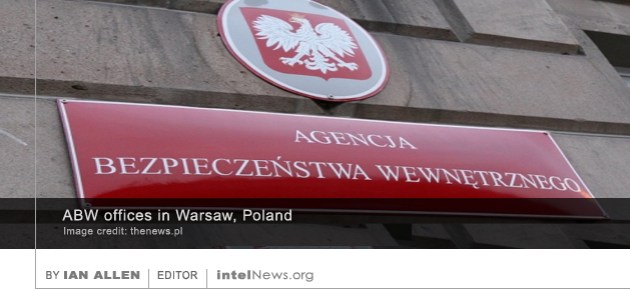 DURING THE COLD WAR, Poland hosted the Eastern Bloc’s only known intelligence training facility for operations officers situated outside of the Soviet Union. The highly secretive training facility operated out of a heavily guarded compound located near the northern Polish village of Stare Kiejkuty in Gmina Szczytno county, approximately 65 miles from the Polish-Soviet border. Today, 50 years after its establishment, the facility continues to train the operations officers of post-communist Poland’s intelligence services.
During World War II, and in the immediate post-war period, Soviet authorities trained Polish intelligence personnel in Kuybyshev (in 1991 renamed to Samara) in southwestern Russia. This setup continued following the establishment of the Soviet-controlled Polish intelligence community. By the 1960s, the Polish intelligence community was being led by the Ministry of Public Security, referred to by its Polish initials, SB. The SB’s elite operations officers, which staffed its First Department, were all trained in the Soviet Union and in a Soviet-controlled facility in Warsaw.
But in 1970, Poland’s reformist President, Edward Gierek, put in motion a plan to modernize the Polish intelligence services. Gierek’s goal was for Polish intelligence to catch up with the pace of technological development, especially in the emerging digital realm. He also wanted Polish spy organizations to be able to compete directly against rival agencies in Western Europe. The rapid establishment of the Intelligence Personnel Training Centre near Stare Kiejkuty was the centerpiece of Gierek’s intelligence reforms.
Construction began in 1971 and was mostly completed within two years. In 1973, the heavily guarded training facility, which had been disguised as a “holiday resort” in official government maps, welcomed its first students. Students were taught how to operate undercover in the West and how to recruit sources in countries like West Germany, France and the United Kingdom. They were taught about Western European lifestyles and had access to Western products, including soft drinks and vending machines, which were absent from Polish life. Read more of this post

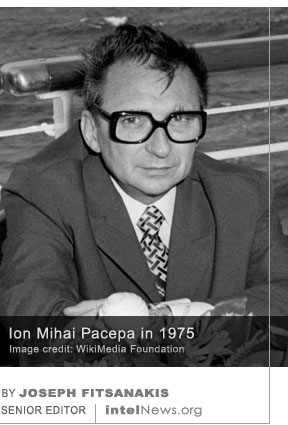 ION MIHAI PACEPA, WHO defected to the West as acting head of the Romanian intelligence service, making him the Cold War’s highest-ranking defector from the Soviet Bloc , has reportedly died in the United States of COVID-19. There has been no official announcement of Pacepa’s passing. However, a number of American and Romanian news outlets have
 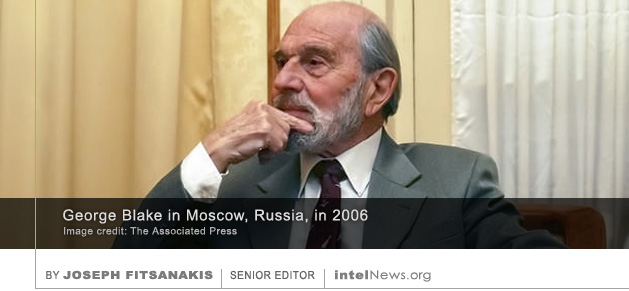 GEORGE BLAKE, A DUTCH-born British intelligence officer, whose espionage for the Soviet Union gained him notoriety in the West and hero status in Moscow, has died aged 98. His death was
 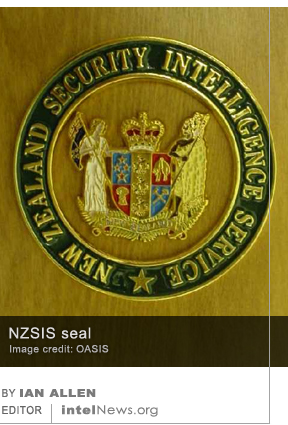 The spy agency of New Zealand broke into at least three foreign embassies in Wellington at the request of the United States and Britain, according to an investigative report by the country’s public radio broadcaster. Radio New Zealand reported on Tuesday that the highly controversial break-ins targeted the Indian High Commission and the Iranian Embassy in the late 1980s and early 1990s. A few years earlier, the New Zealand spy agency had allegedly broken into the Czechoslovakian embassy in Wellington.
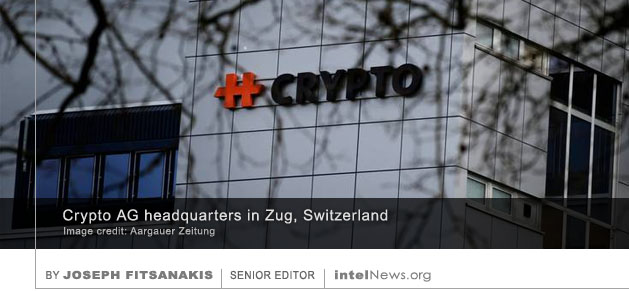 Switzerland is reeling from the shock caused by revelations last week that Crypto AG, the world’s leading manufacturer or cryptologic equipment during the Cold War, whose clients included over 120 governments around the world, was a front company owned by the United States Central Intelligence Agency.
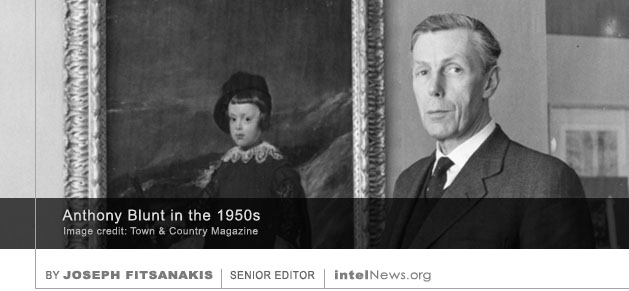
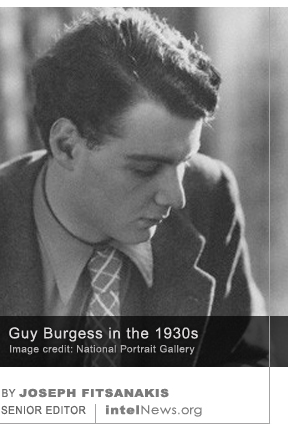 The intelligence service of Russia has openly honored two British members of the so-called Cambridge Five spy ring, who caused great controversy during the Cold War by defecting to Moscow. The intelligence services of the Soviet Union recruited five Enlishmen, H.A.R. ‘Kim’ Philby, John Cairncross, Donald Maclean, Anthony Blunt, as well as an unnamed fifth person, to spy for them in the 1930s. All five were recruited while they were promising young students at Britain’s elite Cambridge University, and entered the diplomatic and security services in order to supply Moscow with classified information about Britain and its allies.
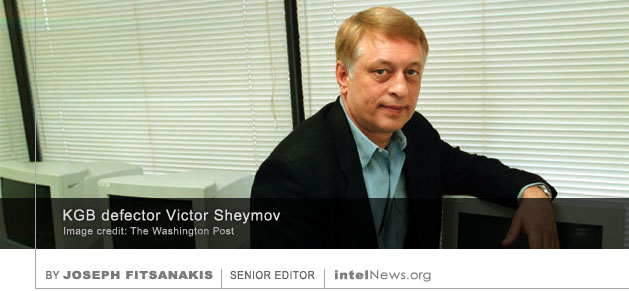 Victor Ivanovich Sheymov, who is often referred to as one of the most important intelligence defectors of the Cold War, has reportedly died in the American state of Virginia. He was one of the most senior officials in the Soviet Union’s Committee for State Security (KGB) to ever defect to the West, and revealed important KGB secrets to the United States.
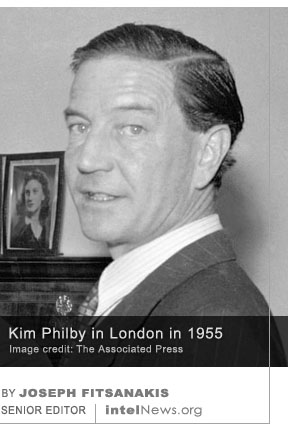 Extensive extracts from the confession of Kim Philby, one of the Cold War’s most prolific double spies, are scheduled to be released today for the first time by Britain’s
 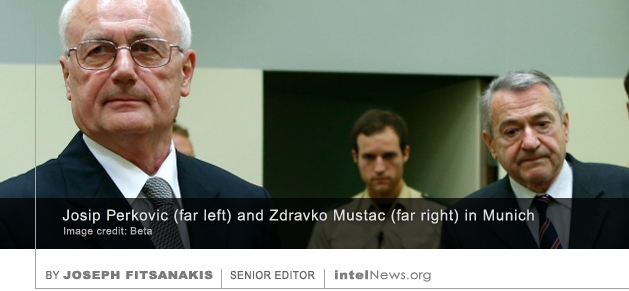 Germany has extradited a former senior official of the Yugoslav intelligence service to Croatia, where he is expected to serve a 30-year prison sentence for organizing the assassination of a dissident in Munich in 1983. Josip Perković is a former senior official in the Yugoslav State Security Service, known as UDBA. In 2014, he was extradited to Germany from Croatia alongside another former UDBA officer Zdravko Mustać. The two men were tried in a German court in the Bavarian capital Munich for organizing the assassination of Stjepan Đureković on July 28, 1983. Đureković’s killing was carried out by UDBA operatives in Wolfratshausen, Bavaria as part of a UDBA operation codenamed DUNAV. Đureković, who was of Croatian nationality, was director of Yugoslavia’s state-owned INA oil company until 1982, when he suddenly defected to West Germany. Upon his arrival in Germany, he was granted political asylum and began associating with Croatian nationalist émigré groups that were active in the country. It was the reason why he was killed by the government of Yugoslavia.
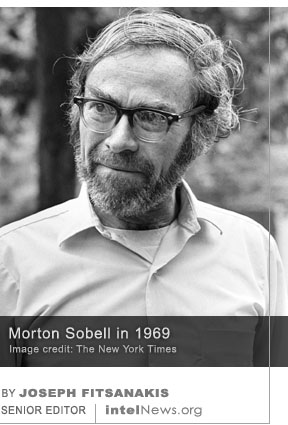 Morton Sobell, an American radar engineer who in 1951 was convicted of conspiracy alongside Julius and Ethel Rosenberg in one of the Cold War’s most prominent espionage cases, has died at 101 years old. His death was
 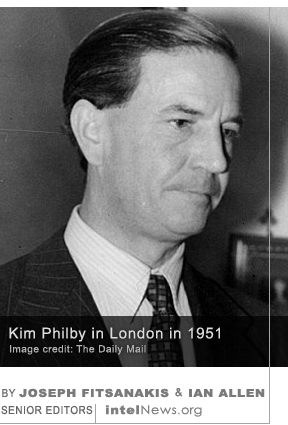 In a sign of worsening relations between the United Kingdom and Russia, a busy intersection in Moscow has been named after Kim Philby, the British senior intelligence officer who secretly spied for the Soviet Union. While working as a senior member of British intelligence, Harold Adrian Russell Philby, known as ‘Kim’ to his friends, spied on behalf of the Soviet NKVD and KGB. His espionage activities lasted from about 1933 until 1963, when he secretly defected to the USSR from his home in Beirut, Lebanon. Philby’s defection sent ripples of shock across Western intelligence and is often seen as one of the most dramatic incidents of the Cold War. He was part of a wider ring of upper-class British spies, known collectively as ‘the Cambridge spies’ because they were recruited by Soviet intelligence during their student days at the University of Cambridge in England.
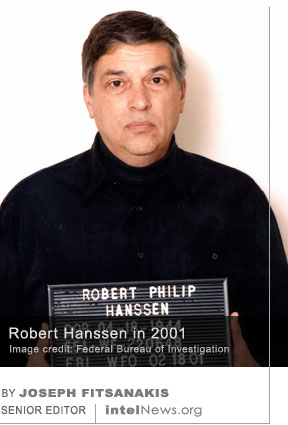 A new book reveals for the first time the name of a former intelligence officer of the Soviet KGB who helped American authorities arrest Robert Hanssen, an American spy for the Soviet Union and Russia. The son of a Chicago police officer, Hanssen joined the Federal Bureau of Investigation in 1976 and was eventually transferred to the Bureau’s Soviet analytical unit, where he held senior counterintelligence posts. It wasn’t until 2000, however, that the FBI realized Hanssen had spied for Moscow since 1979. Following Hanssen’s arrest in 2001, it emerged that he had betrayed the names of 50 FBI and CIA assets or informants, many of whom perished in the hands of the Russian intelligence services.






 intelNews.org
Death of Soviet defector Gordievsky not seen as suspicious, British police say
March 24, 2025 by Joseph Fitsanakis 8 Comments
By 1974, Gordievsky had established contact with Danish and British intelligence and was regularly providing information to Britain’s Secret Intelligence Service (MI6). After 1982, when Gordievsky was posted to the Soviet embassy in London, MI6 deliberately subverted his superiors at the embassy by expelling them. This effectively enabled Gordievsky to take their place and rise to the position of resident-designate of the KGB station in London.
Intelligence historians credit Gordievsky’s intelligence with having shaped the strategic thinking of British and American decision-makers in relation to the Soviet Union. Crucially, Gordievsky’s warnings to MI6 that the Kremlin was genuinely concerned about a possible nuclear attack by the West prompted British and American leaders to temper their public rhetoric against the Soviet Union in the mid-1980s. Some even credit Gordievsky with having helped the West avoid a nuclear confrontation with the Soviet Union.
In 1985, while undergoing interrogation by the Soviet authorities, Gordievsky was smuggled out of Russia by British intelligence, hidden inside a car that made its way to Finnish territory. He was subsequently sentenced in absentia to death for treason against the Soviet Union. In 1991, following an agreement between British and Soviet authorities, Gordievsky’s wife and daughters were allowed to join him in England.
According to Surrey Police, officers were called to a residential address in the city of Godalming on Tuesday March 4, where they found 86-year-old Gordievsky’s body, surrounded by members of his family. Godalming is a small market town in southeastern England, located around 30 miles from London. Surrey Police noted in a statement that the investigation into Gordievsky’s death was led by counterterrorism officers. However, his death was “not being treated as suspicious”.
Gordievsky spent nearly 40 hours in a coma in 2007, from which he eventually recovered. He subsequently claimed that he had been poisoned after taking sleeping pills tainted with a lethal toxin, which had been supplied to him by a man he referred to as a “business associate” with a Russian background.
► Author: Joseph Fitsanakis | Date: 24 March 2025 | Permalink
Filed under Expert news and commentary on intelligence, espionage, spies and spying Tagged with Cold War, defectors, KGB, MI6, Oleg Gordievsky, UK