The day a CIA-trained cat was run over by a taxi

Experiment fail

Experiment fail

By IAN ALLEN | intelNews.org |
A newly declassified report shows that the US Central Intelligence Agency terminated an ambitious project to embed an elaborate wiretap mechanism in a cat, after several failed attempts at controlling the bugged cat’s behavior in real-life situations. The document (.pdf), entitled “Views on Trained Cats [Redacted] for [Redacted] Use”, dates from March 1967. It wraps up by stating that “the environmental and security factors in using this technique in a real foreign situation force us to conclude that, for our [redacted] purposes, [using bugged cats] would not be practical”. Read more of this post

News you may have missed #299

  • US lawmaker wants to stop CIA agents working second jobs. Representative Anna Eshoo (D-CA) says she will offer an amendment to the Intelligence Reauthorization bill later this week that would put new rules into place on the practice of intelligence officers who take second jobs in the private sector.
  • Poland admits to aiding CIA. After human rights groups revealed evidence that showed CIA rendition planes landing in Poland in 2003, the Polish Air Navigation Services Agency has admitted for the first time that Poland played a role in the controversial US program.
  • Former Romanian-German spy fired for secret past. German author Peter Grosz was fired on Thursday from his role as director of the theater festival in the German city of Oppenheim, following revelations that he had spied on fellow authors for Romania’s Securitate communist secret police during the 1970s. Large numbers of Romanian former intelligence agents now reside in Germany.

Bookmark and Share

News you may have missed #293

  • US DHS monitors websites. According to a document released by the US Department of Homeland Security, Cryptome, Wired‘s Danger Room blog, and WikiLeaks, are among websites the DHS systematically monitors “in order to provide situational awareness and establish a common operating picture”. IntelNews wants to take this opportunity to say ‘hi’ to members of the DHS lurking around.
  • Russian spy lived in Dayton, stole secrets. Iowa-born and -bred communist and US Army engineer, George Koval, was a master at blending in. And, as it turns out, he was also a master spy for the Soviet Union. He did just that while working on the Manhattan Project in Dayton for six months in 1945.
  • Niger army suspends constitution. No word yet in Niger about the elections promised by the military coup plotters who appear to have staged a successful coup. For those who may not know, in international politics, Niger means uranium –lots of it. It’s also worth asking what ten agents of Bulgaria’s counterterrorism unit were doing in Niger on the day of the coup.

Bookmark and Share

News you may have missed #0288

CIA declassifies controversial submarine recovery project

Glomar Explorer

Glomar Explorer

By IAN ALLEN | intelNews.org |
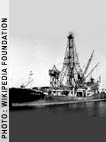
I have written before about the CIA’s controversial 1974 project to recover a Soviet submarine that had sunk in 1968, in 17,000 feet of water, about 750 miles northwest of Hawaii. The project involved the infamous ship Hughes Glomar Explorer and was led by CIA agent Christopher Fitzgerald, who died last year. But the CIA recovery team nearly caused a nuclear explosion when the submarine split while being raised, and its body hit the ocean floor. Now the CIA has for the first time declassified a substantial document relating to the project, codenamed AZORIAN. The document is a lengthy article first published in 1985 in the mostly classified CIA research journal Studies in Intelligence, written by an unnamed CIA team member who participated in the recovery effort. Read more of this post

News you may have missed #0285

  • Canadian government resists release of Cold-War-era files. Canadian journalists are fighting for the release of Cold-War-era government files on Tommy Douglas, a prominent social democratic politician idolized in Canada for his central role in establishing the country’s public health care system. But the government argues that releasing the files would imperil national security and compromise contemporary spy sources and methods.
  • NPR launches series on confidential informants. Informants are often considered a vital crime fighting tool; but what happens if those informants go astray? Washington-based National Public Radio is launching a special investigation into this controversial subject.
  • CIA returns to US university campuses. American anthropologist David Price explains that the US intelligence community is gradually re-establishing its academic recruitment network, which was shattered in the 1970s.

Bookmark and Share

News you may have missed #0282

  • Iran summons Canadian ambassador over CIA links. The Iranian government announced that it summoned the Canadian charge d’affaires in Tehran, in connection with revelations that Canada’s former ambassador to Iran secretly worked for the CIA in the late 1970s.
  • Charlie Wilson dead at 76. Charlie Wilson, a 12-term American congressional representative, who orchestrated the covert funding of Muslim mujahedeen in Soviet-occupied Afghanistan in the 1980s, has died in Texas.
  • Analysis: Is Colombia turning into a nation of informants? On January 27, Colombian President Álvaro Uribe announced his goal of putting a thousand spies in college classrooms. He offered to pay students $50 per month to report any suspicious ideas or behavior to the Colombian authorities. Forrest Hylton, who teaches at the Universidad de los Andes in Bogotá, explains the disturbing political background of Uribe’s announcement.

Bookmark and Share

News you may have missed #0272

  • Outcry in Turkey over revealed coup plot. Turkish daily Taraf has revealed a military coup plot, which included detailed plans to trigger chaos in the country with the ultimate goal of a military takeover. This appears to be a new plot, not associated with the ongoing Ergenekon coup plot investigation.
  • US jails Sri Lankan LTTE operatives. A US federal court has sentenced Thiruthanikan Thanigasalam and Sahilal Sabaratnam to 25 years in prison for trying to purchase almost $1 million worth of high-powered weaponry for the Liberation Tigers of Tamil Eelam (LTTE), which the US considers a terrorist organization.
  • Czechoslovakian spy lookout to be opened to public. The bell tower on St. Nicholas’ Church in Prague, where 20 years ago the Czechoslovakian secret police, the StB, kept a hidden lookout on activities outside nearby embassies, especially that of the US, is to be opened to the public later this year.

Bookmark and Share

News you may have missed #0270

  • S. Korean court orders damages in alleged spy case. Lee Soo-geun was a senior North Korean government apparatchik, who defected to the South and joined its intelligence service in 1967. Later, however, when he attempted to flee to a third country, he was arrested by South Korean counterintelligence agents, charged with working as a double agent, and shot. But now a court in Seoul has concluded that Lee’s confession was extracted by force, and has ordered that damages be paid to Lee’s niece, who was imprisoned for allegedly helping him.
  • Belarus reshuffles KGB leadership. Last week, Belorussian President Alexander Lukashenko carried out a major reshuffle in the country’s State Security Committee (KGB), a surprise move which affected all KGB deputy chairs and regional department heads. Retired KGB lieutenant colonel Valery Kostka explains the reasoning behind the reshuffle.

Bookmark and Share

News you may have missed #0258

Bookmark and Share

News you may have missed #0253

  • Iran undecided on nukes, says US military spy chief. The US Pentagon’s top intelligence official, Lieutenant General Ronald Burgess, has said what intelNews has been pointing out again and again, namely that the key finding of the 2007 National Intelligence Estimate, that Iran has not yet committed itself to nuclear weapons production, is still valid.
  • Nobel winner demands Germany uncover Romanian ex-spies. Herta Mueller, the Romanian-born German winner of the 2009 Nobel Prize for Literature, has called on Germany to find and prosecute former agents of Romania’s Securitate secret police, large numbers of whom have resettled in Germany after communism ended in Romania 20 years ago.

Bookmark and Share

News you may have missed #0247

  • US government lowers threshold for inclusion on no-fly lists. According to senior US State Department officials, the government has already lowered the threshold for information deemed important enough to put suspicious individuals on a watch list or no-fly list. CNN reports that suspects will now include citizens of the notorious Islamist country of Cuba….
  • CIA starts sharing data with climate scientists. This blog has kept an eye on the CIA’s Climate Change Center, which was established late last year. It now turns out the Agency had started monitoring climate change in 1992, under project MEDEA (Measurements of Earth Data for Environmental Analysis), but the program was shut down in 2001 by the Bush Administration. The Climate Change Center, therefore, represents the re-establishment of an earlier effort.
  • How the KGB tried to recruit an NBC News reporter. FBI files show that the Soviet KGB tried to recruit the late NBC News reporter Irving R. Levine, while he was stationed in Moscow in the 1950s.

Bookmark and Share

Comment: Is There a ‘DNA Problem’ in US Spying?

Sam Tanenhaus

Sam Tanenhaus

By IAN ALLEN* | intelNews.org |
The controversy of the apparent ineffectiveness of US intelligence agencies to uncover the so-called Christmas Day bomb plot has reignited the discussion about the operational shortcomings of the US intelligence community. Sam Tanenhaus, editor of of The New York Times Book Review, has authored an interesting commentary, in which he delves into some of what he sees as the design deficiencies in American intelligence.

Read more of this post

Files reveal previously unknown UK-Soviet diplomatic scuffle

Aubone Pyke

Aubone Pyke

By JOSEPH FITSANAKIS | intelNews.org |
A previously unknown fracas between two British diplomatic officials, their wives, and a team of Soviet intelligence agents, has been revealed in declassified British government reports. The documents, which were released last weekend, show that two employees of the British embassy in Moscow were detained, along with their wives, allegedly for photographing a Soviet military installation. The British diplomats were Lieutenant-Commanders Ian Clapham and Aubone Pyke, who was the embassy’s assistant military attaché. Escorted by their wives, the two officials were allegedly taking a tour of Leningrad (now St. Petersburg), in February of 1979, when a group of “about 25” Soviet intelligence agents rapidly approached them. The agents proceeded to confiscate a cameral belonging to Pyke, after rapidly pulling down his trousers, an old trick aimed to prevent a suspect from running away. Read more of this post

US court upholds NSA’s refusal to admit or deny wiretap data

Glomar Challenger

The Glomar

By IAN ALLEN | intelNews.org |
A US federal appeals court has concluded that the National Security Agency can refuse to admit or deny it possesses information about the US government spying on lawyers representing Guantánamo prison detainees. The decision by the 2nd US Circuit Court of Appeals in New York relates to a Freedom of Information Act (FOIA) request under a civil liberties lawsuit challenging post-9/11 warrantless surveillance operations by US agencies. The latter typically respond to most FOIA requests by confirming or denying possession of information relating to particular requests, and then by proceeding to either deny release, or release selected segments of the requested data. It is rare for an agency to refuse even to acknowledge the existence of information sought through FOIA. Read more of this post